What Happened
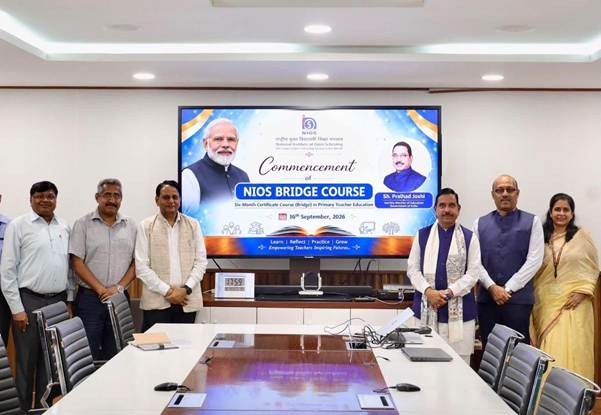
The Ministry of Education has launched a six-month Certificate (Bridge) Course in Primary Teacher Education to provide specialised professional training to eligible in-service primary school teachers who hold a Bachelor of Education (B.Ed.) degree. Union Education Minister Pralhad Joshi launched the programme on 16 September 2026 in New Delhi. The course will be implemented through the National Institute of Open Schooling (NIOS) and is designed specifically for teaching at the primary level, covering Classes I to V.
The programme addresses an important issue in teacher education: training designed for secondary or higher classes is not necessarily identical to the pedagogical preparation required for young children at the primary stage. Primary education requires teachers to understand children's developmental needs, foundational learning, inclusive classrooms, activity-based teaching and age-appropriate pedagogy. The new Bridge Course is therefore intended to provide eligible B.Ed.-qualified in-service teachers with competencies specifically relevant to primary education.
The programme has been designed according to the framework of the National Council for Teacher Education (NCTE). It combines academic learning with practical classroom experience. According to the Ministry of Education, participants will undertake at least 10 days of online contact classes and at least 20 days of school-based experience. This combination is intended to connect educational theory with actual classroom practice.
The curriculum consists of six theory courses along with a school-based practicum. Practical components will include practice teaching, reflective journals and portfolios. Teachers will also have access to video tutorials, e-learning material and other digital resources. The programme is intended to strengthen child-centred, inclusive and developmentally appropriate teaching practices.
The Bridge Course has an important legal background. The Ministry stated that the Supreme Court, through its judgment dated 8 April 2024 in Civil Appeal No. 5068 of 2023, Devesh Sharma versus Union of India and Others, empowered NCTE to devise a bridge course for certain teachers who had been appointed to teach at the primary level but did not possess a Diploma in Elementary Education, or D.El.Ed., qualification.
Accordingly, the present course is not a general new qualification route for every B.Ed. holder wishing to become a primary teacher. It is specifically designed for eligible in-service primary teachers appointed between 28 June 2018 and 11 August 2023 to teach Classes I-V with a B.Ed. degree and whose appointments are protected under the relevant NCTE framework. This eligibility distinction is important for students and teachers because the programme should not be interpreted as automatically making every B.Ed. graduate eligible for primary-school appointments.
The course will be delivered through the Open and Distance Learning mode. This arrangement is particularly suitable for serving teachers because they need to continue their professional responsibilities while undergoing additional training. Online contact programmes, digital self-learning material, practical school experience and electronic learning resources are intended to provide flexibility without eliminating the practical component of teacher preparation.
Hindi and English will be the principal media of instruction. However, candidates will be permitted to write the theory component of the public examination in any of the 22 languages listed in the Eighth Schedule of the Constitution. This multilingual provision is significant in a country where primary education is delivered across a wide range of regional and linguistic contexts.
Admission will take place online through the official NIOS Bridge Course portal. Eligible teachers will be able to register, upload the required documents and track their admission status through the digital dashboard. Course materials will be provided digitally, along with supplementary audio, video and interactive learning resources.
NIOS plays an important role in the programme. It is an autonomous institution under the Ministry of Education and is widely associated with open schooling and flexible learning. Using NIOS for the Bridge Course allows the programme to reach eligible serving teachers across different parts of India without requiring them to leave their jobs for a conventional full-time teacher-training programme.
The involvement of NCTE is equally important. NCTE is the statutory body concerned with planned and coordinated development of teacher education and the maintenance of standards and norms in teacher-education programmes. The Bridge Course therefore combines the regulatory framework of NCTE with the open-learning delivery capabilities of NIOS.
The programme also has wider relevance to foundational education. The primary years are critical for developing literacy, numeracy, communication, social skills and the ability to learn independently. Weaknesses developed at this stage can affect a child's progress in later classes. Strengthening teacher preparation at Classes I-V can therefore influence learning outcomes beyond the primary stage itself.
The emphasis on child-centred pedagogy reflects the broader transformation envisaged in India's education policy. Instead of treating teaching simply as transmission of textbook information, contemporary primary pedagogy increasingly emphasises interaction, exploration, context, inclusion and understanding individual learning needs. The Ministry describes teaching in the programme as a dynamic, context-sensitive and inquiry-based profession.
For competitive examinations, the development connects several important institutions and concepts: Ministry of Education, NIOS, NCTE, B.Ed., D.El.Ed., primary education, Open and Distance Learning, Eighth Schedule languages and teacher education. UPSC and State PCS aspirants should also understand the wider relationship between teacher quality, foundational learning and implementation of education reforms.
क्या हुआ?
शिक्षा मंत्रालय ने Bachelor of Education अर्थात B.Ed. योग्यता रखने वाले पात्र सेवारत प्राथमिक शिक्षकों को विशेष व्यावसायिक प्रशिक्षण प्रदान करने के लिए छह महीने का Certificate (Bridge) Course in Primary Teacher Education शुरू किया है। केंद्रीय शिक्षा मंत्री प्रल्हाद जोशी ने 16 सितंबर 2026 को नई दिल्ली में इस कार्यक्रम का शुभारंभ किया। पाठ्यक्रम का संचालन National Institute of Open Schooling अर्थात NIOS के माध्यम से किया जाएगा और इसे विशेष रूप से कक्षा I से V तक के प्राथमिक स्तर के शिक्षण के लिए तैयार किया गया है।
यह कार्यक्रम शिक्षक शिक्षा से जुड़े एक महत्वपूर्ण विषय को संबोधित करता है। माध्यमिक अथवा उच्च कक्षाओं के लिए तैयार शिक्षक प्रशिक्षण और छोटे बच्चों को प्राथमिक स्तर पर पढ़ाने के लिए आवश्यक शिक्षण पद्धति पूरी तरह समान नहीं होती। प्राथमिक शिक्षा में शिक्षक को बच्चों की विकासात्मक आवश्यकताओं, बुनियादी अधिगम, समावेशी कक्षा, गतिविधि आधारित शिक्षण और आयु के अनुरूप शिक्षण पद्धति को समझना आवश्यक है। इसलिए यह Bridge Course पात्र B.Ed.-योग्य सेवारत प्राथमिक शिक्षकों को प्राथमिक शिक्षा से संबंधित विशेष दक्षताएँ प्रदान करने के उद्देश्य से बनाया गया है।
कार्यक्रम को National Council for Teacher Education अर्थात NCTE के ढाँचे के अनुसार तैयार किया गया है। इसमें शैक्षणिक अध्ययन और वास्तविक विद्यालयी अनुभव दोनों को शामिल किया गया है। शिक्षा मंत्रालय के अनुसार प्रतिभागियों को कम से कम 10 दिनों की ऑनलाइन संपर्क कक्षाओं और कम से कम 20 दिनों के विद्यालय आधारित अनुभव में भाग लेना होगा। इसका उद्देश्य शिक्षक शिक्षा के सिद्धांतों को वास्तविक कक्षा शिक्षण के साथ जोड़ना है।
पाठ्यक्रम में छह सैद्धांतिक पाठ्यक्रम और एक विद्यालय आधारित Practicum शामिल है। व्यावहारिक गतिविधियों में Practice Teaching, Reflective Journals और Portfolios शामिल होंगे। शिक्षकों को Video Tutorials, E-learning Material और अन्य डिजिटल संसाधन भी उपलब्ध कराए जाएंगे। कार्यक्रम का उद्देश्य बाल-केंद्रित, समावेशी और बच्चों के विकास के अनुरूप शिक्षण पद्धतियों को मजबूत करना है।
इस Bridge Course की महत्वपूर्ण कानूनी पृष्ठभूमि भी है। शिक्षा मंत्रालय के अनुसार सर्वोच्च न्यायालय ने 8 अप्रैल 2024 को Civil Appeal No. 5068 of 2023, Devesh Sharma बनाम Union of India एवं अन्य मामले में NCTE को उन निर्धारित शिक्षकों के लिए Bridge Course तैयार करने का अधिकार दिया था जिन्हें प्राथमिक शिक्षक के रूप में नियुक्त किया गया था लेकिन उनके पास Diploma in Elementary Education अर्थात D.El.Ed. योग्यता नहीं थी।
इसी के अनुरूप वर्तमान पाठ्यक्रम प्रत्येक B.Ed. धारक के लिए प्राथमिक शिक्षक बनने का सामान्य नया मार्ग नहीं है। यह विशेष रूप से उन पात्र सेवारत प्राथमिक शिक्षकों के लिए तैयार किया गया है जिन्हें 28 जून 2018 से 11 अगस्त 2023 के बीच B.Ed. योग्यता के आधार पर कक्षा I-V पढ़ाने के लिए नियुक्त किया गया था और जिनकी नियुक्तियाँ संबंधित NCTE व्यवस्था के अंतर्गत संरक्षित हैं। यह पात्रता संबंधी अंतर अत्यंत महत्वपूर्ण है। इसे इस अर्थ में नहीं समझना चाहिए कि प्रत्येक B.Ed. स्नातक स्वतः प्राथमिक शिक्षक नियुक्ति के लिए पात्र हो गया है।
पाठ्यक्रम Open and Distance Learning अर्थात ODL माध्यम से संचालित किया जाएगा। सेवारत शिक्षकों के लिए यह व्यवस्था उपयोगी है क्योंकि उन्हें अतिरिक्त प्रशिक्षण के साथ अपनी व्यावसायिक जिम्मेदारियाँ भी निभानी होती हैं। ऑनलाइन संपर्क कार्यक्रम, डिजिटल Self-Learning Material, विद्यालय आधारित व्यावहारिक अनुभव और इलेक्ट्रॉनिक शिक्षण संसाधनों के माध्यम से लचीलापन प्रदान किया जाएगा।
शिक्षण का माध्यम मुख्य रूप से हिंदी और अंग्रेजी होगा। हालांकि अभ्यर्थियों को सार्वजनिक परीक्षा के सैद्धांतिक भाग को संविधान की आठवीं अनुसूची में सूचीबद्ध 22 भाषाओं में से किसी भी भाषा में लिखने की अनुमति होगी। भारत की भाषाई विविधता और क्षेत्रीय माध्यमों में संचालित प्राथमिक शिक्षा को देखते हुए यह प्रावधान महत्वपूर्ण है।
प्रवेश प्रक्रिया आधिकारिक NIOS Bridge Course Portal के माध्यम से ऑनलाइन होगी। पात्र शिक्षक पंजीकरण कर सकेंगे, आवश्यक दस्तावेज अपलोड कर सकेंगे और डिजिटल Dashboard के माध्यम से अपने प्रवेश की स्थिति देख सकेंगे। सभी Self-Learning Materials डिजिटल रूप में उपलब्ध कराए जाएंगे। इसके अतिरिक्त Audio, Video और Interactive Content जैसे पूरक संसाधन भी उपलब्ध होंगे।
इस कार्यक्रम में NIOS की महत्वपूर्ण भूमिका है। NIOS शिक्षा मंत्रालय के अंतर्गत एक स्वायत्त संस्था है और Open Schooling तथा लचीली शिक्षा व्यवस्था से जुड़ी प्रमुख संस्था है। NIOS के माध्यम से कार्यक्रम चलाने से विभिन्न राज्यों में कार्यरत पात्र शिक्षकों तक प्रशिक्षण पहुँचाया जा सकता है और उन्हें नियमित पूर्णकालिक प्रशिक्षण के लिए अपनी नौकरी छोड़ने की आवश्यकता नहीं होगी।
NCTE की भूमिका भी महत्वपूर्ण है। NCTE शिक्षक शिक्षा के योजनाबद्ध और समन्वित विकास तथा Teacher Education Programmes में मानकों और गुणवत्ता से संबंधित वैधानिक संस्था है। इस प्रकार Bridge Course में NCTE के नियामक ढाँचे और NIOS की Open Learning क्षमता को एक साथ जोड़ा गया है।
यह कार्यक्रम बुनियादी शिक्षा की गुणवत्ता के लिए भी महत्वपूर्ण है। प्राथमिक कक्षाएँ बच्चों में साक्षरता, संख्यात्मक क्षमता, संचार कौशल, सामाजिक कौशल और स्वतंत्र रूप से सीखने की क्षमता विकसित करने का महत्वपूर्ण चरण होती हैं। इस स्तर पर उत्पन्न सीखने की कमजोरी बाद की कक्षाओं में बच्चे की प्रगति को प्रभावित कर सकती है। इसलिए कक्षा I-V में शिक्षक प्रशिक्षण की गुणवत्ता मजबूत करने का प्रभाव केवल प्राथमिक स्तर तक सीमित नहीं रहता।
बाल-केंद्रित शिक्षण पद्धति पर दिया गया जोर भारत की शिक्षा व्यवस्था में व्यापक परिवर्तन से भी जुड़ा है। आधुनिक प्राथमिक शिक्षा में शिक्षण को केवल पाठ्यपुस्तक की जानकारी बच्चों तक पहुँचाने की प्रक्रिया नहीं माना जाता। इसमें संवाद, खोज, स्थानीय संदर्भ, समावेशन और प्रत्येक बच्चे की अलग सीखने की आवश्यकता को समझने पर बल दिया जाता है। मंत्रालय ने भी इस कार्यक्रम में शिक्षण को गतिशील, संदर्भ-संवेदनशील और खोज आधारित पेशे के रूप में प्रस्तुत किया है।
प्रतियोगी परीक्षाओं के लिए यह विषय शिक्षा मंत्रालय, NIOS, NCTE, B.Ed., D.El.Ed., प्राथमिक शिक्षा, Open and Distance Learning, संविधान की आठवीं अनुसूची और शिक्षक शिक्षा जैसे कई महत्वपूर्ण विषयों को जोड़ता है। UPSC और State PCS के अभ्यर्थियों को शिक्षक गुणवत्ता, बुनियादी अधिगम और शिक्षा सुधारों के क्रियान्वयन के बीच संबंध को भी समझना चाहिए।
Key Facts
• The six-month Certificate Bridge Course in Primary Teacher Education was launched on 16 September 2026 in New Delhi.
• The programme is intended for specified eligible in-service primary teachers holding a B.Ed. degree.
• It covers teaching at the primary level from Classes I to V.
• The programme will be implemented through the National Institute of Open Schooling.
• The course has been designed according to the framework of the National Council for Teacher Education.
• The programme consists of six theory courses and a school-based practicum.
• Teachers must undertake at least 10 days of online contact classes.
• At least 20 days of school-based experience are included.
• The course will be delivered through Open and Distance Learning mode.
• The principal media of instruction are Hindi and English.
• Candidates can write the theory public examination in any of the 22 languages listed in the Eighth Schedule.
• The course is linked to the Supreme Court judgment dated 8 April 2024 in Devesh Sharma versus Union of India and Others.
• It is designed for specified eligible in-service primary teachers appointed between 28 June 2018 and 11 August 2023.
• Admission will be conducted online through the official NIOS Bridge Course portal.
• Self-learning and supplementary digital resources will be provided online.
मुख्य तथ्य
• छह महीने के Certificate Bridge Course in Primary Teacher Education का शुभारंभ 16 सितंबर 2026 को नई दिल्ली में हुआ।
• कार्यक्रम निर्धारित पात्र B.Ed. योग्य सेवारत प्राथमिक शिक्षकों के लिए है।
• यह कक्षा I से V तक के प्राथमिक शिक्षण से संबंधित है।
• कार्यक्रम का संचालन National Institute of Open Schooling के माध्यम से किया जाएगा।
• पाठ्यक्रम National Council for Teacher Education के ढाँचे के अनुसार तैयार किया गया है।
• इसमें छह सैद्धांतिक पाठ्यक्रम और एक विद्यालय आधारित Practicum शामिल है।
• शिक्षकों को कम से कम 10 दिनों की ऑनलाइन संपर्क कक्षाओं में भाग लेना होगा।
• कम से कम 20 दिनों का विद्यालय आधारित अनुभव भी शामिल है।
• पाठ्यक्रम Open and Distance Learning माध्यम से संचालित होगा।
• शिक्षण का मुख्य माध्यम हिंदी और अंग्रेजी होगा।
• अभ्यर्थी सैद्धांतिक सार्वजनिक परीक्षा आठवीं अनुसूची की 22 भाषाओं में से किसी में लिख सकेंगे।
• पाठ्यक्रम 8 अप्रैल 2024 के Devesh Sharma बनाम Union of India एवं अन्य मामले के सर्वोच्च न्यायालय के निर्णय से जुड़ा है।
• यह 28 जून 2018 से 11 अगस्त 2023 के बीच नियुक्त निर्धारित पात्र सेवारत प्राथमिक शिक्षकों के लिए तैयार किया गया है।
• प्रवेश आधिकारिक NIOS Bridge Course Portal के माध्यम से ऑनलाइन होगा।
• Self-Learning और पूरक डिजिटल सामग्री ऑनलाइन उपलब्ध कराई जाएगी।
Background
Teacher education for the primary stage requires specialised preparation because children in Classes I-V are at a crucial stage of cognitive, linguistic, social and emotional development. The legal context of this Bridge Course emerged from questions concerning B.Ed.-qualified teachers appointed at the primary level without D.El.Ed. qualifications. Following the Supreme Court's 8 April 2024 judgment, NCTE was empowered to devise a bridge programme for the specified category of appointees. The new six-month programme operationalises that requirement through NIOS while combining academic instruction with practical school experience.
पृष्ठभूमि
प्राथमिक स्तर पर शिक्षक शिक्षा के लिए विशेष प्रशिक्षण आवश्यक होता है क्योंकि कक्षा I-V के बच्चे संज्ञानात्मक, भाषाई, सामाजिक और भावनात्मक विकास के महत्वपूर्ण चरण में होते हैं। इस Bridge Course की कानूनी पृष्ठभूमि उन B.Ed. योग्य शिक्षकों से संबंधित प्रश्नों से विकसित हुई जिन्हें D.El.Ed. योग्यता के बिना प्राथमिक स्तर पर नियुक्त किया गया था। सर्वोच्च न्यायालय के 8 अप्रैल 2024 के निर्णय के बाद NCTE को निर्धारित श्रेणी के नियुक्त शिक्षकों के लिए Bridge Programme तैयार करने का अधिकार दिया गया। नया छह महीने का कार्यक्रम NIOS के माध्यम से शैक्षणिक अध्ययन और व्यावहारिक विद्यालयी अनुभव को जोड़ते हुए इस आवश्यकता को लागू करता है।
Why It Matters
The programme matters because teacher qualifications alone do not guarantee that an educator has received specialised preparation for the developmental and pedagogical requirements of young children. The Bridge Course attempts to address this gap for a legally specified category of existing teachers without requiring them to leave service for a conventional full-time programme. Its combination of child-centred pedagogy, inclusive education, practical teaching experience and distance-learning delivery could strengthen classroom competencies among the eligible teachers covered by the programme.
यह क्यों महत्वपूर्ण है?
यह कार्यक्रम इसलिए महत्वपूर्ण है क्योंकि केवल शिक्षक की शैक्षणिक योग्यता यह सुनिश्चित नहीं करती कि उसे छोटे बच्चों की विकासात्मक और शिक्षण संबंधी आवश्यकताओं के लिए विशेष प्रशिक्षण प्राप्त हुआ है। Bridge Course निर्धारित कानूनी श्रेणी के मौजूदा शिक्षकों के लिए इस अंतर को कम करने का प्रयास करता है और उन्हें नियमित पूर्णकालिक कार्यक्रम के लिए सेवा छोड़ने की आवश्यकता नहीं होती। बाल-केंद्रित शिक्षण, समावेशी शिक्षा, व्यावहारिक शिक्षण अनुभव और दूरस्थ शिक्षा के संयोजन से पात्र शिक्षकों की कक्षा संबंधी दक्षताओं को मजबूत करने का प्रयास किया गया है।
Exam Connection
Important for UPSC GS-II Social Sector and Education, State PCS, teaching examinations and education-related current affairs. Remember: six-month Bridge Course; Ministry of Education; NIOS as implementing institution; NCTE framework; Classes I-V; six theory courses; minimum 10 days of online contact classes; minimum 20 days of school-based experience; ODL mode; and the 22 Eighth Schedule languages for the theory examination. Also remember that the programme is for a specified category of eligible in-service B.Ed.-qualified primary teachers and should not be interpreted as a general eligibility route for all B.Ed. holders.
परीक्षा से संबंध
UPSC GS-II सामाजिक क्षेत्र एवं शिक्षा, State PCS, शिक्षक भर्ती परीक्षाओं और शिक्षा संबंधी समसामयिकी के लिए महत्वपूर्ण। याद रखें: छह महीने का Bridge Course; शिक्षा मंत्रालय; क्रियान्वयन संस्था NIOS; NCTE Framework; कक्षा I-V; छह Theory Courses; कम से कम 10 दिन की Online Contact Classes; कम से कम 20 दिन का School-Based Experience; ODL Mode; तथा Theory Examination के लिए आठवीं अनुसूची की 22 भाषाएँ। यह भी ध्यान रखें कि कार्यक्रम निर्धारित श्रेणी के पात्र सेवारत B.Ed.-योग्य प्राथमिक शिक्षकों के लिए है और इसे सभी B.Ed. धारकों के लिए सामान्य प्राथमिक शिक्षक पात्रता मार्ग नहीं समझना चाहिए।