What Happened
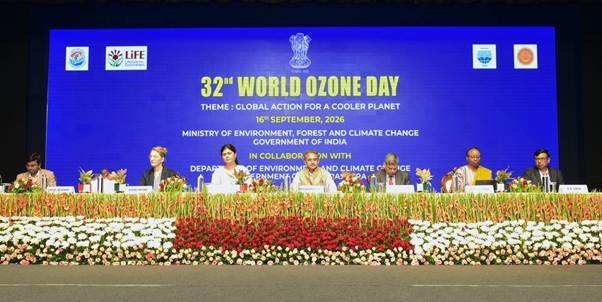
India marked the 32nd World Ozone Day on 16 September 2026 with the launch of two important digital climate-governance tools: India's Net Zero Portal and the National Action Plan on Climate Change Dashboard. The national programme was organised by the Ministry of Environment, Forest and Climate Change in Mumbai under the theme 'Global Action for a Cooler Planet'. The initiative brought together ozone-layer protection, climate action, sustainable cooling, digital monitoring and skill development within a broader environmental-governance framework.
India's Net Zero Portal is intended to serve as a central platform for information connected with the country's transition towards net-zero emissions. It can help consolidate information on climate commitments and provide a mechanism through which organisations, industries and government bodies can voluntarily showcase progress towards their net-zero objectives. Such a system is important because climate governance increasingly requires measurable implementation rather than only announcement of targets. Reliable information can help policymakers and stakeholders understand where progress is occurring and where additional intervention may be necessary.
The NAPCC Dashboard provides a digital gateway connected with India's National Action Plan on Climate Change. NAPCC is one of the important components of India's domestic climate-policy architecture. It has historically brought together national missions dealing with areas such as solar energy, enhanced energy efficiency, sustainable habitat, water, the Himalayan ecosystem, forests, sustainable agriculture and strategic knowledge for climate change. A dashboard can make information related to these areas easier to access and monitor.
The launch took place on World Ozone Day, which is observed every year on 16 September. The day commemorates international efforts to protect the stratospheric ozone layer. This layer is extremely important because it absorbs a substantial portion of the Sun's harmful ultraviolet radiation. Excessive exposure to ultraviolet radiation can affect human health, crops and ecosystems.
International action on ozone protection developed through the Vienna Convention for the Protection of the Ozone Layer, adopted in 1985, followed by the Montreal Protocol on Substances that Deplete the Ozone Layer in 1987. The Montreal Protocol established an international framework for controlling and progressively eliminating the production and consumption of major ozone-depleting substances.
India has been associated with the Vienna Convention, Montreal Protocol and subsequent amendments since 1992. According to the Environment Ministry, India has fulfilled its scheduled commitments relating to several ozone-depleting substances. Controlled applications of substances such as chlorofluorocarbons, carbon tetrachloride and halons have already been phased out.
Attention has subsequently shifted towards hydrochlorofluorocarbons, or HCFCs. These chemicals have been widely used in refrigeration, air-conditioning and foam-related applications. Although many HCFCs have lower ozone-depletion potential than the older CFCs they replaced, they can still damage the ozone layer and can also contribute significantly to global warming. India has met the scheduled HCFC reduction targets applicable for 2015, 2020 and 2025.
The Kigali Amendment to the Montreal Protocol expanded the environmental importance of the framework by addressing hydrofluorocarbons, or HFCs. HFCs are different from the classic ozone-depleting substances because they generally do not significantly damage stratospheric ozone. However, many HFCs have high global-warming potential. Their rapid growth as refrigerants therefore became a major climate concern.
India ratified the Kigali Amendment in September 2021, and it entered into force for India on 26 December 2021. Under India's applicable phase-down schedule, HFC reductions are scheduled to begin in 2032. The schedule provides for a 10 per cent reduction in 2032, 20 per cent in 2037, 30 per cent in 2042 and 85 per cent in 2047 against the applicable baseline.
The World Ozone Day 2026 programme also placed significant emphasis on the refrigeration and air-conditioning workforce. Twelve refrigeration and air-conditioning manufacturers announced the adoption of 248 Industrial Training Institutes through an institutional arrangement designed to strengthen technical training and connect classroom learning more closely with industry requirements.
Technician training is an important environmental issue because changing refrigerants alone cannot guarantee lower emissions. Refrigerants must be handled, installed, recovered and serviced correctly. Leakage during installation or maintenance can undermine environmental benefits. Properly trained technicians are therefore essential for the transition towards climate-friendly cooling technologies.
India and Germany are also cooperating on climate-friendly cooling solutions under HCFC Phase-out Management Plan Stage III for the 2025-2030 period. The refrigeration and air-conditioning servicing sector is an important component of this cooperation. A nationally recognised certification system for air-conditioning technicians is being developed, with a target of training 25,000 technicians by 2030.
The development should also be understood in the context of the India Cooling Action Plan. India's demand for cooling is expected to grow with urbanisation, economic development and increasing temperatures. Cooling is essential for homes, hospitals, food supply chains, commercial buildings and industrial activity. However, inefficient cooling equipment can increase electricity consumption and greenhouse-gas emissions. Energy-efficient equipment, lower-impact refrigerants, better buildings and skilled servicing can help address this challenge.
For students, an important conceptual distinction is the difference between ozone depletion and global warming. Ozone depletion refers primarily to the reduction of protective ozone in the stratosphere, which allows more harmful ultraviolet radiation to reach the Earth's surface. Global warming refers to the long-term increase in Earth's average temperature associated largely with greenhouse gases. Some refrigerants are relevant to both environmental issues, but ozone depletion and global warming are not the same phenomenon.
World Ozone Day 2026 therefore represents more than a commemorative event. The launch of the Net Zero Portal and NAPCC Dashboard illustrates the increasing role of digital systems in environmental governance, while India's continuing implementation of the Montreal Protocol and Kigali Amendment demonstrates how international environmental agreements can influence domestic technology, industry, skills and energy policy.
क्या हुआ?
भारत ने 16 सितंबर 2026 को 32वें विश्व ओजोन दिवस के अवसर पर दो महत्वपूर्ण डिजिटल जलवायु शासन उपकरणों — India's Net Zero Portal और National Action Plan on Climate Change Dashboard — का शुभारंभ किया। राष्ट्रीय कार्यक्रम का आयोजन पर्यावरण, वन एवं जलवायु परिवर्तन मंत्रालय द्वारा मुंबई में 'Global Action for a Cooler Planet' विषय के अंतर्गत किया गया। इस पहल ने ओजोन परत संरक्षण, जलवायु कार्रवाई, सतत शीतलन, डिजिटल निगरानी और कौशल विकास को व्यापक पर्यावरणीय शासन व्यवस्था के साथ जोड़ा।
India's Net Zero Portal का उद्देश्य भारत की Net Zero उत्सर्जन की दिशा में प्रगति से संबंधित सूचनाओं के लिए एक केंद्रीय मंच उपलब्ध कराना है। यह जलवायु प्रतिबद्धताओं से संबंधित जानकारी को एक स्थान पर लाने में सहायता कर सकता है तथा उद्योगों, संगठनों और सरकारी निकायों को अपने Net Zero लक्ष्यों की दिशा में हुई प्रगति को स्वैच्छिक रूप से प्रदर्शित करने का अवसर प्रदान कर सकता है। यह व्यवस्था इसलिए महत्वपूर्ण है क्योंकि आधुनिक जलवायु शासन केवल लक्ष्य घोषित करने तक सीमित नहीं रह सकता। लक्ष्यों के वास्तविक क्रियान्वयन की निगरानी के लिए विश्वसनीय आँकड़े और पारदर्शी व्यवस्था आवश्यक है।
NAPCC Dashboard भारत के National Action Plan on Climate Change से संबंधित एक डिजिटल प्रवेश द्वार प्रदान करता है। NAPCC भारत की घरेलू जलवायु नीति का महत्वपूर्ण आधार है। इसके अंतर्गत ऐतिहासिक रूप से सौर ऊर्जा, ऊर्जा दक्षता, सतत आवास, जल, हिमालयी पारिस्थितिकी तंत्र, वन, सतत कृषि और जलवायु परिवर्तन संबंधी रणनीतिक ज्ञान जैसे क्षेत्रों से संबंधित राष्ट्रीय मिशनों को शामिल किया गया है। Dashboard के माध्यम से इन क्षेत्रों से संबंधित जानकारी और प्रगति को अधिक व्यवस्थित रूप से देखा जा सकता है।
इन डिजिटल प्रणालियों का शुभारंभ World Ozone Day पर किया गया, जो प्रत्येक वर्ष 16 सितंबर को मनाया जाता है। यह दिवस समतापमंडलीय ओजोन परत की रक्षा के लिए किए गए अंतरराष्ट्रीय प्रयासों की याद दिलाता है। ओजोन परत अत्यंत महत्वपूर्ण है क्योंकि यह सूर्य से आने वाले हानिकारक पराबैंगनी विकिरण के बड़े हिस्से को अवशोषित करती है। अत्यधिक पराबैंगनी विकिरण मानव स्वास्थ्य, कृषि फसलों और पारिस्थितिकी तंत्र को प्रभावित कर सकता है।
ओजोन परत की रक्षा के लिए अंतरराष्ट्रीय प्रयासों को 1985 में अपनाए गए Vienna Convention for the Protection of the Ozone Layer के माध्यम से संस्थागत आधार मिला। इसके बाद 1987 में Montreal Protocol on Substances that Deplete the Ozone Layer अपनाया गया। Montreal Protocol ने प्रमुख ओजोन क्षयकारी पदार्थों के उत्पादन और उपभोग को नियंत्रित तथा चरणबद्ध रूप से समाप्त करने के लिए अंतरराष्ट्रीय व्यवस्था स्थापित की।
भारत 1992 से Vienna Convention, Montreal Protocol और इसके बाद के संशोधनों से जुड़ा हुआ है। पर्यावरण मंत्रालय के अनुसार भारत ने विभिन्न ओजोन क्षयकारी पदार्थों से संबंधित निर्धारित प्रतिबद्धताओं को पूरा किया है। Chlorofluorocarbons, Carbon Tetrachloride और Halons जैसे पदार्थों के नियंत्रित उपयोगों को पहले ही चरणबद्ध रूप से समाप्त किया जा चुका है।
इसके बाद Hydrochlorofluorocarbons अर्थात HCFCs पर ध्यान केंद्रित किया गया। इन रसायनों का उपयोग प्रशीतन, वातानुकूलन और फोम निर्माण सहित विभिन्न क्षेत्रों में किया जाता रहा है। पुराने CFCs की तुलना में कई HCFCs की ओजोन क्षय क्षमता कम होती है, लेकिन वे फिर भी ओजोन परत को नुकसान पहुँचा सकते हैं और जलवायु परिवर्तन में भी योगदान कर सकते हैं। भारत ने HCFC से संबंधित 2015, 2020 और 2025 के निर्धारित कमी लक्ष्यों को पूरा किया है।
Montreal Protocol के Kigali Amendment ने इस व्यवस्था को जलवायु परिवर्तन से और अधिक प्रत्यक्ष रूप से जोड़ दिया। Kigali Amendment Hydrofluorocarbons अर्थात HFCs से संबंधित है। HFCs सामान्यतः पारंपरिक ओजोन क्षयकारी पदार्थों की तरह समतापमंडलीय ओजोन को गंभीर रूप से नुकसान नहीं पहुँचाते, लेकिन इनमें से अनेक की Global Warming Potential बहुत अधिक होती है। Refrigerant के रूप में इनके बढ़ते उपयोग के कारण इनका जलवायु प्रभाव महत्वपूर्ण बन गया।
भारत ने सितंबर 2021 में Kigali Amendment का अनुमोदन किया और यह भारत के लिए 26 दिसंबर 2021 से प्रभावी हुआ। भारत की लागू समय-सारिणी के अनुसार HFC में चरणबद्ध कमी 2032 से शुरू होगी। निर्धारित आधार रेखा की तुलना में 2032 में 10 प्रतिशत, 2037 में 20 प्रतिशत, 2042 में 30 प्रतिशत और 2047 में 85 प्रतिशत कमी निर्धारित है।
World Ozone Day 2026 कार्यक्रम में Refrigeration and Air-Conditioning क्षेत्र में कौशल विकास पर भी विशेष ध्यान दिया गया। 12 Refrigeration and Air-Conditioning Manufacturers द्वारा 248 Industrial Training Institutes को अपनाने की घोषणा की गई। इसका उद्देश्य तकनीकी प्रशिक्षण व्यवस्था को मजबूत करना और प्रशिक्षण को उद्योग की वास्तविक आवश्यकताओं के अधिक अनुरूप बनाना है।
तकनीशियनों का प्रशिक्षण पर्यावरणीय दृष्टि से महत्वपूर्ण है क्योंकि केवल Refrigerant बदल देने से उत्सर्जन में कमी सुनिश्चित नहीं होती। Refrigerant को सुरक्षित तरीके से भरना, निकालना, पुनर्प्राप्त करना और उपकरणों की सही Servicing करना आवश्यक है। गलत Installation अथवा Servicing से Refrigerant का रिसाव हो सकता है और पर्यावरणीय लाभ कम हो सकता है। इसलिए जलवायु अनुकूल Cooling Technology की ओर परिवर्तन में प्रशिक्षित तकनीशियनों की महत्वपूर्ण भूमिका है।
भारत और जर्मनी HCFC Phase-out Management Plan Stage III के अंतर्गत 2025-2030 की अवधि में जलवायु अनुकूल Cooling Solutions पर सहयोग कर रहे हैं। Refrigeration and Air-Conditioning Servicing Sector इस सहयोग का महत्वपूर्ण भाग है। Air-Conditioning Technicians के लिए राष्ट्रीय स्तर पर मान्यता प्राप्त Certification System विकसित किया जा रहा है और 2030 तक 25,000 तकनीशियनों को प्रशिक्षित करने का लक्ष्य है।
इस विकास को India Cooling Action Plan के संदर्भ में भी समझना चाहिए। शहरीकरण, आर्थिक विकास और बढ़ते तापमान के कारण भारत में Cooling की माँग बढ़ने की संभावना है। घरों, अस्पतालों, खाद्य आपूर्ति शृंखलाओं, व्यावसायिक भवनों और उद्योगों के लिए Cooling आवश्यक है। लेकिन अकुशल Cooling Equipment बिजली की खपत और Greenhouse Gas Emissions बढ़ा सकते हैं। ऊर्जा-कुशल उपकरण, कम पर्यावरणीय प्रभाव वाले Refrigerants, बेहतर भवन और प्रशिक्षित Servicing Workforce इस चुनौती से निपटने में सहायता कर सकते हैं।
विद्यार्थियों के लिए Ozone Depletion और Global Warming के बीच अंतर समझना अत्यंत आवश्यक है। Ozone Depletion मुख्य रूप से समतापमंडल में मौजूद सुरक्षात्मक ओजोन की मात्रा कम होने से संबंधित है, जिसके कारण पृथ्वी की सतह तक अधिक हानिकारक पराबैंगनी विकिरण पहुँच सकता है। Global Warming का संबंध मुख्य रूप से Greenhouse Gases के कारण पृथ्वी के औसत तापमान में दीर्घकालिक वृद्धि से है। कुछ Refrigerants दोनों पर्यावरणीय समस्याओं से जुड़े हो सकते हैं, लेकिन Ozone Depletion और Global Warming एक ही घटना नहीं हैं।
इस प्रकार World Ozone Day 2026 केवल एक स्मारक दिवस नहीं है। Net Zero Portal और NAPCC Dashboard का शुभारंभ पर्यावरणीय शासन में डिजिटल प्रणालियों की बढ़ती भूमिका को दर्शाता है। वहीं Montreal Protocol और Kigali Amendment के अंतर्गत भारत की कार्रवाई यह दिखाती है कि अंतरराष्ट्रीय पर्यावरणीय समझौते घरेलू तकनीक, उद्योग, कौशल और ऊर्जा नीति को किस प्रकार प्रभावित कर सकते हैं।
Key Facts
• World Ozone Day is observed every year on 16 September.
• India marked the 32nd World Ozone Day in 2026.
• The national programme was held in Mumbai.
• The 2026 theme was 'Global Action for a Cooler Planet'.
• India's Net Zero Portal was launched during the programme.
• The NAPCC Dashboard was also launched.
• The Vienna Convention for the Protection of the Ozone Layer was adopted in 1985.
• The Montreal Protocol on Substances that Deplete the Ozone Layer was adopted in 1987.
• India has been associated with the Vienna Convention, Montreal Protocol and amendments since 1992.
• India ratified the Kigali Amendment in September 2021.
• The Kigali Amendment entered into force for India on 26 December 2021.
• India's scheduled HFC phase-down begins in 2032.
• The scheduled HFC reductions are 10% in 2032, 20% in 2037, 30% in 2042 and 85% in 2047 against the applicable baseline.
• Twelve refrigeration and air-conditioning manufacturers announced adoption of 248 Industrial Training Institutes.
• India and Germany are cooperating under HCFC Phase-out Management Plan Stage III for 2025-2030.
• The programme includes a target of training 25,000 air-conditioning technicians by 2030.
मुख्य तथ्य
• World Ozone Day प्रत्येक वर्ष 16 सितंबर को मनाया जाता है।
• भारत ने 2026 में 32वाँ World Ozone Day मनाया।
• राष्ट्रीय कार्यक्रम मुंबई में आयोजित किया गया।
• 2026 की थीम 'Global Action for a Cooler Planet' थी।
• कार्यक्रम में India's Net Zero Portal का शुभारंभ किया गया।
• NAPCC Dashboard का भी शुभारंभ किया गया।
• Vienna Convention for the Protection of the Ozone Layer को 1985 में अपनाया गया था।
• Montreal Protocol on Substances that Deplete the Ozone Layer को 1987 में अपनाया गया था।
• भारत 1992 से Vienna Convention, Montreal Protocol और इनके संशोधनों से जुड़ा है।
• भारत ने सितंबर 2021 में Kigali Amendment का अनुमोदन किया।
• Kigali Amendment भारत के लिए 26 दिसंबर 2021 से प्रभावी हुआ।
• भारत में HFC की निर्धारित चरणबद्ध कमी 2032 से शुरू होगी।
• HFC में निर्धारित कमी 2032 में 10%, 2037 में 20%, 2042 में 30% और 2047 में 85% है।
• 12 Refrigeration and Air-Conditioning Manufacturers ने 248 Industrial Training Institutes को अपनाने की घोषणा की।
• भारत और जर्मनी HCFC Phase-out Management Plan Stage III, 2025-2030 के अंतर्गत सहयोग कर रहे हैं।
• 2030 तक 25,000 Air-Conditioning Technicians को प्रशिक्षित करने का लक्ष्य है।
Background
The Montreal Protocol is one of the most important international environmental agreements dealing with the protection of the ozone layer. It established schedules for controlling ozone-depleting substances. The Kigali Amendment subsequently addressed HFCs because many of these chemicals, although not major ozone-depleting substances, have high global-warming potential. India's implementation therefore links ozone protection with climate-friendly cooling, energy efficiency and technological transition.
पृष्ठभूमि
Montreal Protocol ओजोन परत की सुरक्षा से संबंधित सबसे महत्वपूर्ण अंतरराष्ट्रीय पर्यावरणीय समझौतों में से एक है। इसके माध्यम से ओजोन क्षयकारी पदार्थों को नियंत्रित और चरणबद्ध रूप से समाप्त करने की समय-सारिणी बनाई गई। बाद में Kigali Amendment के माध्यम से HFCs को शामिल किया गया क्योंकि इनमें से अनेक रसायन ओजोन परत को गंभीर क्षति नहीं पहुँचाने के बावजूद उच्च Global Warming Potential रखते हैं। इसलिए भारत में इसका क्रियान्वयन ओजोन संरक्षण को जलवायु अनुकूल Cooling, ऊर्जा दक्षता और तकनीकी परिवर्तन से जोड़ता है।
Why It Matters
The development is important because India's demand for refrigeration and air-conditioning is likely to increase as urbanisation, incomes and temperatures rise. The environmental impact of this growth will depend on the refrigerants used, the energy efficiency of appliances and the quality of servicing. The Net Zero Portal and NAPCC Dashboard also illustrate how digital monitoring is becoming part of climate governance by improving access to information on commitments and implementation.
यह क्यों महत्वपूर्ण है?
यह विकास इसलिए महत्वपूर्ण है क्योंकि शहरीकरण, आय और तापमान बढ़ने के साथ भारत में Refrigeration और Air-Conditioning की माँग बढ़ने की संभावना है। इस वृद्धि का पर्यावरणीय प्रभाव उपयोग किए जाने वाले Refrigerants, उपकरणों की ऊर्जा दक्षता और Servicing की गुणवत्ता पर निर्भर करेगा। Net Zero Portal और NAPCC Dashboard यह भी दर्शाते हैं कि जलवायु प्रतिबद्धताओं और उनके क्रियान्वयन से संबंधित जानकारी को अधिक व्यवस्थित बनाने के लिए डिजिटल निगरानी अब Climate Governance का महत्वपूर्ण हिस्सा बन रही है।
Exam Connection
Important for UPSC GS-III Environment, UPSC Prelims, SSC, Railway and State PCS. Remember: World Ozone Day — 16 September; Vienna Convention — 1985; Montreal Protocol — 1987; Kigali Amendment; CFCs, HCFCs and HFCs; India's HFC phase-down beginning in 2032; NAPCC; Net Zero Portal; and India Cooling Action Plan. A common conceptual question can ask the difference between ozone-depleting substances and greenhouse gases.
परीक्षा से संबंध
UPSC GS-III पर्यावरण, UPSC प्रारंभिक परीक्षा, SSC, Railway और State PCS के लिए महत्वपूर्ण। याद रखें: World Ozone Day — 16 सितंबर; Vienna Convention — 1985; Montreal Protocol — 1987; Kigali Amendment; CFCs, HCFCs और HFCs; भारत में HFC की चरणबद्ध कमी की शुरुआत — 2032; NAPCC; Net Zero Portal; और India Cooling Action Plan। ओजोन क्षयकारी पदार्थों और Greenhouse Gases के बीच अंतर पर अवधारणात्मक प्रश्न पूछा जा सकता है।