
What Happened
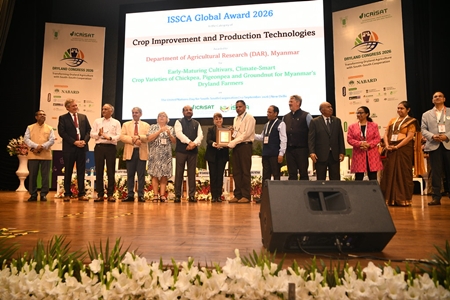
The Dryland Congress 2026 concluded in New Delhi with the adoption of the Delhi Declaration on Drylands, also referred to as the 3D Declaration, creating a shared agenda for improving the resilience, productivity and sustainability of dryland agriculture. The three-day international gathering brought together governments, scientists, agricultural institutions, development organisations, experts and farming-sector stakeholders at a time when dryland regions are facing increasing pressure from climate variability, land degradation, water scarcity and changing markets. The Congress was organised jointly by the Indian Council of Agricultural Research, or ICAR, and the International Crops Research Institute for the Semi-Arid Tropics, or ICRISAT.
The Congress was held in New Delhi from 10 to 12 September 2026 under the theme 'Transforming Dryland Agriculture with South-South Cooperation'. Its conclusion coincided with the United Nations Day for South-South Cooperation, giving the Delhi Declaration a wider international-development context. The Declaration emphasises collaboration, knowledge exchange, innovation and collective action across countries of the Global South.
Drylands are extremely important to global food security. According to information released in connection with the Congress, drylands cover approximately 45 per cent of the world's land surface and are home to more than two billion people. Many residents of these regions are smallholder farmers whose livelihoods are directly exposed to uncertain rainfall, drought, rising temperatures, soil degradation and water stress. Consequently, improving dryland agriculture is not merely an agricultural-production challenge; it is connected with poverty reduction, food security, climate adaptation, rural livelihoods and sustainable development.
Dryland agriculture differs significantly from farming in regions with dependable irrigation and rainfall. Farmers often operate under greater climatic uncertainty and have less room for error. A failed monsoon or prolonged dry spell can sharply reduce crop yields and livestock productivity. Agricultural policy in these regions therefore needs to focus on resilience rather than simply maximising output under ideal conditions.
Science and technology can play a major role in building this resilience. Drought-tolerant crop varieties, improved soil-moisture conservation, efficient irrigation, weather forecasting, climate advisories, remote sensing, better livestock management and digital agricultural services can help farmers manage risk. However, technologies must be adapted to local ecological and socioeconomic conditions. A solution that succeeds in one dryland region may not automatically work in another.
The Congress therefore highlighted the importance of robust data systems and 'living laboratories'. A living-laboratory approach involves testing agricultural solutions under real-world conditions with the participation of farmers, scientists and other stakeholders. Instead of treating farmers only as recipients of technology, such an approach can involve them directly in experimentation, evaluation and adaptation.
South-South cooperation is another central element of the Declaration. Many countries in Asia, Africa and other parts of the Global South face similar challenges involving semi-arid agriculture, water scarcity, small landholdings and climate vulnerability. Knowledge developed in one developing country can therefore be relevant to another. Cooperation may involve sharing crop varieties, agricultural research, water-management techniques, digital tools, institutional models and policy experience.
The Congress also marked 50 years of partnership between ICAR and ICRISAT. ICRISAT is an international agricultural research organisation with particular expertise in dryland and semi-arid agriculture. Its work includes crops and farming systems that are important to populations living in water-stressed regions. The long-running ICAR-ICRISAT partnership demonstrates the importance of international agricultural research cooperation for addressing challenges that cross national boundaries.
Dryland transformation is also closely linked with climate change. Rising temperatures and changing rainfall patterns can increase evapotranspiration, intensify water stress and make crop planning more difficult. Resilient agricultural systems therefore need to combine climate-adapted crops, soil conservation, efficient water use, diversified livelihoods and improved information systems.
For competitive examinations, Dryland Congress 2026 connects geography, agriculture, environment and international relations. Students should understand the characteristics of drylands, South-South cooperation, ICAR, ICRISAT, climate-resilient agriculture and the relationship between water scarcity and food security. The Delhi Declaration on Drylands is particularly relevant for UPSC Prelims and GS-III.
क्या हुआ?
Dryland Congress 2026 का समापन नई दिल्ली में Delhi Declaration on Drylands को अपनाने के साथ हुआ। इसे 3D Declaration भी कहा गया है। इस घोषणा का उद्देश्य शुष्क क्षेत्रों की कृषि को अधिक लचीला, उत्पादक और टिकाऊ बनाने के लिए साझा कार्यसूची विकसित करना है। तीन दिवसीय अंतरराष्ट्रीय सम्मेलन में सरकारों, वैज्ञानिकों, कृषि संस्थानों, विकास संगठनों, विशेषज्ञों और कृषि क्षेत्र से जुड़े प्रतिनिधियों ने भाग लिया। यह आयोजन ऐसे समय में हुआ जब शुष्क क्षेत्रों को जलवायु परिवर्तनशीलता, भूमि क्षरण, जल की कमी और बदलते बाजारों जैसी गंभीर चुनौतियों का सामना करना पड़ रहा है। सम्मेलन का संयुक्त आयोजन भारतीय कृषि अनुसंधान परिषद अर्थात ICAR और International Crops Research Institute for the Semi-Arid Tropics अर्थात ICRISAT ने किया।
सम्मेलन 10 से 12 सितंबर 2026 तक नई दिल्ली में 'Transforming Dryland Agriculture with South-South Cooperation' विषय के अंतर्गत आयोजित किया गया। इसका समापन United Nations Day for South-South Cooperation के अवसर के साथ हुआ। इसलिए Delhi Declaration का महत्व केवल कृषि तक सीमित नहीं है बल्कि यह विकासशील देशों के बीच ज्ञान और तकनीक साझा करने की व्यापक अवधारणा से भी जुड़ा है। घोषणा में सहयोग, ज्ञान आदान-प्रदान, नवाचार और Global South के देशों के बीच सामूहिक कार्रवाई पर बल दिया गया है।
विश्व की खाद्य सुरक्षा में शुष्क क्षेत्रों का अत्यंत महत्वपूर्ण स्थान है। सम्मेलन से संबंधित सरकारी जानकारी के अनुसार शुष्क क्षेत्र विश्व के लगभग 45 प्रतिशत भूभाग में फैले हुए हैं और इनमें दो अरब से अधिक लोग रहते हैं। इनमें बड़ी संख्या छोटे किसानों की है जिनकी आजीविका अनिश्चित वर्षा, सूखा, बढ़ते तापमान, मिट्टी के क्षरण और जल संकट से सीधे प्रभावित होती है। इसलिए शुष्क क्षेत्र की कृषि में सुधार केवल कृषि उत्पादन का प्रश्न नहीं है। इसका संबंध गरीबी उन्मूलन, खाद्य सुरक्षा, जलवायु अनुकूलन, ग्रामीण आजीविका और सतत विकास से भी है।
शुष्क क्षेत्रों की कृषि पर्याप्त सिंचाई और नियमित वर्षा वाले क्षेत्रों से काफी अलग होती है। किसानों को अधिक जलवायु अनिश्चितता का सामना करना पड़ता है। मानसून की विफलता अथवा लंबे सूखे से फसल उत्पादन और पशुधन उत्पादकता में भारी गिरावट आ सकती है। इसलिए इन क्षेत्रों की कृषि नीति का उद्देश्य केवल आदर्श परिस्थितियों में अधिकतम उत्पादन प्राप्त करना नहीं बल्कि ऐसी कृषि व्यवस्था बनाना होना चाहिए जो प्रतिकूल परिस्थितियों का सामना कर सके।
विज्ञान और प्रौद्योगिकी इस लचीलेपन को विकसित करने में महत्वपूर्ण भूमिका निभा सकते हैं। सूखा सहन करने वाली फसल किस्में, मिट्टी की नमी का संरक्षण, कुशल सिंचाई, मौसम पूर्वानुमान, जलवायु परामर्श, दूरसंवेदी तकनीक, बेहतर पशुधन प्रबंधन और डिजिटल कृषि सेवाएँ किसानों को जोखिम कम करने में सहायता कर सकती हैं। लेकिन तकनीकों को स्थानीय पारिस्थितिक और सामाजिक-आर्थिक परिस्थितियों के अनुसार अनुकूलित करना आवश्यक है।
इसी कारण सम्मेलन में मजबूत आँकड़ा प्रणालियों और 'Living Laboratories' के महत्व पर बल दिया गया। Living Laboratory दृष्टिकोण में किसानों, वैज्ञानिकों और अन्य संबंधित पक्षों की भागीदारी से वास्तविक परिस्थितियों में कृषि समाधानों का परीक्षण किया जाता है। इसमें किसान केवल तकनीक प्राप्त करने वाले व्यक्ति नहीं होते बल्कि प्रयोग, मूल्यांकन और स्थानीय अनुकूलन की प्रक्रिया में सक्रिय भागीदार बन सकते हैं।
South-South Cooperation घोषणा का एक अन्य केंद्रीय तत्व है। एशिया, अफ्रीका और Global South के अन्य क्षेत्रों के अनेक देशों में अर्ध-शुष्क कृषि, जल की कमी, छोटी जोत और जलवायु संवेदनशीलता जैसी समान समस्याएँ हैं। इसलिए किसी एक विकासशील देश में विकसित सफल ज्ञान और तकनीक दूसरे देश के लिए भी उपयोगी हो सकती है। सहयोग में फसल किस्मों, कृषि अनुसंधान, जल प्रबंधन तकनीक, डिजिटल उपकरण, संस्थागत मॉडल और नीतिगत अनुभव साझा किए जा सकते हैं।
इस सम्मेलन ने ICAR और ICRISAT की साझेदारी के 50 वर्ष भी चिह्नित किए। ICRISAT एक अंतरराष्ट्रीय कृषि अनुसंधान संगठन है जो शुष्क और अर्ध-शुष्क क्षेत्रों की कृषि पर विशेष रूप से कार्य करता है। ICAR-ICRISAT की दीर्घकालिक साझेदारी यह दर्शाती है कि राष्ट्रीय सीमाओं से परे कृषि चुनौतियों के समाधान के लिए अंतरराष्ट्रीय अनुसंधान सहयोग कितना महत्वपूर्ण है।
शुष्क क्षेत्रों में परिवर्तन जलवायु परिवर्तन से भी सीधे जुड़ा है। बढ़ता तापमान और बदलता वर्षा प्रतिरूप वाष्पोत्सर्जन बढ़ा सकता है, जल संकट को गंभीर बना सकता है और फसल नियोजन को कठिन कर सकता है। इसलिए लचीली कृषि व्यवस्था में जलवायु अनुकूल फसलें, मिट्टी संरक्षण, कुशल जल उपयोग, विविध आजीविका और बेहतर सूचना प्रणाली को एक साथ शामिल करना आवश्यक है।
प्रतियोगी परीक्षाओं के लिए Dryland Congress 2026 भूगोल, कृषि, पर्यावरण और अंतरराष्ट्रीय संबंधों को जोड़ता है। विद्यार्थियों को शुष्क क्षेत्रों की विशेषताएँ, South-South Cooperation, ICAR, ICRISAT, जलवायु अनुकूल कृषि तथा जल संकट और खाद्य सुरक्षा के संबंध को समझना चाहिए। Delhi Declaration on Drylands UPSC Prelims और GS-III के लिए विशेष रूप से महत्वपूर्ण है।
Key Facts
• Dryland Congress 2026 was held in New Delhi from 10 to 12 September 2026.
• The Congress concluded with adoption of the Delhi Declaration on Drylands.
• The Declaration is also referred to as the 3D Declaration.
• The Congress theme was 'Transforming Dryland Agriculture with South-South Cooperation'.
• ICAR and ICRISAT jointly organised the Congress.
• Drylands cover approximately 45 per cent of the world's land surface.
• More than two billion people live in dryland regions.
• The Congress marked 50 years of ICAR-ICRISAT partnership.
• The concluding day coincided with the United Nations Day for South-South Cooperation.
• The Declaration emphasises science, innovation, knowledge exchange and partnerships.
• Robust data systems and living laboratories were highlighted as important tools for resilient dryland agri-food systems.
मुख्य तथ्य
• Dryland Congress 2026 का आयोजन 10 से 12 सितंबर 2026 तक नई दिल्ली में हुआ।
• सम्मेलन का समापन Delhi Declaration on Drylands को अपनाने के साथ हुआ।
• घोषणा को 3D Declaration भी कहा गया है।
• सम्मेलन का विषय 'Transforming Dryland Agriculture with South-South Cooperation' था।
• ICAR और ICRISAT ने संयुक्त रूप से सम्मेलन आयोजित किया।
• शुष्क क्षेत्र विश्व के लगभग 45 प्रतिशत भूभाग में फैले हैं।
• शुष्क क्षेत्रों में दो अरब से अधिक लोग रहते हैं।
• सम्मेलन ने ICAR-ICRISAT साझेदारी के 50 वर्ष भी चिह्नित किए।
• सम्मेलन का अंतिम दिन United Nations Day for South-South Cooperation के साथ पड़ा।
• घोषणा विज्ञान, नवाचार, ज्ञान आदान-प्रदान और साझेदारी पर बल देती है।
• लचीली शुष्क कृषि व्यवस्था के लिए मजबूत आँकड़ा प्रणाली और Living Laboratories के महत्व पर बल दिया गया।
Background
Drylands are regions where water availability is limited relative to potential water loss through evaporation and plant use. Agriculture in such areas is particularly vulnerable to rainfall variability, drought, soil degradation and climate change. ICAR and ICRISAT have worked together for decades on technologies and farming systems suited to semi-arid environments.
पृष्ठभूमि
शुष्क क्षेत्र वे क्षेत्र हैं जहाँ उपलब्ध जल की मात्रा संभावित वाष्पीकरण और वनस्पति द्वारा जल उपयोग की तुलना में सीमित होती है। ऐसे क्षेत्रों की कृषि वर्षा की अनिश्चितता, सूखा, मिट्टी क्षरण और जलवायु परिवर्तन के प्रति विशेष रूप से संवेदनशील होती है। ICAR और ICRISAT कई दशकों से अर्ध-शुष्क क्षेत्रों के अनुकूल कृषि तकनीकों पर सहयोग कर रहे हैं।
Why It Matters
With climate change increasing uncertainty in rainfall and water availability, improving dryland agriculture is essential for food security and rural livelihoods. The Declaration is important because it promotes cooperation among countries facing similar climatic and agricultural challenges.
यह क्यों महत्वपूर्ण है?
जलवायु परिवर्तन के कारण वर्षा और जल उपलब्धता की अनिश्चितता बढ़ रही है। इसलिए खाद्य सुरक्षा और ग्रामीण आजीविका के लिए शुष्क कृषि को मजबूत करना आवश्यक है। यह घोषणा समान जलवायु और कृषि चुनौतियों का सामना करने वाले देशों के बीच सहयोग को बढ़ावा देती है।
Exam Connection
Very important for UPSC GS-I Geography, GS-II International Relations and GS-III Agriculture and Environment. Revise ICAR, ICRISAT, drylands, South-South Cooperation, climate-resilient agriculture, land degradation and water conservation.
परीक्षा से संबंध
UPSC GS-I भूगोल, GS-II अंतरराष्ट्रीय संबंध और GS-III कृषि एवं पर्यावरण के लिए अत्यंत महत्वपूर्ण। ICAR, ICRISAT, शुष्क क्षेत्र, South-South Cooperation, जलवायु अनुकूल कृषि, भूमि क्षरण और जल संरक्षण का अध्ययन करें।

_20260912113920_448fc1.jpeg)