
Reading time: Approximately 10 minutes | Category: Learning & AI
Studying longer is not always the same as learning better. This guide shows how competitive-exam aspirants can combine proven learning techniques with careful, practical use of AI.
The problem is not always a lack of effort
Imagine studying Indian polity for four hours, closing the book and discovering that you cannot explain the difference between a Money Bill and an ordinary bill. You worked hard, but the learning did not survive without the page in front of you. This gap between time spent and knowledge retained is one of the biggest challenges in competitive examination preparation. AI can help students practise, diagnose mistakes and receive explanations, but it cannot replace understanding or independent judgement.
What research actually says about learning
A major 2013 review by Dunlosky and colleagues assessed ten commonly used learning techniques. Practice testing and distributed practice received high utility ratings; highlighting and rereading alone were less consistently useful. This does not mean notes or textbooks are useless. It means reading should be followed by retrieval and repeated practice. Source: https://doi.org/10.1177/1529100612453266
Read the learning-science research
1. Start with the syllabus, not the chatbot
Download the official syllabus and examine past papers for your specific examination. Separate topics into three groups: confident, partially understood and unfamiliar. Make a realistic weekly plan with time for revision and tests. AI can help turn a syllabus into a checklist, but verify every suggested topic against the official notice. A UPSC aspirant and an SSC CGL aspirant need different depth, question types and revision cycles.
Visit the official UPSC website Visit the official SSC website
2. Replace passive reading with active recall
After a 25–40 minute learning session, close the source and write five questions from memory. For example: What is the role of the Finance Commission? Which constitutional article provides for it? How does it differ from the GST Council? Check your answers against reliable materials and record what you missed. You can ask AI to quiz you one question at a time, but ask it to wait for your answer before explaining.
3. Use spaced revision, not last-minute panic
Try reviewing a new topic later the same day, then after approximately two days, one week and three weeks. These are illustrative intervals, not a scientifically universal schedule. Shorten the interval when you forget and lengthen it when recall becomes easy. A simple spreadsheet with topic, last review, next review and accuracy is enough to begin.
4. Make AI explain your mistakes
An effective AI prompt is: I am preparing for SSC CGL. Ask me one medium-difficulty question on percentages. Wait for my answer. If I am wrong, identify the precise error, show a correct solution, and give me one similar question. Do not reveal the answer early. This creates a feedback loop rather than a stream of ready-made answers. Verify numerical solutions independently when stakes are high.
5. Treat AI-generated facts as unverified until checked
Language models can produce convincing but incorrect dates, legal provisions, citations and current-affairs claims. For government schemes, recruitment eligibility, examination schedules and answer keys, use the relevant official authority as the final source. Keep a source log with the page URL and the date checked. Never submit private identification documents, passwords or personal account details to an untrusted study tool.
6. Build a subject-specific workflow
For mathematics: solve without help, inspect the mistake, then retry a related problem. For English: practise reading comprehension, error correction and vocabulary in context. For general studies: connect facts to causes, consequences, maps and timelines. For current affairs: identify the issuing ministry, policy objective, official announcement and exam relevance. For descriptive answers: draft independently, seek feedback on structure, then rewrite.
7. A realistic six-hour study day
Here is an example, not a rule: 90 minutes for a difficult concept; 60 minutes for related problems; 45 minutes for retrieval of earlier topics; 60 minutes for a second subject; 45 minutes for current affairs or reading; and 60 minutes for a timed mini-test and error analysis. Take breaks between blocks. A student with two hours daily can preserve the same sequence at a smaller scale. Consistency and quality matter more than copying someone else’s timetable.
8. The error notebook that changes preparation
Maintain four columns: question or topic, what I answered, why I was wrong, and what I will do differently. Distinguish concept gaps from careless calculation, misunderstood wording and time pressure. Every weekend, revisit recurring error categories. A mock score becomes useful only when it changes what you study next.
9. What not to outsource to AI
Do not let AI write every answer before you attempt it. Do not memorize unsourced generated current-affairs summaries. Do not trust invented book quotations or citations. Do not substitute a chatbot conversation for a timed mock test. Most importantly, do not measure progress by the number of prompts you typed. Measure it by what you can solve, explain and recall without assistance.
10. A seven-day experiment you can try
Day 1: choose one weak topic and take a baseline quiz. Day 2: study the concept and practise recall. Day 3: solve mixed questions and classify errors. Day 4: revisit without notes. Day 5: ask AI for targeted explanations of unresolved doubts. Day 6: attempt a timed test under exam conditions. Day 7: compare accuracy, time and error types with Day 1. If performance improves, continue; if not, adjust the method rather than simply adding study hours.
Frequently asked questions
Can AI replace coaching? No single tool replaces quality instruction, reliable source material, feedback and sustained practice. Is AI useful for beginners? Yes, especially for simplifying unfamiliar ideas, provided important facts are verified. How many hours should I study? The answer depends on your baseline, exam, commitments and stamina. Can I use AI for current affairs? Yes for explanations and revision questions, but confirm every important fact using credible, preferably primary, sources.
Final takeaway
The strongest preparation system combines clear goals, reliable materials, retrieval practice, spaced revision, timed testing and honest analysis of mistakes. AI is most useful as a patient practice partner and explanation assistant, not an unquestioned authority. Start with one topic today, test yourself tomorrow and keep improving the process.
Sources and editorial note
Primary research: Dunlosky et al., Psychological Science in the Public Interest (2013). Guidance on helpful content: Google Search Central. The suggested study routines are practical examples, not guaranteed outcomes. Prepared for Vitorr Classes with AI assistance; review before publication.
 History Geography General Science Economy
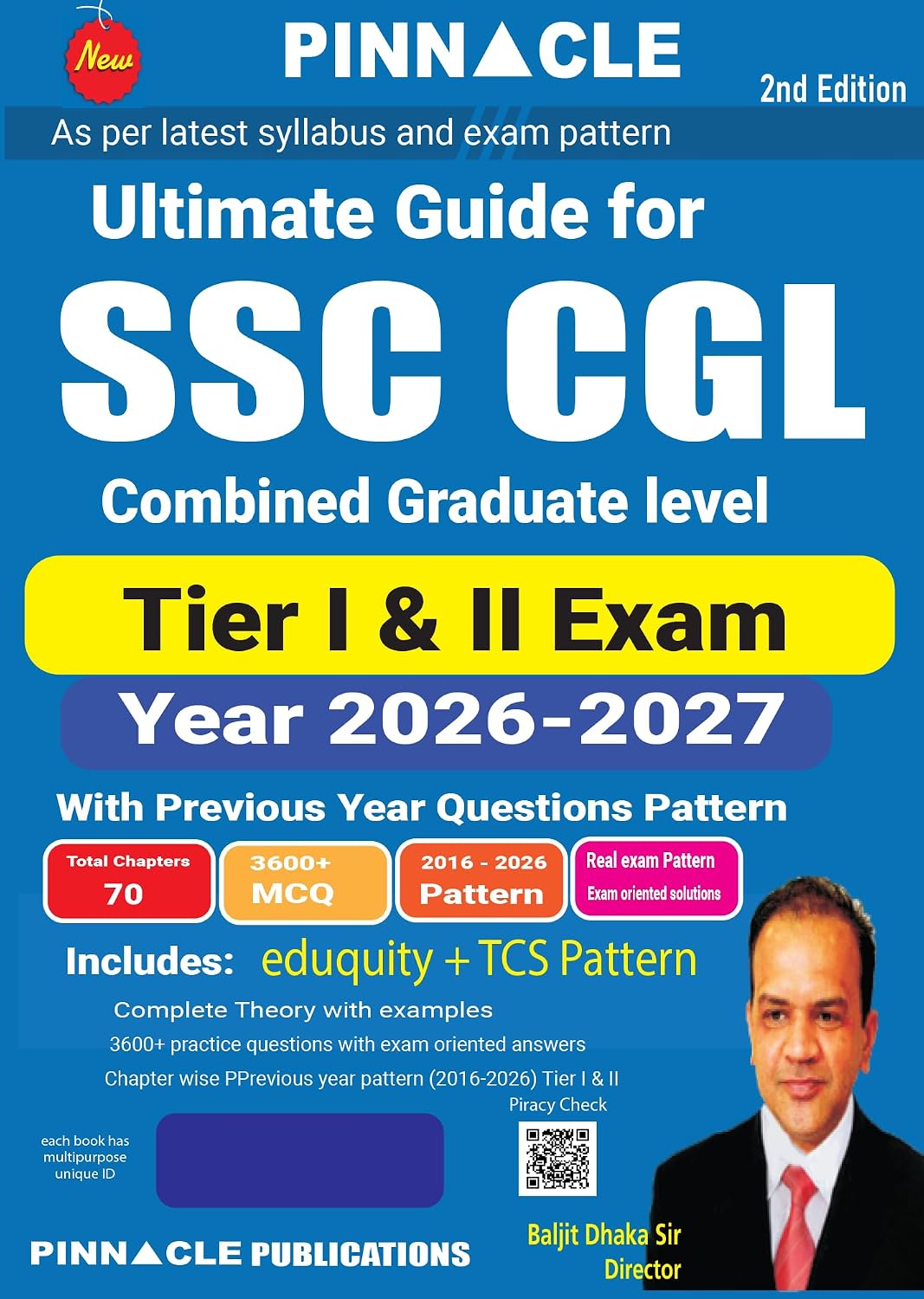 SSC CGL 2026 Ultimate Chapterwise