Updated 27 October 2026. A major new solar-and-battery proposal in Egypt shows why the next stage of clean energy depends as much on storage and finance as on sunshine.
A desert project with global significance
In southern Egypt, a proposed solar power development is drawing attention for a reason that goes beyond the number of panels it will install. The Dandara project in Nagaa Hammadi, Qena province, combines large-scale electricity generation with battery storage, international development financing and a national strategy to reduce dependence on imported natural gas. On 26 October 2026, Egypt announced a preliminary financing agreement for the project. This is a significant milestone, but it is not the same as a completed power station or a final commissioning announcement.
What exactly has been announced?
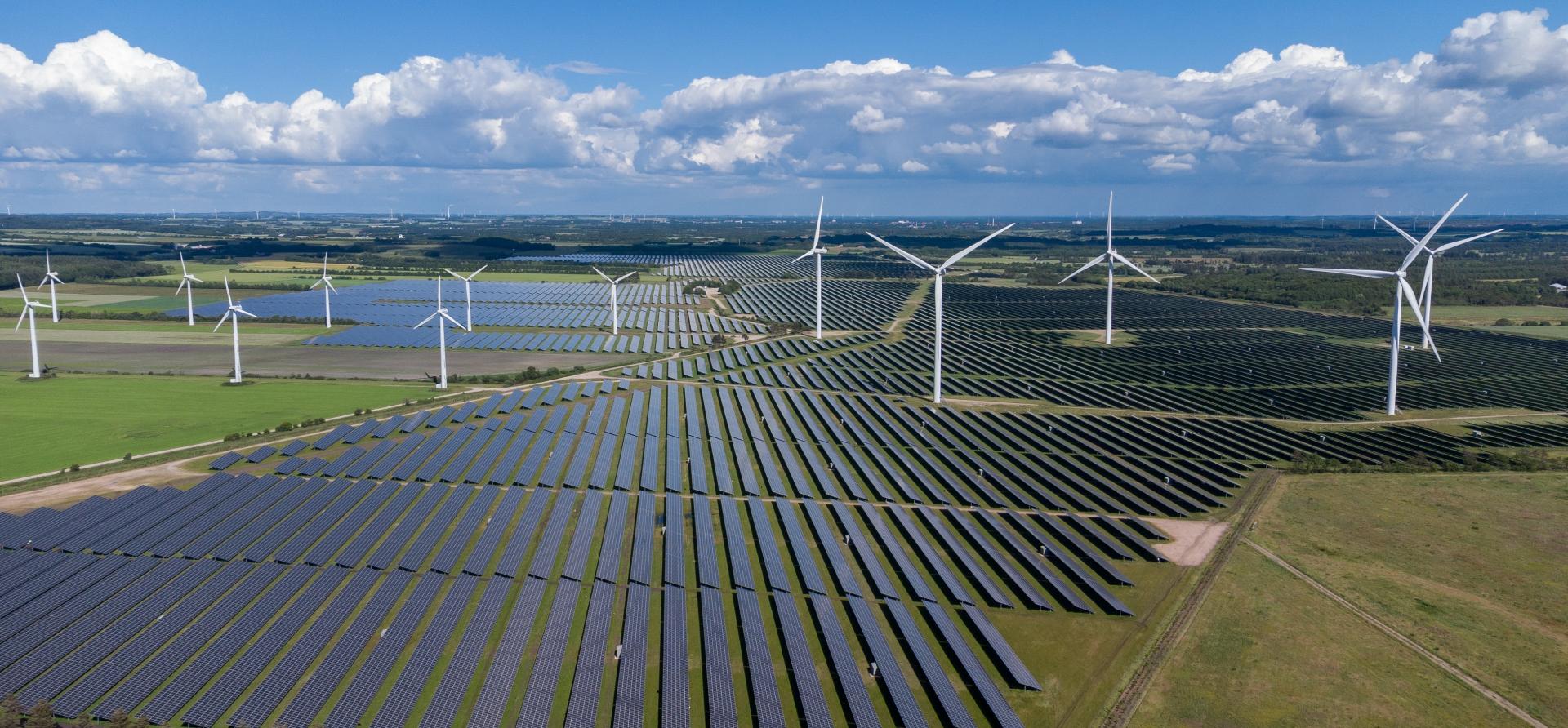
According to Reuters, the proposed Dandara project has an estimated value of $650 million. It is designed for 1 gigawatt (GW) of solar generation capacity and 200 megawatt-hours (MWh) of battery storage. Norway's Scatec is involved in the project. The European Investment Bank, European Bank for Reconstruction and Development, and African Development Bank are participating in financing arrangements, while the National Bank of Egypt is expected to take an equity stake in the project company. The plan calls for two phases, each with 500 megawatts of solar capacity and 100 MWh of storage. These are announced plans, not operating figures.
Why 1 gigawatt is a big number
A gigawatt is 1,000 megawatts, or one billion watts of rated power. That sounds like enough electricity to power a vast number of homes, but a solar project's nameplate capacity does not mean it delivers its full output every hour. Solar generation varies with sunlight, weather, panel orientation, maintenance and the electricity network. The actual annual energy produced depends on the plant's capacity factor. For illustration only, if a 1 GW facility operated at an average 25% capacity factor, its annual output would be about 2.19 terawatt-hours. This is an example calculation, not an official forecast for Dandara.
The crucial difference between MW and MWh
Power and energy are not interchangeable. Megawatts describe the rate at which electricity can be generated or delivered at a moment in time. Megawatt-hours describe a quantity of energy. A battery rated at 200 MWh could, in theory, provide 100 MW for two hours or 200 MW for one hour, assuming suitable discharge power, usable capacity and idealized conditions. The announced 200 MWh figure does not, by itself, tell us the battery's maximum discharge power, operating schedule or round-trip efficiency. This distinction matters because headlines can make a storage system sound larger or more flexible than its engineering specifications establish.
Why solar needs storage and a reliable grid
Solar plants often produce most electricity during daylight, while household and industrial demand may extend well into the evening. Batteries can shift some energy from hours of strong sunshine to periods when demand is higher or clouds reduce output. They can also help with grid balancing, depending on system design. Yet storage is not a substitute for transmission lines, grid upgrades, dispatch planning or backup capacity during prolonged low-generation periods. A successful renewable-energy project is therefore an electricity-system project, not simply a construction project with panels.
Egypt’s natural gas dilemma
Egypt's interest in renewable power is also an economic question. Generating more domestic electricity from sunlight can reduce the amount of natural gas burned in power stations and potentially ease pressure on fuel imports. The scale of any savings depends on actual solar generation, the timing of output, gas prices and grid operations. In its October announcement, Egypt linked its renewable-energy expansion to reducing its natural gas import bill. It also stated a goal for renewables to account for 42% of electricity generation by 2030. A target is not the same as an achieved share, and reaching it will require many projects and supporting investments.
Why development banks are involved
Big infrastructure projects need long-term capital, predictable contracts and ways to manage construction and market risks. Development banks can contribute financing, due diligence and environmental and social safeguards. Their participation can also help attract other investors, although it does not guarantee that a project will finish on schedule or within budget. The Dandara announcement is noteworthy because it brings together European and African financing institutions and an Egyptian banking partner. It illustrates how the energy transition increasingly depends on cooperation among governments, utilities, lenders and private developers.
The two-phase approach
The proposed construction plan divides the project into two equal phases: 500 MW of solar generation and 100 MWh of battery storage in each. Phased construction can allow developers to coordinate equipment delivery, grid connection, financing and commissioning. But a phased plan also introduces milestones that must be monitored separately. Readers should look for evidence of financial close, construction start, grid-connection approval, commissioning and commercial operation before describing the facility as operational. The October 26 report establishes a preliminary financing agreement, not those later steps.
A wider African energy story
Across Africa, falling solar-equipment costs and growing electricity demand are creating new opportunities for solar installations. Reuters reported earlier in 2026 that Africa added a record 4.5 GW of photovoltaic capacity in 2025, citing the Global Solar Council. That figure describes additions across the continent, not the Dandara project. Egypt's new plan fits into a broader effort to expand generation while making power systems more resilient. Nevertheless, the continent is not one uniform market: electricity access, credit conditions, transmission networks and regulatory frameworks vary enormously by country.
What this means for India
India faces its own challenge of integrating rising solar and wind capacity into a grid that must serve growing industrial and household demand. The Egyptian example offers a useful lesson: evaluate renewable projects by delivered energy, storage duration, network readiness and financing quality, rather than headline capacity alone. India also has opportunities in engineering services, power electronics, battery manufacturing, grid software and project finance. But the specific economics of Dandara cannot simply be copied to India; sunlight, land costs, tariffs, policy incentives and grid conditions differ.
The unanswered questions
Several important details remain to be confirmed publicly in the reporting used for this article: the precise project timetable, final financial terms, solar generation forecast, battery power rating, grid interconnection arrangements and eventual electricity price. Without those details, it would be misleading to calculate definitive household coverage, emissions savings or financial returns. Responsible reporting should identify these gaps rather than fill them with impressive but unsupported numbers.
Why readers should care
The global energy transition is becoming less about a contest between fossil fuels and renewable technologies in isolation and more about the design of reliable, affordable systems. Egypt's Dandara proposal shows how solar generation, battery storage and international finance can be planned together. If executed successfully, projects of this kind may help diversify electricity supply and reduce exposure to fuel-price volatility. The outcome will depend on what happens after the announcement: financing completion, construction, grid integration and actual performance.
Frequently asked questions
Where is the Dandara solar project planned?
In Nagaa Hammadi in Qena province, southern Egypt.
How large is the planned solar facility?
The announced plan calls for 1 GW of solar capacity and 200 MWh of battery storage.
Is the project already operating?
No. The October 26 announcement concerns a preliminary financing agreement; operation has not been established by this source.
What is the difference between 1 GW and 200 MWh?
1 GW is a measure of rated power; 200 MWh is a quantity of stored energy.
What is Egypt’s renewable electricity target?
Egypt has stated a goal of 42% of electricity generation from renewables by 2030.
Sources and further reading
This article is an original educational explainer based on the following reporting. Figures are attributed to their sources and projections are labelled as such.
 Primebook Storage 14 1 Inch MediaTek Keyboard