Updated 27 October 2026. A new South Korean economic report shows how artificial intelligence is changing international trade. But the data also reveal why a booming technology sector does not automatically mean stronger household spending.
The Economy Behind Every AI Answer
Every question asked of a large artificial intelligence system depends on physical infrastructure. Data centres need processors, memory, networking equipment and electricity. Although software attracts most of the attention, the semiconductor supply chain determines how quickly new systems can be built. South Korea is a revealing example: its export-oriented economy has benefited from demand for advanced memory chips and the machinery used to manufacture them. The story is not simply about one successful technology sector. It is about how a worldwide investment cycle can influence national growth, trade balances, industrial policy and household finances.
What the October 2026 Figures Actually Show
Advance Bank of Korea estimates released on 27 October show South Korean gross domestic product expanding 1.0% quarter on quarter in July–September 2026, compared with 0.6% in the preceding quarter. Economists surveyed by Reuters had expected 0.7%. Exports increased 2.3% and facilities investment rose 4.1%, supported by semiconductors and related equipment. A central-bank official estimated that semiconductors accounted for roughly half of economic growth. These are preliminary national-account estimates, and later revisions are possible. The figures show momentum in output, not that every company or household enjoyed comparable gains.
Why AI Requires So Many Chips
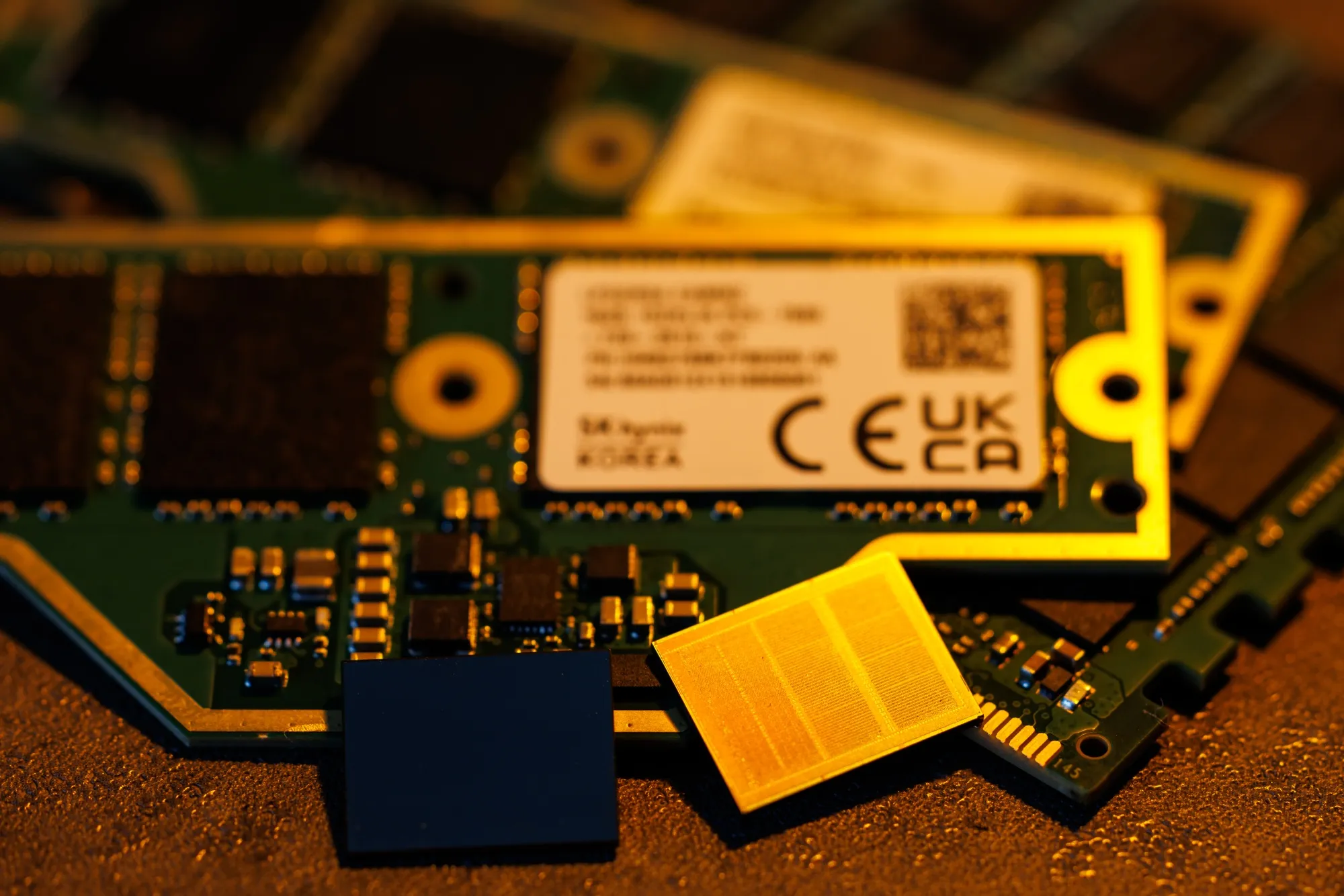
Training a large AI model requires repeated calculations across enormous datasets. Serving millions of user requests also requires computing capacity. Accelerators perform much of the mathematical work, but they cannot operate effectively without fast memory and communications. High-bandwidth memory, or HBM, places memory components in a compact arrangement to move information quickly while managing power and space constraints. This creates demand not only for logic processors but also for advanced memory, packaging, testing equipment and specialist materials. The commercial opportunity therefore extends across a complex industrial network rather than one product category.
South Korea’s Place in the Semiconductor Supply Chain
South Korea has developed deep expertise in memory-chip manufacturing through companies including Samsung Electronics and SK hynix. The broader semiconductor ecosystem also involves equipment manufacturers, chemicals, research laboratories, skilled technicians and international customers. Taiwan is central to advanced contract chip fabrication, while the United States plays major roles in chip design and manufacturing equipment. Japan and European countries contribute important materials and tools. This geographic specialization makes the industry highly productive, but also vulnerable to export controls, natural disasters, trade disputes and logistical interruptions.
Why Export Growth Can Outpace Household Prosperity
The same report that showed strong South Korean growth also recorded a 0.2% decline in private consumption during the third quarter. That contrast matters. Chip factories are capital-intensive: a relatively small number of very expensive facilities can produce large export revenues without creating equivalent immediate gains in retail spending. Shareholders, engineers and suppliers may benefit before wages rise more broadly. Consumers also face borrowing costs and other financial pressures. GDP growth is a measure of aggregate production, not a direct measure of how comfortably every resident is living.
The Difference Between a Boom and a Bubble
An investment boom can be justified when future demand supports the spending. It becomes dangerous when expectations rise much faster than eventual revenues or when companies borrow heavily against uncertain growth. AI infrastructure has genuine uses, but no one knows precisely how quickly customers will pay enough to justify every new data centre and chip order. Semiconductor markets have historically experienced cycles of shortages, expansion and oversupply. Investors should distinguish between strong current orders, sustainable end-user demand and optimistic projections. A quarter of robust exports does not establish that the present cycle will continue indefinitely.
Why Governments Care About Semiconductor Sovereignty
Advanced chips are used in consumer electronics, hospitals, telecommunications, scientific laboratories and defence systems. Governments therefore see semiconductor manufacturing as a matter of economic resilience and national security. Subsidies and industrial incentives can encourage local factories, yet manufacturing capability cannot be created overnight. It requires reliable electricity, clean water, precision engineering, intellectual property, skilled workers and dependable suppliers. Policies must also balance strategic goals with the cost of public support. Building a factory is only one step toward a competitive ecosystem.
What This Means for India
India has opportunities in chip design, electronics manufacturing, assembly, testing, packaging and the infrastructure that supports these industries. The country also has a large pool of engineering talent and growing demand for digital services. But opportunities should not be confused with guaranteed outcomes. Moving into sophisticated manufacturing requires sustained investment, process discipline, supplier development and a workforce trained for highly specialized roles. India can benefit from diversified supply chains while still facing intense competition for capital, technology and customers. A realistic strategy should emphasize capability building and measurable outcomes rather than slogans alone.
The Jobs That Could Grow Around the Industry
Semiconductor expansion can support careers in electrical engineering, materials science, process engineering, robotics, quality assurance, embedded software, equipment maintenance and supply-chain analytics. Data centres also need cooling specialists, power engineers and cybersecurity professionals. Students do not all need to become chip designers to participate. A strong foundation in mathematics, physics, programming, statistics and problem-solving is useful across many of these roles. Career planning should be based on actual vacancies and required qualifications, because headlines about investment do not automatically translate into immediate local hiring.
Energy, Water and the Physical Limits of Growth
Semiconductor fabrication and AI computing both depend on dependable physical infrastructure. Chip plants require extremely clean manufacturing environments and large quantities of carefully treated water; data centres require electricity and cooling. Rapid expansion can strain power grids, local resources and public infrastructure if planning is inadequate. At the same time, more efficient hardware and better cooling can reduce resource use per computation. Policymakers should evaluate total demand, energy sources, water recycling, local environmental effects and community benefits, not simply announce investment totals.
What Could Change the Outlook in 2027
Several developments could alter the industry’s trajectory: weaker spending by cloud companies, improved chip efficiency, new export restrictions, supply disruptions, interest-rate changes or a shift in the mix of AI workloads. Conversely, sustained commercial adoption could support continued demand for processors and memory. The correct approach is to monitor new orders, company earnings, capital spending, electricity availability and household indicators together. Forecasts are conditional scenarios rather than facts about the future.
The Bigger Lesson: Technology Growth Is Uneven
South Korea's third-quarter results illustrate a wider economic lesson. A technological breakthrough can produce extraordinary growth in one export industry while other parts of the economy remain subdued. The benefits depend on competition, labour markets, investment choices, education and public policy. For students and readers, understanding the semiconductor supply chain is a way to understand globalization itself: a single AI service may depend on ideas, materials, machinery and workers spread across several continents. The future of AI will be shaped as much by factories and infrastructure as by software.
Frequently Asked Questions
Did South Korea’s economy grow by 1% in a year?
No. The 1.0% figure refers to quarter-on-quarter GDP growth in the third quarter of 2026, based on advance estimates.
Why are memory chips important for artificial intelligence?
AI systems move and process enormous quantities of information. Fast memory helps processors access that information efficiently.
Does semiconductor growth mean all South Koreans are better off?
Not necessarily. Private consumption declined during the quarter even as exports and investment grew.
Can India become part of the global chip industry?
India can expand its role in design, manufacturing, assembly and testing, but sustained investment, skills and reliable infrastructure are essential.
Will AI chip demand keep increasing?
It may, but demand depends on commercial adoption, efficiency gains, investment budgets and economic conditions. Future growth is uncertain.
Sources and Further Reading
Primary figures are drawn from Bank of Korea advance estimates as reported by Reuters on 27 October 2026. For future revisions, consult the Bank of Korea directly.
Editorial note: This article is educational analysis, not investment advice. Economic figures are preliminary and may be revised.
 History Geography General Science Economy
 Oxford Student Atlas India Competitive