What Happened
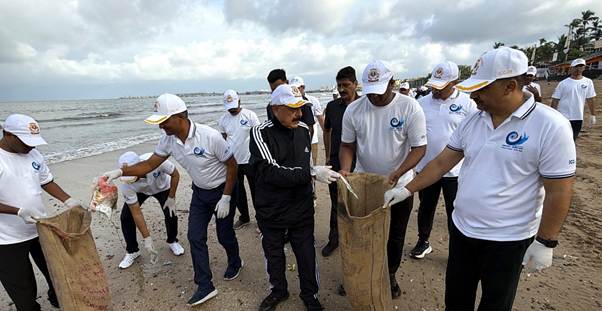
India has expanded its nationwide coastal conservation campaign, Swachh Sagar Surakshit Sagar, with the 2026 edition being conducted from 12 September to 19 September across coastal regions of the country. On 18 September 2026, a major coastal clean-up programme was organised at Juhu Beach in Mumbai on the eve of International Coastal Cleanup Day. The programme brought together government institutions, citizens, students, volunteers, scientific organisations and other stakeholders to highlight the growing challenge of marine litter and the need to protect India's coastal and ocean ecosystems.
The Swachh Sagar Surakshit Sagar campaign was originally launched in 2022 during the celebrations marking 75 years of India's independence. It began as a 75-day inter-ministerial campaign but has subsequently developed into an annual nationwide initiative associated with International Coastal Cleanup Day. The Ministry of Earth Sciences describes the initiative as a whole-of-government and whole-of-society effort aimed at creating cleaner coasts and safer seas.
International Coastal Cleanup Day is observed on the third Saturday of September. The observance encourages communities around the world to participate in the removal of waste from beaches, coastlines and other marine environments while building public awareness about marine pollution. In 2026, India's Swachh Sagar Surakshit Sagar campaign has been organised from 12 to 19 September, combining physical clean-up activities with public engagement and environmental awareness programmes.
At the Juhu Beach programme, participants took a mass Ocean Pledge and subsequently participated in the removal of plastic and other waste from the shoreline. The programme was led by Union Minister of State for Earth Sciences Dr Jitendra Singh. Senior officials of the Ministry of Earth Sciences and its institutions, volunteers and representatives from different sections of society also participated.
The campaign involves coastal States and Union Territories, State Governments, Central Government departments and agencies, the Indian Coast Guard, Indian Navy, students, educational institutions, non-governmental organisations, volunteer organisations and coastal communities. This broad participation reflects the fact that marine pollution cannot be addressed by a single ministry or institution. Waste generated inland can travel through drains and rivers before reaching coastal waters, while fishing, tourism, shipping and coastal settlements can also contribute to marine litter if waste is not properly managed.
Plastic pollution is one of the most visible forms of marine litter. Plastic products can persist in the environment for long periods and may fragment into smaller particles rather than completely disappearing. Marine animals can become entangled in discarded material or ingest plastic fragments. Marine litter can also affect beaches, tourism, fisheries and coastal habitats. Preventing waste from entering the marine environment is therefore generally more effective than attempting to remove it after it has dispersed through the ocean.
The 2026 campaign is also being connected with India's broader maritime and Blue Economy objectives. The Blue Economy broadly refers to the sustainable use of ocean and coastal resources for economic development, livelihoods and employment while maintaining the health of marine ecosystems. Oceans can support fisheries, maritime transport, tourism, renewable energy, biotechnology, mineral resources and other economic activities, but long-term benefits depend on maintaining ecological sustainability.
India has an extensive maritime domain. According to the Ministry of Earth Sciences, India's coastline is about 11,098 kilometres long and extends across its coastal States and Union Territories. This coastline supports diverse ecosystems, communities and economic activities. Coastal areas contain ecologically important habitats and are closely linked with fisheries, ports, tourism, transportation and livelihoods. Their protection therefore has environmental as well as economic significance.
The campaign has also been linked with the Deep Ocean Mission, through which India is strengthening its scientific and technological capabilities for deep-ocean exploration. The ocean contains important biological and mineral resources, but exploration and economic utilisation need to be accompanied by scientific understanding and environmental safeguards. The Ministry has therefore emphasised that India's ocean resources and marine ecosystems must be considered together rather than as separate objectives.
The Deep Ocean Mission is an important science and technology initiative associated with India's efforts to understand and explore the deep ocean. Deep-sea research can contribute to knowledge about marine biodiversity, ocean processes, mineral resources and other aspects of the ocean environment. For competitive examinations, students should connect the Deep Ocean Mission with the Ministry of Earth Sciences and India's wider Blue Economy strategy.
A particularly important aspect of Swachh Sagar Surakshit Sagar is citizen participation. The Ministry of Earth Sciences is supporting the campaign through scientific and public-outreach activities related to marine litter and coastal environmental protection. Public participation is also being strengthened through the Sagar Prahari platform, which enables engagement with the campaign and supports documentation of marine litter.
The use of citizen participation for environmental monitoring is increasingly important. Government agencies and scientific institutions cannot continuously observe every part of India's extensive coastline. Local communities, students and volunteers can contribute observations, document pollution and build awareness. Such participation does not replace scientific monitoring, but it can complement institutional efforts and help expand the geographical reach of environmental initiatives.
Coastal pollution also demonstrates the interconnected nature of terrestrial and marine ecosystems. A plastic item discarded far from the coast may enter a drainage channel, move into a river and eventually reach the sea. River-borne waste can therefore become marine pollution. Effective coastal conservation consequently requires better waste management, reduction of unnecessary plastic use, public awareness, responsible tourism and improved management of waste generated by coastal economic activities.
Healthy marine ecosystems are also closely related to climate resilience. Coastal ecosystems can provide habitats for biodiversity and support livelihoods, while some ecosystems such as mangroves can contribute to shoreline protection and carbon storage. Pollution can place additional stress on ecosystems that may already face pressures from coastal development, changing ocean conditions and extreme weather events.
The campaign therefore has relevance beyond beach cleanliness. It connects environmental conservation, waste management, public participation, marine science and sustainable economic development. The transition of Swachh Sagar Surakshit Sagar from a 75-day campaign in 2022 to a recurring nationwide initiative illustrates an effort to convert periodic clean-up activities into sustained public engagement with India's coastal environment.
For competitive-examination students, the 2026 campaign is particularly useful because it connects several important concepts. Swachh Sagar Surakshit Sagar relates to marine pollution and citizen participation; International Coastal Cleanup Day is observed on the third Saturday of September; the Ministry of Earth Sciences is an important institution connected with the initiative; Sagar Prahari supports citizen engagement and documentation of marine litter; and the campaign can be studied alongside the Deep Ocean Mission and the Blue Economy.
The larger lesson is that economic utilisation of ocean resources and protection of marine ecosystems are interdependent. Fisheries, tourism, maritime activities, scientific exploration and other components of the Blue Economy depend on healthy marine systems. Cleaner beaches and reduced marine litter are therefore not only aesthetic objectives but components of sustainable ocean governance.
क्या हुआ?
भारत ने अपने राष्ट्रव्यापी तटीय संरक्षण अभियान 'स्वच्छ सागर सुरक्षित सागर' का विस्तार करते हुए 2026 संस्करण को 12 सितंबर से 19 सितंबर तक देश के विभिन्न तटीय क्षेत्रों में आयोजित किया है। 18 सितंबर 2026 को अंतरराष्ट्रीय तटीय सफाई दिवस की पूर्व संध्या पर मुंबई के जुहू समुद्र तट पर एक प्रमुख तटीय सफाई कार्यक्रम आयोजित किया गया। इस कार्यक्रम में सरकारी संस्थाओं, नागरिकों, विद्यार्थियों, स्वयंसेवकों, वैज्ञानिक संगठनों और अन्य हितधारकों ने भाग लिया। इसका उद्देश्य समुद्री कचरे की बढ़ती समस्या के प्रति जागरूकता बढ़ाना और भारत के तटीय तथा समुद्री पारिस्थितिकी तंत्र की रक्षा की आवश्यकता को रेखांकित करना था।
स्वच्छ सागर सुरक्षित सागर अभियान की शुरुआत वर्ष 2022 में भारत की स्वतंत्रता के 75 वर्ष पूरे होने के अवसर पर की गई थी। प्रारंभ में इसे 75 दिनों के अंतर-मंत्रालयी अभियान के रूप में शुरू किया गया था। बाद में यह अंतरराष्ट्रीय तटीय सफाई दिवस से जुड़ी एक वार्षिक राष्ट्रव्यापी पहल के रूप में विकसित हुआ। पृथ्वी विज्ञान मंत्रालय ने इसे स्वच्छ तटों और सुरक्षित समुद्रों के लिए सरकार तथा समाज की व्यापक भागीदारी वाला अभियान बताया है।
अंतरराष्ट्रीय तटीय सफाई दिवस सितंबर के तीसरे शनिवार को मनाया जाता है। इसका उद्देश्य दुनिया भर के समुदायों को समुद्र तटों और तटीय क्षेत्रों से कचरा हटाने के लिए प्रोत्साहित करना तथा समुद्री प्रदूषण के प्रति जन-जागरूकता बढ़ाना है। वर्ष 2026 में भारत का स्वच्छ सागर सुरक्षित सागर अभियान 12 से 19 सितंबर तक आयोजित किया गया है, जिसमें वास्तविक सफाई गतिविधियों के साथ जनभागीदारी और पर्यावरण जागरूकता कार्यक्रम भी शामिल हैं।
जुहू समुद्र तट पर आयोजित कार्यक्रम में प्रतिभागियों ने सामूहिक Ocean Pledge लिया और इसके बाद तट से प्लास्टिक तथा अन्य प्रकार के कचरे को हटाने की गतिविधि में भाग लिया। कार्यक्रम का नेतृत्व केंद्रीय पृथ्वी विज्ञान राज्य मंत्री डॉ. जितेंद्र सिंह ने किया। पृथ्वी विज्ञान मंत्रालय और उससे संबंधित संस्थानों के वरिष्ठ अधिकारियों, स्वयंसेवकों तथा समाज के विभिन्न वर्गों के प्रतिनिधियों ने भी इसमें भाग लिया।
इस अभियान में तटीय राज्य और केंद्रशासित प्रदेश, राज्य सरकारें, केंद्र सरकार के विभाग और एजेंसियाँ, भारतीय तटरक्षक बल, भारतीय नौसेना, विद्यार्थी, शैक्षणिक संस्थान, गैर-सरकारी संगठन, स्वयंसेवी संस्थाएँ और तटीय समुदाय शामिल हैं। इतनी व्यापक भागीदारी इस तथ्य को दर्शाती है कि समुद्री प्रदूषण का समाधान किसी एक मंत्रालय या संस्था द्वारा नहीं किया जा सकता। स्थल भाग में उत्पन्न कचरा नालों और नदियों के माध्यम से समुद्र तक पहुँच सकता है। इसी प्रकार मत्स्य पालन, पर्यटन, नौवहन और तटीय बस्तियों से उत्पन्न कचरा भी उचित प्रबंधन न होने पर समुद्री प्रदूषण का कारण बन सकता है।
प्लास्टिक प्रदूषण समुद्री कचरे के सबसे स्पष्ट रूपों में से एक है। प्लास्टिक लंबे समय तक पर्यावरण में बना रह सकता है और पूरी तरह समाप्त होने के बजाय छोटे-छोटे कणों में टूट सकता है। समुद्री जीव फेंके गए प्लास्टिक और अन्य सामग्री में फँस सकते हैं अथवा प्लास्टिक के टुकड़ों को भोजन समझकर निगल सकते हैं। समुद्री कचरा समुद्र तटों, पर्यटन, मत्स्य पालन और तटीय आवासों को भी प्रभावित कर सकता है। इसलिए कचरे को समुद्री पर्यावरण में प्रवेश करने से रोकना, समुद्र में फैल जाने के बाद उसे हटाने की तुलना में अधिक प्रभावी उपाय है।
2026 के अभियान को भारत की व्यापक समुद्री और नीली अर्थव्यवस्था संबंधी प्राथमिकताओं से भी जोड़ा गया है। नीली अर्थव्यवस्था का सामान्य अर्थ महासागरीय और तटीय संसाधनों का इस प्रकार सतत उपयोग करना है जिससे आर्थिक विकास, रोजगार और आजीविका को बढ़ावा मिले तथा समुद्री पारिस्थितिकी तंत्र का स्वास्थ्य भी सुरक्षित रहे। महासागर मत्स्य पालन, समुद्री परिवहन, पर्यटन, नवीकरणीय ऊर्जा, जैव प्रौद्योगिकी, खनिज संसाधन और अन्य आर्थिक गतिविधियों के लिए अवसर प्रदान करते हैं, लेकिन इनका दीर्घकालिक लाभ पारिस्थितिक स्थिरता पर निर्भर करता है।
भारत का समुद्री क्षेत्र अत्यंत विस्तृत है। पृथ्वी विज्ञान मंत्रालय के अनुसार भारत की तटरेखा लगभग 11,098 किलोमीटर लंबी है और यह विभिन्न तटीय राज्यों तथा केंद्रशासित प्रदेशों में फैली हुई है। यह तटरेखा अनेक पारिस्थितिकी तंत्रों, समुदायों और आर्थिक गतिविधियों का आधार है। तटीय क्षेत्र मत्स्य पालन, बंदरगाह, पर्यटन, परिवहन और स्थानीय आजीविका से निकटता से जुड़े हैं। इसलिए इनकी सुरक्षा का पर्यावरणीय महत्व होने के साथ-साथ आर्थिक महत्व भी है।
इस अभियान को Deep Ocean Mission के साथ भी जोड़ा गया है, जिसके माध्यम से भारत गहरे समुद्र के अन्वेषण के लिए अपनी वैज्ञानिक और तकनीकी क्षमताओं को मजबूत कर रहा है। महासागरों में महत्वपूर्ण जैविक और खनिज संसाधन मौजूद हैं, लेकिन इनके अन्वेषण और आर्थिक उपयोग के साथ वैज्ञानिक समझ तथा पर्यावरणीय सुरक्षा भी आवश्यक है। इसलिए समुद्री संसाधनों के उपयोग और समुद्री पारिस्थितिकी तंत्र की सुरक्षा को अलग-अलग उद्देश्यों के रूप में नहीं देखा जा सकता।
Deep Ocean Mission भारत के गहरे समुद्र को समझने और उसका वैज्ञानिक अन्वेषण करने से संबंधित महत्वपूर्ण विज्ञान एवं प्रौद्योगिकी पहल है। गहरे समुद्र का अनुसंधान समुद्री जैव विविधता, महासागरीय प्रक्रियाओं, खनिज संसाधनों और समुद्री पर्यावरण के अन्य पहलुओं के बारे में जानकारी बढ़ा सकता है। प्रतियोगी परीक्षाओं के विद्यार्थियों को Deep Ocean Mission को पृथ्वी विज्ञान मंत्रालय तथा भारत की व्यापक Blue Economy रणनीति के साथ जोड़कर पढ़ना चाहिए।
स्वच्छ सागर सुरक्षित सागर अभियान की एक महत्वपूर्ण विशेषता नागरिक भागीदारी है। पृथ्वी विज्ञान मंत्रालय समुद्री कचरे और तटीय पर्यावरण संरक्षण से संबंधित वैज्ञानिक तथा जन-जागरूकता गतिविधियों के माध्यम से अभियान को समर्थन दे रहा है। Sagar Prahari मंच के माध्यम से भी नागरिक भागीदारी को मजबूत किया जा रहा है। यह मंच अभियान से लोगों को जोड़ने और समुद्री कचरे के दस्तावेजीकरण में सहायता करता है।
पर्यावरण निगरानी में नागरिक भागीदारी का महत्व लगातार बढ़ रहा है। सरकारी एजेंसियों और वैज्ञानिक संस्थानों के लिए भारत की पूरी विस्तृत तटरेखा के प्रत्येक हिस्से की निरंतर निगरानी करना कठिन है। स्थानीय समुदाय, विद्यार्थी और स्वयंसेवक प्रदूषण संबंधी जानकारी उपलब्ध कराने, समस्याओं का दस्तावेजीकरण करने और जागरूकता बढ़ाने में योगदान दे सकते हैं। नागरिक भागीदारी वैज्ञानिक निगरानी का विकल्प नहीं है, लेकिन यह संस्थागत प्रयासों को मजबूत कर सकती है।
तटीय प्रदूषण स्थल और समुद्री पारिस्थितिकी तंत्रों के बीच संबंध को भी स्पष्ट करता है। समुद्र से बहुत दूर फेंका गया प्लास्टिक किसी नाले में पहुँच सकता है, वहाँ से नदी में जा सकता है और अंततः समुद्र तक पहुँच सकता है। इस प्रकार नदी के माध्यम से आने वाला कचरा समुद्री प्रदूषण में बदल सकता है। इसलिए प्रभावी तटीय संरक्षण के लिए बेहतर अपशिष्ट प्रबंधन, अनावश्यक प्लास्टिक उपयोग में कमी, जन-जागरूकता, जिम्मेदार पर्यटन और तटीय आर्थिक गतिविधियों से उत्पन्न कचरे का उचित प्रबंधन आवश्यक है।
स्वस्थ समुद्री पारिस्थितिकी तंत्र जलवायु सहनशीलता से भी जुड़े हैं। तटीय पारिस्थितिकी तंत्र जैव विविधता को आवास प्रदान करते हैं और स्थानीय आजीविका का समर्थन करते हैं। मैंग्रोव जैसे कुछ तटीय पारिस्थितिकी तंत्र तट सुरक्षा और कार्बन भंडारण में भी योगदान कर सकते हैं। प्रदूषण ऐसे पारिस्थितिकी तंत्रों पर अतिरिक्त दबाव डाल सकता है जो पहले से तटीय विकास, महासागरीय परिस्थितियों में परिवर्तन और चरम मौसम की घटनाओं जैसी चुनौतियों का सामना कर रहे हैं।
इसलिए यह अभियान केवल समुद्र तट की सफाई तक सीमित नहीं है। यह पर्यावरण संरक्षण, अपशिष्ट प्रबंधन, जनभागीदारी, समुद्री विज्ञान और सतत आर्थिक विकास जैसे विषयों को एक साथ जोड़ता है। वर्ष 2022 के 75-दिवसीय अभियान से एक नियमित राष्ट्रव्यापी पहल के रूप में इसका विकास भारत के तटीय पर्यावरण के प्रति दीर्घकालिक जनभागीदारी बढ़ाने के प्रयास को दर्शाता है।
प्रतियोगी परीक्षाओं के लिए 2026 का अभियान कई महत्वपूर्ण अवधारणाओं को जोड़ता है। स्वच्छ सागर सुरक्षित सागर अभियान समुद्री प्रदूषण और नागरिक भागीदारी से संबंधित है। अंतरराष्ट्रीय तटीय सफाई दिवस सितंबर के तीसरे शनिवार को मनाया जाता है। पृथ्वी विज्ञान मंत्रालय इस पहल से जुड़ी प्रमुख संस्था है। Sagar Prahari मंच नागरिक भागीदारी और समुद्री कचरे के दस्तावेजीकरण में सहायता करता है। इसके साथ ही अभियान को Deep Ocean Mission और Blue Economy के संदर्भ में भी पढ़ा जा सकता है।
इस पूरे विषय का व्यापक संदेश यह है कि महासागरीय संसाधनों का आर्थिक उपयोग और समुद्री पारिस्थितिकी तंत्र की सुरक्षा एक-दूसरे पर निर्भर हैं। मत्स्य पालन, पर्यटन, समुद्री गतिविधियाँ, वैज्ञानिक अन्वेषण और Blue Economy के अन्य घटक स्वस्थ समुद्री पारिस्थितिकी तंत्र पर निर्भर करते हैं। इसलिए स्वच्छ समुद्र तट और समुद्री कचरे में कमी केवल सौंदर्य से जुड़े लक्ष्य नहीं हैं, बल्कि सतत महासागर शासन के महत्वपूर्ण घटक हैं।
Key Facts
• Swachh Sagar Surakshit Sagar was originally launched in 2022 during India's 75th year of Independence.
• The initiative began as a 75-day inter-ministerial coastal clean-up campaign.
• It has developed into an annual nationwide coastal conservation initiative.
• The 2026 campaign is being conducted from 12 September to 19 September.
• International Coastal Cleanup Day is observed on the third Saturday of September.
• A major clean-up programme was held at Juhu Beach, Mumbai, on 18 September 2026.
• The programme included a mass Ocean Pledge followed by a coastal clean-up activity.
• The campaign involves coastal States and Union Territories, government agencies, students, NGOs, volunteers and local communities.
• The Indian Coast Guard and Indian Navy are among the institutions participating in the wider campaign.
• The Ministry of Earth Sciences and its institutions support scientific and public-outreach activities under the campaign.
• The Sagar Prahari platform supports citizen participation and documentation of marine litter.
• India's coastline is about 11,098 kilometres long according to the Ministry of Earth Sciences.
• The campaign links coastal conservation with India's wider engagement with the Blue Economy.
• The Deep Ocean Mission is associated with strengthening India's scientific and technological capabilities for deep-ocean exploration.
• Marine resources include fisheries, biodiversity, bioresources, metals and minerals, making conservation important alongside economic utilisation.
मुख्य तथ्य
• स्वच्छ सागर सुरक्षित सागर अभियान की शुरुआत 2022 में भारत की स्वतंत्रता के 75वें वर्ष के दौरान हुई थी।
• यह पहल प्रारंभ में 75 दिनों के अंतर-मंत्रालयी तटीय सफाई अभियान के रूप में शुरू हुई थी।
• बाद में यह एक वार्षिक राष्ट्रव्यापी तटीय संरक्षण पहल के रूप में विकसित हुई।
• 2026 का अभियान 12 सितंबर से 19 सितंबर तक आयोजित किया जा रहा है।
• अंतरराष्ट्रीय तटीय सफाई दिवस सितंबर के तीसरे शनिवार को मनाया जाता है।
• 18 सितंबर 2026 को मुंबई के जुहू समुद्र तट पर प्रमुख सफाई कार्यक्रम आयोजित किया गया।
• कार्यक्रम में सामूहिक Ocean Pledge के बाद तटीय सफाई गतिविधि आयोजित हुई।
• अभियान में तटीय राज्य और केंद्रशासित प्रदेश, सरकारी एजेंसियाँ, विद्यार्थी, गैर-सरकारी संगठन, स्वयंसेवक और स्थानीय समुदाय भाग लेते हैं।
• भारतीय तटरक्षक बल और भारतीय नौसेना भी व्यापक अभियान से जुड़ी संस्थाओं में शामिल हैं।
• पृथ्वी विज्ञान मंत्रालय और उसके संस्थान वैज्ञानिक तथा जन-जागरूकता गतिविधियों के माध्यम से अभियान का समर्थन करते हैं।
• Sagar Prahari मंच नागरिक भागीदारी और समुद्री कचरे के दस्तावेजीकरण में सहायता करता है।
• पृथ्वी विज्ञान मंत्रालय के अनुसार भारत की तटरेखा लगभग 11,098 किलोमीटर लंबी है।
• अभियान तटीय संरक्षण को भारत की व्यापक Blue Economy से जोड़ता है।
• Deep Ocean Mission भारत की गहरे समुद्र के अन्वेषण संबंधी वैज्ञानिक और तकनीकी क्षमताओं को मजबूत करने से जुड़ा है।
• समुद्री संसाधनों में मत्स्य, जैव विविधता, जैव संसाधन, धातु और खनिज शामिल हैं, इसलिए आर्थिक उपयोग के साथ संरक्षण भी आवश्यक है।
Background
Swachh Sagar Surakshit Sagar began in 2022 as a 75-day campaign associated with India's 75th year of Independence. It subsequently evolved into a recurring nationwide initiative around International Coastal Cleanup Day. The programme combines physical removal of marine litter with environmental awareness, scientific outreach and citizen participation. Its broader context includes India's extensive coastline, the Blue Economy and scientific programmes such as the Deep Ocean Mission.
पृष्ठभूमि
स्वच्छ सागर सुरक्षित सागर की शुरुआत वर्ष 2022 में भारत की स्वतंत्रता के 75वें वर्ष से जुड़े 75-दिवसीय अभियान के रूप में हुई थी। बाद में यह अंतरराष्ट्रीय तटीय सफाई दिवस के आसपास आयोजित होने वाली नियमित राष्ट्रव्यापी पहल के रूप में विकसित हुआ। इसमें समुद्री कचरे को वास्तविक रूप से हटाने के साथ पर्यावरण जागरूकता, वैज्ञानिक जनसंपर्क और नागरिक भागीदारी को जोड़ा गया है। इसका व्यापक संदर्भ भारत की विस्तृत तटरेखा, Blue Economy और Deep Ocean Mission जैसे वैज्ञानिक कार्यक्रमों से जुड़ा है।
Why It Matters
The campaign matters because marine litter affects biodiversity, fisheries, coastal livelihoods, tourism and the ecological health of beaches and seas. It also illustrates the connection between land-based waste management and ocean pollution, since waste can travel through drainage systems and rivers before reaching the sea. By combining scientific institutions, government agencies and citizens, the initiative attempts to make coastal conservation a continuing public responsibility rather than a one-day clean-up exercise.
यह क्यों महत्वपूर्ण है?
यह अभियान महत्वपूर्ण है क्योंकि समुद्री कचरा जैव विविधता, मत्स्य पालन, तटीय आजीविका, पर्यटन और समुद्र तथा समुद्र तटों के पारिस्थितिक स्वास्थ्य को प्रभावित कर सकता है। यह स्थल आधारित अपशिष्ट प्रबंधन और समुद्री प्रदूषण के बीच संबंध को भी दर्शाता है, क्योंकि कचरा नालों और नदियों के माध्यम से समुद्र तक पहुँच सकता है। वैज्ञानिक संस्थानों, सरकारी एजेंसियों और नागरिकों को एक साथ जोड़कर यह पहल तटीय संरक्षण को केवल एक दिन की सफाई गतिविधि के बजाय निरंतर सामाजिक जिम्मेदारी बनाने का प्रयास करती है।
Exam Connection
Important for UPSC Prelims, GS-III Environment, Geography, Science & Technology, SSC, Railway and State PCS. Remember: Swachh Sagar Surakshit Sagar was launched in 2022; the 2026 campaign runs from 12-19 September; International Coastal Cleanup Day is observed on the third Saturday of September; Ministry of Earth Sciences is a key ministry associated with the initiative; Sagar Prahari supports citizen participation and marine-litter documentation; and India's coastline is about 11,098 km according to the Ministry. Also revise the concepts of Blue Economy, marine litter, coastal ecosystems and Deep Ocean Mission.
परीक्षा से संबंध
UPSC प्रारंभिक परीक्षा, GS-III पर्यावरण, भूगोल, विज्ञान एवं प्रौद्योगिकी, SSC, Railway और State PCS के लिए महत्वपूर्ण। याद रखें: स्वच्छ सागर सुरक्षित सागर अभियान 2022 में शुरू हुआ; 2026 का अभियान 12 से 19 सितंबर तक आयोजित है; International Coastal Cleanup Day सितंबर के तीसरे शनिवार को मनाया जाता है; पृथ्वी विज्ञान मंत्रालय इस पहल से जुड़ा प्रमुख मंत्रालय है; Sagar Prahari नागरिक भागीदारी और समुद्री कचरे के दस्तावेजीकरण में सहायता करता है; तथा मंत्रालय के अनुसार भारत की तटरेखा लगभग 11,098 किमी है। Blue Economy, Marine Litter, Coastal Ecosystems और Deep Ocean Mission की अवधारणाएँ भी पढ़ें।