1. Why in News?
On 28 October 2026, India released four important publications on biodiversity conservation, biosafety and access and benefit-sharing during the 17th Conference of the Parties to the Convention on Biological Diversity in Yerevan, Armenia.
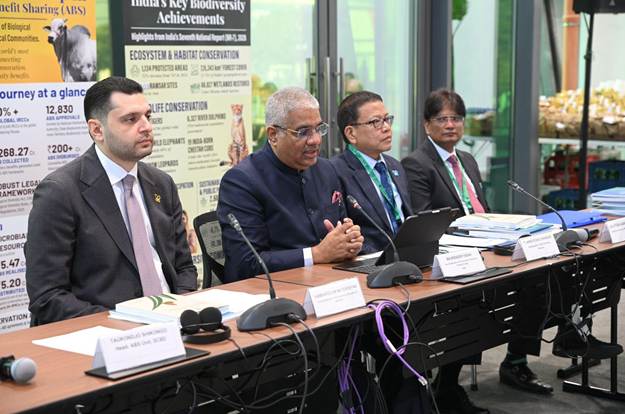
Union Environment Minister Bhupender Yadav participated in a side event focusing on converting international biodiversity commitments into practical conservation outcomes.
The development is important for UPSC Environment and Ecology, international environmental conventions, biodiversity governance and sustainable development.
2. Key Facts
- Conference: 17th Conference of the Parties to the Convention on Biological Diversity.
- Abbreviation: CBD COP17.
- Location: Yerevan, Armenia.
- Publication date: 28 October 2026.
- Indian minister: Bhupender Yadav.
- Indian ministry: Ministry of Environment, Forest and Climate Change.
- Partner institutions: National Biodiversity Authority and United Nations Development Programme.
- Number of publications released: Four.
- Official PIB release: 2329499.
3. The Four Publications
- Guidelines for the Designation of India's Other Effective Area-Based Conservation Measures (I-OECMs) 2026.
- 5th National Report on Cartagena Protocol on Biosafety.
- The Convention on Biological Diversity Handbook: Reference Guide and Indian Perspective.
- India's ABS Success Story.
These publications address different aspects of conservation policy, reporting, legal understanding and equitable sharing of benefits from genetic resources.
4. What Is the Convention on Biological Diversity?
The Convention on Biological Diversity is an international environmental treaty adopted in 1992 at the Rio Earth Summit. It entered into force in 1993.
The convention provides a global framework for protecting biodiversity and ensuring that biological resources are used responsibly.
5. Three Objectives of the CBD
The convention has three central objectives: conservation of biological diversity, sustainable use of its components, and fair and equitable sharing of benefits arising from the utilisation of genetic resources.
These objectives connect environmental protection with economic development, scientific research and social justice.
6. What Is a Conference of the Parties?
A Conference of the Parties is a meeting of countries participating in an international agreement.
It provides a forum for reviewing implementation, discussing policy decisions and strengthening cooperation.
CBD COP17 is the seventeenth meeting of the parties to the biodiversity convention. It should not be confused with conferences under the United Nations climate change convention.
7. Why Armenia Matters
Yerevan, the capital of Armenia, hosted CBD COP17 in 2026.
The meeting provided a platform for governments and institutions to discuss biodiversity governance, implementation and international cooperation.
The Indian event was held in partnership with the National Biodiversity Authority and UNDP.
8. First Publication: I-OECM Guidelines 2026
India released guidelines for identifying and designating Other Effective Area-Based Conservation Measures.
These measures recognise that important biodiversity conservation outcomes can occur outside conventional protected areas.
The guidelines aim to support recognition based on appropriate conservation criteria and governance arrangements.
9. What Is an OECM?
An Other Effective Area-Based Conservation Measure is a geographically defined area other than a protected area that is governed and managed in ways achieving positive and sustained long-term biodiversity conservation outcomes.
Such areas may have different primary management objectives, but their conservation results can still be significant.
Recognition requires suitable evidence and assessment rather than automatic designation.
10. Protected Areas Versus OECMs
Protected areas are generally designated and managed with nature conservation as a principal objective.
OECMs can deliver effective conservation even where biodiversity protection is not the primary purpose of management.
Both approaches can contribute to broader conservation targets, but their legal and governance arrangements may differ.
11. Why OECMs Are Important for India
India contains forests, wetlands, coastal areas, agricultural landscapes and other ecosystems with significant biodiversity.
Conservation outcomes can arise through community institutions, responsible land management and other governance systems.
Appropriate recognition of such areas may support biodiversity protection beyond formally notified protected areas.
12. Community Participation
Local communities may possess valuable ecological knowledge and participate in managing landscapes and natural resources.
Conservation initiatives should consider legitimate rights, governance responsibilities and long-term livelihoods.
Recognition of conservation outcomes should not be treated as automatic transfer of ownership or removal of community rights.
13. Second Publication: Cartagena Protocol Report
India released its fifth national report on the Cartagena Protocol on Biosafety.
The report reflects India's commitment to transparent reporting and responsible governance of biosafety issues.
National reports are important for assessing implementation of international agreements.
14. What Is the Cartagena Protocol?
The Cartagena Protocol on Biosafety is a supplementary agreement to the Convention on Biological Diversity.
It addresses the safe transfer, handling and use of living modified organisms resulting from modern biotechnology that may have adverse effects on biological diversity, taking into account risks to human health.
It was adopted in 2000 and entered into force in 2003.
15. What Are Living Modified Organisms?
Living modified organisms are living organisms possessing novel combinations of genetic material obtained through modern biotechnology, as defined under the protocol.
The concept is important in the regulation of biotechnology and potential environmental risks.
Not every product derived from biotechnology is necessarily a living modified organism under the protocol's definition.
16. Importance of Biosafety
Biosafety concerns the assessment and management of risks associated with biological materials and biotechnology.
Regulatory frameworks may consider potential effects on ecosystems, non-target organisms and human health.
Effective biosafety governance requires scientific assessment, monitoring and transparent institutional processes.
17. Third Publication: CBD Handbook
The Convention on Biological Diversity Handbook: Reference Guide and Indian Perspective was released to support better understanding of the convention.
It aims to provide accessible reference material for informed participation and continuity in implementation.
Such resources can assist policymakers, researchers and other stakeholders in navigating complex international environmental processes.
18. Fourth Publication: India's ABS Success Story
India's ABS Success Story highlights the country's experience in access and benefit-sharing.
Access and benefit-sharing concerns the conditions under which genetic resources are accessed and how resulting benefits are shared fairly.
The publication presents India's approach to linking biodiversity utilisation with conservation and community interests.
19. What Is Access and Benefit-Sharing?
Access and benefit-sharing, abbreviated ABS, is a framework for ensuring that benefits arising from the utilisation of genetic resources are shared fairly and equitably.
Benefits may include monetary or non-monetary forms, depending on applicable laws and agreements.
ABS seeks to connect scientific and commercial use of biological resources with the interests of resource providers and relevant communities.
20. Nagoya Protocol
The Nagoya Protocol is a supplementary agreement to the Convention on Biological Diversity.
It provides an international framework for fair and equitable sharing of benefits arising from the utilisation of genetic resources.
The protocol was adopted in 2010 and entered into force in 2014.
21. Cartagena Protocol Versus Nagoya Protocol
| Cartagena Protocol | Nagoya Protocol |
|---|---|
| Biosafety | Access and benefit-sharing |
| Living modified organisms | Genetic resources and related benefit-sharing |
| Adopted in 2000 | Adopted in 2010 |
| Entered into force in 2003 | Entered into force in 2014 |
22. National Biodiversity Authority
The National Biodiversity Authority is an important Indian institution for implementing biodiversity-related legal provisions.
It was established under the Biological Diversity Act, 2002.
Its functions relate to biodiversity governance, including access to biological resources and benefit-sharing under applicable law.
23. Biological Diversity Act, 2002
India enacted the Biological Diversity Act in 2002 to provide a legal framework for conservation, sustainable use and benefit-sharing.
The framework supports implementation of India's commitments under the Convention on Biological Diversity.
Its provisions have subsequently been amended, including through the Biological Diversity (Amendment) Act, 2023.
24. Kunming-Montreal Global Biodiversity Framework
The Kunming-Montreal Global Biodiversity Framework was adopted at CBD COP15 in 2022.
It establishes global goals and targets for addressing biodiversity loss and promoting nature conservation.
At COP17, India emphasised that adopting targets is insufficient without implementation capacity, financial resources and measurable results.
25. The 30-by-30 Target
Target 3 of the Global Biodiversity Framework calls for effective conservation and management of at least 30% of terrestrial, inland water, coastal and marine areas by 2030 through protected areas and other effective area-based conservation measures.
It also emphasises ecological representation, connectivity and equitable governance.
The target is global; it should not automatically be interpreted as a statement that every country has already achieved 30% conservation coverage.
26. Biodiversity Finance
Conservation programmes require resources for habitat protection, ecological restoration, monitoring and institutional capacity.
At COP17, India highlighted the need for sustainable financing and implementation-oriented cooperation.
Mobilising finance is important, but spending alone does not establish that biodiversity outcomes have improved.
27. Lifestyle for Environment
Environment Minister Bhupender Yadav referred to the Lifestyle for Environment, or LiFE, approach.
LiFE promotes responsible consumption and environmentally sustainable choices.
The concept connects individual and collective behaviour with broader environmental objectives.
28. South-South Cooperation
India emphasised international cooperation, including learning among developing countries.
South-South cooperation can support exchanges of experience, technology, institutional practices and conservation knowledge.
Effective partnerships must consider different national circumstances and development priorities.
29. Measuring Conservation Outcomes
The minister called for assessing progress through actual implementation and lasting conservation outcomes rather than announcements alone.
Useful measures may include habitat condition, species trends, ecological connectivity and the distribution of conservation benefits.
Transparent reporting and public accountability can strengthen confidence in conservation programmes.
30. Challenges for Biodiversity Governance
Major challenges include habitat loss, fragmentation, invasive species, pollution, climate change and unsustainable resource use.
Institutional coordination, adequate financing and effective enforcement remain important.
Conservation policies must also account for community rights, livelihoods and equitable sharing of benefits.
31. Relevance for UPSC GS Paper III
The topic directly relates to biodiversity, environmental conservation, biotechnology, biosafety and sustainable development.
Important examination concepts include OECMs, protected areas, the Cartagena Protocol, the Nagoya Protocol and the Global Biodiversity Framework.
32. Relevance for UPSC GS Paper II
The development also concerns international agreements, environmental diplomacy, global governance and India's cooperation with international organisations.
It illustrates how multilateral commitments can be translated into domestic policy instruments and institutional reporting.
33. Prelims Practice Questions
Q1. Where was CBD COP17 held in 2026? Answer: Yerevan, Armenia.
Q2. How many publications did India release at the side event? Answer: Four.
Q3. Who represented India as Environment Minister? Answer: Bhupender Yadav.
Q4. What does OECM stand for? Answer: Other Effective Area-Based Conservation Measure.
Q5. Which publication concerned OECMs? Answer: Guidelines for the Designation of India's OECMs 2026.
Q6. Which protocol deals with biosafety? Answer: Cartagena Protocol.
Q7. Which protocol deals with access and benefit-sharing? Answer: Nagoya Protocol.
Q8. When was the CBD adopted? Answer: 1992.
Q9. When was the Kunming-Montreal Global Biodiversity Framework adopted? Answer: 2022.
Q10. What is the 30-by-30 target? Answer: Effective conservation and management of at least 30% of specified land and water areas globally by 2030.
Q11. Which Indian law established the National Biodiversity Authority? Answer: Biological Diversity Act, 2002.
Q12. What does ABS mean? Answer: Access and Benefit-Sharing.
34. UPSC Mains Practice Questions
Question 1: Explain the importance of Other Effective Area-Based Conservation Measures in achieving global biodiversity targets. Discuss the opportunities and governance challenges associated with their recognition in India.
Question 2: Examine the roles of the Cartagena and Nagoya Protocols in international biodiversity governance. How can India improve implementation, biosafety and equitable benefit-sharing?
35. Conclusion
India's four publications at CBD COP17 demonstrate an effort to strengthen the practical foundations of biodiversity governance.
The OECM guidelines, biosafety report, CBD handbook and ABS publication address complementary dimensions of conservation policy.
The central message is that biodiversity commitments must be supported by credible institutions, adequate finance, community participation and measurable long-term outcomes.
36. Official Source
1. चर्चा में क्यों?
28 अक्टूबर 2026 को आर्मेनिया की राजधानी येरेवान में आयोजित जैव विविधता अभिसमय के 17वें पक्षकार सम्मेलन के दौरान भारत ने जैव विविधता संरक्षण, जैव सुरक्षा तथा संसाधनों तक पहुंच और लाभों के बंटवारे से संबंधित चार महत्वपूर्ण प्रकाशन जारी किए।
केंद्रीय पर्यावरण मंत्री भूपेंद्र यादव ने अंतरराष्ट्रीय प्रतिबद्धताओं को व्यावहारिक संरक्षण परिणामों में बदलने के महत्व पर बल दिया।
यह विषय पर्यावरण एवं पारिस्थितिकी, अंतरराष्ट्रीय पर्यावरण समझौतों और सतत विकास की तैयारी के लिए महत्वपूर्ण है।
2. परीक्षाओं के लिए महत्वपूर्ण तथ्य
- सम्मेलन: जैव विविधता अभिसमय का 17वां पक्षकार सम्मेलन।
- स्थान: येरेवान, आर्मेनिया।
- तिथि: 28 अक्टूबर 2026।
- भारतीय मंत्री: भूपेंद्र यादव।
- मंत्रालय: पर्यावरण, वन और जलवायु परिवर्तन मंत्रालय।
- सहयोगी संस्थाएं: राष्ट्रीय जैव विविधता प्राधिकरण और संयुक्त राष्ट्र विकास कार्यक्रम।
- जारी प्रकाशन: चार।
- आधिकारिक विज्ञप्ति: 2329499।
3. चार महत्वपूर्ण प्रकाशन
- भारत में अन्य प्रभावी क्षेत्र-आधारित संरक्षण उपायों के निर्धारण के लिए दिशा-निर्देश, 2026।
- जैव सुरक्षा संबंधी कार्टाजेना प्रोटोकॉल पर पांचवीं राष्ट्रीय रिपोर्ट।
- जैव विविधता अभिसमय की संदर्भ पुस्तिका: भारतीय दृष्टिकोण सहित।
- संसाधनों तक पहुंच और लाभों के बंटवारे में भारत की सफलता की कहानी।
ये प्रकाशन संरक्षण नीति, अंतरराष्ट्रीय रिपोर्टिंग, कानूनी समझ और आनुवंशिक संसाधनों से मिलने वाले लाभों के न्यायसंगत वितरण से संबंधित हैं।
4. जैव विविधता अभिसमय क्या है?
जैव विविधता अभिसमय एक अंतरराष्ट्रीय पर्यावरण समझौता है, जिसे 1992 में रियो पृथ्वी सम्मेलन के दौरान स्वीकार किया गया था।
यह 1993 में प्रभावी हुआ।
इसका उद्देश्य जैव विविधता की रक्षा और जैविक संसाधनों के जिम्मेदार उपयोग के लिए वैश्विक ढांचा उपलब्ध कराना है।
5. अभिसमय के तीन उद्देश्य
पहला उद्देश्य जैविक विविधता का संरक्षण है।
दूसरा उद्देश्य इसके घटकों का सतत उपयोग है।
तीसरा उद्देश्य आनुवंशिक संसाधनों के उपयोग से उत्पन्न लाभों का उचित और न्यायसंगत बंटवारा सुनिश्चित करना है।
ये उद्देश्य पर्यावरण संरक्षण को आर्थिक विकास, वैज्ञानिक अनुसंधान और सामाजिक न्याय से जोड़ते हैं।
6. पक्षकार सम्मेलन क्या होता है?
पक्षकार सम्मेलन किसी अंतरराष्ट्रीय समझौते में भाग लेने वाले देशों की बैठक होती है।
इसमें समझौते के कार्यान्वयन की समीक्षा, नीतिगत चर्चा और अंतरराष्ट्रीय सहयोग किया जाता है।
जैव विविधता अभिसमय के पक्षकार सम्मेलन को संयुक्त राष्ट्र जलवायु परिवर्तन अभिसमय के सम्मेलन से अलग समझना चाहिए।
7. आर्मेनिया में सम्मेलन का महत्व
आर्मेनिया की राजधानी येरेवान ने 2026 में जैव विविधता अभिसमय के 17वें पक्षकार सम्मेलन की मेजबानी की।
इससे देशों और संस्थाओं को जैव विविधता शासन, कार्यान्वयन और सहयोग पर चर्चा का मंच मिला।
भारत का संबंधित कार्यक्रम राष्ट्रीय जैव विविधता प्राधिकरण और संयुक्त राष्ट्र विकास कार्यक्रम के सहयोग से आयोजित हुआ।
8. पहला प्रकाशन: संरक्षण उपाय दिशा-निर्देश 2026
भारत ने अन्य प्रभावी क्षेत्र-आधारित संरक्षण उपायों की पहचान और निर्धारण के लिए दिशा-निर्देश जारी किए।
इनका महत्व यह है कि जैव विविधता का प्रभावी संरक्षण पारंपरिक संरक्षित क्षेत्रों के बाहर भी संभव है।
दिशा-निर्देश उचित संरक्षण मानदंडों और शासन व्यवस्थाओं के आधार पर ऐसे क्षेत्रों की पहचान में सहायता करेंगे।
9. अन्य प्रभावी क्षेत्र-आधारित संरक्षण उपाय क्या हैं?
यह ऐसा भौगोलिक रूप से निर्धारित क्षेत्र होता है जो औपचारिक संरक्षित क्षेत्र नहीं है, लेकिन उसके शासन और प्रबंधन से जैव विविधता के सकारात्मक तथा दीर्घकालिक संरक्षण परिणाम प्राप्त होते हैं।
ऐसे क्षेत्र का मुख्य उद्देश्य कुछ और भी हो सकता है, फिर भी उसके संरक्षण परिणाम महत्वपूर्ण हो सकते हैं।
मान्यता देने के लिए उपयुक्त साक्ष्य और मूल्यांकन आवश्यक होते हैं।
10. संरक्षित क्षेत्र और अन्य संरक्षण उपायों में अंतर
संरक्षित क्षेत्रों का निर्धारण और प्रबंधन सामान्यतः प्रकृति संरक्षण को प्रमुख उद्देश्य बनाकर किया जाता है।
अन्य प्रभावी क्षेत्र-आधारित उपायों में जैव विविधता संरक्षण मुख्य उद्देश्य न होने पर भी वास्तविक संरक्षण परिणाम प्राप्त हो सकते हैं।
दोनों वैश्विक संरक्षण लक्ष्यों में योगदान दे सकते हैं, लेकिन उनकी कानूनी और प्रशासनिक व्यवस्थाएं अलग हो सकती हैं।
11. भारत के लिए महत्व
भारत में वन, आर्द्रभूमियां, तटीय क्षेत्र, कृषि परिदृश्य और अन्य विविध पारिस्थितिकी तंत्र मौजूद हैं।
सामुदायिक संस्थाओं और जिम्मेदार भूमि प्रबंधन के माध्यम से भी संरक्षण परिणाम प्राप्त हो सकते हैं।
ऐसे क्षेत्रों की उचित पहचान औपचारिक संरक्षित क्षेत्रों के बाहर जैव विविधता संरक्षण को बढ़ावा दे सकती है।
12. स्थानीय समुदायों की भूमिका
स्थानीय समुदायों के पास महत्वपूर्ण पारिस्थितिक ज्ञान हो सकता है और वे प्राकृतिक संसाधनों के प्रबंधन में भाग ले सकते हैं।
संरक्षण पहल में वैध अधिकारों, शासन संबंधी जिम्मेदारियों और आजीविका पर ध्यान देना आवश्यक है।
संरक्षण उपलब्धियों की मान्यता को स्वतः भूमि स्वामित्व के हस्तांतरण या सामुदायिक अधिकारों की समाप्ति नहीं समझना चाहिए।
13. दूसरा प्रकाशन: कार्टाजेना प्रोटोकॉल की रिपोर्ट
भारत ने जैव सुरक्षा संबंधी कार्टाजेना प्रोटोकॉल पर अपनी पांचवीं राष्ट्रीय रिपोर्ट जारी की।
यह रिपोर्ट पारदर्शी सूचना प्रस्तुति और जिम्मेदार जैव सुरक्षा शासन के प्रति भारत की प्रतिबद्धता दर्शाती है।
राष्ट्रीय रिपोर्ट अंतरराष्ट्रीय समझौतों के कार्यान्वयन का आकलन करने में महत्वपूर्ण होती हैं।
14. कार्टाजेना प्रोटोकॉल क्या है?
कार्टाजेना प्रोटोकॉल जैव विविधता अभिसमय का पूरक अंतरराष्ट्रीय समझौता है।
यह आधुनिक जैव प्रौद्योगिकी से उत्पन्न जीवित परिवर्तित जीवों के सुरक्षित स्थानांतरण, संचालन और उपयोग से संबंधित है, जिनका जैव विविधता पर प्रतिकूल प्रभाव पड़ सकता है।
इसमें मानव स्वास्थ्य से संबंधित जोखिमों को भी ध्यान में रखा जाता है।
इसे 2000 में स्वीकार किया गया और यह 2003 में प्रभावी हुआ।
15. जीवित परिवर्तित जीव क्या हैं?
जीवित परिवर्तित जीव वे जीव हैं जिनमें आधुनिक जैव प्रौद्योगिकी के माध्यम से आनुवंशिक सामग्री के नए संयोजन प्राप्त हुए हों और जो प्रोटोकॉल की परिभाषा के अंतर्गत आते हों।
जैव प्रौद्योगिकी के नियमन और संभावित पर्यावरणीय जोखिमों के मूल्यांकन में यह अवधारणा महत्वपूर्ण है।
जैव प्रौद्योगिकी से प्राप्त प्रत्येक उत्पाद आवश्यक नहीं कि प्रोटोकॉल की परिभाषा के अनुसार जीवित परिवर्तित जीव हो।
16. जैव सुरक्षा का महत्व
जैव सुरक्षा का संबंध जैविक सामग्री और जैव प्रौद्योगिकी से जुड़े जोखिमों के मूल्यांकन तथा प्रबंधन से है।
नियामक व्यवस्था पारिस्थितिकी तंत्र, अन्य जीवों और मानव स्वास्थ्य पर संभावित प्रभावों का अध्ययन कर सकती है।
प्रभावी जैव सुरक्षा के लिए वैज्ञानिक मूल्यांकन, निगरानी और पारदर्शी संस्थागत प्रक्रियाएं आवश्यक हैं।
17. तीसरा प्रकाशन: जैव विविधता अभिसमय पुस्तिका
जैव विविधता अभिसमय की संदर्भ पुस्तिका भारतीय दृष्टिकोण सहित जारी की गई।
इसका उद्देश्य अभिसमय की बेहतर समझ और कार्यान्वयन में निरंतरता को प्रोत्साहित करना है।
ऐसी संदर्भ सामग्री नीति निर्माताओं, शोधकर्ताओं और अन्य हितधारकों को जटिल अंतरराष्ट्रीय पर्यावरण प्रक्रियाओं को समझने में सहायता कर सकती है।
18. चौथा प्रकाशन: लाभ बंटवारे में भारत की सफलता
भारत की सफलता संबंधी पुस्तक आनुवंशिक संसाधनों तक पहुंच और उनसे उत्पन्न लाभों के बंटवारे के क्षेत्र में देश के अनुभव को प्रस्तुत करती है।
इस व्यवस्था का संबंध इस बात से है कि आनुवंशिक संसाधनों का उपयोग किन शर्तों पर किया जाए और उससे प्राप्त लाभों का उचित वितरण कैसे हो।
यह संरक्षण तथा समुदायों के हितों को जैव विविधता के उपयोग से जोड़ती है।
19. पहुंच और लाभ बंटवारा क्या है?
यह ऐसी व्यवस्था है जिसके अंतर्गत आनुवंशिक संसाधनों के उपयोग से उत्पन्न लाभों का उचित और न्यायसंगत वितरण सुनिश्चित करने का प्रयास किया जाता है।
लाभ मौद्रिक या गैर-मौद्रिक हो सकते हैं, जो लागू कानूनों और समझौतों पर निर्भर करते हैं।
इसका उद्देश्य वैज्ञानिक और व्यावसायिक उपयोग को संसाधन उपलब्ध कराने वालों तथा संबंधित समुदायों के हितों से जोड़ना है।
20. नागोया प्रोटोकॉल
नागोया प्रोटोकॉल जैव विविधता अभिसमय का पूरक समझौता है।
यह आनुवंशिक संसाधनों के उपयोग से उत्पन्न लाभों के उचित और न्यायसंगत बंटवारे के लिए अंतरराष्ट्रीय ढांचा प्रदान करता है।
इसे 2010 में स्वीकार किया गया और यह 2014 में प्रभावी हुआ।
21. कार्टाजेना और नागोया प्रोटोकॉल में अंतर
| कार्टाजेना प्रोटोकॉल | नागोया प्रोटोकॉल |
|---|---|
| जैव सुरक्षा से संबंधित | पहुंच और लाभ बंटवारे से संबंधित |
| जीवित परिवर्तित जीवों पर केंद्रित | आनुवंशिक संसाधनों से संबंधित |
| 2000 में स्वीकार | 2010 में स्वीकार |
| 2003 में प्रभावी | 2014 में प्रभावी |
22. राष्ट्रीय जैव विविधता प्राधिकरण
राष्ट्रीय जैव विविधता प्राधिकरण भारत में जैव विविधता संबंधी कानूनी प्रावधानों के कार्यान्वयन की महत्वपूर्ण संस्था है।
इसकी स्थापना जैव विविधता अधिनियम, 2002 के अंतर्गत हुई।
इसके कार्यों में लागू कानून के अनुसार जैविक संसाधनों तक पहुंच और लाभों के बंटवारे से संबंधित विषय शामिल हैं।
23. जैव विविधता अधिनियम, 2002
भारत ने संरक्षण, सतत उपयोग और लाभ बंटवारे के लिए कानूनी ढांचा प्रदान करने हेतु 2002 में जैव विविधता अधिनियम बनाया।
यह जैव विविधता अभिसमय के अंतर्गत भारत की प्रतिबद्धताओं के कार्यान्वयन में सहायता करता है।
इस कानूनी ढांचे में बाद में संशोधन किए गए, जिनमें जैव विविधता संशोधन अधिनियम, 2023 भी शामिल है।
24. कुनमिंग-मॉन्ट्रियल वैश्विक जैव विविधता रूपरेखा
कुनमिंग-मॉन्ट्रियल वैश्विक जैव विविधता रूपरेखा को 2022 में जैव विविधता अभिसमय के 15वें पक्षकार सम्मेलन में स्वीकार किया गया था।
इसमें जैव विविधता ह्रास रोकने और प्रकृति संरक्षण को बढ़ावा देने के लिए वैश्विक लक्ष्य निर्धारित किए गए।
भारत ने 17वें सम्मेलन में कहा कि केवल लक्ष्य स्वीकार करना पर्याप्त नहीं है। कार्यान्वयन क्षमता, वित्तीय संसाधन और मापने योग्य परिणाम भी आवश्यक हैं।
25. 30 गुणा 30 लक्ष्य
वैश्विक जैव विविधता रूपरेखा का लक्ष्य 3 वर्ष 2030 तक कम से कम 30 प्रतिशत स्थलीय, अंतर्देशीय जल, तटीय और समुद्री क्षेत्रों के प्रभावी संरक्षण तथा प्रबंधन से संबंधित है।
इसमें संरक्षित क्षेत्रों और अन्य प्रभावी क्षेत्र-आधारित संरक्षण उपायों की भूमिका शामिल है।
यह वैश्विक लक्ष्य है। इसका अर्थ यह नहीं कि प्रत्येक देश पहले ही 30 प्रतिशत संरक्षण कवरेज प्राप्त कर चुका है।
26. जैव विविधता वित्तपोषण
संरक्षण कार्यक्रमों के लिए आवास संरक्षण, पारिस्थितिक पुनर्स्थापन, निगरानी और संस्थागत क्षमता पर संसाधन खर्च करने पड़ते हैं।
भारत ने सम्मेलन में टिकाऊ वित्तपोषण और कार्यान्वयन केंद्रित सहयोग पर बल दिया।
वित्त जुटाना महत्वपूर्ण है, लेकिन केवल खर्च की गई राशि से संरक्षण परिणामों में सुधार सिद्ध नहीं होता।
27. पर्यावरण के लिए जीवनशैली
पर्यावरण मंत्री भूपेंद्र यादव ने पर्यावरण के लिए जीवनशैली पहल का उल्लेख किया।
यह जिम्मेदार उपभोग और पर्यावरण के अनुकूल व्यवहार को बढ़ावा देती है।
यह अवधारणा व्यक्तिगत तथा सामूहिक व्यवहार को व्यापक पर्यावरणीय उद्देश्यों से जोड़ती है।
28. दक्षिण-दक्षिण सहयोग
भारत ने विकासशील देशों के बीच अनुभवों के आदान-प्रदान सहित अंतरराष्ट्रीय सहयोग पर बल दिया।
दक्षिण-दक्षिण सहयोग से तकनीक, संस्थागत अनुभव और संरक्षण संबंधी ज्ञान साझा करने में सहायता मिल सकती है।
प्रभावी साझेदारी के लिए विभिन्न देशों की परिस्थितियों और विकास संबंधी प्राथमिकताओं का सम्मान आवश्यक है।
29. संरक्षण परिणामों का मूल्यांकन
मंत्री ने कहा कि प्रगति का आकलन केवल घोषणाओं के आधार पर नहीं, बल्कि वास्तविक कार्यान्वयन और टिकाऊ संरक्षण परिणामों से होना चाहिए।
उपयोगी संकेतकों में आवास की स्थिति, प्रजातियों की संख्या के रुझान, पारिस्थितिक संपर्क और संरक्षण लाभों का वितरण शामिल हो सकते हैं।
पारदर्शी रिपोर्टिंग और सार्वजनिक जवाबदेही संरक्षण कार्यक्रमों में विश्वास बढ़ा सकती है।
30. जैव विविधता शासन की चुनौतियां
प्रमुख चुनौतियों में प्राकृतिक आवासों का विनाश, विखंडन, आक्रामक बाहरी प्रजातियां, प्रदूषण, जलवायु परिवर्तन और संसाधनों का अस्थिर उपयोग शामिल हैं।
संस्थागत समन्वय, पर्याप्त वित्त और प्रभावी कानूनी कार्यान्वयन महत्वपूर्ण हैं।
संरक्षण नीतियों में समुदायों के अधिकारों, आजीविका और लाभों के न्यायसंगत बंटवारे पर भी ध्यान देना चाहिए।
31. यूपीएससी सामान्य अध्ययन प्रश्नपत्र III में महत्व
यह विषय जैव विविधता, पर्यावरण संरक्षण, जैव प्रौद्योगिकी, जैव सुरक्षा और सतत विकास से सीधे संबंधित है।
महत्वपूर्ण अवधारणाओं में अन्य प्रभावी क्षेत्र-आधारित संरक्षण उपाय, संरक्षित क्षेत्र, कार्टाजेना प्रोटोकॉल, नागोया प्रोटोकॉल और वैश्विक जैव विविधता रूपरेखा शामिल हैं।
32. यूपीएससी सामान्य अध्ययन प्रश्नपत्र II में महत्व
यह विकास अंतरराष्ट्रीय समझौतों, पर्यावरण कूटनीति, वैश्विक शासन और अंतरराष्ट्रीय संगठनों के साथ भारत के सहयोग से भी संबंधित है।
यह दर्शाता है कि बहुपक्षीय प्रतिबद्धताओं को घरेलू नीति और संस्थागत रिपोर्टिंग में कैसे बदला जा सकता है।
33. प्रारंभिक परीक्षा अभ्यास प्रश्न
प्रश्न 1. 2026 में जैव विविधता अभिसमय का 17वां पक्षकार सम्मेलन कहां आयोजित हुआ? उत्तर: येरेवान, आर्मेनिया।
प्रश्न 2. भारत ने कितने प्रकाशन जारी किए? उत्तर: चार।
प्रश्न 3. भारत के पर्यावरण मंत्री कौन थे? उत्तर: भूपेंद्र यादव।
प्रश्न 4. अन्य प्रभावी क्षेत्र-आधारित संरक्षण उपाय किससे संबंधित हैं? उत्तर: औपचारिक संरक्षित क्षेत्रों के बाहर प्रभावी जैव विविधता संरक्षण से।
प्रश्न 5. भारत ने इस विषय पर किस वर्ष के दिशा-निर्देश जारी किए? उत्तर: 2026।
प्रश्न 6. जैव सुरक्षा से कौन-सा प्रोटोकॉल संबंधित है? उत्तर: कार्टाजेना प्रोटोकॉल।
प्रश्न 7. आनुवंशिक संसाधनों से लाभ बंटवारे का संबंध किस प्रोटोकॉल से है? उत्तर: नागोया प्रोटोकॉल।
प्रश्न 8. जैव विविधता अभिसमय कब स्वीकार किया गया? उत्तर: 1992।
प्रश्न 9. कुनमिंग-मॉन्ट्रियल वैश्विक जैव विविधता रूपरेखा कब स्वीकार की गई? उत्तर: 2022।
प्रश्न 10. 30 गुणा 30 लक्ष्य का क्या अर्थ है? उत्तर: 2030 तक निर्धारित स्थलीय और जलीय क्षेत्रों के कम से कम 30 प्रतिशत का प्रभावी संरक्षण एवं प्रबंधन।
प्रश्न 11. राष्ट्रीय जैव विविधता प्राधिकरण की स्थापना किस अधिनियम के अंतर्गत हुई? उत्तर: जैव विविधता अधिनियम, 2002।
प्रश्न 12. पहुंच और लाभ बंटवारे का मुख्य उद्देश्य क्या है? उत्तर: आनुवंशिक संसाधनों के उपयोग से प्राप्त लाभों का उचित और न्यायसंगत वितरण।
34. यूपीएससी मुख्य परीक्षा अभ्यास
प्रश्न 1: वैश्विक जैव विविधता लक्ष्यों की प्राप्ति में अन्य प्रभावी क्षेत्र-आधारित संरक्षण उपायों का महत्व स्पष्ट कीजिए। भारत में उनकी मान्यता से जुड़े अवसरों और प्रशासनिक चुनौतियों पर चर्चा कीजिए।
प्रश्न 2: अंतरराष्ट्रीय जैव विविधता शासन में कार्टाजेना और नागोया प्रोटोकॉल की भूमिका का परीक्षण कीजिए। भारत जैव सुरक्षा और न्यायसंगत लाभ बंटवारे को किस प्रकार मजबूत कर सकता है?
35. निष्कर्ष
जैव विविधता अभिसमय के 17वें पक्षकार सम्मेलन में भारत द्वारा जारी चार प्रकाशन संरक्षण शासन की व्यावहारिक आधारशिला मजबूत करने के प्रयास को दर्शाते हैं।
संरक्षण उपायों के दिशा-निर्देश, जैव सुरक्षा रिपोर्ट, अभिसमय पुस्तिका और लाभ बंटवारे संबंधी प्रकाशन पर्यावरण नीति के परस्पर जुड़े पहलुओं को संबोधित करते हैं।
मुख्य संदेश यह है कि जैव विविधता संबंधी प्रतिबद्धताओं को विश्वसनीय संस्थाओं, पर्याप्त वित्त, सामुदायिक भागीदारी और मापने योग्य दीर्घकालिक परिणामों का समर्थन मिलना चाहिए।
 Oxford Student Atlas India Competitive