1. Why in News?
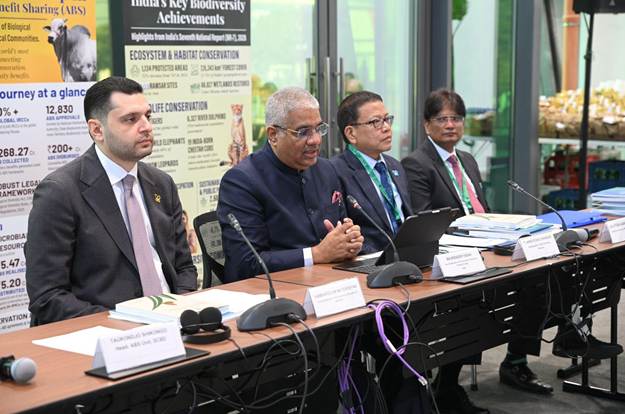
On 28 October 2026, India released four important publications relating to biodiversity conservation, biosafety and Access and Benefit-Sharing at the seventeenth Conference of the Parties to the Convention on Biological Diversity.
The event took place in Yerevan, Armenia, where Union Minister for Environment, Forest and Climate Change Bhupender Yadav emphasised the importance of translating international biodiversity commitments into measurable conservation outcomes.
The announcement is significant because it addresses conservation beyond protected areas, biosafety reporting, international biodiversity governance and equitable sharing of benefits derived from genetic resources.
2. Important Facts for Competitive Examinations
- Event: Seventeenth Conference of the Parties to the Convention on Biological Diversity.
- Abbreviation: CBD COP-17.
- Location: Yerevan, Armenia.
- News date: 28 October 2026.
- Indian ministry: Ministry of Environment, Forest and Climate Change.
- Indian minister: Bhupender Yadav.
- Partner institutions: National Biodiversity Authority and United Nations Development Programme.
- Number of publications released: Four.
- Conservation concept: Other Effective Area-Based Conservation Measures.
- Biosafety agreement: Cartagena Protocol.
- Benefit-sharing agreement: Nagoya Protocol.
- Global biodiversity framework: Kunming–Montreal Global Biodiversity Framework.
- Official PIB release: 2329499.
3. What Is Biodiversity?
Biodiversity refers to the variety of living organisms and the ecological systems of which they are part.
It includes diversity within species, diversity between species and diversity of ecosystems.
Genetic diversity supports adaptation and resilience, species diversity contributes to ecological interactions, and ecosystem diversity supports different environmental functions.
4. Importance of Biodiversity
Biodiversity supports food production, pollination, soil fertility, freshwater systems, medicines and livelihoods.
Healthy ecosystems can help regulate water cycles, store carbon and reduce vulnerability to certain environmental hazards.
Biodiversity loss may undermine economic security and the well-being of communities that depend directly on natural resources.
5. Convention on Biological Diversity
The Convention on Biological Diversity is an international environmental treaty adopted in 1992 and opened for signature at the Rio Earth Summit.
It entered into force in 1993.
The Convention establishes an international framework for biodiversity conservation and cooperation among participating countries.
6. Three Objectives of the Convention
The Convention on Biological Diversity has three principal objectives.
First: Conservation of biological diversity.
Second: Sustainable use of its components.
Third: Fair and equitable sharing of benefits arising from the utilisation of genetic resources.
These objectives connect environmental protection with sustainable development and fairness.
7. What Is the Conference of the Parties?
The Conference of the Parties is the governing body through which parties to an international agreement review progress and take decisions within the treaty framework.
CBD COP meetings provide a platform for discussing conservation policies, implementation arrangements, finance, reporting and cooperation.
COP-17 was hosted in Yerevan, Armenia.
8. India's Participation at COP-17
India participated through its Ministry of Environment, Forest and Climate Change.
The Indian side event was organised in partnership with the National Biodiversity Authority and the United Nations Development Programme.
Its theme focused on moving from policy commitments to practical implementation through innovation, finance, Access and Benefit-Sharing and area-based conservation.
9. Four Publications Released by India
India released the following publications:
- Guidelines for the Designation of India's Other Effective Area-Based Conservation Measures (I-OECMs) 2026.
- Fifth National Report on the Cartagena Protocol on Biosafety.
- The Convention on Biological Diversity Handbook: Reference Guide and Indian Perspective.
- India's ABS Success Story.
Each publication addresses a different component of biodiversity governance.
10. First Publication: I-OECM Guidelines 2026
The first publication provides guidance for recognising India's Other Effective Area-Based Conservation Measures.
These measures concern geographical areas outside conventional protected areas where governance and management achieve positive, sustained biodiversity conservation outcomes.
The guidelines are intended to support recognition based on appropriate criteria rather than treating every green space automatically as a conservation area.
11. What Are OECMs?
OECM stands for Other Effective Area-Based Conservation Measure.
An OECM is a geographically defined area other than a protected area that is governed and managed in ways achieving positive and sustained long-term outcomes for in-situ biodiversity conservation.
Its primary management objective need not necessarily be biodiversity conservation, but meaningful conservation outcomes must exist.
12. OECMs and Protected Areas
Protected areas are generally established or recognised with conservation as a central objective.
OECMs may include areas managed primarily for other purposes, provided they meet the required biodiversity conservation criteria.
Both can contribute to landscape-level conservation, but their legal status, governance and management objectives may differ.
13. Importance of OECMs for India
India contains forests, wetlands, agricultural landscapes, coastal ecosystems and community-managed areas with diverse conservation values.
Recognition of suitable OECMs can acknowledge conservation contributions outside conventional protected areas.
However, designation must be supported by evidence, effective governance and sustained biodiversity outcomes.
14. Second Publication: Cartagena Protocol Report
The second publication is India's Fifth National Report on the Cartagena Protocol on Biosafety.
It reflects India's participation in international reporting on biosafety governance.
Such reports support transparency and provide information about implementation of obligations under the Protocol.
15. What Is the Cartagena Protocol?
The Cartagena Protocol on Biosafety is a supplementary agreement to the Convention on Biological Diversity.
It was adopted in 2000 and entered into force in 2003.
It addresses the safe transfer, handling and use of living modified organisms resulting from modern biotechnology, with particular attention to transboundary movements and potential adverse effects on biodiversity.
16. What Are Living Modified Organisms?
Living Modified Organisms, or LMOs, are living organisms possessing a novel combination of genetic material obtained through the use of modern biotechnology, as defined under the Protocol.
The concept is relevant to biosafety because such organisms may interact with natural ecosystems.
Risk assessment and appropriate management help address potential adverse effects.
17. Biosafety and Biosecurity
Biosafety generally concerns preventing unintended harm associated with biological materials, organisms and biotechnology.
Biosecurity is a broader term that can include measures to prevent misuse, unauthorised access or the introduction and spread of harmful biological agents.
Although related, the two terms should not be treated as completely interchangeable.
18. Third Publication: CBD Handbook
The third publication is titled The Convention on Biological Diversity Handbook: Reference Guide and Indian Perspective.
It is intended to provide accessible reference material on international biodiversity processes.
Such guidance can assist officials, researchers and other stakeholders in understanding treaty obligations and implementation arrangements.
19. Why International Environmental Reporting Matters
International environmental agreements require more than statements of intent.
Reporting mechanisms allow countries to describe policies, institutional measures and progress toward agreed objectives.
Transparent reporting also supports international learning, although the quality of reported information and actual implementation remain important.
20. Fourth Publication: India's ABS Success Story
The fourth publication highlights India's experience with Access and Benefit-Sharing.
Access and Benefit-Sharing concerns arrangements for accessing genetic resources and distributing benefits arising from their utilisation fairly and equitably.
Benefits may be monetary or non-monetary, depending on the applicable legal framework and agreement.
21. What Is Access and Benefit-Sharing?
Access and Benefit-Sharing, abbreviated ABS, is an important component of international biodiversity governance.
It seeks to ensure that the use of genetic resources is accompanied by appropriate arrangements concerning access and the distribution of resulting benefits.
ABS can connect research, commercial innovation, conservation and the interests of resource providers.
22. Nagoya Protocol
The Nagoya Protocol is a supplementary agreement to the Convention on Biological Diversity.
It was adopted in 2010 and entered into force in 2014.
Its purpose is to advance the fair and equitable sharing of benefits arising from the utilisation of genetic resources.
The Protocol provides an international framework while implementation depends on applicable domestic laws and arrangements.
23. Cartagena Protocol Versus Nagoya Protocol
Cartagena Protocol: Primarily addresses biosafety relating to living modified organisms.
Nagoya Protocol: Primarily addresses access to genetic resources and fair and equitable benefit-sharing.
Both are associated with the Convention on Biological Diversity, but they have different objectives.
24. National Biodiversity Authority
The National Biodiversity Authority is an important institution in India's biodiversity governance framework.
It was established under the Biological Diversity Act, 2002.
The Authority performs functions relating to biodiversity conservation, access to biological resources and benefit-sharing under the applicable legal framework.
25. Biological Diversity Act, 2002
India enacted the Biological Diversity Act, 2002 to provide a domestic legal framework for biodiversity conservation, sustainable use and benefit-sharing.
The law establishes institutional arrangements at different levels.
Subsequent amendments have modified aspects of the framework, so current legal questions should be answered using the applicable amended provisions.
26. Biodiversity Management Committees
Biodiversity Management Committees are local institutions associated with biodiversity documentation and conservation under India's biodiversity governance system.
They can help recognise locally important biological resources and traditional knowledge.
Effective participation by local communities is important for conservation outcomes.
27. People's Biodiversity Registers
People's Biodiversity Registers document information about local biological resources and associated knowledge.
They can contribute to biodiversity awareness, local planning and institutional records.
Documentation should be accompanied by appropriate safeguards for sensitive information and community interests.
28. Kunming–Montreal Global Biodiversity Framework
The Kunming–Montreal Global Biodiversity Framework was adopted at CBD COP-15 in December 2022.
It provides a global framework for biodiversity action toward 2030 and beyond.
The framework contains four long-term goals for 2050 and 23 action-oriented targets for 2030.
29. The 30 by 30 Conservation Target
Target 3 of the Kunming–Montreal Global Biodiversity Framework concerns effective conservation and management of at least 30% of terrestrial, inland water, coastal and marine areas by 2030.
Protected areas and qualifying OECMs can contribute to this objective.
The target also emphasises ecological representation, connectivity and equitable governance.
30. Biodiversity Finance
Biodiversity conservation requires financial resources for ecosystem restoration, monitoring, protected area management and community participation.
Finance can come from public budgets, international cooperation and other appropriate mechanisms.
At COP-17, India stressed that adequate and sustained financing is necessary for turning commitments into practical outcomes.
31. Lifestyle for Environment
Lifestyle for Environment, or LiFE, promotes environmentally responsible choices and patterns of consumption.
Bhupender Yadav highlighted the importance of sustainable lifestyles in maintaining a harmonious relationship with nature.
Individual behaviour can contribute to conservation, although systemic policy and institutional measures are also essential.
32. International Cooperation
Biodiversity loss crosses national boundaries through shared ecosystems, migratory species, trade and environmental pressures.
International cooperation can support scientific exchange, finance, technology and implementation capacity.
India also emphasised South-South learning and approaches that respect national priorities.
33. From Policy to Implementation
A major message from the Indian side event was that conservation success should be assessed through implementation and measurable results.
Announcing targets or identifying areas does not automatically establish effective conservation.
Reliable monitoring, governance, public accountability and long-term ecological outcomes are necessary.
34. Challenges in Biodiversity Conservation
Major challenges include habitat degradation, pollution, invasive species, unsustainable resource use and climate-related pressures.
Institutional capacity, financing gaps and difficulties in monitoring conservation outcomes may also affect implementation.
Successful conservation requires cooperation among governments, communities, researchers and businesses.
35. Relevance for UPSC GS Paper III
This topic is directly relevant to biodiversity conservation, environmental governance, international environmental agreements and sustainable development.
It also connects with governance and international cooperation under GS Paper II.
Important distinctions for examinations include protected areas versus OECMs, the Cartagena Protocol versus the Nagoya Protocol, and conservation announcements versus verified conservation outcomes.
36. Prelims Practice Questions
Q1. Where was CBD COP-17 held? Answer: Yerevan, Armenia.
Q2. How many publications did India release at the event? Answer: Four.
Q3. What does CBD stand for? Answer: Convention on Biological Diversity.
Q4. What does OECM stand for? Answer: Other Effective Area-Based Conservation Measure.
Q5. Which Protocol concerns biosafety of living modified organisms? Answer: Cartagena Protocol.
Q6. Which Protocol concerns Access and Benefit-Sharing? Answer: Nagoya Protocol.
Q7. When was the Cartagena Protocol adopted? Answer: 2000.
Q8. When was the Nagoya Protocol adopted? Answer: 2010.
Q9. Under which law was the National Biodiversity Authority established? Answer: Biological Diversity Act, 2002.
Q10. How many 2030 targets are included in the Kunming–Montreal Global Biodiversity Framework? Answer: 23.
Q11. Which framework includes the 30 by 30 target? Answer: Kunming–Montreal Global Biodiversity Framework.
Q12. What does LiFE stand for? Answer: Lifestyle for Environment.
37. UPSC Mains Practice Questions
Question 1: Explain the concept of Other Effective Area-Based Conservation Measures. How can they complement conventional protected areas in achieving biodiversity conservation targets?
Question 2: Discuss the importance of Access and Benefit-Sharing in biodiversity governance. Examine the roles of the Nagoya Protocol and India's institutional framework.
38. Conclusion
India's four publications at CBD COP-17 highlight a comprehensive approach to biodiversity governance.
They address conservation outside conventional protected areas, biosafety reporting, international treaty guidance and equitable benefit-sharing.
The central policy challenge is to translate international commitments into effective institutions, adequate financing and lasting conservation results.
39. Official Source
1. चर्चा में क्यों?
28 अक्टूबर 2026 को भारत ने जैव विविधता अभिसमय के सत्रहवें पक्षकार सम्मेलन में जैव विविधता संरक्षण, जैव सुरक्षा तथा संसाधनों तक पहुंच और लाभों के बंटवारे से संबंधित चार महत्वपूर्ण प्रकाशन जारी किए।
यह कार्यक्रम आर्मेनिया की राजधानी येरेवान में आयोजित हुआ। केंद्रीय पर्यावरण, वन एवं जलवायु परिवर्तन मंत्री भूपेंद्र यादव ने अंतरराष्ट्रीय प्रतिबद्धताओं को वास्तविक संरक्षण परिणामों में बदलने की आवश्यकता पर बल दिया।
यह घटना महत्वपूर्ण है क्योंकि इसमें संरक्षित क्षेत्रों के बाहर संरक्षण, जैव सुरक्षा संबंधी प्रतिवेदन, अंतरराष्ट्रीय पर्यावरणीय शासन और आनुवंशिक संसाधनों से प्राप्त लाभों के न्यायसंगत बंटवारे जैसे विषय शामिल हैं।
2. प्रतियोगी परीक्षाओं के लिए महत्वपूर्ण तथ्य
- कार्यक्रम: जैव विविधता अभिसमय का सत्रहवां पक्षकार सम्मेलन।
- संक्षिप्त नाम: सीबीडी कॉप-17।
- स्थान: येरेवान, आर्मेनिया।
- समाचार तिथि: 28 अक्टूबर 2026।
- भारतीय मंत्रालय: पर्यावरण, वन एवं जलवायु परिवर्तन मंत्रालय।
- भारतीय मंत्री: भूपेंद्र यादव।
- सहयोगी संस्थाएं: राष्ट्रीय जैव विविधता प्राधिकरण और संयुक्त राष्ट्र विकास कार्यक्रम।
- जारी प्रकाशन: चार।
- प्रमुख संरक्षण अवधारणा: अन्य प्रभावी क्षेत्र-आधारित संरक्षण उपाय।
- जैव सुरक्षा संबंधी समझौता: कार्टाजेना प्रोटोकॉल।
- लाभ बंटवारे संबंधी समझौता: नागोया प्रोटोकॉल।
- वैश्विक ढांचा: कुनमिंग-मॉन्ट्रियल वैश्विक जैव विविधता रूपरेखा।
- आधिकारिक विज्ञप्ति: 2329499।
3. जैव विविधता क्या है?
जैव विविधता का अर्थ जीवित प्राणियों और उनसे संबंधित पारिस्थितिक प्रणालियों में पाई जाने वाली विविधता है।
इसमें एक ही प्रजाति के भीतर आनुवंशिक विविधता, विभिन्न प्रजातियों के बीच विविधता और पारिस्थितिक तंत्रों की विविधता शामिल हैं।
आनुवंशिक विविधता अनुकूलन क्षमता बढ़ाती है, प्रजातीय विविधता पारिस्थितिक संबंधों को मजबूत करती है और पारिस्थितिक तंत्रों की विविधता अनेक पर्यावरणीय कार्यों को बनाए रखती है।
4. जैव विविधता का महत्व
जैव विविधता खाद्य उत्पादन, परागण, मिट्टी की उर्वरता, स्वच्छ जल, औषधियों और आजीविका को सहारा देती है।
स्वस्थ पारिस्थितिक तंत्र जल चक्र के नियमन, कार्बन भंडारण और कुछ पर्यावरणीय खतरों से सुरक्षा में योगदान देते हैं।
जैव विविधता में गिरावट आर्थिक सुरक्षा और प्राकृतिक संसाधनों पर निर्भर समुदायों के कल्याण को प्रभावित कर सकती है।
5. जैव विविधता अभिसमय
जैव विविधता अभिसमय एक अंतरराष्ट्रीय पर्यावरणीय संधि है जिसे 1992 में स्वीकार किया गया और रियो पृथ्वी सम्मेलन में हस्ताक्षर के लिए खोला गया।
यह 1993 में प्रभावी हुआ।
यह अभिसमय जैव विविधता संरक्षण और देशों के बीच सहयोग के लिए अंतरराष्ट्रीय ढांचा प्रदान करता है।
6. अभिसमय के तीन प्रमुख उद्देश्य
जैव विविधता अभिसमय के तीन प्रमुख उद्देश्य हैं।
पहला: जैव विविधता का संरक्षण।
दूसरा: जैव विविधता के घटकों का सतत उपयोग।
तीसरा: आनुवंशिक संसाधनों के उपयोग से उत्पन्न लाभों का उचित और न्यायसंगत बंटवारा।
ये उद्देश्य पर्यावरण संरक्षण को सतत विकास और न्याय से जोड़ते हैं।
7. पक्षकार सम्मेलन क्या है?
पक्षकार सम्मेलन वह शासी व्यवस्था है जिसके माध्यम से किसी अंतरराष्ट्रीय समझौते में शामिल देश प्रगति की समीक्षा करते हैं और संधि के अंतर्गत निर्णय लेते हैं।
जैव विविधता अभिसमय के पक्षकार सम्मेलन में संरक्षण नीति, कार्यान्वयन, वित्त, प्रतिवेदन और सहयोग पर चर्चा होती है।
सत्रहवां सम्मेलन आर्मेनिया के येरेवान में आयोजित हुआ।
8. सम्मेलन में भारत की भागीदारी
भारत ने पर्यावरण, वन एवं जलवायु परिवर्तन मंत्रालय के माध्यम से भाग लिया।
भारतीय विशेष कार्यक्रम का आयोजन राष्ट्रीय जैव विविधता प्राधिकरण और संयुक्त राष्ट्र विकास कार्यक्रम के सहयोग से हुआ।
इसमें नवाचार, वित्त, संसाधनों तक पहुंच, लाभों के बंटवारे और क्षेत्र-आधारित संरक्षण के माध्यम से नीतियों को व्यवहार में बदलने पर जोर दिया गया।
9. भारत द्वारा जारी चार प्रकाशन
- भारत के अन्य प्रभावी क्षेत्र-आधारित संरक्षण उपायों को मान्यता देने के दिशा-निर्देश, 2026।
- जैव सुरक्षा पर कार्टाजेना प्रोटोकॉल के अंतर्गत पांचवां राष्ट्रीय प्रतिवेदन।
- जैव विविधता अभिसमय पुस्तिका: संदर्भ मार्गदर्शिका और भारतीय दृष्टिकोण।
- संसाधनों तक पहुंच और लाभों के बंटवारे में भारत की सफलता की कहानी।
प्रत्येक प्रकाशन जैव विविधता शासन के अलग पहलू पर केंद्रित है।
10. पहला प्रकाशन: क्षेत्र-आधारित संरक्षण दिशा-निर्देश
पहला प्रकाशन भारत में अन्य प्रभावी क्षेत्र-आधारित संरक्षण उपायों को मान्यता देने के लिए मार्गदर्शन प्रदान करता है।
ये उपाय पारंपरिक संरक्षित क्षेत्रों के बाहर स्थित ऐसे भौगोलिक क्षेत्रों से संबंधित हैं जहां शासन और प्रबंधन से जैव विविधता के सकारात्मक तथा स्थायी संरक्षण परिणाम प्राप्त होते हैं।
इनका उद्देश्य उचित मानदंडों के आधार पर मान्यता देना है, न कि प्रत्येक हरित क्षेत्र को स्वतः संरक्षण क्षेत्र घोषित करना।
11. अन्य प्रभावी क्षेत्र-आधारित संरक्षण उपाय क्या हैं?
अन्य प्रभावी क्षेत्र-आधारित संरक्षण उपाय ऐसे भौगोलिक रूप से निर्धारित क्षेत्र हैं जो संरक्षित क्षेत्र की श्रेणी में नहीं आते, लेकिन जिनके प्रबंधन से प्राकृतिक आवास में जैव विविधता के सकारात्मक और दीर्घकालिक संरक्षण परिणाम प्राप्त होते हैं।
इन क्षेत्रों का मुख्य उद्देश्य हमेशा जैव विविधता संरक्षण होना आवश्यक नहीं है, लेकिन वास्तविक संरक्षण परिणाम मौजूद होने चाहिए।
12. संरक्षित क्षेत्र और अन्य संरक्षण उपायों में अंतर
संरक्षित क्षेत्रों की स्थापना या मान्यता सामान्यतः संरक्षण को केंद्रीय उद्देश्य बनाकर की जाती है।
अन्य प्रभावी क्षेत्र-आधारित संरक्षण उपायों में ऐसे क्षेत्र भी शामिल हो सकते हैं जिनका प्राथमिक प्रबंधन उद्देश्य अलग हो, बशर्ते वे निर्धारित जैव विविधता संरक्षण मानदंडों को पूरा करते हों।
दोनों व्यापक संरक्षण में योगदान दे सकते हैं, लेकिन उनकी कानूनी स्थिति और प्रबंधन व्यवस्था अलग हो सकती है।
13. भारत के लिए महत्व
भारत में वन, आर्द्रभूमियां, कृषि परिदृश्य, तटीय पारिस्थितिक तंत्र और समुदायों द्वारा प्रबंधित अनेक क्षेत्र हैं।
उपयुक्त क्षेत्रों को मान्यता देकर पारंपरिक संरक्षित क्षेत्रों के बाहर होने वाले संरक्षण प्रयासों को पहचान मिल सकती है।
हालांकि मान्यता के लिए प्रमाण, प्रभावी शासन और स्थायी संरक्षण परिणाम आवश्यक हैं।
14. दूसरा प्रकाशन: कार्टाजेना प्रोटोकॉल प्रतिवेदन
दूसरा प्रकाशन जैव सुरक्षा पर कार्टाजेना प्रोटोकॉल के अंतर्गत भारत का पांचवां राष्ट्रीय प्रतिवेदन है।
यह जैव सुरक्षा संबंधी अंतरराष्ट्रीय प्रतिवेदन में भारत की भागीदारी को दर्शाता है।
ऐसे प्रतिवेदन पारदर्शिता बढ़ाते हैं और प्रोटोकॉल के अंतर्गत दायित्वों के कार्यान्वयन की जानकारी उपलब्ध कराते हैं।
15. कार्टाजेना प्रोटोकॉल क्या है?
कार्टाजेना प्रोटोकॉल जैव विविधता अभिसमय से संबंधित एक पूरक अंतरराष्ट्रीय समझौता है।
इसे 2000 में स्वीकार किया गया और यह 2003 में प्रभावी हुआ।
यह आधुनिक जैव प्रौद्योगिकी से प्राप्त जीवित संशोधित जीवों के सुरक्षित स्थानांतरण, संचालन और उपयोग से संबंधित है। इसमें सीमापार आवाजाही तथा जैव विविधता पर संभावित प्रतिकूल प्रभावों पर विशेष ध्यान दिया गया है।
16. जीवित संशोधित जीव क्या हैं?
जीवित संशोधित जीव वे जीव हैं जिनमें आधुनिक जैव प्रौद्योगिकी के उपयोग से आनुवंशिक सामग्री का नया संयोजन प्राप्त हुआ हो, जैसा प्रोटोकॉल में परिभाषित है।
ये जीव प्राकृतिक पारिस्थितिक तंत्रों के साथ संपर्क स्थापित कर सकते हैं, इसलिए जैव सुरक्षा के दृष्टिकोण से महत्वपूर्ण हैं।
जोखिम मूल्यांकन और उचित प्रबंधन संभावित प्रतिकूल प्रभावों को कम करने में सहायता करते हैं।
17. जैव सुरक्षा और जैव संरक्षा
जैव सुरक्षा सामान्यतः जैविक सामग्री, जीवों और जैव प्रौद्योगिकी से होने वाले अनपेक्षित नुकसान की रोकथाम से संबंधित है।
जैव संरक्षा का व्यापक उपयोग जैविक कारकों के दुरुपयोग, अनधिकृत पहुंच अथवा हानिकारक जैविक तत्वों के प्रवेश और प्रसार को रोकने के उपायों के लिए भी किया जाता है।
दोनों संबंधित अवधारणाएं हैं, लेकिन पूरी तरह समान नहीं।
18. तीसरा प्रकाशन: जैव विविधता अभिसमय पुस्तिका
तीसरा प्रकाशन जैव विविधता अभिसमय पुस्तिका: संदर्भ मार्गदर्शिका और भारतीय दृष्टिकोण है।
इसका उद्देश्य अंतरराष्ट्रीय जैव विविधता प्रक्रियाओं को समझने के लिए सुलभ संदर्भ सामग्री उपलब्ध कराना है।
इससे अधिकारियों, शोधकर्ताओं और अन्य हितधारकों को संधि संबंधी दायित्वों तथा कार्यान्वयन व्यवस्थाओं की जानकारी प्राप्त करने में सहायता मिल सकती है।
19. अंतरराष्ट्रीय पर्यावरणीय प्रतिवेदन का महत्व
अंतरराष्ट्रीय पर्यावरणीय समझौतों के लिए केवल प्रतिबद्धता व्यक्त करना पर्याप्त नहीं होता।
प्रतिवेदन प्रणालियां देशों को अपनी नीतियों, संस्थागत उपायों और निर्धारित उद्देश्यों की दिशा में प्रगति की जानकारी देने का अवसर प्रदान करती हैं।
पारदर्शी प्रतिवेदन अंतरराष्ट्रीय अनुभव साझा करने में भी सहायता करता है, हालांकि जानकारी की गुणवत्ता और वास्तविक कार्यान्वयन महत्वपूर्ण बने रहते हैं।
20. चौथा प्रकाशन: भारत की लाभ-बंटवारा सफलता
चौथा प्रकाशन आनुवंशिक संसाधनों तक पहुंच और लाभों के बंटवारे से संबंधित भारत के अनुभव को सामने रखता है।
इस अवधारणा में आनुवंशिक संसाधनों के उपयोग से उत्पन्न लाभों को उचित और न्यायसंगत रूप से साझा करने की व्यवस्था शामिल है।
लागू कानून और समझौते के अनुसार लाभ आर्थिक या गैर-आर्थिक हो सकते हैं।
21. संसाधनों तक पहुंच और लाभ-बंटवारा
संसाधनों तक पहुंच और लाभ-बंटवारा अंतरराष्ट्रीय जैव विविधता शासन का महत्वपूर्ण घटक है।
इसका उद्देश्य आनुवंशिक संसाधनों के उपयोग के साथ उनकी प्राप्ति और उनसे उत्पन्न लाभों के वितरण की उचित व्यवस्था सुनिश्चित करना है।
यह अनुसंधान, व्यावसायिक नवाचार, संरक्षण और संसाधन उपलब्ध कराने वाले समुदायों के हितों को जोड़ सकता है।
22. नागोया प्रोटोकॉल
नागोया प्रोटोकॉल जैव विविधता अभिसमय से संबंधित पूरक समझौता है।
इसे 2010 में स्वीकार किया गया और यह 2014 में प्रभावी हुआ।
इसका उद्देश्य आनुवंशिक संसाधनों के उपयोग से उत्पन्न लाभों का उचित और न्यायसंगत बंटवारा सुनिश्चित करना है।
यह अंतरराष्ट्रीय ढांचा प्रदान करता है, जबकि वास्तविक कार्यान्वयन संबंधित घरेलू कानूनों और व्यवस्थाओं पर निर्भर करता है।
23. कार्टाजेना और नागोया प्रोटोकॉल में अंतर
कार्टाजेना प्रोटोकॉल: मुख्यतः जीवित संशोधित जीवों से संबंधित जैव सुरक्षा पर केंद्रित है।
नागोया प्रोटोकॉल: मुख्यतः आनुवंशिक संसाधनों तक पहुंच और उनसे उत्पन्न लाभों के न्यायसंगत बंटवारे पर केंद्रित है।
दोनों जैव विविधता अभिसमय से संबंधित हैं, लेकिन उनके उद्देश्य अलग हैं।
24. राष्ट्रीय जैव विविधता प्राधिकरण
राष्ट्रीय जैव विविधता प्राधिकरण भारत की जैव विविधता शासन व्यवस्था की महत्वपूर्ण संस्था है।
इसकी स्थापना जैव विविधता अधिनियम, 2002 के अंतर्गत की गई थी।
यह लागू कानूनी व्यवस्था के अनुसार जैव विविधता संरक्षण, जैविक संसाधनों तक पहुंच और लाभ-बंटवारे से संबंधित कार्य करता है।
25. जैव विविधता अधिनियम, 2002
भारत ने जैव विविधता संरक्षण, सतत उपयोग और लाभ-बंटवारे के लिए घरेलू कानूनी ढांचा प्रदान करने हेतु जैव विविधता अधिनियम, 2002 बनाया।
यह कानून विभिन्न स्तरों पर संस्थागत व्यवस्थाएं स्थापित करता है।
बाद के संशोधनों से व्यवस्था के कुछ प्रावधान बदले गए हैं, इसलिए वर्तमान कानूनी प्रश्नों में लागू संशोधित प्रावधानों का उपयोग आवश्यक है।
26. जैव विविधता प्रबंधन समितियां
जैव विविधता प्रबंधन समितियां भारत की जैव विविधता व्यवस्था के अंतर्गत स्थानीय स्तर पर जैविक संसाधनों के दस्तावेजीकरण और संरक्षण से जुड़ी संस्थाएं हैं।
ये स्थानीय रूप से महत्वपूर्ण जैविक संसाधनों और पारंपरिक ज्ञान को पहचानने में सहायता कर सकती हैं।
प्रभावी संरक्षण के लिए स्थानीय समुदायों की भागीदारी महत्वपूर्ण है।
27. जन जैव विविधता रजिस्टर
जन जैव विविधता रजिस्टर स्थानीय जैविक संसाधनों और उनसे संबंधित ज्ञान की जानकारी दर्ज करते हैं।
ये जैव विविधता संबंधी जागरूकता, स्थानीय नियोजन और संस्थागत अभिलेखों में योगदान दे सकते हैं।
दस्तावेजीकरण के साथ संवेदनशील जानकारी और समुदायों के हितों की सुरक्षा भी आवश्यक है।
28. कुनमिंग-मॉन्ट्रियल वैश्विक जैव विविधता रूपरेखा
कुनमिंग-मॉन्ट्रियल वैश्विक जैव विविधता रूपरेखा को दिसंबर 2022 में जैव विविधता अभिसमय के पंद्रहवें पक्षकार सम्मेलन में स्वीकार किया गया।
यह 2030 और उसके बाद की अवधि के लिए वैश्विक जैव विविधता कार्रवाई का ढांचा प्रदान करती है।
इसमें 2050 के लिए चार दीर्घकालिक लक्ष्य और 2030 के लिए 23 कार्रवाई संबंधी लक्ष्य शामिल हैं।
29. तीस प्रतिशत संरक्षण लक्ष्य
कुनमिंग-मॉन्ट्रियल रूपरेखा का तीसरा लक्ष्य 2030 तक कम से कम 30 प्रतिशत स्थलीय, अंतर्देशीय जल, तटीय और समुद्री क्षेत्रों के प्रभावी संरक्षण तथा प्रबंधन से संबंधित है।
संरक्षित क्षेत्र और निर्धारित मानदंडों को पूरा करने वाले अन्य प्रभावी क्षेत्र-आधारित संरक्षण उपाय इस लक्ष्य में योगदान दे सकते हैं।
इसमें पारिस्थितिक प्रतिनिधित्व, संपर्क और न्यायसंगत शासन पर भी जोर दिया गया है।
30. जैव विविधता वित्त
जैव विविधता संरक्षण के लिए पारिस्थितिक तंत्रों की बहाली, निगरानी, संरक्षित क्षेत्रों के प्रबंधन और सामुदायिक भागीदारी हेतु वित्तीय संसाधन आवश्यक हैं।
वित्त सार्वजनिक बजट, अंतरराष्ट्रीय सहयोग और अन्य उपयुक्त व्यवस्थाओं से प्राप्त हो सकता है।
भारत ने सम्मेलन में इस बात पर जोर दिया कि प्रतिबद्धताओं को वास्तविक परिणामों में बदलने के लिए पर्याप्त और निरंतर वित्त आवश्यक है।
31. पर्यावरण के लिए जीवनशैली
पर्यावरण के लिए जीवनशैली पहल पर्यावरण के प्रति जिम्मेदार व्यवहार और उपभोग के तरीकों को प्रोत्साहित करती है।
भूपेंद्र यादव ने प्रकृति के साथ संतुलित संबंध बनाए रखने के लिए सतत जीवनशैली के महत्व को रेखांकित किया।
व्यक्तिगत व्यवहार संरक्षण में योगदान दे सकता है, लेकिन व्यापक नीतिगत और संस्थागत उपाय भी आवश्यक हैं।
32. अंतरराष्ट्रीय सहयोग
जैव विविधता का नुकसान साझा पारिस्थितिक तंत्रों, प्रवासी प्रजातियों, व्यापार और पर्यावरणीय दबावों के कारण राष्ट्रीय सीमाओं से परे प्रभाव डालता है।
अंतरराष्ट्रीय सहयोग वैज्ञानिक जानकारी, वित्त, प्रौद्योगिकी और कार्यान्वयन क्षमता उपलब्ध कराने में सहायता कर सकता है।
भारत ने दक्षिण-दक्षिण सहयोग और राष्ट्रीय प्राथमिकताओं का सम्मान करने वाली व्यवस्थाओं पर भी जोर दिया।
33. नीति से वास्तविक कार्यान्वयन तक
भारतीय कार्यक्रम का प्रमुख संदेश था कि संरक्षण की सफलता का मूल्यांकन वास्तविक कार्यान्वयन और मापने योग्य परिणामों से होना चाहिए।
लक्ष्य घोषित करना या क्षेत्र पहचान लेना अपने आप प्रभावी संरक्षण सुनिश्चित नहीं करता।
विश्वसनीय निगरानी, प्रभावी शासन, सार्वजनिक जवाबदेही और दीर्घकालिक पारिस्थितिक परिणाम आवश्यक हैं।
34. जैव विविधता संरक्षण की चुनौतियां
प्रमुख चुनौतियों में प्राकृतिक आवासों का क्षरण, प्रदूषण, आक्रामक प्रजातियां, संसाधनों का असतत उपयोग और जलवायु परिवर्तन से संबंधित दबाव शामिल हैं।
संस्थागत क्षमता, वित्त की कमी और संरक्षण परिणामों की निगरानी में कठिनाई भी कार्यान्वयन को प्रभावित कर सकती है।
सफल संरक्षण के लिए सरकारों, समुदायों, शोधकर्ताओं और व्यवसायों के बीच सहयोग आवश्यक है।
35. यूपीएससी सामान्य अध्ययन प्रश्नपत्र III में महत्व
यह विषय जैव विविधता संरक्षण, पर्यावरणीय शासन, अंतरराष्ट्रीय पर्यावरणीय समझौतों और सतत विकास से सीधे संबंधित है।
शासन और अंतरराष्ट्रीय सहयोग के कारण इसका संबंध सामान्य अध्ययन प्रश्नपत्र II से भी है।
परीक्षा के लिए महत्वपूर्ण अंतर हैं: संरक्षित क्षेत्र और अन्य प्रभावी क्षेत्र-आधारित संरक्षण उपाय, कार्टाजेना और नागोया प्रोटोकॉल तथा संरक्षण की घोषणा और प्रमाणित संरक्षण परिणाम।
36. प्रारंभिक परीक्षा अभ्यास प्रश्न
प्रश्न 1. जैव विविधता अभिसमय का सत्रहवां पक्षकार सम्मेलन कहां आयोजित हुआ? उत्तर: येरेवान, आर्मेनिया।
प्रश्न 2. भारत ने कितने प्रकाशन जारी किए? उत्तर: चार।
प्रश्न 3. CBD का पूरा नाम क्या है? उत्तर: Convention on Biological Diversity।
प्रश्न 4. OECM का पूरा नाम क्या है? उत्तर: Other Effective Area-Based Conservation Measure।
प्रश्न 5. जीवित संशोधित जीवों की जैव सुरक्षा किस प्रोटोकॉल से संबंधित है? उत्तर: कार्टाजेना प्रोटोकॉल।
प्रश्न 6. संसाधनों तक पहुंच और लाभ-बंटवारे से कौन-सा प्रोटोकॉल संबंधित है? उत्तर: नागोया प्रोटोकॉल।
प्रश्न 7. कार्टाजेना प्रोटोकॉल कब स्वीकार किया गया? उत्तर: 2000।
प्रश्न 8. नागोया प्रोटोकॉल कब स्वीकार किया गया? उत्तर: 2010।
प्रश्न 9. राष्ट्रीय जैव विविधता प्राधिकरण किस कानून के अंतर्गत स्थापित हुआ? उत्तर: जैव विविधता अधिनियम, 2002।
प्रश्न 10. कुनमिंग-मॉन्ट्रियल रूपरेखा में 2030 के लिए कितने लक्ष्य हैं? उत्तर: 23।
प्रश्न 11. तीस प्रतिशत संरक्षण लक्ष्य किस रूपरेखा से संबंधित है? उत्तर: कुनमिंग-मॉन्ट्रियल वैश्विक जैव विविधता रूपरेखा।
प्रश्न 12. LiFE का पूरा नाम क्या है? उत्तर: Lifestyle for Environment।
37. यूपीएससी मुख्य परीक्षा अभ्यास
प्रश्न 1: अन्य प्रभावी क्षेत्र-आधारित संरक्षण उपायों की अवधारणा स्पष्ट कीजिए। जैव विविधता संरक्षण लक्ष्यों को प्राप्त करने में ये पारंपरिक संरक्षित क्षेत्रों के पूरक किस प्रकार बन सकते हैं?
प्रश्न 2: जैव विविधता शासन में संसाधनों तक पहुंच और लाभ-बंटवारे का महत्व स्पष्ट कीजिए। नागोया प्रोटोकॉल तथा भारत की संस्थागत व्यवस्था की भूमिका का परीक्षण कीजिए।
38. निष्कर्ष
जैव विविधता अभिसमय के सत्रहवें पक्षकार सम्मेलन में भारत द्वारा जारी चार प्रकाशन जैव विविधता शासन के व्यापक दृष्टिकोण को दर्शाते हैं।
इनमें पारंपरिक संरक्षित क्षेत्रों के बाहर संरक्षण, जैव सुरक्षा प्रतिवेदन, अंतरराष्ट्रीय संधि संबंधी मार्गदर्शन और न्यायसंगत लाभ-बंटवारा शामिल हैं।
मुख्य चुनौती अंतरराष्ट्रीय प्रतिबद्धताओं को प्रभावी संस्थाओं, पर्याप्त वित्त और स्थायी संरक्षण परिणामों में बदलने की है।
 Oxford Student Atlas India Competitive