Updated 30 October 2026. An original Vitorr Classes explainer based on current reporting. The meeting outcomes are not yet confirmed.
A meeting overshadowed by conflict
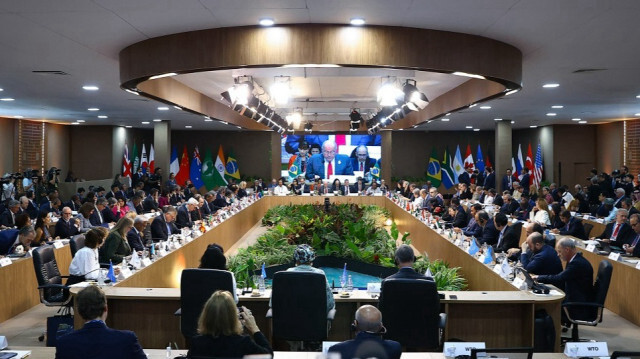
When foreign ministers gather for the G20 meeting in Atlanta on 30–31 October 2026, their agenda extends far beyond a ceremonial group photograph. Wars in Ukraine and the Middle East, disagreements over sanctions, fragile supply chains and competition for critical minerals are testing whether the world's largest economies can cooperate even when they disagree on fundamental questions. Reuters reported on 30 October that these divisions may make a joint statement difficult. That is a forecast about the negotiations, not an announcement that the meeting has failed.
What is the G20?
The Group of Twenty is a forum for international economic cooperation. Its membership consists of 19 countries and two regional bodies, the European Union and the African Union. It brings together advanced and emerging economies to discuss growth, financial stability, development and increasingly issues that influence the global economy, including energy security and geopolitical instability. It is not a world government and cannot compel members to adopt a common foreign policy. Its influence comes from coordination, diplomatic pressure and decisions implemented by individual governments.
Why the 2026 meeting is different
The United States holds the G20 presidency in 2026. The Atlanta foreign ministers' gathering takes place before the leaders' summit planned for December in Miami. The host is seeking attention for trade imbalances, energy, resilient supply chains and reducing dependence on concentrated supplies of critical minerals. Other delegations are expected to bring urgent security concerns. Because foreign ministers represent governments with sharply different interests, agreement on practical economic matters may coexist with deadlock over language about wars.
Ukraine and the limits of consensus
The Russia–Ukraine war has repeatedly exposed disagreements over how international forums should describe aggression, sanctions, security guarantees and peace efforts. Some governments favour stronger collective condemnation and assistance for Ukraine; others prioritise dialogue, economic stability or non-alignment. A communique requires wording that participants can accept. Even one disputed phrase can prevent consensus. Failure to agree on a declaration does not automatically mean that every technical discussion or bilateral meeting was unproductive.
The Middle East and energy markets
Instability in the Middle East can influence oil prices, shipping insurance, freight routes and business confidence far beyond the region. Energy-importing countries are especially sensitive to price shocks because higher fuel costs can increase transport expenses, inflation and pressure on public budgets. Diplomats may disagree about the causes of conflict and appropriate responses while still sharing an interest in keeping commercial routes functioning. For readers, the important distinction is between diplomatic positions, market risks and confirmed disruptions; these should never be presented as interchangeable facts.
Critical minerals: the quiet strategic contest
Lithium, cobalt, nickel, graphite and rare-earth elements matter to batteries, electric vehicles, wind turbines, electronics and defence manufacturing. Mining, processing and refining are distributed unevenly around the world. Dependence on a small number of suppliers can create vulnerabilities if export restrictions, political tensions or natural disasters interrupt trade. Countries are responding through new mining projects, recycling, stockpiles and supply agreements. Yet diversification is expensive and environmentally complex. The G20 debate is therefore not simply about buying minerals; it concerns technology, environmental standards, labour conditions and industrial competitiveness.
Why trade imbalances cause friction
A trade surplus means a country exports more goods and services than it imports over a specified period; a deficit means the reverse. These figures do not by themselves establish whether an economy is healthy or unhealthy. Policymakers debate whether persistent imbalances reflect competitiveness, domestic savings patterns, exchange rates, industrial subsidies or weak consumption. Tariffs may protect some producers but can raise costs for consumers and firms that rely on imported components. Effective analysis must consider both sides rather than describing every surplus as unfair or every deficit as failure.
Why a joint declaration matters—and why it is not everything
A common statement can signal broad agreement and provide political momentum for subsequent work. But declarations are generally not binding treaties. When consensus fails, the host may publish a chair's summary or participants may issue separate statements. Smaller coalitions can pursue cooperation on individual subjects. The test of a summit's success is therefore broader than the existence of a final communique: useful measures may emerge from working groups, ministerial contacts and follow-up agreements, while an ambitious statement can also produce little implementation.
What this means for India
India has substantial interests in affordable energy, secure shipping, access to critical minerals, export markets and a stable international financial system. It also maintains relationships with a wide range of partners whose geopolitical positions do not always align. A fragmented G20 can complicate global cooperation, but it may also increase the value of practical bridge-building and issue-specific partnerships. Indian businesses should watch shipping costs, commodity prices, export demand and the availability of industrial inputs rather than treating summit rhetoric as an immediate forecast for the stock market.
How students should read diplomatic headlines
Start by separating what happened from what a source expects to happen. An agenda is not an agreement; a proposal is not a policy; a diplomatic warning is not a confirmed economic outcome. Next, identify the actors and their incentives. Finally, check the primary documents after the meeting, including any chair's summary or official statement. For UPSC and other examinations, connect the story to multilateralism, strategic autonomy, supply-chain resilience, energy security and the difference between formal treaties and informal international forums.
Three scenarios to watch after Atlanta
One possibility is limited consensus on technical economic issues alongside sharp disagreements over security language. Another is a chair's summary instead of a collectively endorsed declaration. A third is progress through bilateral meetings or smaller groups, with the most contentious questions postponed. These are analytical scenarios, not reported outcomes. As of publication on 30 October, the two-day meeting was still underway or scheduled, so its final results should be added only after official confirmation.
The larger lesson
The G20 was designed to make coordination easier in a deeply interconnected world. Today that interconnection creates both incentives to cooperate and new forms of vulnerability. Countries need one another for trade, energy and financial stability, yet they also fear excessive dependence on rivals. The Atlanta meeting is therefore a window into a larger question: can governments cooperate on shared economic problems without first resolving every geopolitical disagreement? The answer will emerge from what they implement after the speeches, not just what they say during them.
Frequently asked questions
Is the G20 the same as the United Nations?
No. The G20 is an informal economic cooperation forum; the UN is a treaty-based international organisation with a much wider membership.
Does the G20 have 20 members?
It has 19 country members plus the European Union and African Union, making 21 members in total.
Has the Atlanta meeting issued a final agreement?
This article was prepared on 30 October 2026 before a verified final outcome. Check official releases for updates.
Why should Indian students follow the G20?
It connects international relations, economics, energy, trade and current affairs in a single case study.
Are G20 declarations legally binding?
They are generally political commitments rather than legally binding treaties.
Sources and further reading
Read original reporting and check the official G20 website for meeting documents.
Reuters: G20 foreign ministers and geopolitical divisions
 Oxford Student Atlas India Competitive
 Power Your Subconscious Mind Success