Vitorr Classes | Global Environment Explained
Published 3 November 2026 · Original explanatory analysis · Reading time approximately 15 minutes
At a glance: Countries at COP17 in Armenia agreed to accelerate action to protect biodiversity, but the world remains off track on many 2030 targets. The critical questions are finance, accountability and implementation.
Key takeaways
- COP17 reviewed progress on the 2022 global biodiversity framework.
- The 30x30 target calls for effective conservation, not just map designations.
- Finance and reform of nature-harming incentives remain major challenges.
- India has direct stakes through forests, wetlands, agriculture and coastal ecosystems.
The agreement that matters beyond the conference hall
At the end of October 2026, governments meeting at the seventeenth Conference of the Parties to the Convention on Biological Diversity (COP17) in Yerevan, Armenia, agreed on a pathway to accelerate implementation of global biodiversity commitments. The decision followed a first global review of the Kunming–Montreal Global Biodiversity Framework, adopted in 2022. The review showed progress in planning but a substantial gap between promises and changes visible on the ground. The outcome is not a new treaty that automatically protects forests and oceans. It is a political and implementation framework whose effectiveness will depend on national budgets, laws, monitoring and enforcement.
Why biodiversity is not just about saving rare animals
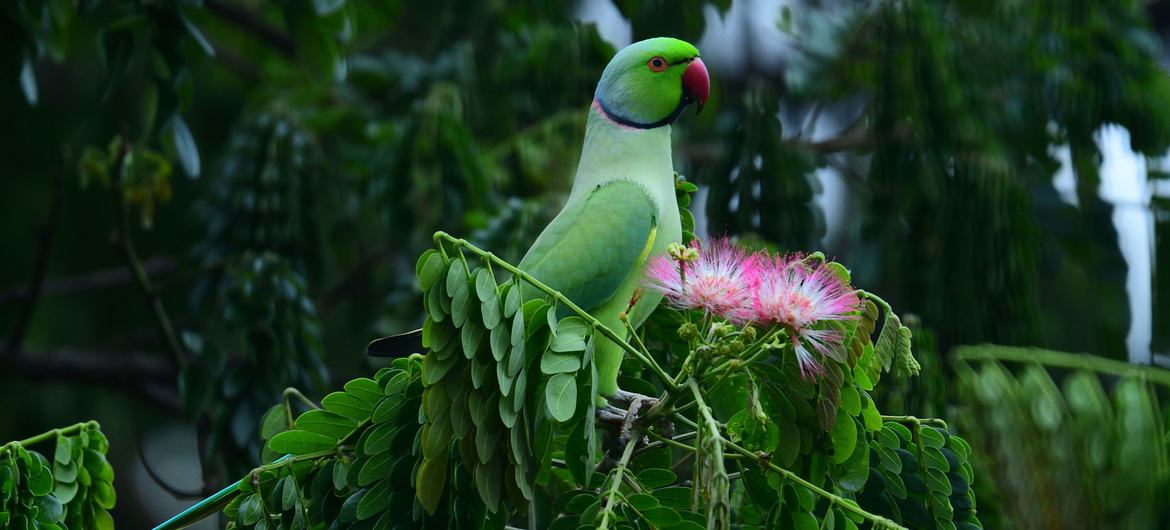
Biodiversity describes variation among living organisms, including diversity within species, between species and across ecosystems. A forest is not merely a collection of trees: it contains fungi that recycle nutrients, insects that pollinate plants, predators that control populations, soil organisms that maintain fertility and complex food webs that respond to disturbance. When biodiversity erodes, ecosystems can become less resilient to droughts, disease and changing temperatures. That can affect farming, fisheries, drinking-water quality, coastal protection and human livelihoods. Conservation is therefore not separate from economic development; it is part of the natural infrastructure on which development depends.
What exactly happened at COP17 in Armenia
Negotiators at COP17 adopted what reporting described as the Yerevan Pathway, a decision intended to accelerate progress toward the biodiversity framework’s 2030 targets. Discussions focused on harmful subsidies, financing for developing countries and alignment between public expenditure and biodiversity objectives. The meeting also reviewed national targets and implementation efforts. The important distinction is between an agreement on the direction of travel and money actually delivered or ecosystems actually restored. Neither an announced pledge nor a new decision should be counted as a completed conservation result.
Understanding the 30 by 30 target
One of the most widely discussed targets is to effectively conserve and manage at least 30% of the world’s terrestrial, inland-water, coastal and marine areas by 2030. It is often shortened to “30x30.” The target is not simply about drawing boundaries on maps. Protected and conserved areas must be ecologically representative, well connected and equitably governed, while recognizing the rights of Indigenous peoples and local communities. A protected area without adequate staffing, community cooperation or effective enforcement may do little to prevent ecological degradation. The quality of conservation matters as much as the headline percentage.
Why money remains the central obstacle
Biodiversity protection requires long-term spending: trained rangers, habitat restoration, pollution control, scientific surveys, community support and monitoring. Many biodiversity-rich countries face limited fiscal space and competing priorities such as healthcare, housing and infrastructure. The global framework includes a goal to mobilize at least $200 billion annually for biodiversity by 2030 from public and private sources. Reuters reported that more than $1.8 billion in financing announcements emerged around COP17, but those announcements are not the same as the full annual funding target, nor necessarily money already disbursed. Tracking whether funds reach projects and communities will be crucial.
The surprising role of harmful subsidies
Governments sometimes unintentionally reward activities that damage nature. Examples can include poorly designed incentives that encourage excessive fertilizer use, overfishing or conversion of natural habitats. The biodiversity framework calls for identifying and reforming incentives harmful to biodiversity, with a target to reduce them by at least $500 billion per year by 2030. Reform is politically difficult because subsidies often support livelihoods or lower consumer prices. Good policy must distinguish between removing environmental harm and abandoning vulnerable households. Governments can redirect support toward sustainable farming, cleaner technologies and ecosystem restoration.
The high seas: conservation beyond national borders
Much of the ocean lies beyond the jurisdiction of any single country. Migratory species, deep-sea ecosystems and ocean food webs do not respect national boundaries. This makes monitoring, scientific cooperation and international rules essential. Marine protected areas can help, but their design must consider fishing activity, shipping, scientific uncertainty and enforcement capabilities. COP17’s biodiversity agenda intersects with broader efforts to govern the high seas, yet the different international agreements have distinct legal processes. A conference declaration by itself does not create a functioning marine reserve.
How nature loss affects food security
Agriculture relies on ecological processes that often go unnoticed. Pollinators help many crops reproduce; healthy soils retain moisture and cycle nutrients; wetlands filter water; and genetic diversity offers options for breeding crops resistant to pests and changing climates. If a farming landscape becomes too uniform, a disease or climate shock can have wider consequences. Protecting biodiversity does not mean ending food production. It can mean using integrated pest management, maintaining field margins, conserving local crop varieties and reducing unnecessary chemical runoff. The strongest approaches measure both ecological outcomes and farmers’ incomes.
India’s stakes: forests, mangroves and coastal communities
India contains ecosystems ranging from the Himalayas and Western Ghats to grasslands, wetlands, mangroves and coral reefs. These landscapes support biodiversity while also providing livelihoods and services. Mangroves can reduce some coastal storm impacts, although they cannot eliminate disaster risk. Wetlands can store floodwater and support fisheries. Forests contribute to watershed stability and carbon storage. India’s challenge is to balance conservation with infrastructure, agriculture, urban growth and the rights of forest-dependent communities. A practical strategy requires transparent environmental assessments, credible data and participation from people who live closest to these ecosystems.
Why conservation cannot succeed without local communities
Conservation policies sometimes fail when residents are treated as obstacles rather than partners. Indigenous peoples and local communities often possess detailed knowledge of seasonal changes, species behaviour and sustainable resource use. At the same time, not every traditional practice is automatically sustainable under modern population and market pressures. Effective conservation combines scientific evidence, legal rights, fair benefit sharing and locally appropriate institutions. Community-led monitoring, compensation for wildlife-related losses and alternative livelihoods can make environmental protection more durable.
Businesses and investors are part of the story
Companies depend on nature through water supply, raw materials, land stability and functioning supply chains. A food producer may face crop failures; a tourism operator may depend on healthy reefs; a manufacturer may depend on reliable water availability. Biodiversity risk therefore belongs in business planning, not only corporate social responsibility reports. Firms can map dependencies and impacts, avoid damaging sensitive habitats and restore degraded areas where feasible. However, vague “nature-positive” claims without measurable baselines or independent verification risk becoming greenwashing.
What could happen between now and 2030
There are several plausible trajectories. In a stronger implementation scenario, governments align budgets with biodiversity goals, expand effective conservation and publish reliable progress data. In a partial-progress scenario, national targets improve on paper while finance and enforcement lag. In a weaker scenario, economic shocks and political disputes push biodiversity down the agenda. These are analytical scenarios, not forecasts. The decisive indicators will include funding delivered, harmful incentives reformed, ecosystem condition, species trends and the rights and wellbeing of affected communities.
How to read biodiversity headlines critically
When reading a claim that a country has protected a certain percentage of land, ask whether the area is legally designated, effectively managed and ecologically representative. When a financing headline cites billions of dollars, ask whether it is a pledge, commitment, loan, grant or disbursement. When a company announces restoration, ask what the baseline was and whether survival and ecosystem outcomes are monitored over years. Distinguishing inputs, outputs and outcomes helps readers avoid mistaking impressive announcements for measurable progress.
Why this topic matters for UPSC and other examinations
Biodiversity governance connects ecology with international relations, economics, public administration and ethics. Students should understand the Convention on Biological Diversity, the Kunming–Montreal Global Biodiversity Framework, the 30x30 target, ecosystem services, protected-area governance and biodiversity finance. In a mains answer, explain both the ecological urgency and the institutional challenges: financing gaps, monitoring, equitable participation and conflicting land-use priorities. A balanced conclusion should recommend measurable targets, local participation and transparent accountability rather than treating conservation as a slogan.
Conclusion: the real test begins after the summit
COP17 demonstrates that governments can still negotiate common priorities for nature even when geopolitics is difficult. But the planet’s ecosystems will not be restored by communiqués alone. Success will depend on whether budgets change, harmful incentives are redesigned, ecosystems recover and communities share fairly in the benefits. For readers, the most important question is not whether leaders agreed to protect nature. It is whether the world can demonstrate, with evidence, that nature is actually becoming healthier by 2030.
Frequently asked questions
What is COP17?
COP17 is the seventeenth meeting of parties to the Convention on Biological Diversity, held in Yerevan, Armenia, in 2026.
What is the 30x30 biodiversity target?
It aims for effective conservation and management of at least 30% of land, inland waters, coastal areas and oceans by 2030.
Did COP17 solve the biodiversity funding gap?
No. Governments agreed to accelerate implementation, but substantial financing and delivery challenges remain.
How is COP17 different from COP31?
COP17 here refers to the biodiversity convention; COP31 is the 2026 UN climate-change conference under a different treaty.
Why does biodiversity matter to India?
It underpins agriculture, water resources, fisheries, forests, disaster resilience and livelihoods.
Are financial pledges the same as money spent?
No. Pledges and announcements should be distinguished from binding commitments and actual disbursements.
Sources and further reading
- Reuters: COP17 agreement, 31 October 2026
- Convention on Biological Diversity: Global Biodiversity Framework
- Official Convention on Biological Diversity website
Explore the Official Biodiversity Targets
Explore More Articles at Vitorr Classes
Editorial disclosure: This is an original educational explainer based on cited public reporting and official framework information. It is not an official UN statement. Figures refer to targets or reported announcements unless otherwise stated.
 Oxford Student Atlas India Competitive