What Happened
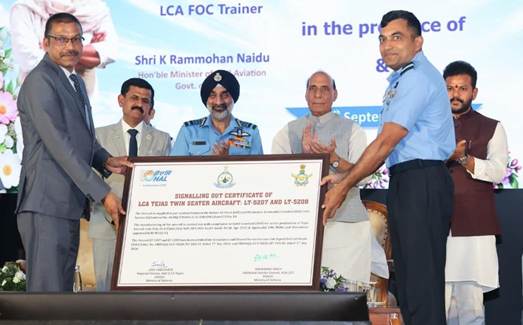
India's indigenous aerospace programme recorded an important development on 18 September 2026 when Hindustan Aeronautics Limited (HAL) handed over two Light Combat Aircraft Tejas Final Operational Clearance Twin-Seater Trainers and three HTT-40 Basic Trainer Aircraft to the Indian Air Force, while four Dhruv Next Generation helicopters were handed over to Pawan Hans Limited. The ceremony took place in Bengaluru, Karnataka, in the presence of Defence Minister Rajnath Singh and Civil Aviation Minister K. Rammohan Naidu.
The event brought together three different indigenous aerospace platforms serving different purposes: advanced fighter-pilot training through the Tejas twin-seater, basic military flying training through the HTT-40, and civil rotary-wing operations through the Dhruv NG helicopter. This makes the development particularly relevant for understanding India's attempt to build aerospace capabilities across both defence and civil aviation rather than treating the two sectors as completely separate ecosystems.
The two Tejas aircraft handed over during the ceremony are the final two twin-seater trainers under the Final Operational Clearance contract. These aircraft are intended to support the Indian Air Force's pilot-training requirements and provide an indigenous training pathway leading into frontline fighter operations. An important feature of the Tejas Trainer is that it retains the core systems and combat capability of the frontline aircraft. This enables pilots to train on a platform closely related to the aircraft that they may subsequently operate in active service.
The term Final Operational Clearance, commonly abbreviated as FOC, is important for competitive examinations. In a fighter-aircraft development programme, operational clearances indicate the progressive validation of the aircraft for defined operational capabilities. The Tejas programme has therefore involved not only the development of an indigenous fighter aircraft but also the creation of associated training, maintenance, production and operational capabilities.
The second important platform involved in the handover was the HTT-40, or Hindustan Turbo Trainer-40. HAL handed over three HTT-40 Basic Trainer Aircraft to the Indian Air Force. The HTT-40 is an indigenously designed and developed aircraft intended to meet the primary flying-training requirements of India's defence forces.
Basic trainer aircraft occupy an important position in military aviation training. A trainee pilot does not begin training directly on a frontline fighter aircraft. Pilot training progresses through stages, beginning with fundamental flying skills and moving towards more advanced aircraft and specialised operational training. A basic trainer therefore helps pilots develop essential skills such as aircraft handling, navigation, instrument flying and formation flying before progressing to more demanding platforms.
According to the Ministry of Defence, the HTT-40 is built around a proven turboprop engine and has been designed to provide effective low-speed handling characteristics for trainee pilots. The aircraft incorporates a modern cockpit and avionics suite. Its training roles include aerobatics, general aircraft handling, instrument flying, navigation, night flying and close-formation flying.
The HTT-40 is also important from the perspective of indigenous defence manufacturing because India had previously depended on imported aircraft for a significant part of its basic pilot-training requirement. Indigenous production can potentially provide greater domestic control over maintenance, upgrades, spare parts, lifecycle support and future development, although operational performance, production schedules and lifecycle costs remain important practical considerations for any aerospace programme.
The third platform highlighted during the event was the Dhruv Next Generation helicopter. HAL handed over four Dhruv NG helicopters to Pawan Hans Limited. Unlike the Tejas and HTT-40 aircraft handed to the Indian Air Force, the Dhruv NG is being introduced into civil and commercial rotary-wing operations.
The Ministry of Defence described the Dhruv NG as an important step in HAL's entry into the civil and commercial helicopter segment. The helicopter is configured for civilian operations and incorporates enhanced systems, modern avionics and a more powerful engine. Potential applications include passenger transportation, emergency medical services and offshore logistics support.
The civil role of the Dhruv NG is significant because indigenous aerospace capability can have applications beyond the armed forces. Technologies and industrial capabilities associated with aircraft design, avionics, propulsion, composite materials, flight-control systems, manufacturing, testing and certification can support both military and civilian aviation programmes.
The handover therefore also highlighted the concept of an integrated aerospace ecosystem. Such an ecosystem extends beyond the final aircraft manufacturer. Modern aircraft depend on thousands of components and subsystems, specialised materials, electronics, sensors, avionics, engines, software, manufacturing tools, testing facilities and certification processes. Suppliers, MSMEs, research organisations, private companies, public-sector enterprises and skilled workers can all participate in this industrial network.
HAL occupies a central position in India's aerospace manufacturing system. Its activities extend across aircraft production, helicopter development, maintenance, repair, overhaul and aerospace engineering. The government's stated objective is to expand domestic capabilities across the aerospace value chain, including design, development, manufacturing, certification, lifecycle support and international marketing.
Research and development is another major component of this strategy. Aerospace systems require long development cycles because aircraft must meet demanding requirements involving safety, structural performance, aerodynamics, propulsion, avionics and operational reliability. Delays can increase project costs, create capability gaps and expose technologies to the risk of becoming outdated before full deployment. The government therefore emphasised the importance of realistic project timelines alongside continued R&D.
The Ministry of Defence also highlighted the growing role of private industry alongside Defence Public Sector Undertakings. Modern aerospace programmes can involve large networks of suppliers and specialised technology companies. Greater cooperation between public-sector organisations and private companies can potentially broaden the industrial base and allow specialised firms to participate in components, electronics, software, materials and manufacturing technologies.
Emerging technologies are expected to influence the next generation of aerospace systems. Artificial Intelligence, autonomous systems, unmanned aerial systems, electronic warfare, cyber technologies and next-generation propulsion were among the technological areas identified during the event. These technologies demonstrate how aviation and defence are becoming increasingly connected with software, data, advanced electronics and automation.
Artificial Intelligence can support functions such as data analysis, maintenance prediction and decision-support systems. Autonomous and unmanned systems are changing surveillance and military operations, while electronic warfare involves the use and control of the electromagnetic spectrum. Cybersecurity is increasingly important because modern aircraft and military networks depend heavily on digital systems and communications.
The event also illustrates the relationship between defence industrial policy and technological capability. Producing an aircraft domestically requires capabilities extending far beyond final assembly. Design expertise, specialised materials, avionics, software, testing infrastructure, certification, skilled personnel and reliable supply chains all contribute to the final platform. Consequently, aerospace manufacturing can generate technological spillovers into other advanced industrial sectors.
For competitive-examination students, the three platforms should be clearly distinguished. LCA Tejas is India's indigenous Light Combat Aircraft programme. The aircraft handed over on 18 September were FOC Twin-Seater Trainers intended for the Indian Air Force. HTT-40 stands for Hindustan Turbo Trainer-40 and is an indigenously designed and developed Basic Trainer Aircraft. Dhruv NG is a Next Generation helicopter configured for civil operations, with four helicopters handed over to Pawan Hans Limited.
The organisations involved are equally important. HAL stands for Hindustan Aeronautics Limited and is a major Defence Public Sector Undertaking associated with India's aerospace sector. The Indian Air Force received the Tejas FOC Trainers and HTT-40 aircraft, whereas Pawan Hans Limited received the four Dhruv NG helicopters.
The 18 September 2026 handover therefore represents more than the delivery of nine aircraft and helicopters. It provides a current-affairs example of India's efforts to develop indigenous aircraft design and manufacturing, pilot-training infrastructure, civil helicopter capability and a broader aerospace industrial ecosystem spanning defence and commercial aviation.
क्या हुआ?
भारत के स्वदेशी एयरोस्पेस कार्यक्रम में 18 सितंबर 2026 को एक महत्वपूर्ण विकास हुआ, जब Hindustan Aeronautics Limited अर्थात HAL ने भारतीय वायु सेना को दो Light Combat Aircraft Tejas Final Operational Clearance Twin-Seater Trainer और तीन HTT-40 Basic Trainer Aircraft सौंपे। इसके साथ ही चार Dhruv Next Generation Helicopters Pawan Hans Limited को सौंपे गए। यह समारोह कर्नाटक के बेंगलुरु में रक्षा मंत्री राजनाथ सिंह और नागरिक उड्डयन मंत्री के. राममोहन नायडू की उपस्थिति में आयोजित हुआ।
इस कार्यक्रम में तीन अलग-अलग स्वदेशी एयरोस्पेस प्लेटफॉर्म शामिल थे। Tejas Twin-Seater उन्नत लड़ाकू पायलट प्रशिक्षण से संबंधित है, HTT-40 बुनियादी सैन्य उड़ान प्रशिक्षण के लिए विकसित किया गया है और Dhruv NG नागरिक हेलीकॉप्टर संचालन के लिए उपयोग किया जाएगा। इसलिए यह विकास भारत द्वारा रक्षा और नागरिक उड्डयन दोनों क्षेत्रों में एयरोस्पेस क्षमता विकसित करने के प्रयास को समझने की दृष्टि से महत्वपूर्ण है।
समारोह में सौंपे गए दो Tejas विमान Final Operational Clearance अनुबंध के अंतर्गत अंतिम दो Twin-Seater Trainer हैं। इनका उद्देश्य भारतीय वायु सेना की पायलट प्रशिक्षण आवश्यकताओं को पूरा करना और पायलटों को अग्रिम पंक्ति के लड़ाकू विमानों के संचालन की दिशा में स्वदेशी प्रशिक्षण व्यवस्था उपलब्ध कराना है। Tejas Trainer की महत्वपूर्ण विशेषता यह है कि इसमें अग्रिम पंक्ति वाले Tejas की मुख्य प्रणालियाँ और युद्धक क्षमता बरकरार रहती हैं। इससे पायलटों को उसी प्रकार के विमान पर प्रशिक्षण प्राप्त करने में सहायता मिलती है जिसे वे आगे सक्रिय सेवा में संचालित कर सकते हैं।
Final Operational Clearance अर्थात FOC प्रतियोगी परीक्षाओं की दृष्टि से महत्वपूर्ण शब्द है। लड़ाकू विमान विकास कार्यक्रम में Operational Clearance विमान की निर्धारित परिचालन क्षमताओं के क्रमिक सत्यापन से संबंधित होता है। इसलिए Tejas कार्यक्रम केवल एक स्वदेशी लड़ाकू विमान के विकास तक सीमित नहीं है, बल्कि इससे प्रशिक्षण, रखरखाव, उत्पादन और परिचालन क्षमता भी जुड़ी हुई है।
इस कार्यक्रम का दूसरा महत्वपूर्ण विमान HTT-40 अर्थात Hindustan Turbo Trainer-40 है। HAL ने तीन HTT-40 Basic Trainer Aircraft भारतीय वायु सेना को सौंपे। यह स्वदेशी रूप से डिजाइन और विकसित विमान है, जिसका उद्देश्य रक्षा बलों की प्रारंभिक उड़ान प्रशिक्षण आवश्यकताओं को पूरा करना है।
Basic Trainer Aircraft सैन्य विमानन प्रशिक्षण में महत्वपूर्ण भूमिका निभाता है। कोई प्रशिक्षु पायलट सीधे अग्रिम पंक्ति के लड़ाकू विमान पर प्रशिक्षण शुरू नहीं करता। पायलट प्रशिक्षण विभिन्न चरणों में आगे बढ़ता है। प्रारंभिक स्तर पर बुनियादी उड़ान कौशल सिखाया जाता है और उसके बाद अधिक उन्नत विमान तथा विशेष अभियान प्रशिक्षण की ओर बढ़ा जाता है। Basic Trainer पायलटों को Aircraft Handling, Navigation, Instrument Flying और Formation Flying जैसे आवश्यक कौशल विकसित करने में सहायता करता है।
रक्षा मंत्रालय के अनुसार HTT-40 एक प्रमाणित Turboprop Engine पर आधारित है और इसे प्रशिक्षु पायलटों के लिए प्रभावी Low-Speed Handling Characteristics प्रदान करने के उद्देश्य से तैयार किया गया है। इसमें आधुनिक Cockpit और Avionics Suite शामिल हैं। यह Aerobatics, General Handling, Instrument Flying, Navigation, Night Flying और Close Formation Flying जैसे प्रशिक्षण कार्य कर सकता है।
HTT-40 स्वदेशी रक्षा विनिर्माण की दृष्टि से भी महत्वपूर्ण है क्योंकि भारत पहले अपनी Basic Pilot Training आवश्यकताओं के एक महत्वपूर्ण हिस्से के लिए आयातित विमानों पर निर्भर रहा है। घरेलू उत्पादन से Maintenance, Upgrades, Spare Parts, Lifecycle Support और भविष्य के विकास पर अधिक घरेलू नियंत्रण संभव हो सकता है। हालांकि किसी भी Aerospace Programme में Operational Performance, Production Schedule और Lifecycle Cost जैसे व्यावहारिक कारक भी महत्वपूर्ण होते हैं।
कार्यक्रम में तीसरा महत्वपूर्ण प्लेटफॉर्म Dhruv Next Generation Helicopter था। HAL ने चार Dhruv NG Helicopters Pawan Hans Limited को सौंपे। Tejas और HTT-40 के विपरीत Dhruv NG को नागरिक और वाणिज्यिक Rotary-Wing Operations के लिए शामिल किया जा रहा है।
रक्षा मंत्रालय ने Dhruv NG को नागरिक और वाणिज्यिक हेलीकॉप्टर क्षेत्र में HAL के प्रवेश की दिशा में महत्वपूर्ण कदम बताया है। इसे नागरिक संचालन के लिए तैयार किया गया है और इसमें उन्नत प्रणालियाँ, आधुनिक Avionics तथा अधिक शक्तिशाली Engine शामिल है। इसके संभावित उपयोगों में Passenger Transport, Emergency Medical Services और Offshore Logistics Support शामिल हैं।
Dhruv NG का नागरिक उपयोग इसलिए महत्वपूर्ण है क्योंकि स्वदेशी Aerospace Capability का लाभ केवल सशस्त्र बलों तक सीमित नहीं रहता। Aircraft Design, Avionics, Propulsion, Composite Materials, Flight-Control Systems, Manufacturing, Testing और Certification से संबंधित औद्योगिक क्षमताओं का उपयोग सैन्य और नागरिक दोनों Aviation Programmes में किया जा सकता है।
इस कार्यक्रम ने Integrated Aerospace Ecosystem की अवधारणा को भी सामने रखा। ऐसा पारिस्थितिकी तंत्र केवल अंतिम विमान बनाने वाली कंपनी तक सीमित नहीं होता। आधुनिक विमान हजारों Components और Subsystems, विशेष Materials, Electronics, Sensors, Avionics, Engines, Software, Manufacturing Tools, Testing Facilities और Certification Processes पर निर्भर करते हैं। Suppliers, MSMEs, Research Organisations, Private Companies, Public-Sector Enterprises और कुशल कर्मचारी इस पूरी औद्योगिक व्यवस्था का हिस्सा होते हैं।
HAL भारत की Aerospace Manufacturing व्यवस्था में केंद्रीय भूमिका निभाता है। इसकी गतिविधियाँ Aircraft Manufacturing, Helicopter Development, Maintenance, Repair, Overhaul और Aerospace Engineering तक फैली हुई हैं। सरकार का घोषित उद्देश्य Design, Development, Manufacturing, Certification, Lifecycle Support और Global Marketing सहित पूरे Aerospace Value Chain में घरेलू क्षमता बढ़ाना है।
Research and Development भी इस रणनीति का महत्वपूर्ण हिस्सा है। Aerospace Systems के विकास में लंबा समय लग सकता है क्योंकि विमानों को सुरक्षा, संरचनात्मक क्षमता, Aerodynamics, Propulsion, Avionics और Operational Reliability से संबंधित कठोर आवश्यकताओं को पूरा करना होता है। परियोजनाओं में देरी से लागत बढ़ सकती है, आवश्यक सैन्य क्षमता समय पर उपलब्ध न होने की समस्या उत्पन्न हो सकती है और तकनीक पुरानी पड़ने का जोखिम बढ़ सकता है। इसलिए निरंतर R&D के साथ यथार्थवादी Project Timelines पर भी जोर दिया गया।
रक्षा मंत्रालय ने Defence Public Sector Undertakings के साथ निजी उद्योग की बढ़ती भूमिका को भी रेखांकित किया। आधुनिक Aerospace Programmes में बड़ी संख्या में Suppliers और विशेष Technology Companies शामिल हो सकती हैं। Public Sector और Private Companies के बीच अधिक सहयोग Components, Electronics, Software, Materials और Manufacturing Technologies जैसे क्षेत्रों में औद्योगिक आधार का विस्तार कर सकता है।
उभरती तकनीकें भविष्य की Aerospace Systems को तेजी से प्रभावित करेंगी। Artificial Intelligence, Autonomous Systems, Unmanned Aerial Systems, Electronic Warfare, Cyber Technologies और Next-Generation Propulsion को कार्यक्रम के दौरान महत्वपूर्ण तकनीकी क्षेत्रों के रूप में रेखांकित किया गया। ये तकनीकें दिखाती हैं कि Aviation और Defence अब Software, Data, Advanced Electronics और Automation से तेजी से जुड़ रहे हैं।
Artificial Intelligence का उपयोग Data Analysis, Maintenance Prediction और Decision Support जैसे क्षेत्रों में किया जा सकता है। Autonomous और Unmanned Systems निगरानी तथा सैन्य अभियानों की प्रकृति बदल रहे हैं। Electronic Warfare विद्युतचुंबकीय स्पेक्ट्रम के उपयोग और नियंत्रण से संबंधित है। Cybersecurity भी अत्यंत महत्वपूर्ण हो गई है क्योंकि आधुनिक विमान और सैन्य नेटवर्क Digital Systems तथा Communication Networks पर निर्भर करते हैं।
यह कार्यक्रम Defence Industrial Policy और Technological Capability के बीच संबंध को भी समझाता है। किसी विमान का घरेलू उत्पादन केवल उसकी Final Assembly तक सीमित नहीं होता। Design Expertise, Specialised Materials, Avionics, Software, Testing Infrastructure, Certification, Skilled Workforce और Reliable Supply Chains सभी अंतिम विमान के निर्माण में योगदान करते हैं। इसलिए Aerospace Manufacturing अन्य Advanced Industrial Sectors में भी तकनीकी क्षमता बढ़ा सकता है।
प्रतियोगी परीक्षाओं के विद्यार्थियों को इन तीनों प्लेटफॉर्मों के बीच अंतर स्पष्ट रूप से याद रखना चाहिए। LCA Tejas भारत का स्वदेशी Light Combat Aircraft Programme है। 18 सितंबर को सौंपे गए विमान FOC Twin-Seater Trainers थे और इन्हें भारतीय वायु सेना को दिया गया। HTT-40 का पूरा नाम Hindustan Turbo Trainer-40 है और यह स्वदेशी रूप से डिजाइन और विकसित Basic Trainer Aircraft है। Dhruv NG एक Next Generation Helicopter है जिसे नागरिक संचालन के लिए तैयार किया गया है और इसके चार हेलीकॉप्टर Pawan Hans Limited को सौंपे गए।
इससे जुड़ी संस्थाएँ भी महत्वपूर्ण हैं। HAL का पूरा नाम Hindustan Aeronautics Limited है और यह भारत के Aerospace Sector से जुड़ा प्रमुख Defence Public Sector Undertaking है। भारतीय वायु सेना को Tejas FOC Trainers और HTT-40 Aircraft प्राप्त हुए, जबकि Pawan Hans Limited को चार Dhruv NG Helicopters दिए गए।
इस प्रकार 18 सितंबर 2026 का यह कार्यक्रम केवल नौ विमानों और हेलीकॉप्टरों की डिलीवरी नहीं है। यह स्वदेशी Aircraft Design और Manufacturing, Pilot Training Infrastructure, Civil Helicopter Capability तथा Defence और Commercial Aviation दोनों को जोड़ने वाले व्यापक Aerospace Industrial Ecosystem के विकास का महत्वपूर्ण समसामयिक उदाहरण है।
Key Facts
• HAL conducted the aircraft handover ceremony in Bengaluru on 18 September 2026.
• Two LCA Tejas Final Operational Clearance Twin-Seater Trainers were handed over to the Indian Air Force.
• The two Tejas trainers are the final two aircraft under the FOC contract.
• Three HTT-40 Basic Trainer Aircraft were handed over to the Indian Air Force.
• HTT-40 stands for Hindustan Turbo Trainer-40.
• The HTT-40 is indigenously designed and developed.
• The HTT-40 is intended to meet the primary flying-training requirements of the Defence Forces.
• HTT-40 training roles include aerobatics, general handling, instrument flying, navigation, night flying and close-formation flying.
• Four Dhruv Next Generation helicopters were handed over to Pawan Hans Limited.
• Dhruv NG is configured for civil operations.
• Dhruv NG incorporates modern avionics, enhanced systems and a more powerful engine.
• Dhruv NG can be used for passenger transport, emergency medical services and offshore logistics support.
• HAL stands for Hindustan Aeronautics Limited.
• Emerging aerospace technologies highlighted at the event included Artificial Intelligence, autonomous systems and unmanned aerial systems.
• Electronic warfare, cyber technologies and next-generation propulsion were also identified as important future aerospace technologies.
मुख्य तथ्य
• HAL ने 18 सितंबर 2026 को बेंगलुरु में विमान हस्तांतरण समारोह आयोजित किया।
• दो LCA Tejas Final Operational Clearance Twin-Seater Trainers भारतीय वायु सेना को सौंपे गए।
• ये दोनों Tejas Trainer FOC Contract के अंतिम दो विमान हैं।
• तीन HTT-40 Basic Trainer Aircraft भारतीय वायु सेना को सौंपे गए।
• HTT-40 का पूरा नाम Hindustan Turbo Trainer-40 है।
• HTT-40 स्वदेशी रूप से डिजाइन और विकसित विमान है।
• HTT-40 को रक्षा बलों की प्राथमिक उड़ान प्रशिक्षण आवश्यकताओं के लिए तैयार किया गया है।
• HTT-40 Aerobatics, General Handling, Instrument Flying, Navigation, Night Flying और Close-Formation Flying का प्रशिक्षण दे सकता है।
• चार Dhruv Next Generation Helicopters Pawan Hans Limited को सौंपे गए।
• Dhruv NG को नागरिक संचालन के लिए तैयार किया गया है।
• Dhruv NG में आधुनिक Avionics, उन्नत प्रणालियाँ और अधिक शक्तिशाली Engine शामिल है।
• Dhruv NG का उपयोग Passenger Transport, Emergency Medical Services और Offshore Logistics Support में किया जा सकता है।
• HAL का पूरा नाम Hindustan Aeronautics Limited है।
• कार्यक्रम में Artificial Intelligence, Autonomous Systems और Unmanned Aerial Systems को भविष्य की महत्वपूर्ण Aerospace Technologies के रूप में रेखांकित किया गया।
• Electronic Warfare, Cyber Technologies और Next-Generation Propulsion को भी महत्वपूर्ण तकनीकी क्षेत्रों के रूप में बताया गया।
Background
India has been developing indigenous aerospace capabilities across fighter aircraft, helicopters and training aircraft through organisations including Hindustan Aeronautics Limited. The Tejas programme represents indigenous light-combat-aircraft capability, while the HTT-40 addresses basic military pilot training. Dhruv NG extends indigenous helicopter capability into the civil and commercial rotary-wing sector. Together, these platforms illustrate the wider aerospace value chain covering design, development, manufacturing, certification, training and lifecycle support.
पृष्ठभूमि
भारत Hindustan Aeronautics Limited जैसी संस्थाओं के माध्यम से Fighter Aircraft, Helicopters और Training Aircraft में स्वदेशी Aerospace Capability विकसित कर रहा है। Tejas Programme स्वदेशी Light Combat Aircraft क्षमता का प्रतिनिधित्व करता है, जबकि HTT-40 Basic Military Pilot Training की आवश्यकता को पूरा करने के लिए विकसित किया गया है। Dhruv NG स्वदेशी Helicopter Capability को Civil और Commercial Rotary-Wing Sector तक विस्तारित करता है। ये तीनों प्लेटफॉर्म Design, Development, Manufacturing, Certification, Training और Lifecycle Support वाली व्यापक Aerospace Value Chain को समझने में सहायता करते हैं।
Why It Matters
The development is important because indigenous aerospace capability involves much more than assembling aircraft. It requires domestic competence in design, avionics, flight-control systems, manufacturing, testing, certification, maintenance and skilled human resources. The simultaneous handover of military trainers and civil helicopters also demonstrates the potential overlap between defence and civilian aerospace industrial capabilities. For students, the event provides a useful example of defence indigenisation, aviation technology and India's aerospace manufacturing ecosystem.
यह क्यों महत्वपूर्ण है?
यह विकास महत्वपूर्ण है क्योंकि स्वदेशी Aerospace Capability केवल विमानों की Assembly तक सीमित नहीं होती। इसके लिए Design, Avionics, Flight-Control Systems, Manufacturing, Testing, Certification, Maintenance और Skilled Human Resources में घरेलू क्षमता आवश्यक होती है। Military Trainers और Civil Helicopters का एक साथ हस्तांतरण Defence तथा Civil Aerospace Industrial Capabilities के बीच संबंध को भी दर्शाता है। विद्यार्थियों के लिए यह Defence Indigenisation, Aviation Technology और भारत के Aerospace Manufacturing Ecosystem का महत्वपूर्ण उदाहरण है।
Exam Connection
Important for UPSC Prelims and GS-III, CDS, NDA, AFCAT, CAPF, SSC, Railway and State PCS. Remember the 18 September 2026 handover: two LCA Tejas FOC Twin-Seater Trainers and three HTT-40 Basic Trainers went to the Indian Air Force, while four Dhruv NG helicopters went to Pawan Hans Limited. HTT-40 means Hindustan Turbo Trainer-40. Dhruv NG is intended for civil operations. HAL means Hindustan Aeronautics Limited. Also revise the concepts of FOC, basic trainer aircraft, avionics, unmanned aerial systems, electronic warfare and indigenous defence manufacturing.
परीक्षा से संबंध
UPSC प्रारंभिक परीक्षा एवं GS-III, CDS, NDA, AFCAT, CAPF, SSC, Railway और State PCS के लिए महत्वपूर्ण। 18 सितंबर 2026 का मुख्य तथ्य याद रखें: दो LCA Tejas FOC Twin-Seater Trainers और तीन HTT-40 Basic Trainers भारतीय वायु सेना को दिए गए, जबकि चार Dhruv NG Helicopters Pawan Hans Limited को सौंपे गए। HTT-40 का अर्थ Hindustan Turbo Trainer-40 है। Dhruv NG नागरिक संचालन के लिए है। HAL का पूरा नाम Hindustan Aeronautics Limited है। FOC, Basic Trainer Aircraft, Avionics, Unmanned Aerial Systems, Electronic Warfare और Indigenous Defence Manufacturing की अवधारणाएँ भी पढ़ें।