What Happened
1. Why in News?
On 10 November 2026, the Ministry of Fisheries, Animal Husbandry and Dairying highlighted a strategy to strengthen island-based fisheries in Lakshadweep and the Andaman and Nicobar Islands. The strategy focuses on tuna, seaweed, ornamental fish, modern infrastructure, sustainable harvesting and export-oriented value chains.
2. Official Announcement
The Press Information Bureau published the announcement under the title 'Island fisheries at the centre of India's Blue Economy push'. It was released on 10 November 2026, with official release number 2334511.
3. What Is the Blue Economy?
The Blue Economy refers to the sustainable use of ocean resources for economic growth, improved livelihoods and employment while maintaining the health of marine ecosystems. Fisheries, aquaculture, shipping, tourism and marine biotechnology are among its important activities.
4. India's Coastline
The official announcement reports India's coastline as approximately 11,099 kilometres. This extensive coastline creates opportunities for marine fisheries, maritime transport, coastal tourism and ocean-based economic activities.
5. Exclusive Economic Zone
India's Exclusive Economic Zone covers nearly 24 lakh square kilometres. An Exclusive Economic Zone is a maritime area in which a coastal state has specified sovereign rights relating to natural resources under international law.
6. Importance of Island Territories
Lakshadweep and the Andaman and Nicobar Islands together account for nearly 40% of India's Exclusive Economic Zone. Their maritime location provides access to substantial ocean resources and important tuna migration routes.
7. Marine Geography of Lakshadweep
Lakshadweep lies in the Arabian Sea. Its lagoons, coral reefs and surrounding deep waters provide opportunities for tuna fisheries, seaweed cultivation and livelihoods linked to marine ecosystems.
8. Marine Geography of Andaman and Nicobar Islands
The Andaman and Nicobar Islands are situated in the Bay of Bengal region, with proximity to Southeast Asian maritime routes. Their marine habitats support opportunities for fishing, mariculture and seafood processing.
9. India's Marine Fisheries Potential
The ministry estimates India's marine fisheries potential within its Exclusive Economic Zone at approximately 58.6 lakh metric tonnes. This represents estimated resource potential rather than the quantity currently harvested.
10. Livelihood Importance
Marine fisheries support the livelihoods of nearly 50 lakh fishers. The sector also contributes to food security, nutrition, employment, local incomes and export earnings.
11. Seafood Export Value
India's seafood exports were valued at approximately ₹73,890 crore during financial year 2025–26, according to the official announcement. This indicates the importance of marine products in international trade.
12. Public Investment Since 2015
The government reported commitments of approximately ₹39,272 crore through major fisheries schemes and programmes since 2015. This figure represents public investment commitments across the sector, not expenditure exclusively on the two island territories.
13. PMMSY
The Pradhan Mantri Matsya Sampada Yojana is a major government programme for fisheries development. It supports infrastructure, production, productivity, quality improvement and the strengthening of fisheries-related livelihoods.
14. Investment for Andaman and Nicobar Islands
Under PMMSY, an investment of ₹218 crore has been allocated for fisheries development in the Andaman and Nicobar Islands. The planned support is intended to strengthen the island territory's fisheries capabilities.
15. Investment for Lakshadweep
Under PMMSY, ₹175 crore has been earmarked for Lakshadweep. This support is associated with developing fisheries infrastructure and unlocking sustainable marine economic opportunities.
16. Union Budget 2025–26
The Union Budget 2025–26 emphasised sustainable use of fisheries resources from the Exclusive Economic Zone and the high seas, with particular attention to Lakshadweep and the Andaman and Nicobar Islands.
17. Tuna as a Priority
Tuna fisheries form a central component of the island development strategy. Tuna is a commercially valuable group of marine fish with important domestic and international markets.
18. Important Tuna Species
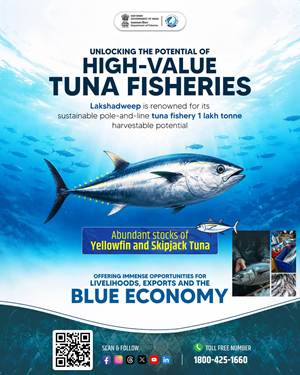
The official announcement identifies Yellowfin tuna, Skipjack tuna and Bigeye tuna as important species associated with the surrounding waters. These are particularly relevant to geography and fisheries-related examinations.
19. Lakshadweep Tuna Production Target
A five-year development plan seeks to double tuna production in Lakshadweep to 50,000 tonnes. This is a future target, not a claim that the territory has already achieved that production level.
20. Traditional Fishing Methods
Lakshadweep's traditional pole-and-line fishing is an important part of the proposed development strategy. This method uses individual lines and can provide greater selectivity than some large-scale fishing techniques when appropriately managed.
21. Selective Fishing
The strategy encourages methods such as hook-and-line and pole-and-line fishing. Selective fishing can help reduce unwanted catches, although environmental outcomes depend on how the methods are implemented.
22. Deep-Sea Fishing Vessels
Modern deep-sea vessels and mother vessels are part of the proposed fisheries expansion. They can support fishing operations farther from shore and improve handling and logistics when suitable safeguards are applied.
23. Tuna Cluster in Andaman and Nicobar Islands
A dedicated Tuna Cluster under PMMSY is supporting fisheries development in the Andaman and Nicobar Islands. The approach combines fleet modernisation, infrastructure and market access.
24. Fleet Modernisation
The island strategy includes upgrading fishing fleets and introducing modern vessels. Better equipment can improve operational efficiency, safety and handling of high-value catches.
25. Cold-Chain Development
Cold-chain infrastructure includes facilities that keep fish at suitable temperatures from landing to processing and distribution. Such systems are essential for preserving quality and reducing spoilage.
26. Role of MPEDA
The Marine Products Export Development Authority is expected to strengthen its presence to improve market access and facilitate direct seafood exports from the Andaman and Nicobar Islands. MPEDA is associated with the development and promotion of marine product exports.
27. Seaweed as an Economic Opportunity
Seaweed cultivation is being promoted as another pillar of island fisheries development. Seaweed can be used in food products, cosmetics, pharmaceuticals, nutraceuticals and various industrial applications.
28. Lakshadweep Seaweed Cluster
Lakshadweep has been notified as a dedicated Seaweed Cluster. The roadmap includes large-scale cultivation, seed banks, hatcheries and training to build a reliable production and marketing system.
29. What Is Mariculture?
Mariculture refers to cultivating aquatic organisms in marine or coastal environments. Depending on the species and production method, it can include seaweed farming and other forms of marine aquaculture.
30. Ornamental Fisheries
Ornamental fisheries involve aquatic species valued for their appearance and use in aquariums. This sector may provide specialised income opportunities, but it requires conservation safeguards and responsible sourcing.
31. Ornamental Species in Lakshadweep
The official announcement states that Lakshadweep hosts more than 300 reef-associated ornamental species. This biological richness offers economic possibilities while creating an important responsibility to protect reef ecosystems.
32. Conservation-Based Collection
The government strategy proposes regulated collection and conservation-based practices for ornamental species. Such safeguards are important because excessive collection can damage fragile marine populations and habitats.
33. Rearing Facilities
Medium-scale ornamental fish rearing units are among the proposed interventions. Rearing facilities may help develop controlled production systems and reduce pressure on wild populations when appropriately designed.
34. Fish Landing Centres
Fish landing centres provide facilities where fishing vessels can unload catches. Improved landing infrastructure can support hygiene, handling, transportation and market access.
35. Ice Plants and Preservation
Ice plants and onboard preservation systems help maintain fish quality. These facilities are especially important in tropical island conditions where delays can increase post-harvest losses.
36. Fish Aggregating Devices
Fish aggregating devices are structures used to attract or concentrate certain fish species. Their use requires scientific management because poorly regulated deployment can create ecological risks and unwanted catches.
37. Processing and Value Addition
Processing facilities, including canning and other value-addition units, can help island communities capture more economic value from fish products rather than depending entirely on sales of unprocessed catches.
38. Boat-Building and Support Infrastructure
Boat-building yards and supporting facilities are included in the development strategy. Local infrastructure can strengthen maintenance capabilities and support fishing-related employment.
39. Export Readiness
Improved cold storage, processing, logistics and quality management can make island-based seafood more competitive in domestic and international markets. Export expansion must also comply with relevant safety and sustainability requirements.
40. Post-Harvest Losses
Post-harvest losses occur when fish deteriorates or is wasted after capture. Better preservation, transport and processing can reduce these losses and improve incomes without necessarily increasing fishing pressure.
41. Environmental Sensitivity
Coral reefs, lagoons and other marine habitats are ecologically sensitive. Fisheries development must therefore consider habitat protection, sustainable harvesting and the long-term health of marine ecosystems.
42. Community Participation
The strategy emphasises opportunities for fishers, local businesses and island communities. Meaningful participation is important to ensure that economic benefits reach residents rather than remaining concentrated elsewhere.
43. Food and Nutrition Security
Fish provides important nutrients, including protein and certain vitamins and minerals. Sustainable fisheries can contribute to local food systems as well as export earnings.
44. Economic Diversification
Combining tuna, seaweed, ornamental fisheries and processing can reduce dependence on a single activity. Diversification may help communities develop multiple income sources, subject to ecological and market conditions.
45. Strategic Importance
The island territories have significance beyond fisheries because of their location in major maritime regions. Developing sustainable economic activities can strengthen local infrastructure and maritime capabilities.
46. Examination Relevance
This topic connects Indian geography, Exclusive Economic Zones, the Blue Economy, PMMSY, marine biodiversity, sustainable resource management, fisheries infrastructure and international trade. It is relevant to UPSC GS1 and GS3 as well as SSC and Railway general awareness.
47. Important Clarification
The ₹218 crore and ₹175 crore figures are PMMSY investment allocations, while the 50,000-tonne tuna figure is a planned production target. These should not be presented as completed expenditure or achieved production.
48. Overall Significance
India's island fisheries strategy seeks to move from simply harvesting marine resources towards sustainable value creation through scientific management, infrastructure, processing and community participation. Its long-term success will depend on balancing economic growth with marine biodiversity conservation.
क्या हुआ?
1. चर्चा में क्यों?
10 नवंबर 2026 को मत्स्यपालन, पशुपालन और डेयरी मंत्रालय ने लक्षद्वीप तथा अंडमान और निकोबार द्वीपसमूह में मत्स्यपालन के विकास की महत्वपूर्ण रणनीति प्रस्तुत की। इस रणनीति में टूना मछली, समुद्री शैवाल, सजावटी मछलियों, आधुनिक अवसंरचना, सतत मत्स्य दोहन और निर्यात आधारित मूल्य शृंखलाओं पर विशेष ध्यान दिया गया है।
2. आधिकारिक घोषणा
प्रेस सूचना ब्यूरो ने भारत की नीली अर्थव्यवस्था में द्वीपीय मत्स्यपालन की केंद्रीय भूमिका विषय पर 10 नवंबर 2026 को घोषणा प्रकाशित की। इसकी आधिकारिक विज्ञप्ति संख्या 2334511 है।
3. नीली अर्थव्यवस्था क्या है?
नीली अर्थव्यवस्था का अर्थ समुद्री पारिस्थितिकी तंत्र के स्वास्थ्य को बनाए रखते हुए महासागरीय संसाधनों का आर्थिक विकास, रोजगार और आजीविका सुधार के लिए सतत उपयोग करना है। मत्स्यपालन, जलीय कृषि, जहाजरानी, पर्यटन और समुद्री जैव प्रौद्योगिकी इसके महत्वपूर्ण क्षेत्र हैं।
4. भारत की तटरेखा
आधिकारिक घोषणा के अनुसार भारत की तटरेखा लगभग 11,099 किलोमीटर लंबी है। इतनी विस्तृत तटरेखा समुद्री मत्स्यपालन, परिवहन, तटीय पर्यटन और महासागर आधारित आर्थिक गतिविधियों के लिए महत्वपूर्ण अवसर प्रदान करती है।
5. विशेष आर्थिक क्षेत्र
भारत का विशेष आर्थिक समुद्री क्षेत्र लगभग 24 लाख वर्ग किलोमीटर में फैला हुआ है। अंतरराष्ट्रीय कानून के अनुसार इस क्षेत्र में तटीय देश को प्राकृतिक संसाधनों के संबंध में विशिष्ट संप्रभु अधिकार प्राप्त होते हैं।
6. द्वीपीय क्षेत्रों का महत्व
लक्षद्वीप तथा अंडमान और निकोबार द्वीपसमूह मिलकर भारत के विशेष आर्थिक क्षेत्र के लगभग 40 प्रतिशत हिस्से का प्रतिनिधित्व करते हैं। इनकी समुद्री स्थिति महत्वपूर्ण महासागरीय संसाधनों और टूना मछलियों के प्रवास मार्गों तक पहुंच प्रदान करती है।
7. लक्षद्वीप का समुद्री भूगोल
लक्षद्वीप अरब सागर में स्थित है। यहां के लैगून, प्रवाल भित्तियां और आसपास के गहरे समुद्री जल टूना मत्स्यपालन, समुद्री शैवाल की खेती और समुद्री पारिस्थितिकी तंत्र से जुड़ी आजीविका के अवसर प्रदान करते हैं।
8. अंडमान और निकोबार का समुद्री भूगोल
अंडमान और निकोबार द्वीपसमूह बंगाल की खाड़ी क्षेत्र में स्थित है तथा दक्षिण-पूर्व एशिया के समुद्री मार्गों के निकट है। इसके समुद्री आवास मत्स्यपालन, समुद्री जलीय कृषि और समुद्री खाद्य प्रसंस्करण की संभावनाएं प्रदान करते हैं।
9. भारत की समुद्री मत्स्य क्षमता
मंत्रालय के अनुसार भारत के विशेष आर्थिक क्षेत्र में समुद्री मत्स्य संसाधनों की अनुमानित क्षमता लगभग 58.6 लाख मीट्रिक टन है। यह संसाधनों की अनुमानित क्षमता है, वर्तमान में पकड़ी जा रही मछलियों की वास्तविक मात्रा नहीं।
10. आजीविका में महत्व
समुद्री मत्स्यपालन लगभग 50 लाख मछुआरों की आजीविका को समर्थन देता है। यह क्षेत्र खाद्य सुरक्षा, पोषण, रोजगार, स्थानीय आय और निर्यात से प्राप्त आय में भी योगदान करता है।
11. समुद्री खाद्य निर्यात
आधिकारिक घोषणा के अनुसार वित्त वर्ष 2025–26 में भारत का समुद्री खाद्य निर्यात लगभग 73,890 करोड़ रुपये रहा। यह अंतरराष्ट्रीय व्यापार में समुद्री उत्पादों के महत्व को दर्शाता है।
12. वर्ष 2015 से सार्वजनिक निवेश
सरकार के अनुसार वर्ष 2015 से प्रमुख मत्स्य योजनाओं और कार्यक्रमों के माध्यम से लगभग 39,272 करोड़ रुपये के निवेश की प्रतिबद्धता व्यक्त की गई है। यह पूरे मत्स्य क्षेत्र से संबंधित आंकड़ा है, केवल दोनों द्वीपीय क्षेत्रों पर किए गए व्यय का नहीं।
13. प्रधानमंत्री मत्स्य संपदा योजना
प्रधानमंत्री मत्स्य संपदा योजना मत्स्य क्षेत्र के विकास का प्रमुख सरकारी कार्यक्रम है। यह अवसंरचना, उत्पादन, उत्पादकता, गुणवत्ता सुधार और मत्स्यपालन से संबंधित आजीविका को मजबूत करने में सहायता प्रदान करती है।
14. अंडमान और निकोबार के लिए निवेश
प्रधानमंत्री मत्स्य संपदा योजना के अंतर्गत अंडमान और निकोबार द्वीपसमूह में मत्स्य विकास के लिए 218 करोड़ रुपये का निवेश आवंटित किया गया है। इसका उद्देश्य इस द्वीपीय क्षेत्र की मत्स्य क्षमताओं को मजबूत करना है।
15. लक्षद्वीप के लिए निवेश
प्रधानमंत्री मत्स्य संपदा योजना के अंतर्गत लक्षद्वीप के लिए 175 करोड़ रुपये निर्धारित किए गए हैं। यह सहायता मत्स्य अवसंरचना और सतत समुद्री आर्थिक अवसरों के विकास से संबंधित है।
16. केंद्रीय बजट 2025–26
केंद्रीय बजट 2025–26 में विशेष आर्थिक क्षेत्र और खुले समुद्र के मत्स्य संसाधनों के सतत उपयोग पर जोर दिया गया था। इसमें लक्षद्वीप तथा अंडमान और निकोबार द्वीपसमूह को विशेष महत्व दिया गया।
17. टूना मछली को प्राथमिकता
टूना मत्स्यपालन द्वीपीय विकास रणनीति का प्रमुख घटक है। टूना समुद्री मछलियों का व्यावसायिक रूप से महत्वपूर्ण समूह है जिसकी घरेलू और अंतरराष्ट्रीय बाजारों में मांग है।
18. टूना की प्रमुख प्रजातियां
आधिकारिक घोषणा में येलोफिन टूना, स्किपजैक टूना और बिगआई टूना का उल्लेख किया गया है। ये प्रजातियां आसपास के समुद्री जल में पाई जाती हैं और भूगोल तथा मत्स्यपालन संबंधी परीक्षाओं के लिए महत्वपूर्ण हैं।
19. लक्षद्वीप का टूना उत्पादन लक्ष्य
पांच वर्षीय विकास योजना के अंतर्गत लक्षद्वीप में टूना उत्पादन दोगुना करके 50,000 टन करने का लक्ष्य रखा गया है। यह भविष्य का लक्ष्य है, पहले से प्राप्त उत्पादन उपलब्धि नहीं।
20. पारंपरिक मत्स्य विधि
लक्षद्वीप की पारंपरिक पोल एंड लाइन मत्स्य विधि विकास रणनीति का महत्वपूर्ण हिस्सा है। इस पद्धति में अलग-अलग डोरियों का उपयोग किया जाता है और उचित प्रबंधन होने पर कुछ बड़े पैमाने की मत्स्य विधियों की तुलना में अधिक चयनात्मक पकड़ संभव होती है।
21. चयनात्मक मत्स्यपालन
रणनीति में हुक एंड लाइन तथा पोल एंड लाइन जैसी विधियों को प्रोत्साहित किया गया है। चयनात्मक मत्स्यपालन अवांछित जीवों की पकड़ कम करने में सहायक हो सकता है, हालांकि वास्तविक पर्यावरणीय प्रभाव इसके कार्यान्वयन पर निर्भर करते हैं।
22. गहरे समुद्र में मत्स्यपालन करने वाले जहाज
आधुनिक गहरे समुद्र के जहाज और मदर वेसल प्रस्तावित मत्स्य विस्तार का हिस्सा हैं। उचित सुरक्षा उपायों के साथ ये तट से दूर मत्स्य संचालन, भंडारण और परिवहन को बेहतर बना सकते हैं।
23. अंडमान और निकोबार में टूना क्लस्टर
प्रधानमंत्री मत्स्य संपदा योजना के अंतर्गत अंडमान और निकोबार द्वीपसमूह में विशेष टूना क्लस्टर विकसित किया जा रहा है। इसमें मत्स्य बेड़े का आधुनिकीकरण, अवसंरचना और बाजार तक पहुंच को एक साथ जोड़ा गया है।
24. मत्स्य बेड़े का आधुनिकीकरण
द्वीपीय रणनीति में मत्स्य जहाजों का उन्नयन और आधुनिक जहाजों का उपयोग शामिल है। बेहतर उपकरण परिचालन दक्षता, सुरक्षा और मूल्यवान मछलियों के रखरखाव में सुधार कर सकते हैं।
25. शीत शृंखला का विकास
शीत शृंखला में मछलियों को उतारने से लेकर प्रसंस्करण और वितरण तक उपयुक्त तापमान पर रखने वाली सुविधाएं शामिल हैं। गुणवत्ता बनाए रखने और खराब होने से होने वाली हानि घटाने के लिए यह आवश्यक है।
26. MPEDA की भूमिका
समुद्री उत्पाद निर्यात विकास प्राधिकरण की उपस्थिति मजबूत करके अंडमान और निकोबार से सीधे समुद्री खाद्य निर्यात तथा बाजार तक पहुंच बढ़ाने का प्रयास किया जा रहा है। यह प्राधिकरण समुद्री उत्पादों के निर्यात के विकास और संवर्धन से संबंधित है।
27. समुद्री शैवाल के आर्थिक अवसर
समुद्री शैवाल की खेती को द्वीपीय मत्स्य विकास के एक अन्य प्रमुख क्षेत्र के रूप में प्रोत्साहित किया जा रहा है। समुद्री शैवाल का उपयोग खाद्य पदार्थों, सौंदर्य प्रसाधनों, औषधियों, पोषण उत्पादों और विभिन्न औद्योगिक उत्पादों में किया जा सकता है।
28. लक्षद्वीप समुद्री शैवाल क्लस्टर
लक्षद्वीप को विशेष समुद्री शैवाल क्लस्टर के रूप में अधिसूचित किया गया है। विकास योजना में बड़े पैमाने पर खेती, बीज बैंक, हैचरी और प्रशिक्षण की व्यवस्था शामिल है।
29. समुद्री जलीय कृषि क्या है?
समुद्री जलीय कृषि का अर्थ समुद्री या तटीय वातावरण में जलीय जीवों और वनस्पतियों का पालन या उत्पादन करना है। प्रजातियों तथा उत्पादन पद्धति के अनुसार इसमें समुद्री शैवाल की खेती और अन्य समुद्री कृषि गतिविधियां शामिल हो सकती हैं।
30. सजावटी मत्स्यपालन
सजावटी मत्स्यपालन में ऐसी जलीय प्रजातियां शामिल होती हैं जिन्हें उनके आकर्षक रूप और एक्वेरियम में उपयोग के लिए महत्व दिया जाता है। इससे विशेष आय के अवसर मिल सकते हैं, लेकिन संरक्षण और जिम्मेदार संग्रहण आवश्यक है।
31. लक्षद्वीप में सजावटी प्रजातियां
आधिकारिक घोषणा के अनुसार लक्षद्वीप में प्रवाल भित्तियों से जुड़ी 300 से अधिक सजावटी प्रजातियां पाई जाती हैं। यह जैविक विविधता आर्थिक अवसरों के साथ प्रवाल पारिस्थितिकी तंत्र की रक्षा की जिम्मेदारी भी पैदा करती है।
32. संरक्षण आधारित संग्रहण
सरकारी रणनीति में सजावटी प्रजातियों के नियंत्रित संग्रहण और संरक्षण आधारित पद्धतियों को बढ़ावा दिया गया है। अत्यधिक संग्रहण से संवेदनशील समुद्री जीवों और उनके आवासों को नुकसान पहुंच सकता है।
33. पालन सुविधाएं
सजावटी मछलियों के लिए मध्यम आकार की पालन इकाइयां प्रस्तावित उपायों में शामिल हैं। उचित डिजाइन और प्रबंधन होने पर ऐसी इकाइयां नियंत्रित उत्पादन को बढ़ावा देकर प्राकृतिक आबादी पर दबाव कम कर सकती हैं।
34. मछली उतारने के केंद्र
मत्स्य अवतरण केंद्र वे सुविधाएं हैं जहां मछली पकड़ने वाले जहाज अपना माल उतारते हैं। बेहतर केंद्र स्वच्छता, रखरखाव, परिवहन और बाजार तक पहुंच को मजबूत कर सकते हैं।
35. बर्फ संयंत्र और संरक्षण
बर्फ संयंत्र और जहाजों पर संरक्षण की सुविधाएं मछलियों की गुणवत्ता बनाए रखने में मदद करती हैं। उष्णकटिबंधीय द्वीपीय क्षेत्रों में इनका महत्व अधिक है क्योंकि देरी से पकड़ी गई मछलियां जल्दी खराब हो सकती हैं।
36. मछलियों को आकर्षित करने वाले उपकरण
मछली एकत्रीकरण उपकरण ऐसी संरचनाएं हैं जिनका उपयोग कुछ मछली प्रजातियों को आकर्षित करने के लिए किया जाता है। इनके उपयोग में वैज्ञानिक प्रबंधन आवश्यक है क्योंकि अनियंत्रित उपयोग से पर्यावरणीय जोखिम और अवांछित पकड़ बढ़ सकती है।
37. प्रसंस्करण और मूल्य संवर्धन
डिब्बाबंदी और अन्य प्रसंस्करण इकाइयां द्वीपीय समुदायों को मछलियों से अधिक आर्थिक मूल्य प्राप्त करने में सहायता कर सकती हैं। इससे केवल बिना प्रसंस्करण वाली मछलियों की बिक्री पर निर्भरता कम हो सकती है।
38. नौका निर्माण और सहायक अवसंरचना
नौका निर्माण केंद्र और संबंधित सुविधाएं विकास रणनीति में शामिल हैं। स्थानीय अवसंरचना रखरखाव क्षमता को मजबूत कर सकती है और मत्स्यपालन से संबंधित रोजगार बढ़ा सकती है।
39. निर्यात की तैयारी
बेहतर शीत भंडारण, प्रसंस्करण, परिवहन और गुणवत्ता प्रबंधन से द्वीपीय समुद्री उत्पाद घरेलू तथा अंतरराष्ट्रीय बाजारों में अधिक प्रतिस्पर्धी बन सकते हैं। निर्यात विस्तार में खाद्य सुरक्षा और पर्यावरणीय मानकों का पालन भी आवश्यक है।
40. पकड़ के बाद होने वाली हानि
मछली पकड़ने के बाद खराब होने या बर्बाद होने वाली मात्रा को पकड़ के बाद की हानि कहा जाता है। बेहतर संरक्षण, परिवहन और प्रसंस्करण से अतिरिक्त मत्स्य दोहन बढ़ाए बिना भी आय में सुधार किया जा सकता है।
41. पर्यावरणीय संवेदनशीलता
प्रवाल भित्तियां, लैगून और अन्य समुद्री आवास पारिस्थितिक रूप से संवेदनशील होते हैं। इसलिए मत्स्य विकास में आवास संरक्षण, सतत मत्स्य दोहन और समुद्री पारिस्थितिकी तंत्र के दीर्घकालीन स्वास्थ्य को ध्यान में रखना आवश्यक है।
42. सामुदायिक भागीदारी
रणनीति में मछुआरों, स्थानीय व्यवसायों और द्वीपीय समुदायों के लिए अवसरों पर जोर दिया गया है। आर्थिक लाभ स्थानीय निवासियों तक पहुंचाने के लिए उनकी सार्थक भागीदारी महत्वपूर्ण है।
43. खाद्य और पोषण सुरक्षा
मछली प्रोटीन तथा कुछ विटामिन और खनिजों का महत्वपूर्ण स्रोत है। सतत मत्स्यपालन स्थानीय खाद्य व्यवस्था को मजबूत करने के साथ निर्यात आय भी बढ़ा सकता है।
44. आर्थिक विविधीकरण
टूना, समुद्री शैवाल, सजावटी मछलियों और प्रसंस्करण को एक साथ विकसित करने से किसी एक आर्थिक गतिविधि पर निर्भरता कम हो सकती है। इससे पर्यावरणीय और बाजार संबंधी परिस्थितियों के अनुसार समुदायों को आय के अनेक स्रोत मिल सकते हैं।
45. रणनीतिक महत्व
द्वीपीय क्षेत्रों का महत्व केवल मत्स्यपालन तक सीमित नहीं है। प्रमुख समुद्री क्षेत्रों में उनकी स्थिति उन्हें रणनीतिक रूप से भी महत्वपूर्ण बनाती है। सतत आर्थिक गतिविधियों का विकास स्थानीय अवसंरचना और समुद्री क्षमताओं को मजबूत कर सकता है।
46. प्रतियोगी परीक्षाओं में महत्व
यह विषय भारतीय भूगोल, विशेष आर्थिक क्षेत्र, नीली अर्थव्यवस्था, प्रधानमंत्री मत्स्य संपदा योजना, समुद्री जैव विविधता, सतत संसाधन प्रबंधन, मत्स्य अवसंरचना और अंतरराष्ट्रीय व्यापार से संबंधित है। यह UPSC GS1 और GS3 के साथ SSC तथा रेलवे सामान्य जागरूकता के लिए उपयोगी है।
47. महत्वपूर्ण स्पष्टीकरण
218 करोड़ रुपये और 175 करोड़ रुपये की राशियां प्रधानमंत्री मत्स्य संपदा योजना के अंतर्गत निवेश आवंटन हैं। इसी प्रकार 50,000 टन टूना उत्पादन एक प्रस्तावित लक्ष्य है। इन्हें पूर्ण व्यय या पहले से प्राप्त उत्पादन उपलब्धि नहीं बताना चाहिए।
48. समग्र महत्व
भारत की द्वीपीय मत्स्य रणनीति केवल समुद्री संसाधनों के दोहन से आगे बढ़कर वैज्ञानिक प्रबंधन, अवसंरचना, प्रसंस्करण और सामुदायिक भागीदारी के माध्यम से सतत मूल्य निर्माण पर केंद्रित है। इसकी दीर्घकालीन सफलता आर्थिक विकास और समुद्री जैव विविधता संरक्षण के बीच संतुलन बनाए रखने पर निर्भर करेगी।
Key Facts
• The official announcement was published on 10 November 2026.
• The responsible ministry is the Ministry of Fisheries, Animal Husbandry and Dairying.
• The strategy focuses on Lakshadweep and the Andaman and Nicobar Islands.
• India's coastline is approximately 11,099 kilometres according to the release.
• India's Exclusive Economic Zone covers nearly 24 lakh square kilometres.
• Lakshadweep and the Andaman and Nicobar Islands together account for nearly 40% of India's EEZ.
• India's estimated marine fisheries potential within its EEZ is 58.6 lakh metric tonnes.
• Marine fisheries support nearly 50 lakh fishers.
• India's seafood exports were worth approximately ₹73,890 crore in FY 2025–26.
• Public investment commitments in major fisheries programmes since 2015 total approximately ₹39,272 crore.
• PMMSY stands for Pradhan Mantri Matsya Sampada Yojana.
• PMMSY investment allocation for the Andaman and Nicobar Islands is ₹218 crore.
• PMMSY investment earmarked for Lakshadweep is ₹175 crore.
• The Union Budget 2025–26 highlighted sustainable fisheries in the EEZ and high seas.
• Lakshadweep lies in the Arabian Sea.
• The Andaman and Nicobar Islands are in the Bay of Bengal region.
• The important tuna species mentioned are Yellowfin, Skipjack and Bigeye.
• Lakshadweep has a five-year target to double tuna production to 50,000 tonnes.
• The 50,000-tonne tuna figure is a target, not an achieved output.
• Pole-and-line fishing is a traditional method used in Lakshadweep.
• Hook-and-line fishing is among the selective fishing methods promoted.
• Modern deep-sea vessels form part of the fisheries strategy.
• Mother vessels are included in the Lakshadweep tuna development plan.
• A dedicated Tuna Cluster is being developed in the Andaman and Nicobar Islands under PMMSY.
• Cold-chain expansion is an important infrastructure priority.
• MPEDA stands for Marine Products Export Development Authority.
• MPEDA's strengthened presence is expected to support exports from the Andaman and Nicobar Islands.
• Lakshadweep has been notified as a dedicated Seaweed Cluster.
• Seaweed cultivation has applications in food, cosmetics, pharmaceuticals and industrial products.
• Seaweed seed banks and hatcheries are included in the development roadmap.
• Lakshadweep hosts more than 300 reef-associated ornamental species.
• Ornamental fisheries involve aquatic species valued for aquarium use.
• Conservation-based collection is an important part of ornamental fisheries planning.
• Medium-scale ornamental fish rearing units are proposed.
• Fish landing centres are part of the infrastructure strategy.
• Ice plants and onboard preservation systems help maintain fish quality.
• Fish aggregating devices are included among planned infrastructure measures.
• Boat-building yards form part of the fisheries infrastructure programme.
• Processing and canning facilities can increase local value addition.
• Reducing post-harvest losses is a major objective.
• Marine biodiversity protection is essential for sustainable island fisheries.
• Local communities and fishers are intended participants in the development strategy.
• The Blue Economy links ocean-based growth with environmental sustainability.
• The official PIB release number is 2334511.
मुख्य तथ्य
• आधिकारिक घोषणा 10 नवंबर 2026 को प्रकाशित हुई।
• संबंधित मंत्रालय मत्स्यपालन, पशुपालन और डेयरी मंत्रालय है।
• रणनीति लक्षद्वीप तथा अंडमान और निकोबार द्वीपसमूह पर केंद्रित है।
• विज्ञप्ति के अनुसार भारत की तटरेखा लगभग 11,099 किलोमीटर लंबी है।
• भारत का विशेष आर्थिक क्षेत्र लगभग 24 लाख वर्ग किलोमीटर है।
• लक्षद्वीप तथा अंडमान और निकोबार मिलकर भारत के विशेष आर्थिक क्षेत्र के लगभग 40 प्रतिशत हिस्से का प्रतिनिधित्व करते हैं।
• भारत के विशेष आर्थिक क्षेत्र में समुद्री मत्स्य क्षमता लगभग 58.6 लाख मीट्रिक टन अनुमानित है।
• समुद्री मत्स्यपालन लगभग 50 लाख मछुआरों की आजीविका को समर्थन देता है।
• वित्त वर्ष 2025–26 में समुद्री खाद्य निर्यात का मूल्य लगभग 73,890 करोड़ रुपये था।
• वर्ष 2015 से प्रमुख मत्स्य कार्यक्रमों में सार्वजनिक निवेश प्रतिबद्धताएं लगभग 39,272 करोड़ रुपये हैं।
• PMMSY का पूरा नाम प्रधानमंत्री मत्स्य संपदा योजना है।
• अंडमान और निकोबार के लिए PMMSY निवेश आवंटन 218 करोड़ रुपये है।
• लक्षद्वीप के लिए PMMSY निवेश आवंटन 175 करोड़ रुपये है।
• केंद्रीय बजट 2025–26 में विशेष आर्थिक क्षेत्र और खुले समुद्र में सतत मत्स्यपालन पर जोर दिया गया।
• लक्षद्वीप अरब सागर में स्थित है।
• अंडमान और निकोबार द्वीपसमूह बंगाल की खाड़ी क्षेत्र में स्थित है।
• महत्वपूर्ण टूना प्रजातियां येलोफिन, स्किपजैक और बिगआई हैं।
• लक्षद्वीप में पांच वर्षों में टूना उत्पादन दोगुना करके 50,000 टन करने का लक्ष्य है।
• 50,000 टन टूना उत्पादन एक लक्ष्य है, प्राप्त उपलब्धि नहीं।
• पोल एंड लाइन लक्षद्वीप की पारंपरिक मत्स्य विधि है।
• हुक एंड लाइन प्रोत्साहित की जाने वाली चयनात्मक मत्स्य विधियों में शामिल है।
• आधुनिक गहरे समुद्र के जहाज विकास रणनीति का हिस्सा हैं।
• लक्षद्वीप की टूना विकास योजना में मदर वेसल शामिल हैं।
• अंडमान और निकोबार में PMMSY के अंतर्गत विशेष टूना क्लस्टर विकसित किया जा रहा है।
• शीत शृंखला का विस्तार महत्वपूर्ण अवसंरचना प्राथमिकता है।
• MPEDA का पूरा नाम Marine Products Export Development Authority है।
• MPEDA की मजबूत उपस्थिति से अंडमान और निकोबार से निर्यात को सहायता मिलने की अपेक्षा है।
• लक्षद्वीप को विशेष समुद्री शैवाल क्लस्टर के रूप में अधिसूचित किया गया है।
• समुद्री शैवाल का उपयोग खाद्य, सौंदर्य प्रसाधन, औषधि और औद्योगिक उत्पादों में होता है।
• समुद्री शैवाल के बीज बैंक और हैचरी विकास योजना में शामिल हैं।
• लक्षद्वीप में प्रवाल भित्तियों से जुड़ी 300 से अधिक सजावटी प्रजातियां हैं।
• सजावटी मत्स्यपालन में एक्वेरियम के लिए महत्वपूर्ण जलीय प्रजातियां शामिल होती हैं।
• सजावटी मत्स्यपालन की योजना में संरक्षण आधारित संग्रहण महत्वपूर्ण है।
• सजावटी मछलियों की मध्यम आकार की पालन इकाइयां प्रस्तावित हैं।
• मछली उतारने के केंद्र अवसंरचना रणनीति में शामिल हैं।
• बर्फ संयंत्र और जहाजों पर संरक्षण प्रणाली मछलियों की गुणवत्ता बनाए रखने में सहायक हैं।
• मछली एकत्रीकरण उपकरण प्रस्तावित अवसंरचना उपायों में शामिल हैं।
• नौका निर्माण केंद्र मत्स्य अवसंरचना कार्यक्रम का हिस्सा हैं।
• प्रसंस्करण और डिब्बाबंदी सुविधाएं स्थानीय मूल्य संवर्धन बढ़ा सकती हैं।
• पकड़ के बाद होने वाली हानि कम करना प्रमुख उद्देश्य है।
• सतत द्वीपीय मत्स्यपालन के लिए समुद्री जैव विविधता का संरक्षण आवश्यक है।
• स्थानीय समुदाय और मछुआरे विकास रणनीति के महत्वपूर्ण भागीदार हैं।
• नीली अर्थव्यवस्था महासागर आधारित विकास को पर्यावरणीय स्थिरता से जोड़ती है।
• आधिकारिक PIB विज्ञप्ति संख्या 2334511 है।
Background
India's marine fisheries sector is an important source of livelihoods, nutrition and export earnings. The country possesses a coastline of approximately 11,099 kilometres and an Exclusive Economic Zone of nearly 24 lakh square kilometres. Lakshadweep and the Andaman and Nicobar Islands are particularly significant because they collectively account for nearly 40% of India's EEZ. Their surrounding waters provide opportunities for tuna fishing, seaweed cultivation and ornamental fisheries. The government has increased its focus on fisheries infrastructure and value-chain development through programmes including the Pradhan Mantri Matsya Sampada Yojana. The Union Budget 2025–26 also highlighted the sustainable use of fisheries resources in the EEZ and high seas. On 10 November 2026, the Ministry of Fisheries, Animal Husbandry and Dairying outlined how island-focused investment, modern vessels, cold chains, processing, conservation and export support could strengthen India's Blue Economy.
पृष्ठभूमि
भारत का समुद्री मत्स्य क्षेत्र आजीविका, पोषण और निर्यात आय का महत्वपूर्ण स्रोत है। देश की तटरेखा लगभग 11,099 किलोमीटर लंबी है तथा विशेष आर्थिक क्षेत्र लगभग 24 लाख वर्ग किलोमीटर में फैला है। लक्षद्वीप तथा अंडमान और निकोबार द्वीपसमूह विशेष रूप से महत्वपूर्ण हैं क्योंकि ये मिलकर भारत के विशेष आर्थिक क्षेत्र के लगभग 40 प्रतिशत हिस्से का प्रतिनिधित्व करते हैं। इनके आसपास के समुद्री जल में टूना मत्स्यपालन, समुद्री शैवाल की खेती और सजावटी मछलियों के विकास की संभावनाएं हैं। सरकार ने प्रधानमंत्री मत्स्य संपदा योजना सहित विभिन्न कार्यक्रमों के माध्यम से मत्स्य अवसंरचना और मूल्य शृंखला विकास पर ध्यान बढ़ाया है। केंद्रीय बजट 2025–26 में भी विशेष आर्थिक क्षेत्र और खुले समुद्र के मत्स्य संसाधनों के सतत उपयोग को महत्व दिया गया। 10 नवंबर 2026 को मत्स्यपालन, पशुपालन और डेयरी मंत्रालय ने बताया कि द्वीपीय निवेश, आधुनिक जहाज, शीत शृंखला, प्रसंस्करण, संरक्षण और निर्यात सहायता भारत की नीली अर्थव्यवस्था को कैसे मजबूत कर सकते हैं।
Why It Matters
The island fisheries strategy is significant because it connects economic development with marine resource conservation. The Andaman and Nicobar Islands and Lakshadweep provide access to important fishing grounds, but their coral reefs and marine ecosystems are environmentally sensitive. Investment in cold storage, processing and market access can improve the value received from existing catches, while scientifically managed tuna fishing and seaweed cultivation can create additional livelihood opportunities. The proposed development of ornamental fisheries also requires conservation-based regulation to avoid damaging reef biodiversity. The strategy illustrates how infrastructure, exports, community participation and environmental safeguards must work together for sustainable Blue Economy growth. It is particularly relevant to UPSC topics involving marine geography, fisheries, economic development, biodiversity and sustainable resource management.
यह क्यों महत्वपूर्ण है?
द्वीपीय मत्स्य विकास रणनीति महत्वपूर्ण है क्योंकि यह आर्थिक विकास को समुद्री संसाधनों के संरक्षण से जोड़ती है। अंडमान और निकोबार तथा लक्षद्वीप महत्वपूर्ण मत्स्य क्षेत्रों तक पहुंच प्रदान करते हैं, लेकिन उनकी प्रवाल भित्तियां और समुद्री पारिस्थितिकी तंत्र पर्यावरणीय रूप से संवेदनशील हैं। शीत भंडारण, प्रसंस्करण और बाजार तक पहुंच में निवेश से पहले से पकड़ी गई मछलियों का आर्थिक मूल्य बढ़ाया जा सकता है। वैज्ञानिक प्रबंधन वाले टूना मत्स्यपालन और समुद्री शैवाल की खेती से अतिरिक्त आजीविका अवसर भी विकसित हो सकते हैं। सजावटी मत्स्यपालन के प्रस्तावित विस्तार में प्रवाल जैव विविधता को नुकसान से बचाने के लिए संरक्षण आधारित नियमन आवश्यक है। यह रणनीति दर्शाती है कि सतत नीली अर्थव्यवस्था के लिए अवसंरचना, निर्यात, सामुदायिक भागीदारी और पर्यावरणीय सुरक्षा को एक साथ कार्य करना चाहिए। यह समुद्री भूगोल, मत्स्यपालन, आर्थिक विकास, जैव विविधता और सतत संसाधन प्रबंधन से संबंधित UPSC विषयों के लिए विशेष रूप से उपयोगी है।
Exam Connection
Important Examination Facts: Announcement date: 10 November 2026. Ministry: Ministry of Fisheries, Animal Husbandry and Dairying. Official PIB release: 2334511. Main focus: Lakshadweep and Andaman and Nicobar Islands. India's coastline: Approximately 11,099 km. India's Exclusive Economic Zone: Nearly 24 lakh sq. km. Combined EEZ share of the two island groups: Nearly 40%. Estimated marine fisheries potential: 58.6 lakh metric tonnes. Fishers supported: Nearly 50 lakh. Seafood exports FY 2025–26: Approximately ₹73,890 crore. Public investment commitments in fisheries since 2015: Approximately ₹39,272 crore. Main scheme: Pradhan Mantri Matsya Sampada Yojana. Andaman and Nicobar PMMSY allocation: ₹218 crore. Lakshadweep PMMSY allocation: ₹175 crore. Lakshadweep tuna production target: 50,000 tonnes over a five-year plan. Important tuna species: Yellowfin, Skipjack and Bigeye. Traditional Lakshadweep method: Pole-and-line fishing. Tuna Cluster: Andaman and Nicobar Islands. Seaweed Cluster: Lakshadweep. Ornamental reef-associated species in Lakshadweep: More than 300. Export development authority: Marine Products Export Development Authority. Infrastructure priorities: Cold chains, fish landing centres, ice plants, vessels, processing units and boat-building yards. Main principle: Sustainable growth with ecological safeguards. UPSC relevance: GS1 geography and GS3 economy, agriculture, environment and biodiversity.
परीक्षा से संबंध
परीक्षा के महत्वपूर्ण तथ्य: घोषणा की तिथि: 10 नवंबर 2026। मंत्रालय: मत्स्यपालन, पशुपालन और डेयरी मंत्रालय। आधिकारिक PIB विज्ञप्ति: 2334511। प्रमुख क्षेत्र: लक्षद्वीप तथा अंडमान और निकोबार द्वीपसमूह। भारत की तटरेखा: लगभग 11,099 किलोमीटर। भारत का विशेष आर्थिक क्षेत्र: लगभग 24 लाख वर्ग किलोमीटर। दोनों द्वीपीय समूहों का संयुक्त हिस्सा: लगभग 40 प्रतिशत। अनुमानित समुद्री मत्स्य क्षमता: 58.6 लाख मीट्रिक टन। आजीविका प्राप्त करने वाले मछुआरे: लगभग 50 लाख। वित्त वर्ष 2025–26 का समुद्री खाद्य निर्यात: लगभग 73,890 करोड़ रुपये। वर्ष 2015 से मत्स्य क्षेत्र में सार्वजनिक निवेश प्रतिबद्धताएं: लगभग 39,272 करोड़ रुपये। प्रमुख योजना: प्रधानमंत्री मत्स्य संपदा योजना। अंडमान और निकोबार के लिए आवंटन: 218 करोड़ रुपये। लक्षद्वीप के लिए आवंटन: 175 करोड़ रुपये। लक्षद्वीप में पांच वर्षीय टूना उत्पादन लक्ष्य: 50,000 टन। प्रमुख टूना प्रजातियां: येलोफिन, स्किपजैक और बिगआई। लक्षद्वीप की पारंपरिक विधि: पोल एंड लाइन मत्स्यपालन। टूना क्लस्टर: अंडमान और निकोबार द्वीपसमूह। समुद्री शैवाल क्लस्टर: लक्षद्वीप। लक्षद्वीप में प्रवाल से जुड़ी सजावटी प्रजातियां: 300 से अधिक। निर्यात विकास प्राधिकरण: समुद्री उत्पाद निर्यात विकास प्राधिकरण। अवसंरचना प्राथमिकताएं: शीत शृंखला, मत्स्य अवतरण केंद्र, बर्फ संयंत्र, जहाज, प्रसंस्करण इकाइयां और नौका निर्माण केंद्र। प्रमुख सिद्धांत: पर्यावरणीय सुरक्षा के साथ सतत विकास। UPSC महत्व: GS1 भूगोल तथा GS3 अर्थव्यवस्था, कृषि, पर्यावरण और जैव विविधता।
 History Geography General Science Economy
 Geography Competitive Examinations Navigating Paperback