What Happened
1. Why in News?
On 4 November 2026, the Union Cabinet chaired by Prime Minister Narendra Modi approved a Viability Gap Funding Scheme for the Development of Grid-Scale Energy Storage Systems. The decision is intended to strengthen India's electricity infrastructure and support the large-scale integration of renewable energy.
2. Official Announcement
The Ministry of Power announced the Cabinet decision through the Press Information Bureau. The official release, numbered 2332486, provides details of the financial support, targeted storage capacity, technology distribution, eligibility and domestic manufacturing requirements.
3. Total Government Support
The scheme provides financial support of ₹14,500 crore. This is the approved support amount for the scheme, not an amount already paid to project developers.
4. Implementation Period
The financial support covers FY 2026–27 to FY 2030–31. The scheme is intended to facilitate the development of new grid-scale energy storage projects during this period.
5. Total Storage Capacity
The scheme targets 92 gigawatt-hours of energy storage capacity. The government specifically describes this as capacity that is yet to be commissioned.
6. Three Technology Categories
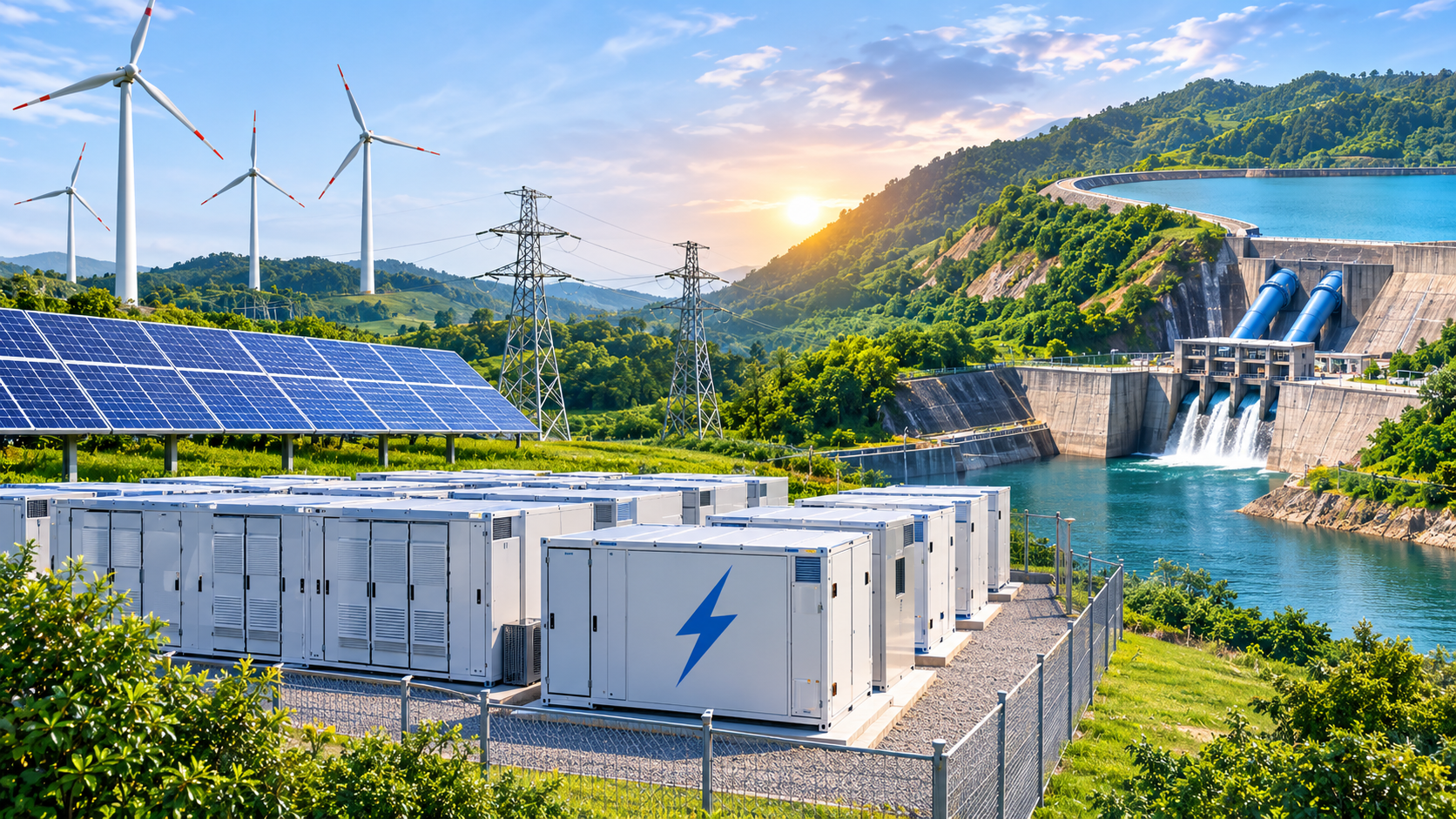
The proposed 92 GWh capacity is divided into 60 GWh of hydro pumped storage, 30 GWh of battery energy storage and 2 GWh of alternative energy storage technologies.
7. Hydro Pumped Storage Allocation
Hydro Pumped Storage Plants, or PSPs, account for 60 GWh of the proposed capacity. Pumped storage is a mature technology for storing large quantities of electrical energy over several hours.
8. Battery Energy Storage Allocation
Battery Energy Storage Systems, or BESS, account for 30 GWh of the scheme's capacity target. Batteries can respond quickly to changes in electricity demand and supply.
9. Emerging Technologies Allocation
The remaining 2 GWh will be supported through alternative energy storage technologies. The official release does not specify an exclusive list of technologies that must receive this allocation.
10. Estimated Total Investment
The government estimates total investment of ₹97,600 crore for the proposed storage infrastructure. This amount represents the broader investment associated with the scheme, rather than the government's ₹14,500 crore support alone.
11. What Is Viability Gap Funding?
Viability Gap Funding is financial assistance intended to make socially or economically desirable infrastructure projects commercially feasible when expected revenues alone may not justify the required investment.
12. Why Energy Storage Needs Support
Large-scale storage projects often require substantial initial investment. Their financial returns depend on electricity-market arrangements, utilisation, operating costs and revenue opportunities. VGF can reduce part of the financing challenge.
13. What Is Grid-Scale Energy Storage?
Grid-scale energy storage refers to systems connected to or supporting the electricity network that can absorb energy and release it later. Such systems help balance electricity supply and demand.
14. Energy and Power Are Different
A gigawatt, or GW, measures power, while a gigawatt-hour, or GWh, measures energy. A 1 GW storage system operating at full output for four hours could deliver approximately 4 GWh of energy, before accounting for losses.
15. Why the Unit GWh Matters
The new scheme specifies energy storage capacity in GWh. This should not be confused with installed generating capacity in GW or with the number of electricity consumers served.
16. How Pumped Storage Works
A pumped-storage plant typically uses electricity to pump water from a lower reservoir to a higher reservoir. When electricity is needed, water flows back through turbines to generate power.
17. Pumped Storage Is Not a Primary Energy Source
Pumped storage does not create energy from nothing. It stores previously generated electricity by converting electrical energy into gravitational potential energy and later recovering part of it.
18. How Battery Storage Works
Battery systems store energy through electrochemical processes and release it when required. Their performance depends on battery chemistry, design, temperature management, power electronics and operating conditions.
19. Battery Storage and Grid Stability
Battery systems can respond rapidly to changes in grid conditions. Depending on their design and operating arrangements, they can provide services such as frequency response, peak shifting and renewable energy balancing.
20. Alternative Storage Technologies
Alternative storage technologies may include mechanical, thermal or other electrochemical approaches. Their eligibility under this scheme will depend on the applicable implementation guidelines and procurement conditions.
21. Renewable Energy Variability
Solar power production changes with sunlight, while wind power depends on wind conditions. Energy storage can absorb electricity during periods of higher generation and release it when generation is lower.
22. Solar Energy Integration
Solar generation is concentrated in daylight hours. Storage can help move some of that electricity to evening periods, when demand may remain high even after solar output declines.
23. Wind Energy Integration
Wind generation can fluctuate over short and long periods. Storage can help manage some of these variations, although transmission capacity, forecasting and other grid resources remain important.
24. Round-the-Clock Electricity
The government states that the scheme will help provide reliable and affordable round-the-clock electricity. Storage can contribute to this objective by increasing the flexibility of the power system.
25. Grid Stability
Grid stability requires electricity supply and demand to remain appropriately balanced while maintaining operating parameters. Storage can provide flexible capacity that helps system operators manage changing conditions.
26. Peak Demand Management
Electricity demand often rises during particular hours. Storage can charge when power is relatively abundant and discharge during peak demand, subject to operational and market arrangements.
27. Reducing Renewable Energy Curtailment
Renewable energy curtailment occurs when available renewable electricity cannot be used or transmitted. Storage can help absorb some otherwise unused generation when technically and economically appropriate.
28. Electricity Distribution Companies
The scheme allows public and private sector electricity distribution companies to receive VGF support for eligible BESS and hydro pumped-storage projects.
29. Alternative Technology Developers
Projects using alternative energy storage technologies will be implemented by public and private sector entities. The precise eligibility conditions will depend on the scheme's implementation arrangements.
30. Competitive Bidding
Energy storage capacity will be allocated through tariff-based competitive bidding. This mechanism is intended to introduce price competition when selecting eligible projects.
31. Meaning of Tariff-Based Bidding
Under tariff-based competitive bidding, eligible participants compete through bids connected to the price of the relevant electricity or storage service. The precise tariff structure depends on the procurement framework.
32. Domestic Content Requirement
BESS projects under the scheme must meet a minimum Domestic Content Requirement of 40 percent. This is an important provision intended to support Indian manufacturing.
33. Correct Interpretation of the 40 Percent Rule
The 40 percent figure is a minimum domestic content requirement for BESS projects under this scheme. It is not a claim that 40 percent of all batteries currently used in India are domestically manufactured.
34. Atmanirbhar Bharat Connection
The scheme seeks to support indigenous energy storage manufacturing and reduce dependence on imported components. This aligns with the objectives of Atmanirbhar Bharat.
35. Demand-Side Financial Support
The government's announcement describes VGF as demand-side financial support. By making storage projects more viable, the scheme can create demand for equipment and manufacturing capabilities.
36. Relationship With Battery Manufacturing
Domestic battery manufacturing requires a supply chain that includes materials, cells, modules, battery management systems and associated equipment. Greater demand for storage installations can encourage investment across parts of this ecosystem.
37. Energy Security
Energy security includes the availability, reliability and affordability of energy supplies. Domestic storage capacity can support energy security by improving the flexibility of India's electricity system.
38. Long-Term Storage Requirement
The government refers to a requirement of 411 GWh of grid-scale energy storage capacity by FY 2031–32. This is a planning requirement cited in the announcement, not the amount already installed.
39. Comparison With Existing Capacity
The official release states that the proposed new storage capacity is equivalent to 170 percent of the country's then-current grid-scale storage capacity. The statement should be understood as a comparison used in the government's announcement.
40. Climate and Decarbonisation
Energy storage can facilitate the use of variable renewable energy and support electricity-sector decarbonisation. Its overall environmental benefits depend on charging sources, equipment production, operating efficiency and other factors.
41. Environmental Considerations for Pumped Storage
Pumped-storage projects may affect land, water resources and ecosystems. Project design, environmental assessment, rehabilitation and compliance with applicable safeguards are therefore important.
42. Environmental Considerations for Batteries
Battery systems require attention to mineral sourcing, manufacturing emissions, thermal safety, recycling and end-of-life waste management. Responsible deployment is essential for sustainable expansion.
43. Challenges in Implementation
Potential challenges include project financing, land acquisition, transmission connectivity, environmental clearances, supply-chain constraints and the development of suitable commercial arrangements for storage services.
44. Important Examination Figures
The most important figures are ₹14,500 crore in government support, 92 GWh of planned capacity, 60 GWh pumped storage, 30 GWh battery storage, 2 GWh alternative storage, ₹97,600 crore estimated investment and 40 percent minimum domestic content for BESS.
45. Overall Significance
The 2026 grid-scale energy storage VGF scheme is an important intervention in India's electricity-sector transformation. It combines infrastructure investment, renewable energy integration, competitive procurement and domestic manufacturing. The eventual results will depend on timely project development, effective implementation and actual commissioning of the proposed capacity.
क्या हुआ?
1. चर्चा में क्यों?
4 नवंबर 2026 को प्रधानमंत्री नरेंद्र मोदी की अध्यक्षता में केंद्रीय मंत्रिमंडल ने ग्रिड-स्तरीय ऊर्जा भंडारण प्रणालियों के विकास के लिए व्यवहार्यता अंतर वित्तपोषण योजना को मंजूरी दी। इस निर्णय का उद्देश्य भारत की विद्युत अवसंरचना को मजबूत करना और बड़े पैमाने पर नवीकरणीय ऊर्जा के एकीकरण को बढ़ावा देना है।
2. आधिकारिक घोषणा
विद्युत मंत्रालय ने प्रेस सूचना ब्यूरो के माध्यम से मंत्रिमंडल के निर्णय की घोषणा की। आधिकारिक विज्ञप्ति संख्या 2332486 में वित्तीय सहायता, लक्षित भंडारण क्षमता, प्रौद्योगिकी के अनुसार वितरण, पात्रता और घरेलू विनिर्माण की आवश्यकताओं का विवरण दिया गया है।
3. कुल सरकारी सहायता
योजना में ₹14,500 करोड़ की वित्तीय सहायता निर्धारित की गई है। यह स्वीकृत सहायता राशि है, परियोजना विकसित करने वाली संस्थाओं को पहले से भुगतान की गई राशि नहीं।
4. कार्यान्वयन अवधि
वित्तीय सहायता वित्त वर्ष 2026–27 से 2030–31 तक प्रदान की जाएगी। योजना का उद्देश्य इस अवधि में नई ग्रिड-स्तरीय ऊर्जा भंडारण परियोजनाओं के विकास को प्रोत्साहित करना है।
5. कुल भंडारण क्षमता
योजना में 92 गीगावाट-घंटा ऊर्जा भंडारण क्षमता विकसित करने का लक्ष्य है। सरकार ने स्पष्ट किया है कि यह ऐसी क्षमता है जिसका संचालन अभी शुरू नहीं हुआ है।
6. प्रौद्योगिकी की तीन श्रेणियां
प्रस्तावित 92 GWh क्षमता में 60 GWh पंप्ड जल भंडारण, 30 GWh बैटरी ऊर्जा भंडारण और 2 GWh वैकल्पिक ऊर्जा भंडारण प्रौद्योगिकियां शामिल हैं।
7. पंप्ड जल भंडारण का आवंटन
पंप्ड स्टोरेज संयंत्रों अर्थात PSP को 60 GWh क्षमता आवंटित की गई है। यह कई घंटों तक बड़ी मात्रा में विद्युत ऊर्जा संग्रहित करने की स्थापित तकनीक है।
8. बैटरी ऊर्जा भंडारण का आवंटन
बैटरी ऊर्जा भंडारण प्रणालियों अर्थात BESS के लिए 30 GWh का लक्ष्य निर्धारित है। बैटरियां बिजली की मांग और आपूर्ति में होने वाले बदलावों पर तेजी से प्रतिक्रिया दे सकती हैं।
9. उभरती प्रौद्योगिकियों का आवंटन
शेष 2 GWh क्षमता वैकल्पिक ऊर्जा भंडारण प्रौद्योगिकियों के माध्यम से विकसित की जाएगी। आधिकारिक घोषणा में इन प्रौद्योगिकियों की कोई विशेष अनिवार्य सूची नहीं दी गई है।
10. कुल अनुमानित निवेश
सरकार ने प्रस्तावित ऊर्जा भंडारण अवसंरचना के लिए ₹97,600 करोड़ के कुल निवेश का अनुमान लगाया है। यह व्यापक निवेश राशि है, केवल ₹14,500 करोड़ की सरकारी सहायता नहीं।
11. व्यवहार्यता अंतर वित्तपोषण क्या है?
व्यवहार्यता अंतर वित्तपोषण अर्थात VGF ऐसी वित्तीय सहायता है जिसका उद्देश्य सामाजिक या आर्थिक रूप से उपयोगी अवसंरचना परियोजनाओं को व्यावसायिक रूप से संभव बनाना है, जब उनकी अपेक्षित आय अकेले आवश्यक निवेश को उचित ठहराने के लिए पर्याप्त न हो।
12. ऊर्जा भंडारण को सहायता क्यों चाहिए?
बड़े ऊर्जा भंडारण संयंत्रों में आरंभिक निवेश अधिक हो सकता है। उनकी वित्तीय सफलता बिजली बाजार की व्यवस्था, उपयोग, संचालन लागत और राजस्व के अवसरों पर निर्भर करती है। VGF वित्तपोषण संबंधी कुछ कठिनाइयों को कम कर सकता है।
13. ग्रिड-स्तरीय ऊर्जा भंडारण क्या है?
ग्रिड-स्तरीय ऊर्जा भंडारण ऐसी प्रणालियों को कहा जाता है जो विद्युत नेटवर्क से जुड़कर या उसका समर्थन करते हुए ऊर्जा संग्रहित करती हैं और आवश्यकता पड़ने पर उसे वापस उपलब्ध कराती हैं। ये बिजली की मांग और आपूर्ति को संतुलित करने में सहायता करती हैं।
14. ऊर्जा और शक्ति में अंतर
गीगावाट अर्थात GW शक्ति की इकाई है, जबकि गीगावाट-घंटा अर्थात GWh ऊर्जा की इकाई है। यदि 1 GW की भंडारण प्रणाली चार घंटे तक पूरी क्षमता से बिजली उपलब्ध कराए, तो हानियों को छोड़कर लगभग 4 GWh ऊर्जा दे सकती है।
15. GWh इकाई का महत्व
नई योजना में ऊर्जा भंडारण क्षमता GWh में बताई गई है। इसे GW में व्यक्त स्थापित उत्पादन क्षमता या बिजली उपभोक्ताओं की संख्या के समान नहीं समझना चाहिए।
16. पंप्ड स्टोरेज कैसे काम करता है?
पंप्ड स्टोरेज संयंत्र सामान्यतः बिजली का उपयोग करके निचले जलाशय से ऊपरी जलाशय में पानी पहुंचाता है। आवश्यकता पड़ने पर पानी को टरबाइन से वापस नीचे प्रवाहित करके बिजली उत्पन्न की जाती है।
17. पंप्ड स्टोरेज ऊर्जा का प्राथमिक स्रोत नहीं है
पंप्ड स्टोरेज स्वयं नई ऊर्जा उत्पन्न नहीं करता। यह पहले उत्पन्न बिजली को गुरुत्वीय स्थितिज ऊर्जा के रूप में संग्रहित करता है और बाद में उसका कुछ भाग पुनः प्राप्त करता है।
18. बैटरी ऊर्जा भंडारण कैसे काम करता है?
बैटरी प्रणालियां विद्युत-रासायनिक प्रक्रियाओं द्वारा ऊर्जा संग्रहित करती हैं और आवश्यकता पड़ने पर उपलब्ध कराती हैं। उनका प्रदर्शन बैटरी के रसायन, डिजाइन, तापमान नियंत्रण, विद्युत उपकरणों और संचालन परिस्थितियों पर निर्भर करता है।
19. बैटरी और ग्रिड की स्थिरता
बैटरी प्रणालियां विद्युत ग्रिड की परिस्थितियों में बदलाव पर तेजी से प्रतिक्रिया दे सकती हैं। अपनी संरचना और संचालन व्यवस्था के अनुसार वे आवृत्ति नियंत्रण, अधिक मांग वाले समय में सहायता और नवीकरणीय ऊर्जा संतुलन जैसी सेवाएं दे सकती हैं।
20. वैकल्पिक भंडारण प्रौद्योगिकियां
वैकल्पिक भंडारण प्रौद्योगिकियों में यांत्रिक, तापीय या अन्य विद्युत-रासायनिक पद्धतियां शामिल हो सकती हैं। इस योजना में उनकी पात्रता संबंधित कार्यान्वयन दिशानिर्देशों और खरीद शर्तों पर निर्भर करेगी।
21. नवीकरणीय ऊर्जा में परिवर्तनशीलता
सौर ऊर्जा का उत्पादन सूर्य के प्रकाश के अनुसार और पवन ऊर्जा का उत्पादन हवा की परिस्थितियों के अनुसार बदलता है। ऊर्जा भंडारण अधिक उत्पादन के समय बिजली संग्रहित करके कम उत्पादन के समय उपलब्ध करा सकता है।
22. सौर ऊर्जा का एकीकरण
सौर ऊर्जा का उत्पादन मुख्यतः दिन के समय होता है। भंडारण से इस बिजली के कुछ भाग को शाम के समय उपयोग किया जा सकता है, जब सौर उत्पादन घट जाता है लेकिन बिजली की मांग अधिक बनी रह सकती है।
23. पवन ऊर्जा का एकीकरण
पवन ऊर्जा का उत्पादन छोटी और लंबी अवधियों में बदल सकता है। भंडारण इन परिवर्तनों को कुछ सीमा तक संभालने में सहायक है, हालांकि पारेषण क्षमता, पूर्वानुमान और अन्य ग्रिड संसाधन भी आवश्यक हैं।
24. चौबीसों घंटे बिजली आपूर्ति
सरकार के अनुसार योजना विश्वसनीय, किफायती और चौबीसों घंटे बिजली उपलब्ध कराने में सहायता करेगी। ऊर्जा भंडारण विद्युत प्रणाली का लचीलापन बढ़ाकर इस उद्देश्य में योगदान दे सकता है।
25. ग्रिड की स्थिरता
विद्युत ग्रिड की स्थिरता के लिए मांग और आपूर्ति का उचित संतुलन तथा संचालन मानकों का नियंत्रण आवश्यक है। ऊर्जा भंडारण बदलती परिस्थितियों का प्रबंधन करने के लिए लचीली क्षमता उपलब्ध कराता है।
26. अधिकतम मांग का प्रबंधन
कुछ घंटों में बिजली की मांग अधिक होती है। भंडारण प्रणालियां अपेक्षाकृत अधिक उपलब्ध बिजली के समय ऊर्जा संग्रहित करके अधिक मांग के समय उसे उपलब्ध करा सकती हैं।
27. नवीकरणीय ऊर्जा की बर्बादी में कमी
कभी-कभी उपलब्ध नवीकरणीय बिजली का उपयोग या पारेषण संभव नहीं होता। उपयुक्त तकनीकी और आर्थिक परिस्थितियों में ऊर्जा भंडारण ऐसी बिजली के कुछ हिस्से को संग्रहित करने में सहायता कर सकता है।
28. बिजली वितरण कंपनियां
योजना के अंतर्गत सार्वजनिक और निजी क्षेत्र की बिजली वितरण कंपनियां पात्र बैटरी ऊर्जा भंडारण तथा पंप्ड स्टोरेज परियोजनाओं के लिए VGF सहायता प्राप्त कर सकती हैं।
29. वैकल्पिक प्रौद्योगिकी विकसित करने वाली संस्थाएं
वैकल्पिक ऊर्जा भंडारण प्रौद्योगिकियों पर आधारित परियोजनाएं सार्वजनिक और निजी क्षेत्र की संस्थाओं द्वारा लागू की जाएंगी। उनकी सटीक पात्रता योजना की कार्यान्वयन व्यवस्था पर निर्भर करेगी।
30. प्रतिस्पर्धी बोली प्रक्रिया
ऊर्जा भंडारण क्षमता का आवंटन टैरिफ आधारित प्रतिस्पर्धी बोली से किया जाएगा। इसका उद्देश्य पात्र परियोजनाओं के चयन में कीमत आधारित प्रतिस्पर्धा को बढ़ावा देना है।
31. टैरिफ आधारित बोली का अर्थ
इस व्यवस्था में पात्र प्रतिभागी संबंधित बिजली या भंडारण सेवा की कीमत से जुड़ी बोलियों के आधार पर प्रतिस्पर्धा करते हैं। टैरिफ की सटीक संरचना खरीद व्यवस्था पर निर्भर करती है।
32. घरेलू सामग्री की अनिवार्यता
योजना के अंतर्गत BESS परियोजनाओं के लिए न्यूनतम 40 प्रतिशत घरेलू सामग्री की अनिवार्यता निर्धारित की गई है। यह भारतीय विनिर्माण को बढ़ावा देने वाला महत्वपूर्ण प्रावधान है।
33. 40 प्रतिशत नियम का सही अर्थ
40 प्रतिशत का आंकड़ा इस योजना की BESS परियोजनाओं के लिए न्यूनतम घरेलू सामग्री की शर्त है। इसका अर्थ यह नहीं है कि भारत में वर्तमान में उपयोग होने वाली सभी बैटरियों का 40 प्रतिशत देश में ही बनता है।
34. आत्मनिर्भर भारत से संबंध
योजना स्वदेशी ऊर्जा भंडारण उपकरणों के निर्माण को समर्थन देने और आयातित घटकों पर निर्भरता कम करने का प्रयास करती है। यह आत्मनिर्भर भारत के उद्देश्यों से जुड़ी है।
35. मांग आधारित वित्तीय सहायता
सरकारी घोषणा में VGF को मांग आधारित वित्तीय सहायता बताया गया है। भंडारण परियोजनाओं को आर्थिक रूप से अधिक व्यवहार्य बनाकर यह योजना उपकरणों और विनिर्माण क्षमताओं की मांग बढ़ा सकती है।
36. बैटरी विनिर्माण से संबंध
घरेलू बैटरी निर्माण के लिए पदार्थ, सेल, मॉड्यूल, बैटरी प्रबंधन प्रणाली और संबंधित उपकरणों की आपूर्ति शृंखला आवश्यक होती है। भंडारण परियोजनाओं की मांग बढ़ने से इस व्यवस्था के विभिन्न हिस्सों में निवेश को प्रोत्साहन मिल सकता है।
37. ऊर्जा सुरक्षा
ऊर्जा सुरक्षा में ऊर्जा की उपलब्धता, विश्वसनीयता और किफायती आपूर्ति शामिल है। घरेलू भंडारण क्षमता भारत की विद्युत प्रणाली को अधिक लचीला बनाकर ऊर्जा सुरक्षा को समर्थन दे सकती है।
38. दीर्घकालीन भंडारण आवश्यकता
सरकार ने वित्त वर्ष 2031–32 तक 411 GWh ग्रिड-स्तरीय ऊर्जा भंडारण क्षमता की आवश्यकता का उल्लेख किया है। यह आधिकारिक घोषणा में दिया गया नियोजन संबंधी अनुमान है, पहले से स्थापित क्षमता नहीं।
39. मौजूदा क्षमता से तुलना
आधिकारिक विज्ञप्ति के अनुसार प्रस्तावित नई भंडारण क्षमता देश की उस समय की ग्रिड-स्तरीय भंडारण क्षमता के 170 प्रतिशत के बराबर है। इसे सरकारी घोषणा में प्रयुक्त तुलनात्मक आंकड़े के रूप में समझना चाहिए।
40. जलवायु और कार्बन उत्सर्जन
ऊर्जा भंडारण परिवर्तनशील नवीकरणीय ऊर्जा के उपयोग और विद्युत क्षेत्र के कार्बन उत्सर्जन में कमी को समर्थन दे सकता है। इसके वास्तविक पर्यावरणीय लाभ बिजली के स्रोत, उपकरण निर्माण, संचालन दक्षता और अन्य कारकों पर निर्भर करेंगे।
41. पंप्ड स्टोरेज के पर्यावरणीय पहलू
पंप्ड स्टोरेज परियोजनाएं भूमि, जल संसाधनों और पारिस्थितिकी तंत्र को प्रभावित कर सकती हैं। इसलिए परियोजना डिजाइन, पर्यावरणीय मूल्यांकन, पुनर्वास और लागू सुरक्षा मानकों का पालन महत्वपूर्ण है।
42. बैटरियों के पर्यावरणीय पहलू
बैटरी प्रणालियों में खनिजों की जिम्मेदार आपूर्ति, विनिर्माण उत्सर्जन, तापीय सुरक्षा, पुनर्चक्रण और उपयोग समाप्त होने के बाद अपशिष्ट प्रबंधन पर ध्यान देना आवश्यक है। टिकाऊ विस्तार के लिए जिम्मेदार कार्यान्वयन महत्वपूर्ण है।
43. कार्यान्वयन की चुनौतियां
संभावित चुनौतियों में परियोजना वित्तपोषण, भूमि अधिग्रहण, पारेषण नेटवर्क से जुड़ाव, पर्यावरणीय मंजूरियां, आपूर्ति शृंखला की बाधाएं और भंडारण सेवाओं के लिए उपयुक्त व्यावसायिक व्यवस्था का विकास शामिल है।
44. परीक्षा के महत्वपूर्ण आंकड़े
विद्यार्थियों को ₹14,500 करोड़ की सरकारी सहायता, 92 GWh प्रस्तावित क्षमता, 60 GWh पंप्ड स्टोरेज, 30 GWh बैटरी भंडारण, 2 GWh वैकल्पिक भंडारण, ₹97,600 करोड़ अनुमानित निवेश और BESS के लिए न्यूनतम 40 प्रतिशत घरेलू सामग्री याद रखनी चाहिए।
45. समग्र महत्व
वर्ष 2026 की ग्रिड-स्तरीय ऊर्जा भंडारण VGF योजना भारत के विद्युत क्षेत्र में परिवर्तन की महत्वपूर्ण पहल है। इसमें अवसंरचना निवेश, नवीकरणीय ऊर्जा एकीकरण, प्रतिस्पर्धी खरीद और घरेलू विनिर्माण को जोड़ा गया है। इसके वास्तविक परिणाम समय पर परियोजना विकास, प्रभावी कार्यान्वयन और प्रस्तावित क्षमता का संचालन शुरू होने पर निर्भर करेंगे।
Key Facts
• The Union Cabinet approved the grid-scale energy storage VGF scheme on 4 November 2026.
• The Cabinet meeting was chaired by Prime Minister Narendra Modi.
• The announcing ministry was the Ministry of Power.
• The scheme's official name is Viability Gap Funding Scheme for Development of Grid-Scale Energy Storage Systems.
• VGF stands for Viability Gap Funding.
• The approved government financial support is ₹14,500 crore.
• The support period is FY 2026–27 to FY 2030–31.
• The scheme targets 92 GWh of new energy storage capacity.
• The proposed capacity was yet to be commissioned at the time of announcement.
• The hydro pumped-storage allocation is 60 GWh.
• The battery energy storage allocation is 30 GWh.
• The alternative energy storage allocation is 2 GWh.
• The three allocations add up to 92 GWh.
• The estimated total investment is ₹97,600 crore.
• PSP stands for Pumped Storage Plant.
• BESS stands for Battery Energy Storage System.
• ESS stands for Energy Storage System.
• GW measures power.
• GWh measures energy.
• One GWh equals one million kilowatt-hours.
• Pumped storage typically uses upper and lower water reservoirs.
• Pumped storage converts electrical energy into gravitational potential energy.
• Pumped storage releases stored energy through turbines.
• Battery storage uses electrochemical processes.
• Energy storage can help balance electricity demand and supply.
• Energy storage can support renewable energy integration.
• Energy storage can help manage variability in solar generation.
• Energy storage can help manage variability in wind generation.
• Energy storage can support grid stability.
• Energy storage can support peak demand management.
• Energy storage can help reduce renewable energy curtailment.
• The scheme aims to support reliable round-the-clock power supply.
• Public electricity distribution companies can be eligible for BESS and PSP support.
• Private electricity distribution companies can be eligible for BESS and PSP support.
• Alternative technology projects may be implemented by public sector entities.
• Alternative technology projects may be implemented by private sector entities.
• Storage capacity will be allocated through tariff-based competitive bidding.
• BESS projects must meet a minimum 40 percent Domestic Content Requirement.
• DCR stands for Domestic Content Requirement.
• The domestic content provision aims to promote indigenous manufacturing.
• The scheme aims to reduce dependence on imported storage components.
• The scheme complements supply-side battery manufacturing incentives.
• The government cites a 411 GWh grid-scale storage requirement by FY 2031–32.
• The proposed new capacity is described as equivalent to 170 percent of existing grid-scale storage capacity.
• The scheme supports the Atmanirbhar Bharat vision.
• The scheme supports the Viksit Bharat vision.
• The scheme aims to strengthen long-term energy security.
• The scheme's objectives include affordable and reliable electricity.
• Cabinet approval does not mean the 92 GWh capacity has already been commissioned.
• The official PIB release number is 2332486.
• The development is relevant to UPSC GS3 infrastructure, energy and environmental sustainability.
मुख्य तथ्य
• केंद्रीय मंत्रिमंडल ने 4 नवंबर 2026 को ग्रिड-स्तरीय ऊर्जा भंडारण VGF योजना को मंजूरी दी।
• मंत्रिमंडल की बैठक की अध्यक्षता प्रधानमंत्री नरेंद्र मोदी ने की।
• घोषणा करने वाला मंत्रालय विद्युत मंत्रालय था।
• योजना का आधिकारिक नाम ग्रिड-स्तरीय ऊर्जा भंडारण प्रणालियों के विकास के लिए व्यवहार्यता अंतर वित्तपोषण योजना है।
• VGF का पूरा नाम Viability Gap Funding है।
• स्वीकृत सरकारी वित्तीय सहायता ₹14,500 करोड़ है।
• सहायता अवधि वित्त वर्ष 2026–27 से 2030–31 तक है।
• योजना में 92 GWh नई ऊर्जा भंडारण क्षमता का लक्ष्य है।
• घोषणा के समय प्रस्तावित क्षमता का संचालन शुरू नहीं हुआ था।
• पंप्ड जल भंडारण के लिए 60 GWh आवंटित हैं।
• बैटरी ऊर्जा भंडारण के लिए 30 GWh आवंटित हैं।
• वैकल्पिक ऊर्जा भंडारण के लिए 2 GWh आवंटित हैं।
• तीनों आवंटनों का योग 92 GWh है।
• कुल अनुमानित निवेश ₹97,600 करोड़ है।
• PSP का पूरा नाम Pumped Storage Plant है।
• BESS का पूरा नाम Battery Energy Storage System है।
• ESS का पूरा नाम Energy Storage System है।
• GW शक्ति की इकाई है।
• GWh ऊर्जा की इकाई है।
• एक GWh दस लाख किलोवाट-घंटे के बराबर होता है।
• पंप्ड स्टोरेज में सामान्यतः ऊपरी और निचले जलाशय होते हैं।
• पंप्ड स्टोरेज विद्युत ऊर्जा को गुरुत्वीय स्थितिज ऊर्जा में बदलता है।
• पंप्ड स्टोरेज टरबाइन के माध्यम से संग्रहित ऊर्जा वापस उपलब्ध कराता है।
• बैटरी भंडारण विद्युत-रासायनिक प्रक्रियाओं का उपयोग करता है।
• ऊर्जा भंडारण बिजली की मांग और आपूर्ति संतुलित करने में सहायक है।
• ऊर्जा भंडारण नवीकरणीय ऊर्जा के एकीकरण में सहायक है।
• ऊर्जा भंडारण सौर उत्पादन की परिवर्तनशीलता संभाल सकता है।
• ऊर्जा भंडारण पवन उत्पादन की परिवर्तनशीलता संभाल सकता है।
• ऊर्जा भंडारण ग्रिड की स्थिरता बढ़ा सकता है।
• ऊर्जा भंडारण अधिकतम मांग का प्रबंधन कर सकता है।
• ऊर्जा भंडारण नवीकरणीय बिजली की बर्बादी कम कर सकता है।
• योजना चौबीसों घंटे विश्वसनीय बिजली आपूर्ति का समर्थन करती है।
• सार्वजनिक बिजली वितरण कंपनियां BESS और PSP सहायता की पात्र हो सकती हैं।
• निजी बिजली वितरण कंपनियां BESS और PSP सहायता की पात्र हो सकती हैं।
• वैकल्पिक प्रौद्योगिकी परियोजनाएं सार्वजनिक क्षेत्र की संस्थाएं लागू कर सकती हैं।
• वैकल्पिक प्रौद्योगिकी परियोजनाएं निजी क्षेत्र की संस्थाएं लागू कर सकती हैं।
• भंडारण क्षमता का आवंटन टैरिफ आधारित प्रतिस्पर्धी बोली से होगा।
• BESS परियोजनाओं में न्यूनतम 40 प्रतिशत घरेलू सामग्री अनिवार्य है।
• DCR का पूरा नाम Domestic Content Requirement है।
• घरेलू सामग्री की शर्त स्वदेशी विनिर्माण बढ़ाने के लिए है।
• योजना आयातित भंडारण घटकों पर निर्भरता कम करने का प्रयास करती है।
• योजना बैटरी विनिर्माण के लिए मौजूदा उत्पादन आधारित सहायता की पूरक है।
• सरकार ने वित्त वर्ष 2031–32 तक 411 GWh ग्रिड-स्तरीय भंडारण आवश्यकता बताई है।
• प्रस्तावित नई क्षमता को मौजूदा ग्रिड-स्तरीय क्षमता के 170 प्रतिशत के बराबर बताया गया है।
• योजना आत्मनिर्भर भारत के दृष्टिकोण का समर्थन करती है।
• योजना विकसित भारत के दृष्टिकोण का समर्थन करती है।
• योजना दीर्घकालीन ऊर्जा सुरक्षा मजबूत करने का लक्ष्य रखती है।
• योजना के उद्देश्यों में किफायती और विश्वसनीय बिजली शामिल है।
• मंत्रिमंडल की मंजूरी का अर्थ 92 GWh क्षमता का संचालन शुरू होना नहीं है।
• आधिकारिक PIB विज्ञप्ति संख्या 2332486 है।
• यह विकास UPSC GS3 अवसंरचना, ऊर्जा और पर्यावरणीय स्थिरता के लिए महत्वपूर्ण है।
Background
India is expanding renewable electricity generation, particularly from solar and wind. Because the output of these sources varies with weather and time, a modern electricity network needs flexible resources to balance supply and demand. Grid-scale energy storage is one such resource. Pumped-storage plants use water reservoirs to store gravitational potential energy, while battery systems store electricity electrochemically. Both technologies can shift energy across time and support grid operations. However, large-scale storage requires significant investment and commercially sustainable revenue arrangements. On 4 November 2026, the Union Cabinet approved a Viability Gap Funding Scheme with ₹14,500 crore in financial support for FY 2026–27 through FY 2030–31. The scheme targets 92 GWh of new storage capacity, consisting of 60 GWh pumped hydro, 30 GWh battery systems and 2 GWh alternative technologies. The estimated investment is ₹97,600 crore. The initiative also introduces a minimum 40 percent domestic content requirement for eligible battery storage projects, aiming to strengthen domestic manufacturing and energy security.
पृष्ठभूमि
भारत सौर और पवन ऊर्जा सहित नवीकरणीय बिजली उत्पादन का विस्तार कर रहा है। इन स्रोतों का उत्पादन मौसम और समय के अनुसार बदलता है, इसलिए आधुनिक विद्युत नेटवर्क को मांग और आपूर्ति संतुलित करने के लिए लचीले संसाधनों की आवश्यकता होती है। ग्रिड-स्तरीय ऊर्जा भंडारण ऐसा ही एक संसाधन है। पंप्ड स्टोरेज संयंत्र जलाशयों की सहायता से गुरुत्वीय स्थितिज ऊर्जा संग्रहित करते हैं, जबकि बैटरी प्रणालियां विद्युत-रासायनिक प्रक्रियाओं से ऊर्जा संग्रहित करती हैं। दोनों प्रौद्योगिकियां अलग-अलग समय पर बिजली उपलब्ध कराने और ग्रिड संचालन में सहायता कर सकती हैं। हालांकि बड़े ऊर्जा भंडारण संयंत्रों के लिए अधिक निवेश और आर्थिक रूप से टिकाऊ राजस्व व्यवस्था आवश्यक है। 4 नवंबर 2026 को केंद्रीय मंत्रिमंडल ने वित्त वर्ष 2026–27 से 2030–31 के लिए ₹14,500 करोड़ की सहायता वाली व्यवहार्यता अंतर वित्तपोषण योजना को मंजूरी दी। इसमें 92 GWh नई क्षमता का लक्ष्य है, जिसमें 60 GWh पंप्ड जल भंडारण, 30 GWh बैटरी प्रणालियां और 2 GWh वैकल्पिक प्रौद्योगिकियां शामिल हैं। कुल अनुमानित निवेश ₹97,600 करोड़ है। योजना में पात्र बैटरी भंडारण परियोजनाओं के लिए न्यूनतम 40 प्रतिशत घरेलू सामग्री की शर्त भी रखी गई है, जिसका उद्देश्य स्वदेशी विनिर्माण और ऊर्जा सुरक्षा को मजबूत करना है।
Why It Matters
The scheme is important for India's energy transition because adding renewable electricity generation capacity does not automatically ensure that electricity will be available whenever it is needed. Storage can shift energy from periods of higher supply to periods of higher demand, support grid stability and improve the utilisation of renewable generation. The proposed 92 GWh capacity represents a significant planned addition to India's electricity infrastructure. Viability Gap Funding can reduce financial barriers to projects that may otherwise face uncertain commercial returns. The 40 percent domestic content requirement for BESS is also an industrial-policy measure intended to encourage Indian manufacturing. The scheme's effectiveness will depend on transparent bidding, sound project economics, transmission access, environmental safeguards and the actual commissioning of new capacity.
यह क्यों महत्वपूर्ण है?
यह योजना भारत के ऊर्जा परिवर्तन के लिए महत्वपूर्ण है क्योंकि नवीकरणीय बिजली उत्पादन क्षमता बढ़ाने से अपने आप यह सुनिश्चित नहीं होता कि आवश्यकता के हर समय बिजली उपलब्ध होगी। भंडारण अधिक आपूर्ति वाले समय से अधिक मांग वाले समय तक ऊर्जा पहुंचा सकता है, ग्रिड की स्थिरता बढ़ा सकता है और नवीकरणीय बिजली के बेहतर उपयोग में सहायता कर सकता है। प्रस्तावित 92 GWh क्षमता भारत की विद्युत अवसंरचना में महत्वपूर्ण नियोजित वृद्धि है। व्यवहार्यता अंतर वित्तपोषण उन परियोजनाओं की वित्तीय बाधाएं कम कर सकता है जिनकी व्यावसायिक आय अनिश्चित हो सकती है। BESS के लिए 40 प्रतिशत घरेलू सामग्री की अनिवार्यता भी भारतीय विनिर्माण को प्रोत्साहित करने वाला औद्योगिक नीति उपाय है। योजना की प्रभावशीलता पारदर्शी बोली, उचित परियोजना अर्थशास्त्र, पारेषण नेटवर्क तक पहुंच, पर्यावरणीय सुरक्षा और नई क्षमता का वास्तविक संचालन शुरू होने पर निर्भर करेगी।
Exam Connection
Important Examination Facts: Approval date: 4 November 2026. Ministry: Ministry of Power. Scheme: Viability Gap Funding Scheme for Development of Grid-Scale Energy Storage Systems. VGF: Viability Gap Funding. Government financial support: ₹14,500 crore. Period: FY 2026–27 to FY 2030–31. Total proposed storage capacity: 92 GWh. Hydro pumped storage: 60 GWh. Battery energy storage: 30 GWh. Alternative storage technologies: 2 GWh. Estimated investment: ₹97,600 crore. BESS: Battery Energy Storage System. PSP: Pumped Storage Plant. DCR: Domestic Content Requirement. Minimum DCR for BESS: 40 percent. Selection: Tariff-based competitive bidding. Eligible BESS and PSP beneficiaries: Public and private electricity distribution companies. Alternative storage projects: Public and private entities. Government-cited storage requirement for FY 2031–32: 411 GWh. Proposed addition relative to existing capacity: 170 percent. Official PIB release: 2332486. Important conceptual distinction: GW is power; GWh is energy. UPSC relevance: GS3 energy security, infrastructure, renewable energy, economic development and environment.
परीक्षा से संबंध
परीक्षा के महत्वपूर्ण तथ्य: मंजूरी की तिथि: 4 नवंबर 2026। मंत्रालय: विद्युत मंत्रालय। योजना: ग्रिड-स्तरीय ऊर्जा भंडारण प्रणालियों के विकास के लिए व्यवहार्यता अंतर वित्तपोषण योजना। VGF: Viability Gap Funding। सरकारी वित्तीय सहायता: ₹14,500 करोड़। अवधि: वित्त वर्ष 2026–27 से 2030–31। कुल प्रस्तावित भंडारण क्षमता: 92 GWh। पंप्ड जल भंडारण: 60 GWh। बैटरी ऊर्जा भंडारण: 30 GWh। वैकल्पिक प्रौद्योगिकियां: 2 GWh। कुल अनुमानित निवेश: ₹97,600 करोड़। BESS: Battery Energy Storage System। PSP: Pumped Storage Plant। DCR: Domestic Content Requirement। BESS के लिए न्यूनतम DCR: 40 प्रतिशत। चयन प्रक्रिया: टैरिफ आधारित प्रतिस्पर्धी बोली। BESS और PSP के पात्र लाभार्थी: सार्वजनिक तथा निजी बिजली वितरण कंपनियां। वैकल्पिक भंडारण परियोजनाएं: सार्वजनिक और निजी संस्थाएं। वित्त वर्ष 2031–32 के लिए सरकार द्वारा बताई गई भंडारण आवश्यकता: 411 GWh। मौजूदा क्षमता की तुलना में प्रस्तावित वृद्धि: 170 प्रतिशत। आधिकारिक PIB विज्ञप्ति: 2332486। महत्वपूर्ण वैचारिक अंतर: GW शक्ति की इकाई है और GWh ऊर्जा की इकाई है। UPSC महत्व: GS3 ऊर्जा सुरक्षा, अवसंरचना, नवीकरणीय ऊर्जा, आर्थिक विकास और पर्यावरण।
 SSC CGL 2026 Ultimate Chapterwise
 SSC CHSL 2026 Ultimate Chapterwise