What Happened
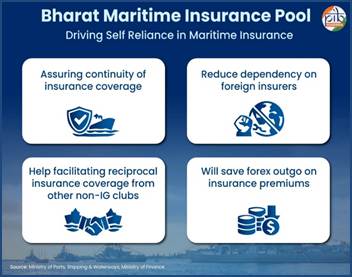
The Government of India highlighted the Bharat Maritime Insurance Pool, or BMIP, in a detailed backgrounder released on 27 September 2026. BMIP is India's first domestic maritime insurance pool and was formally launched on 12 May 2026 after receiving approval on 18 April 2026. It has an underwriting capacity of ₹13,906.50 crore, equivalent to USD 1.5 billion, supported by a sovereign guarantee of ₹12,980 crore, equivalent to USD 1.4 billion. The initiative is designed to provide domestic insurance protection for major maritime risks and reduce India's dependence on foreign insurance providers.
1. What Is the Bharat Maritime Insurance Pool?
The Bharat Maritime Insurance Pool is a collective domestic insurance mechanism created to provide marine insurance coverage for vessels and cargo connected with India.
It covers eligible Indian-flagged vessels and vessels owned, managed or controlled by Indian entities. It can also provide relevant coverage for cargo vessels destined for India or starting their voyage from India.
The pool combines the underwriting capacity of participating domestic insurers and provides a structured mechanism for sharing and reinsuring large maritime risks.
2. When Was BMIP Approved and Launched?
The Bharat Maritime Insurance Pool was approved on 18 April 2026.
It was formally launched on 12 May 2026.
The Press Information Bureau released a detailed backgrounder on 27 September 2026 reviewing its structure, coverage and initial performance.
These three dates should not be confused: approval — 18 April 2026; formal launch — 12 May 2026; PIB backgrounder — 27 September 2026.
3. What Is the Size of the Insurance Pool?
BMIP has an underwriting capacity of ₹13,906.50 crore, equivalent to USD 1.5 billion.
This capacity allows participating domestic insurers collectively to cover large maritime risks that previously depended substantially on overseas insurance markets.
The underwriting capacity should not be confused with the sovereign guarantee, which is a separate figure.
4. What Is the Sovereign Guarantee?
The Government provides sovereign backing of ₹12,980 crore, equivalent to approximately USD 1.4 billion.
This government-backed support is intended to strengthen the financial capacity of the insurance mechanism in the event of very large losses.
The sovereign guarantee is therefore smaller than the total underwriting capacity of ₹13,906.50 crore.
5. Why Did India Need a Domestic Maritime Insurance Pool?
India depends heavily on maritime trade for imports, exports and energy supplies. Despite this, important parts of the marine insurance value chain have historically depended on foreign insurance and reinsurance institutions.
The PIB backgrounder states that dependence on foreign Protection and Indemnity providers alone results in an annual outflow of around USD 45–60 million in P&I premiums, apart from other marine-insurance payments abroad.
Global conflicts can also increase insurance premiums or cause foreign insurers to restrict coverage for high-risk maritime routes.
BMIP seeks to create greater domestic capacity for handling these risks.
6. What Types of Insurance Does BMIP Cover?
The pool covers four broad maritime-risk categories: Hull and Machinery, Cargo, Protection and Indemnity, and War Risk.
Each addresses a different category of risk faced by shipowners, cargo owners and other maritime stakeholders.
The broad coverage makes BMIP relevant not only to shipping companies but also to exporters, importers, manufacturers and commodity businesses using sea transport.
7. What Is Hull and Machinery Insurance?
Hull and Machinery insurance protects the physical vessel and important machinery installed on it.
Hull refers to the main body or structure of a ship, while machinery includes propulsion systems and other important equipment.
Under BMIP, Hull and Machinery War coverage can protect eligible vessels against specified losses associated with war-related risks.
8. What Is Cargo Insurance?
Cargo insurance protects goods transported from one location to another against specified risks.
BMIP includes Cargo War coverage for goods moving through international sea routes, including high-risk or conflict-affected areas subject to policy terms.
This means the pool can benefit Indian exporters and importers as well as vessel operators.
9. What Is Protection and Indemnity Insurance?
Protection and Indemnity insurance, commonly abbreviated as P&I, is particularly important in international shipping because shipowners can face large third-party liabilities.
P&I coverage can address liabilities relating to matters such as pollution, oil-pollution clean-up, wreck removal, crew injury and cargo damage, depending on the terms of the policy.
Traditionally, much of this specialised protection for Indian shipowners has been obtained through international P&I clubs.
10. What Is War-Risk Insurance?
War-risk insurance provides protection against specified losses arising from events such as armed conflict, piracy, terrorism and hostile seizure of vessels.
Such protection becomes especially important when ships operate through regions affected by geopolitical tensions.
The PIB backgrounder specifically refers to maritime risks associated with sensitive corridors such as the Red Sea and the Strait of Hormuz.
11. What Is the International Group of P&I Clubs?
According to the PIB backgrounder, the International Group of Protection and Indemnity Clubs consists of 13 principal clubs.
Together, they insure approximately 90% of the world's large ships against liabilities such as cargo loss, pollution, collisions and crew injuries.
India's reliance on such overseas institutions was one of the factors behind the effort to build domestic maritime-insurance capacity.
12. Which Vessels Can Qualify for BMIP Coverage?
The pool is designed to cover vessels that are Indian flagged or are owned, managed or controlled by Indian entities.
It can also apply to eligible cargo vessels destined for India or originating from India.
The precise availability of coverage for an individual vessel or shipment depends on underwriting and policy conditions.
13. How Long Will the Pool Operate?
The stated duration of BMIP is 10 years.
The arrangement can be extended up to 15 years.
This makes BMIP a long-term institutional mechanism rather than a temporary insurance response to a single geopolitical crisis.
14. How Are Policies Issued?
Policies are issued by domestic insurers that are members of the pool.
The participating insurers use their combined underwriting capacity. Risks covered under these policies are then collectively reinsured by pool members according to the capacity each member has committed.
This pooling structure distributes large risks across multiple participating institutions.
15. How Are Claims Managed?
According to the PIB backgrounder, claims up to USD 100 million are met from accumulated reserves and reinsurance recoveries.
For larger claims, the sovereign guarantee becomes relevant after the pool's reserves have been fully exhausted according to the specified mechanism.
The structure is designed so that sovereign backing functions as protection against exceptionally large losses rather than automatically financing every claim.
16. Who Administers BMIP?
The General Insurance Corporation of India serves as the Pool Administrator.
GIC Re manages the day-to-day functioning of the pool, supports performance reporting and plays a central role in the operational structure.
For examination purposes, remember the association: Bharat Maritime Insurance Pool — General Insurance Corporation of India — Pool Administrator.
17. How Is BMIP Governed?
A Governing Body has been established to oversee and regulate pool operations.
An Underwriting Committee is responsible for maintaining disciplined and consistent risk evaluation.
The institutional structure is intended to support compliance, underwriting quality, financial sustainability and efficient claims management.
18. How Important Is Maritime Trade to India?
The PIB backgrounder states that approximately 95% of India's trade by value and 70% by volume moves through maritime routes.
This makes the reliability of shipping and maritime financial services economically important.
Disruption in maritime transport or insurance can affect energy imports, industrial raw materials, exports and supply chains.
19. How Large Is India's Port Network?
The backgrounder states that India operates 12 Major Ports and 217 Non-Major Ports.
Together, India's major and non-major ports handled approximately 1,668 million metric tonnes of cargo during 2025–26.
These figures illustrate the scale of economic activity supported by India's maritime infrastructure.
20. How Long Is India's Coastline?
The PIB backgrounder gives India's coastline as approximately 11,098 kilometres.
India's long coastline provides access to major international maritime routes and supports ports, fisheries, coastal communities and other economic activities.
Students should use the latest figure stated in the relevant official source when answering date-specific current-affairs questions.
21. What Is the Size of India's Exclusive Economic Zone?
India's Exclusive Economic Zone spans approximately 2.4 million square kilometres according to the backgrounder.
Within an EEZ, a coastal state has sovereign rights relating to exploration, exploitation, conservation and management of natural resources under international law.
The EEZ therefore has economic, environmental and strategic importance.
22. How Extensive Are India's Inland Waterways?
The backgrounder states that India's inland waterways extend for more than 14,500 kilometres.
Rivers, canals and backwaters can provide cost-effective modes for freight and passenger transport when supported by appropriate infrastructure.
India's maritime economy therefore includes not only ocean-going shipping but also ports, coastal shipping and inland waterways.
23. How Many Livelihoods Depend on the Maritime Sector?
According to the PIB backgrounder, maritime livelihoods support more than 30 million people.
This includes fishers, port workers, seafarers, shipbuilders and people engaged in associated activities.
The maritime sector therefore has a direct livelihood dimension in addition to its role in international trade.
24. How Large Is India's Indian-Flagged Fleet?
As of mid-2026, India's Indian-flagged fleet had grown to 1,609 ships with total tonnage of approximately 14.33 million GT.
The backgrounder states that tonnage had increased by roughly 36% since 2015.
GT stands for Gross Tonnage and is a measure associated with the overall internal volume of a ship rather than its cargo weight.
25. How Has BMIP Performed Since Launch?
As of 7 September 2026, BMIP had issued 3,000 Cargo War policies, 92 Hull War-risk policies and 3 Protection and Indemnity policies.
These numbers show that the pool had moved beyond approval and launch into operational insurance activity.
The figures are date-specific and should therefore be quoted with the reference date of 7 September 2026.
26. What Happened to War-Risk Premiums?
The PIB backgrounder states that war-risk insurance premiums had fallen by approximately 35–40% from the peak reached during the West Asia conflict.
This is an observed market-related figure cited by the government in describing BMIP's initial impact.
Students should not interpret the figure as a guaranteed permanent reduction because maritime-insurance premiums can change with geopolitical and commercial risk conditions.
27. What Was India's First P&I Policy Under BMIP?
On 30 July 2026, the first Protection and Indemnity insurance policy under BMIP was issued to Shipping Corporation of India Limited.
The policy was issued by New India Assurance Company Limited.
It provides protection against eligible third-party liabilities under the policy terms.
This is an important factual milestone for examinations.
28. What Was BMIP's First Policy?
The pool's first policy was issued on 12 May 2026, the date of its formal launch.
New India Assurance issued a Marine Hull and Machinery War policy to Hoger Offshore and Marine Private Limited for a vessel sailing through conflict-affected areas.
This represented an early operational demonstration of domestic war-risk coverage.
29. Has BMIP Covered Cargo Belonging to Industrial Companies?
Yes. A Marine Cargo War policy was issued to Vedanta Sterlite Copper Limited for the import of cable wires into India.
The backgrounder also cites a policy issued to Balrampur Chini Mills Limited.
These examples demonstrate that the insurance pool is relevant to businesses moving goods by sea and is not restricted to shipowners alone.
30. Why Is BMIP Important for Energy Security?
India imports a substantial amount of energy through maritime routes. Ships carrying crude oil and other energy commodities may pass through regions affected by geopolitical tensions.
If insurance becomes prohibitively expensive or unavailable, maritime supply chains can face additional difficulties.
Domestic capacity for war-risk and other marine insurance can therefore contribute to the resilience of energy-related shipping, although insurance alone cannot eliminate geopolitical or transport risks.
31. How Does BMIP Reduce Foreign Exchange Outflow?
When Indian maritime businesses purchase insurance services from foreign providers, premium payments can result in foreign-exchange outflow.
The PIB backgrounder estimates an annual outflow of approximately USD 45–60 million specifically in P&I premiums, apart from other marine-insurance payments abroad.
Expanding domestic underwriting and insurance services can retain a greater portion of this financial activity within India's insurance system.
32. What Is Maritime Sovereignty in This Context?
In the context of BMIP, maritime sovereignty refers to increasing India's ability to support its own maritime trade through domestic financial and insurance capacity rather than depending almost entirely on overseas institutions.
It does not mean eliminating all international insurance or reinsurance relationships. The pool itself can use reinsurance partnerships.
The objective is to create stronger domestic capacity and greater resilience during international disruptions.
33. Why Are the Red Sea and Strait of Hormuz Important?
The Red Sea and Strait of Hormuz are strategically important maritime corridors connected with global trade and energy transportation.
Conflict and geopolitical tensions around such routes can increase risks for commercial vessels and consequently affect insurance pricing and availability.
BMIP's war-risk framework is intended to provide Indian maritime stakeholders with domestic protection even when international shipping conditions become more uncertain.
34. What Is the Long-Term Vision for BMIP?
The PIB backgrounder states that the medium-term focus includes strengthening human capital, legal frameworks and reinsurance partnerships while maintaining credible operations, competitive pricing and reliable claims handling.
In the longer term, the government envisages the pool potentially developing into a regional maritime-insurance anchor in the Indian Ocean Region.
This is a forward-looking objective and should be distinguished from BMIP's current operational status.
35. Why Is BMIP Important for Competitive Examinations?
BMIP connects several examination themes: insurance, maritime trade, financial sovereignty, ports, energy security, international trade, geopolitical risk and India's blue economy.
UPSC and State PCS questions may examine why maritime insurance matters for trade resilience and how sovereign guarantees work in large-risk insurance structures.
SSC, Railway, Banking and other examinations may ask direct facts such as launch date, pool size, sovereign guarantee, administrator and coverage categories.
36. What Should Students Remember?
Bharat Maritime Insurance Pool is India's first domestic maritime insurance pool. It was approved on 18 April 2026 and formally launched on 12 May 2026. It has underwriting capacity of ₹13,906.50 crore or USD 1.5 billion and sovereign backing of ₹12,980 crore or USD 1.4 billion.
BMIP covers Hull and Machinery, Cargo, Protection and Indemnity and War risks. Eligible coverage includes Indian-flagged vessels, vessels owned, managed or controlled by Indian entities and relevant cargo vessels connected with India. General Insurance Corporation of India is the Pool Administrator. The pool has an initial duration of 10 years, extendable to 15 years.
As of 7 September 2026, BMIP had issued 3,000 Cargo War policies, 92 Hull War-risk policies and 3 P&I policies. India's first P&I policy under the pool was issued on 30 July 2026 to Shipping Corporation of India Limited by New India Assurance Company Limited.
For quick revision remember: BMIP — launched 12 May 2026 — ₹13,906.50 crore underwriting capacity — ₹12,980 crore sovereign guarantee — GIC Re administrator — Hull and Machinery + Cargo + P&I + War Risk — claims up to USD 100 million from reserves and reinsurance recoveries — 10-year duration extendable to 15 years.
क्या हुआ?
भारत सरकार ने 27 सितंबर 2026 को जारी विस्तृत पृष्ठभूमि-पत्र में भारत समुद्री बीमा पूल अर्थात Bharat Maritime Insurance Pool की संरचना, बीमा सुरक्षा और प्रारंभिक उपलब्धियों की जानकारी दी। यह भारत का पहला घरेलू समुद्री बीमा पूल है। इसे 18 अप्रैल 2026 को स्वीकृति दी गई थी और 12 मई 2026 को औपचारिक रूप से शुरू किया गया। इसकी बीमा जोखिम वहन क्षमता ₹13,906.50 करोड़ अर्थात 1.5 अरब अमेरिकी डॉलर है और इसे ₹12,980 करोड़ अर्थात लगभग 1.4 अरब अमेरिकी डॉलर की संप्रभु गारंटी का समर्थन प्राप्त है। इसका उद्देश्य प्रमुख समुद्री जोखिमों के लिए घरेलू बीमा सुरक्षा उपलब्ध कराना और विदेशी बीमा संस्थाओं पर भारत की निर्भरता कम करना है।
1. भारत समुद्री बीमा पूल क्या है?
भारत समुद्री बीमा पूल एक सामूहिक घरेलू बीमा व्यवस्था है जिसे भारत से जुड़े जहाजों और समुद्री माल परिवहन के जोखिमों के लिए बीमा सुरक्षा प्रदान करने के उद्देश्य से बनाया गया है।
इसके अंतर्गत भारतीय ध्वज वाले जहाजों तथा भारतीय संस्थाओं के स्वामित्व, प्रबंधन या नियंत्रण वाले पात्र जहाजों को बीमा सुरक्षा दी जा सकती है। भारत की ओर आने वाले या भारत से यात्रा प्रारंभ करने वाले पात्र मालवाहक जहाज भी इसकी व्यवस्था के अंतर्गत आ सकते हैं।
इसमें भाग लेने वाली घरेलू बीमा कंपनियों की जोखिम वहन क्षमता को एक साथ जोड़ा जाता है और बड़े समुद्री जोखिमों को साझा करने तथा पुनर्बीमा की संरचित व्यवस्था बनाई जाती है।
2. इसे कब स्वीकृति मिली और कब शुरू किया गया?
भारत समुद्री बीमा पूल को 18 अप्रैल 2026 को स्वीकृति दी गई।
इसे 12 मई 2026 को औपचारिक रूप से शुरू किया गया।
27 सितंबर 2026 को Press Information Bureau ने इसकी संरचना, बीमा क्षेत्र और प्रारंभिक परिणामों पर विस्तृत पृष्ठभूमि-पत्र जारी किया।
तीनों तिथियाँ अलग-अलग याद रखें: स्वीकृति — 18 अप्रैल 2026; औपचारिक शुरुआत — 12 मई 2026; विस्तृत पृष्ठभूमि-पत्र — 27 सितंबर 2026।
3. बीमा पूल की क्षमता कितनी है?
इसकी कुल जोखिम वहन क्षमता ₹13,906.50 करोड़ अर्थात 1.5 अरब अमेरिकी डॉलर है।
यह क्षमता घरेलू बीमा कंपनियों को सामूहिक रूप से बड़े समुद्री जोखिमों का बीमा करने में सहायता करती है।
इसे संप्रभु गारंटी की राशि से अलग समझना चाहिए।
4. संप्रभु गारंटी कितनी है?
भारत सरकार ने इस व्यवस्था को ₹12,980 करोड़ अर्थात लगभग 1.4 अरब अमेरिकी डॉलर की संप्रभु गारंटी प्रदान की है।
इस सरकारी समर्थन का उद्देश्य अत्यधिक बड़े नुकसान की स्थिति में बीमा व्यवस्था की वित्तीय क्षमता को मजबूत करना है।
इसलिए ₹12,980 करोड़ की संप्रभु गारंटी और ₹13,906.50 करोड़ की कुल जोखिम वहन क्षमता दो अलग आँकड़े हैं।
5. भारत को घरेलू समुद्री बीमा पूल की आवश्यकता क्यों थी?
भारत का आयात, निर्यात और ऊर्जा आपूर्ति का बड़ा हिस्सा समुद्री मार्गों पर निर्भर है। इसके बावजूद समुद्री बीमा व्यवस्था के महत्वपूर्ण हिस्सों में लंबे समय से विदेशी संस्थाओं पर काफी निर्भरता रही है।
सरकारी पृष्ठभूमि-पत्र के अनुसार केवल Protection and Indemnity बीमा प्रीमियम के रूप में ही प्रतिवर्ष लगभग 4.5 से 6 करोड़ अमेरिकी डॉलर विदेश जाते हैं। इसके अतिरिक्त अन्य समुद्री बीमा भुगतान भी विदेशों में किए जाते हैं।
अंतरराष्ट्रीय संघर्ष के समय विदेशी बीमा कंपनियाँ उच्च जोखिम वाले समुद्री मार्गों का प्रीमियम बढ़ा सकती हैं या बीमा सुरक्षा सीमित कर सकती हैं।
भारत समुद्री बीमा पूल का उद्देश्य ऐसे जोखिमों के लिए घरेलू क्षमता विकसित करना है।
6. इसमें किन प्रकार के जोखिमों को बीमा सुरक्षा मिलती है?
इस व्यवस्था में चार प्रमुख प्रकार की समुद्री बीमा सुरक्षा शामिल हैं: जहाज की संरचना और मशीनरी, माल, Protection and Indemnity तथा युद्ध संबंधी जोखिम।
इनमें से प्रत्येक समुद्री व्यापार से जुड़े अलग-अलग प्रकार के जोखिम को कवर करता है।
इस कारण यह व्यवस्था केवल जहाज मालिकों के लिए ही नहीं बल्कि निर्यातकों, आयातकों, विनिर्माण कंपनियों और समुद्र के माध्यम से माल भेजने वाले व्यवसायों के लिए भी महत्वपूर्ण है।
7. जहाज की संरचना और मशीनरी बीमा क्या है?
यह बीमा जहाज की मुख्य संरचना और उसमें लगी महत्वपूर्ण मशीनरी की सुरक्षा से संबंधित है।
जहाज की मुख्य संरचना उसके शरीर को दर्शाती है, जबकि मशीनरी में जहाज को चलाने वाली प्रणालियाँ और अन्य महत्वपूर्ण उपकरण शामिल होते हैं।
भारत समुद्री बीमा पूल में युद्ध से संबंधित परिस्थितियों में जहाज की संरचना और मशीनरी के लिए भी पात्र बीमा सुरक्षा उपलब्ध कराई जा सकती है।
8. माल बीमा क्या है?
माल बीमा परिवहन किए जा रहे सामान को निर्धारित जोखिमों से सुरक्षा प्रदान करता है।
भारत समुद्री बीमा पूल में अंतरराष्ट्रीय समुद्री मार्गों, विशेषकर उच्च जोखिम या संघर्ष प्रभावित क्षेत्रों से गुजरने वाले पात्र माल के लिए युद्ध जोखिम बीमा की व्यवस्था भी शामिल है।
इससे भारतीय निर्यातकों और आयातकों को भी लाभ मिल सकता है।
9. Protection and Indemnity बीमा क्या है?
Protection and Indemnity को संक्षेप में P&I कहा जाता है। अंतरराष्ट्रीय जहाजरानी में इसका विशेष महत्व है क्योंकि जहाज मालिकों पर तीसरे पक्ष से संबंधित बहुत बड़ी देनदारियाँ उत्पन्न हो सकती हैं।
पॉलिसी की शर्तों के अनुसार इसमें प्रदूषण, तेल प्रदूषण की सफाई, जहाज के मलबे को हटाने, चालक दल के सदस्यों की चोट और माल को हुए नुकसान जैसी देनदारियाँ शामिल हो सकती हैं।
भारतीय जहाज मालिक लंबे समय से इस विशेष प्रकार की सुरक्षा के लिए अंतरराष्ट्रीय P&I क्लबों पर काफी निर्भर रहे हैं।
10. युद्ध जोखिम बीमा क्या है?
युद्ध जोखिम बीमा सशस्त्र संघर्ष, समुद्री डकैती, आतंकवाद और जहाज के शत्रुतापूर्ण कब्जे जैसी निर्धारित घटनाओं से होने वाले नुकसान के विरुद्ध सुरक्षा देता है।
जब जहाज भू-राजनीतिक तनाव वाले क्षेत्रों से गुजरते हैं तो ऐसी बीमा सुरक्षा का महत्व बढ़ जाता है।
सरकारी पृष्ठभूमि-पत्र में लाल सागर और होर्मुज जलडमरूमध्य जैसे संवेदनशील समुद्री मार्गों का विशेष उल्लेख किया गया है।
11. अंतरराष्ट्रीय P&I क्लबों का समूह क्या है?
सरकारी पृष्ठभूमि-पत्र के अनुसार International Group of Protection and Indemnity Clubs में 13 प्रमुख क्लब शामिल हैं।
ये मिलकर दुनिया के लगभग 90% बड़े जहाजों को माल की हानि, प्रदूषण, टक्कर और चालक दल की चोट जैसी देनदारियों के विरुद्ध बीमा सुरक्षा प्रदान करते हैं।
ऐसी विदेशी संस्थाओं पर भारत की निर्भरता घरेलू समुद्री बीमा क्षमता विकसित करने के प्रमुख कारणों में से एक रही है।
12. कौन-से जहाज पात्र हो सकते हैं?
यह व्यवस्था भारतीय ध्वज वाले जहाजों और भारतीय संस्थाओं के स्वामित्व, प्रबंधन या नियंत्रण वाले पात्र जहाजों के लिए बनाई गई है।
भारत की ओर आने वाले या भारत से यात्रा प्रारंभ करने वाले पात्र मालवाहक जहाजों को भी संबंधित बीमा सुरक्षा मिल सकती है।
किसी विशेष जहाज या माल को मिलने वाली वास्तविक बीमा सुरक्षा जोखिम मूल्यांकन और पॉलिसी की शर्तों पर निर्भर करेगी।
13. यह व्यवस्था कितने समय के लिए है?
भारत समुद्री बीमा पूल की प्रारंभिक अवधि 10 वर्ष है।
इसे अधिकतम 15 वर्ष तक बढ़ाया जा सकता है।
इससे स्पष्ट है कि इसे किसी एक अंतरराष्ट्रीय संकट के लिए अस्थायी उपाय के रूप में नहीं बल्कि दीर्घकालीन संस्थागत व्यवस्था के रूप में तैयार किया गया है।
14. बीमा पॉलिसियाँ कैसे जारी की जाती हैं?
पॉलिसियाँ इस पूल की सदस्य घरेलू बीमा कंपनियों द्वारा जारी की जाती हैं।
भाग लेने वाली कंपनियाँ अपनी संयुक्त जोखिम वहन क्षमता का उपयोग करती हैं। इसके बाद पॉलिसियों के अंतर्गत आने वाले जोखिमों का पुनर्बीमा पूल के सदस्यों द्वारा उनकी निर्धारित क्षमता के अनुपात में सामूहिक रूप से किया जाता है।
इससे बड़े जोखिम कई संस्थाओं के बीच वितरित किए जा सकते हैं।
15. दावों का निपटान कैसे किया जाता है?
सरकारी पृष्ठभूमि-पत्र के अनुसार 10 करोड़ अमेरिकी डॉलर तक के दावों का भुगतान संचित भंडार और पुनर्बीमा से प्राप्त राशि के माध्यम से किया जाता है।
इससे अधिक बड़े दावों की स्थिति में पूल के भंडार पूरी तरह समाप्त होने के बाद निर्धारित व्यवस्था के अनुसार संप्रभु गारंटी सक्रिय होती है।
इसका अर्थ है कि सरकारी गारंटी प्रत्येक सामान्य दावे के भुगतान का पहला स्रोत नहीं है, बल्कि अत्यधिक बड़े नुकसान के विरुद्ध अतिरिक्त सुरक्षा प्रदान करती है।
16. इसका प्रशासन कौन करता है?
General Insurance Corporation of India इस पूल का प्रशासक है।
GIC Re इसके दैनिक संचालन, कार्य निष्पादन रिपोर्ट और अन्य प्रशासनिक व्यवस्थाओं में केंद्रीय भूमिका निभाता है।
परीक्षा के लिए संबंध याद रखें: Bharat Maritime Insurance Pool — General Insurance Corporation of India — Pool Administrator।
17. इसकी शासन व्यवस्था कैसी है?
पूल के संचालन की निगरानी के लिए एक Governing Body बनाई गई है।
जोखिमों के अनुशासित और समान मूल्यांकन के लिए Underwriting Committee भी बनाई गई है।
इस संस्थागत व्यवस्था का उद्देश्य अनुपालन, उचित जोखिम मूल्यांकन, वित्तीय स्थिरता और प्रभावी दावा प्रबंधन सुनिश्चित करना है।
18. भारत के लिए समुद्री व्यापार कितना महत्वपूर्ण है?
सरकारी पृष्ठभूमि-पत्र के अनुसार भारत के कुल व्यापार मूल्य का लगभग 95% और व्यापार मात्रा का लगभग 70% समुद्री मार्गों से गुजरता है।
इस कारण जहाजरानी और समुद्री वित्तीय सेवाओं की निरंतरता भारतीय अर्थव्यवस्था के लिए अत्यंत महत्वपूर्ण है।
समुद्री परिवहन या उसके बीमा में बाधा आने से ऊर्जा आयात, औद्योगिक कच्चा माल, निर्यात और आपूर्ति श्रृंखलाएँ प्रभावित हो सकती हैं।
19. भारत का बंदरगाह नेटवर्क कितना बड़ा है?
पृष्ठभूमि-पत्र के अनुसार भारत में 12 प्रमुख बंदरगाह और 217 गैर-प्रमुख बंदरगाह हैं।
2025–26 में प्रमुख और गैर-प्रमुख बंदरगाहों ने मिलकर लगभग 1,668 मिलियन मीट्रिक टन माल का संचालन किया।
यह आँकड़ा भारत की समुद्री अवसंरचना से जुड़ी आर्थिक गतिविधियों के विशाल आकार को दर्शाता है।
20. भारत की समुद्री तटरेखा कितनी लंबी है?
सरकारी पृष्ठभूमि-पत्र भारत की तटरेखा की लंबाई लगभग 11,098 किलोमीटर बताता है।
भारत की लंबी तटरेखा अंतरराष्ट्रीय समुद्री मार्गों तक पहुँच उपलब्ध कराती है और बंदरगाहों, मत्स्य पालन, तटीय समुदायों तथा अन्य आर्थिक गतिविधियों का आधार है।
तिथि-विशिष्ट Current Affairs प्रश्नों में विद्यार्थियों को संबंधित नवीनतम आधिकारिक स्रोत में दिए गए आँकड़े का उपयोग करना चाहिए।
21. भारत के Exclusive Economic Zone का आकार कितना है?
पृष्ठभूमि-पत्र के अनुसार भारत का Exclusive Economic Zone लगभग 24 लाख वर्ग किलोमीटर में फैला है।
अंतरराष्ट्रीय कानून के अंतर्गत तटीय देश को अपने Exclusive Economic Zone में प्राकृतिक संसाधनों की खोज, उपयोग, संरक्षण और प्रबंधन से संबंधित संप्रभु अधिकार प्राप्त होते हैं।
इसलिए इसका आर्थिक, पर्यावरणीय और सामरिक महत्व है।
22. भारत के अंतर्देशीय जलमार्ग कितने विस्तृत हैं?
पृष्ठभूमि-पत्र के अनुसार भारत के अंतर्देशीय जलमार्ग 14,500 किलोमीटर से अधिक लंबे हैं।
उपयुक्त अवसंरचना होने पर नदियाँ, नहरें और बैकवाटर माल तथा यात्री परिवहन के लिए अपेक्षाकृत कम लागत वाले साधन बन सकते हैं।
भारत की समुद्री अर्थव्यवस्था में महासागरीय जहाजरानी के साथ बंदरगाह, तटीय जहाजरानी और अंतर्देशीय जलमार्ग भी शामिल हैं।
23. समुद्री क्षेत्र कितने लोगों की आजीविका से जुड़ा है?
सरकारी पृष्ठभूमि-पत्र के अनुसार समुद्री क्षेत्र 3 करोड़ से अधिक लोगों की आजीविका को समर्थन देता है।
इनमें मछुआरे, बंदरगाह कर्मचारी, नाविक, जहाज निर्माण से जुड़े कर्मचारी और अन्य संबंधित व्यवसायों के लोग शामिल हैं।
इस प्रकार समुद्री क्षेत्र अंतरराष्ट्रीय व्यापार के साथ रोजगार और आजीविका के लिए भी महत्वपूर्ण है।
24. भारतीय ध्वज वाले जहाजों का बेड़ा कितना बड़ा है?
2026 के मध्य तक भारतीय ध्वज वाले जहाजों की संख्या बढ़कर 1,609 हो गई थी और उनका कुल Gross Tonnage लगभग 14.33 मिलियन था।
पृष्ठभूमि-पत्र के अनुसार 2015 की तुलना में कुल टन भार में लगभग 36% वृद्धि हुई है।
Gross Tonnage जहाज के आंतरिक आयतन से संबंधित माप है, इसे जहाज द्वारा ढोए जाने वाले माल के वजन के समान नहीं समझना चाहिए।
25. शुरुआत के बाद BMIP का प्रदर्शन कैसा रहा?
7 सितंबर 2026 तक भारत समुद्री बीमा पूल के अंतर्गत 3,000 Cargo War policies, 92 Hull War-risk policies और 3 Protection and Indemnity policies जारी की जा चुकी थीं।
इससे पता चलता है कि व्यवस्था केवल स्वीकृति और उद्घाटन तक सीमित नहीं रही बल्कि वास्तविक बीमा गतिविधियों में प्रवेश कर चुकी थी।
ये आँकड़े 7 सितंबर 2026 की स्थिति के हैं और इन्हें इसी संदर्भ तिथि के साथ याद रखना चाहिए।
26. युद्ध जोखिम बीमा प्रीमियम में क्या बदलाव आया?
सरकारी पृष्ठभूमि-पत्र के अनुसार पश्चिम एशिया संघर्ष के चरम समय की तुलना में युद्ध जोखिम बीमा प्रीमियम लगभग 35–40% कम हुआ था।
यह सरकार द्वारा BMIP के प्रारंभिक प्रभाव के संदर्भ में उद्धृत आँकड़ा है।
इसे स्थायी रूप से निश्चित कमी नहीं समझना चाहिए क्योंकि समुद्री बीमा प्रीमियम भू-राजनीतिक और व्यावसायिक जोखिमों के अनुसार बदल सकता है।
27. BMIP के अंतर्गत भारत की पहली P&I Policy कौन-सी थी?
30 जुलाई 2026 को BMIP के अंतर्गत पहली Protection and Indemnity insurance policy Shipping Corporation of India Limited को जारी की गई।
यह पॉलिसी New India Assurance Company Limited द्वारा जारी की गई थी।
यह पॉलिसी निर्धारित शर्तों के अनुसार तीसरे पक्ष से संबंधित देनदारियों के विरुद्ध वित्तीय सुरक्षा प्रदान करती है।
28. पूल की पहली Policy कौन-सी थी?
पूल की पहली पॉलिसी 12 मई 2026 को उसके औपचारिक शुभारंभ के दिन जारी की गई।
New India Assurance ने Hoger Offshore and Marine Private Limited को संघर्ष प्रभावित क्षेत्रों से गुजरने वाले जहाज के लिए Marine Hull and Machinery War Policy जारी की।
यह घरेलू युद्ध जोखिम बीमा क्षमता का प्रारंभिक व्यावहारिक उदाहरण था।
29. क्या औद्योगिक कंपनियों के माल को भी सुरक्षा मिली है?
हाँ। Vedanta Sterlite Copper Limited को भारत में cable wires के आयात के लिए Marine Cargo War Policy जारी की गई।
पृष्ठभूमि-पत्र में Balrampur Chini Mills Limited को जारी की गई पॉलिसी का भी उल्लेख है।
इन उदाहरणों से स्पष्ट है कि यह व्यवस्था केवल जहाज मालिकों तक सीमित नहीं है बल्कि समुद्री मार्ग से माल भेजने वाले व्यापक औद्योगिक और व्यापारिक क्षेत्र के लिए भी उपयोगी है।
30. ऊर्जा सुरक्षा के लिए यह क्यों महत्वपूर्ण है?
भारत बड़ी मात्रा में ऊर्जा संसाधनों का आयात समुद्री मार्ग से करता है। कच्चा तेल और अन्य ऊर्जा सामग्री ले जाने वाले जहाज कई बार भू-राजनीतिक तनाव वाले क्षेत्रों से गुजरते हैं।
यदि बीमा अत्यधिक महँगा हो जाए या उपलब्ध न हो तो समुद्री आपूर्ति श्रृंखला पर अतिरिक्त दबाव पड़ सकता है।
युद्ध जोखिम और अन्य समुद्री बीमा के लिए घरेलू क्षमता ऊर्जा आपूर्ति से जुड़ी जहाजरानी को अधिक लचीला बनाने में योगदान दे सकती है, हालाँकि बीमा स्वयं भू-राजनीतिक जोखिम समाप्त नहीं कर सकता।
31. इससे विदेशी मुद्रा का बाहर जाना कैसे कम हो सकता है?
जब भारतीय समुद्री कंपनियाँ विदेशी संस्थाओं से बीमा सेवाएँ खरीदती हैं तो प्रीमियम के रूप में विदेशी मुद्रा बाहर जाती है।
सरकारी पृष्ठभूमि-पत्र के अनुसार केवल P&I premiums में ही प्रतिवर्ष लगभग 4.5 से 6 करोड़ अमेरिकी डॉलर बाहर जाते हैं।
घरेलू बीमा क्षमता बढ़ने से इस वित्तीय गतिविधि का बड़ा हिस्सा भारतीय बीमा व्यवस्था के भीतर रह सकता है।
32. इस संदर्भ में Maritime Sovereignty का क्या अर्थ है?
यहाँ maritime sovereignty का अर्थ भारत की समुद्री व्यापार व्यवस्था को घरेलू वित्तीय और बीमा क्षमता से अधिक मजबूत बनाना है ताकि विदेशी संस्थाओं पर लगभग पूर्ण निर्भरता न रहे।
इसका अर्थ अंतरराष्ट्रीय बीमा या पुनर्बीमा संबंधों को पूरी तरह समाप्त करना नहीं है। स्वयं यह पूल भी पुनर्बीमा साझेदारियों का उपयोग कर सकता है।
मुख्य उद्देश्य घरेलू क्षमता और वैश्विक व्यवधानों के समय आर्थिक लचीलापन बढ़ाना है।
33. Red Sea और Strait of Hormuz क्यों महत्वपूर्ण हैं?
लाल सागर और होर्मुज जलडमरूमध्य वैश्विक व्यापार और ऊर्जा परिवहन से जुड़े सामरिक समुद्री मार्ग हैं।
इन क्षेत्रों के आसपास संघर्ष और भू-राजनीतिक तनाव वाणिज्यिक जहाजों का जोखिम बढ़ा सकते हैं और बीमा प्रीमियम तथा उपलब्धता को प्रभावित कर सकते हैं।
BMIP की युद्ध जोखिम व्यवस्था का उद्देश्य ऐसी परिस्थितियों में भारतीय समुद्री हितधारकों को घरेलू बीमा विकल्प उपलब्ध कराना है।
34. BMIP की दीर्घकालीन दिशा क्या है?
सरकारी पृष्ठभूमि-पत्र के अनुसार मध्यम अवधि में मानव संसाधन, कानूनी ढाँचे और पुनर्बीमा साझेदारियों को मजबूत करने पर ध्यान दिया जाएगा। इसके साथ विश्वसनीय संचालन, प्रतिस्पर्धी मूल्य और प्रभावी दावा निपटान महत्वपूर्ण रहेंगे।
दीर्घकाल में सरकार इस व्यवस्था को Indian Ocean Region में समुद्री बीमा के क्षेत्रीय केंद्र के रूप में विकसित होने की संभावना से जोड़ती है।
यह भविष्य की दिशा है और इसे वर्तमान उपलब्धि के रूप में नहीं लिखना चाहिए।
35. प्रतियोगी परीक्षाओं के लिए यह क्यों महत्वपूर्ण है?
Bharat Maritime Insurance Pool बीमा, समुद्री व्यापार, वित्तीय आत्मनिर्भरता, बंदरगाह, ऊर्जा सुरक्षा, अंतरराष्ट्रीय व्यापार, भू-राजनीतिक जोखिम और Blue Economy जैसे कई विषयों को जोड़ता है।
UPSC और State PCS में समुद्री बीमा का व्यापारिक लचीलेपन में महत्व और बड़े जोखिमों के लिए संप्रभु गारंटी की भूमिका पूछी जा सकती है।
SSC, Railway, Banking और अन्य परीक्षाओं में launch date, pool size, sovereign guarantee, administrator और coverage categories जैसे सीधे तथ्य पूछे जा सकते हैं।
36. विद्यार्थियों को क्या याद रखना चाहिए?
Bharat Maritime Insurance Pool भारत का पहला घरेलू समुद्री बीमा पूल है। इसे 18 अप्रैल 2026 को स्वीकृति मिली और 12 मई 2026 को औपचारिक रूप से शुरू किया गया। इसकी जोखिम वहन क्षमता ₹13,906.50 करोड़ अर्थात 1.5 अरब अमेरिकी डॉलर है और इसे ₹12,980 करोड़ अर्थात 1.4 अरब अमेरिकी डॉलर की संप्रभु गारंटी प्राप्त है।
इसके अंतर्गत जहाज की संरचना और मशीनरी, माल, Protection and Indemnity तथा युद्ध जोखिम की बीमा सुरक्षा शामिल है। General Insurance Corporation of India इसका Pool Administrator है। इसकी प्रारंभिक अवधि 10 वर्ष है जिसे 15 वर्ष तक बढ़ाया जा सकता है।
7 सितंबर 2026 तक 3,000 Cargo War policies, 92 Hull War-risk policies और 3 P&I policies जारी की जा चुकी थीं। BMIP के अंतर्गत भारत की पहली P&I policy 30 जुलाई 2026 को Shipping Corporation of India Limited को New India Assurance Company Limited द्वारा जारी की गई।
त्वरित पुनरावृत्ति के लिए याद रखें: BMIP — 12 मई 2026 को शुरू — ₹13,906.50 करोड़ जोखिम वहन क्षमता — ₹12,980 करोड़ संप्रभु गारंटी — GIC Re प्रशासक — Hull and Machinery + Cargo + P&I + War Risk — 10 करोड़ अमेरिकी डॉलर तक के दावे भंडार और पुनर्बीमा से — 10 वर्ष की अवधि, 15 वर्ष तक विस्तार संभव।
Key Facts
• Bharat Maritime Insurance Pool is India's first domestic maritime insurance pool.
• BMIP was approved on 18 April 2026.
• It was formally launched on 12 May 2026.
• Its underwriting capacity is ₹13,906.50 crore or USD 1.5 billion.
• Its sovereign guarantee is ₹12,980 crore or USD 1.4 billion.
• BMIP covers Hull and Machinery risks.
• It provides Cargo War coverage.
• It provides Protection and Indemnity coverage.
• It also provides War-risk coverage.
• Eligible vessels include Indian-flagged vessels.
• Vessels owned, managed or controlled by Indian entities can also qualify.
• Relevant cargo vessels destined for or originating from India can be covered.
• The pool has a 10-year duration extendable up to 15 years.
• General Insurance Corporation of India serves as Pool Administrator.
• Claims up to USD 100 million are met through accumulated reserves and reinsurance recoveries.
• For larger claims, the sovereign guarantee is used after exhaustion of pool reserves under the specified mechanism.
• India has 12 Major Ports and 217 Non-Major Ports according to the PIB backgrounder.
• Indian ports handled 1,668 million metric tonnes of cargo during 2025–26.
• India's coastline is cited as approximately 11,098 kilometres.
• India's Exclusive Economic Zone covers approximately 2.4 million square kilometres.
• India has more than 14,500 kilometres of inland waterways.
• The maritime sector supports livelihoods of more than 30 million people.
• Approximately 95% of India's trade by value moves through maritime routes.
• Approximately 70% of India's trade by volume moves through maritime routes.
• The Indian-flagged fleet had reached 1,609 ships by mid-2026.
• Its total tonnage was approximately 14.33 million GT.
• As of 7 September 2026, BMIP had issued 3,000 Cargo War policies.
• It had issued 92 Hull War-risk policies by the same date.
• It had issued 3 P&I policies by the same date.
• War-risk insurance premiums were cited as around 35–40% below their peak during the West Asia conflict.
• India's first P&I policy under BMIP was issued on 30 July 2026 to Shipping Corporation of India Limited.
• New India Assurance Company Limited issued that P&I policy.
• BMIP's first policy on 12 May 2026 was a Marine Hull and Machinery War policy issued to Hoger Offshore and Marine Private Limited.
• The government estimates an annual foreign-exchange outflow of USD 45–60 million in P&I premiums.
मुख्य तथ्य
• Bharat Maritime Insurance Pool भारत का पहला घरेलू समुद्री बीमा पूल है।
• BMIP को 18 अप्रैल 2026 को स्वीकृति मिली।
• इसे 12 मई 2026 को औपचारिक रूप से शुरू किया गया।
• इसकी जोखिम वहन क्षमता ₹13,906.50 करोड़ अर्थात 1.5 अरब अमेरिकी डॉलर है।
• इसे ₹12,980 करोड़ अर्थात 1.4 अरब अमेरिकी डॉलर की संप्रभु गारंटी प्राप्त है।
• BMIP जहाज की संरचना और मशीनरी से जुड़े जोखिमों को कवर करता है।
• यह Cargo War coverage प्रदान करता है।
• यह Protection and Indemnity coverage प्रदान करता है।
• यह युद्ध जोखिम बीमा भी प्रदान करता है।
• भारतीय ध्वज वाले पात्र जहाज इसके अंतर्गत आ सकते हैं।
• भारतीय संस्थाओं के स्वामित्व, प्रबंधन या नियंत्रण वाले पात्र जहाज भी इसमें शामिल हो सकते हैं।
• भारत की ओर आने वाले या भारत से यात्रा प्रारंभ करने वाले पात्र मालवाहक जहाज भी बीमा सुरक्षा प्राप्त कर सकते हैं।
• पूल की अवधि 10 वर्ष है जिसे 15 वर्ष तक बढ़ाया जा सकता है।
• General Insurance Corporation of India इसका Pool Administrator है।
• 10 करोड़ अमेरिकी डॉलर तक के दावे संचित भंडार और पुनर्बीमा से प्राप्त राशि के माध्यम से पूरे किए जाते हैं।
• बड़े दावों के लिए निर्धारित व्यवस्था के अनुसार पूल के भंडार समाप्त होने के बाद संप्रभु गारंटी सक्रिय होती है।
• सरकारी पृष्ठभूमि-पत्र के अनुसार भारत में 12 प्रमुख और 217 गैर-प्रमुख बंदरगाह हैं।
• 2025–26 में भारतीय बंदरगाहों ने 1,668 मिलियन मीट्रिक टन माल का संचालन किया।
• भारत की तटरेखा लगभग 11,098 किलोमीटर बताई गई है।
• भारत का Exclusive Economic Zone लगभग 24 लाख वर्ग किलोमीटर है।
• भारत में 14,500 किलोमीटर से अधिक अंतर्देशीय जलमार्ग हैं।
• समुद्री क्षेत्र 3 करोड़ से अधिक लोगों की आजीविका को समर्थन देता है।
• भारत के व्यापार मूल्य का लगभग 95% समुद्री मार्गों से गुजरता है।
• भारत के व्यापार की मात्रा का लगभग 70% समुद्री मार्गों से गुजरता है।
• 2026 के मध्य तक भारतीय ध्वज वाले जहाजों की संख्या 1,609 हो गई थी।
• इनका कुल Gross Tonnage लगभग 14.33 मिलियन था।
• 7 सितंबर 2026 तक BMIP ने 3,000 Cargo War policies जारी की थीं।
• इसी तिथि तक 92 Hull War-risk policies जारी की गई थीं।
• इसी तिथि तक 3 P&I policies जारी की गई थीं।
• पश्चिम एशिया संघर्ष के चरम की तुलना में युद्ध जोखिम बीमा प्रीमियम लगभग 35–40% कम बताया गया।
• BMIP के अंतर्गत भारत की पहली P&I policy 30 जुलाई 2026 को Shipping Corporation of India Limited को जारी की गई।
• यह P&I policy New India Assurance Company Limited ने जारी की।
• 12 मई 2026 को BMIP की पहली policy Hoger Offshore and Marine Private Limited को Marine Hull and Machinery War Policy के रूप में जारी हुई।
• सरकार ने P&I premiums के कारण वार्षिक विदेशी मुद्रा बहिर्वाह लगभग 4.5 से 6 करोड़ अमेरिकी डॉलर बताया है।
Background
India's economy is deeply connected with maritime transport. The PIB backgrounder states that around 95% of India's trade by value and 70% by volume travels through sea routes. Historically, specialised marine insurance, particularly P&I coverage, has depended substantially on overseas insurance clubs. Geopolitical disruptions can increase premiums and restrict insurance availability. BMIP was therefore created as a domestic risk-pooling mechanism backed by participating insurers and a sovereign guarantee, while building indigenous expertise in maritime underwriting and claims management.
पृष्ठभूमि
भारत की अर्थव्यवस्था समुद्री परिवहन से गहराई से जुड़ी है। सरकारी पृष्ठभूमि-पत्र के अनुसार भारत के व्यापार मूल्य का लगभग 95% और व्यापार मात्रा का लगभग 70% समुद्री मार्गों से गुजरता है। विशेष समुद्री बीमा, विशेषकर P&I बीमा, में भारत लंबे समय से विदेशी बीमा क्लबों पर काफी निर्भर रहा है। भू-राजनीतिक संकट बीमा प्रीमियम बढ़ा सकते हैं और बीमा उपलब्धता सीमित कर सकते हैं। इसी कारण BMIP को घरेलू जोखिम-साझाकरण व्यवस्था के रूप में बनाया गया है, जिसे भाग लेने वाली बीमा कंपनियों और संप्रभु गारंटी का समर्थन प्राप्त है। इसका उद्देश्य समुद्री जोखिम मूल्यांकन और दावा प्रबंधन में घरेलू विशेषज्ञता भी विकसित करना है।
Why It Matters
BMIP is significant because maritime insurance is a financial infrastructure requirement for international trade. A domestic pool can increase India's capacity to insure ships and cargo, reduce vulnerability to sudden changes in overseas insurance markets, retain a larger share of premium payments within the country and develop specialised underwriting expertise. Its importance is particularly visible during geopolitical disruptions when war-risk insurance can become expensive or difficult to obtain. The sovereign guarantee strengthens the pool against catastrophic losses while the normal structure relies on domestic insurers, reserves and reinsurance.
यह क्यों महत्वपूर्ण है?
BMIP महत्वपूर्ण है क्योंकि समुद्री बीमा अंतरराष्ट्रीय व्यापार की आवश्यक वित्तीय अवसंरचना का हिस्सा है। घरेलू बीमा पूल जहाजों और माल का बीमा करने की भारत की क्षमता बढ़ा सकता है, विदेशी बीमा बाजारों में अचानक बदलाव से उत्पन्न जोखिम कम कर सकता है, बीमा प्रीमियम का बड़ा हिस्सा देश में बनाए रख सकता है और विशेष समुद्री जोखिम मूल्यांकन विशेषज्ञता विकसित कर सकता है। भू-राजनीतिक संकट के समय इसका महत्व और बढ़ जाता है क्योंकि युद्ध जोखिम बीमा महँगा या सीमित हो सकता है। संप्रभु गारंटी अत्यधिक बड़े नुकसान के विरुद्ध अतिरिक्त सुरक्षा प्रदान करती है, जबकि सामान्य संचालन घरेलू बीमा कंपनियों, भंडार और पुनर्बीमा व्यवस्था पर आधारित है।
Exam Connection
Remember: Bharat Maritime Insurance Pool—India's first domestic maritime insurance pool; approved—18 April 2026; formally launched—12 May 2026; underwriting capacity—₹13,906.50 crore or USD 1.5 billion; sovereign guarantee—₹12,980 crore or USD 1.4 billion; administrator—General Insurance Corporation of India; coverage—Hull and Machinery, Cargo, Protection and Indemnity and War Risk; duration—10 years extendable to 15 years; claims up to USD 100 million—reserves and reinsurance recoveries; as of 7 September 2026—3,000 Cargo War, 92 Hull War-risk and 3 P&I policies; first P&I policy—Shipping Corporation of India Limited on 30 July 2026.
परीक्षा से संबंध
याद रखें: Bharat Maritime Insurance Pool—भारत का पहला घरेलू समुद्री बीमा पूल; स्वीकृति—18 अप्रैल 2026; औपचारिक शुरुआत—12 मई 2026; जोखिम वहन क्षमता—₹13,906.50 करोड़ या 1.5 अरब अमेरिकी डॉलर; संप्रभु गारंटी—₹12,980 करोड़ या 1.4 अरब अमेरिकी डॉलर; प्रशासक—General Insurance Corporation of India; बीमा सुरक्षा—Hull and Machinery, Cargo, Protection and Indemnity तथा War Risk; अवधि—10 वर्ष, 15 वर्ष तक विस्तार संभव; 10 करोड़ अमेरिकी डॉलर तक के दावे—भंडार और पुनर्बीमा से प्राप्त राशि; 7 सितंबर 2026 तक—3,000 Cargo War, 92 Hull War-risk और 3 P&I policies; पहली P&I policy—30 जुलाई 2026 को Shipping Corporation of India Limited को।
 SSC CGL 2026 Ultimate Chapterwise
 SSC CHSL 2026 Ultimate Chapterwise