Vitorr Classes | Global Economy Explained
Published 3 November 2026. A detailed, original explainer based on recent reporting and established economic concepts.
In brief: Artificial-intelligence investment is helping selected high-tech industries, but many manufacturers still face softer demand and uncertainty. The important question is whether the gains can spread beyond a narrow set of suppliers.
A boom that does not reach every factory
Artificial intelligence has become one of the most powerful narratives in the world economy. Chipmakers, cloud providers and data-centre developers are investing heavily in computing infrastructure. Yet an economy is much larger than its technology sector. A factory making garments, a small metalworking business and a household buying food may experience very different conditions from a manufacturer of advanced memory chips. Reuters reported on 2 November 2026 that manufacturing activity across parts of Asia was losing momentum despite the support provided by AI-related demand. The central lesson is that a spectacular technology investment cycle can coexist with weakness in ordinary manufacturing. This article examines the reasons, the consequences and the questions policymakers should ask.
What the latest reporting actually establishes
Reuters' 2 November report described uneven factory activity across Asia, with the AI boom providing a fading or limited lift to broader manufacturing conditions. This is a regional story, not proof that every Asian economy or every technology company is contracting. Manufacturing surveys are timely indicators, but they are not complete measures of gross domestic product. They often capture changes in orders, output, hiring and delivery times through responses from purchasing managers. Their interpretation depends on the country, survey provider and reference period. Readers should avoid treating a headline about weak factory sentiment as evidence of a continent-wide recession.
Understanding the manufacturing PMI
The Purchasing Managers' Index, or PMI, summarizes business conditions based on survey responses. A headline reading above 50 generally indicates expansion compared with the previous month; below 50 generally indicates contraction. The distance from 50 and the direction of movement both matter. For example, a move from 47 to 49 may mean contraction is becoming less severe, not that output has begun expanding. Similarly, a fall from 55 to 52 can still represent growth at a slower rate. Analysts also examine new export orders, employment, input prices, inventories and suppliers' delivery times. Different survey series should not be mixed casually, and PMI results should be compared with hard data such as industrial production and exports.
Why AI spending is unusually concentrated
The most visible beneficiaries of AI investment include makers of advanced chips, high-bandwidth memory, networking equipment, server components and specialized cooling systems. Data centres also require power equipment and construction services. But these products are supplied through particular companies and geographic clusters. A strong order book at a semiconductor fabrication plant does not automatically create orders for a footwear factory. The benefits spread through wages, suppliers, taxes and consumption only over time, and the size of that spillover depends on domestic supply chains. If a country imports most high-value components, even a local data-centre construction boom may produce less domestic manufacturing value than its headline spending suggests.
The missing consumer
Factories ultimately need buyers. Consumers may postpone purchases of appliances, cars and electronics when borrowing costs are high or incomes are uncertain. Businesses may delay machinery purchases if they expect weaker sales. Export-oriented manufacturers must also respond to demand from customers abroad. This creates an important distinction between investment demand for AI infrastructure and final demand for everyday products. One can be strong while the other is soft. A durable manufacturing recovery normally requires more than one high-performing niche: healthier household purchasing power, predictable financing and a broader pipeline of orders all help.
Trade uncertainty and the supply-chain puzzle
Tariffs, export controls, shipping disruptions and changing trade rules complicate investment decisions. A company choosing where to build a factory must estimate future access to customers, the availability of components and the cost of compliance. Some firms diversify production across countries to reduce concentration risk. Others hold back until the rules become clearer. Diversification can create opportunities for new manufacturing locations, but it also requires roads, ports, reliable electricity, trained workers and consistent regulation. Moving an assembly line is easier than recreating a complete ecosystem of specialized suppliers. Trade uncertainty should therefore be viewed as both a potential catalyst for relocation and a drag on overall investment.
China, Japan, South Korea and Southeast Asia: one region, different stories
It is tempting to speak of Asia as a single factory, but its economies have distinct strengths. South Korea is highly exposed to advanced electronics and memory chips. Japan combines sophisticated machinery and components with substantial domestic industry. China has broad manufacturing capacity spanning consumer products, industrial machinery and advanced technologies. Southeast Asian economies vary in their reliance on electronics assembly, garments, automobiles and commodities. Because their export mixes and domestic markets differ, the same AI investment surge can lift one sector while leaving another almost untouched. Country-specific PMI data and official production releases are necessary before making precise comparisons.
Could the AI boom itself slow down?
AI infrastructure spending is based partly on expectations of future revenue and productivity. Companies may continue investing while demand expands, but projects can be delayed if financing becomes more expensive, energy connections take longer or customers do not generate anticipated returns. That would affect orders for servers and chips as well as contractors and equipment suppliers. Conversely, new AI applications could broaden demand and stimulate investment beyond data centres. Both possibilities are plausible. The critical analytical mistake is to present either a permanent boom or an inevitable collapse as certain. Investors, workers and governments should plan for more than one scenario.
What this means for India
India's manufacturing ambitions intersect with these developments in several ways. Electronics assembly, semiconductor-related initiatives, engineering services and data-centre investment can benefit from changing global supply chains. But competitiveness depends on the entire production system: logistics, power quality, skilled labour, research capability, supplier depth and access to markets. India should also consider how domestic consumer demand supports factories making products for Indian households. The policy objective is not merely to attract a headline investment announcement, but to increase sustainable domestic value added, productive employment and export resilience. Specific claims about India's latest output or PMI should be checked against current official releases rather than inferred from regional reporting.
Why workers and students should pay attention
The gap between a booming technology niche and a slower wider economy matters for career decisions. Demand may rise for electronics technicians, industrial automation specialists, quality engineers, power-system professionals and data analysts even as some traditional employers hire cautiously. That does not mean everyone should switch to coding. Manufacturing requires mechanical, electrical, materials, logistics, finance and management expertise. A useful strategy is to combine a core discipline with digital fluency: reading operational data, understanding quality control, using spreadsheets responsibly and learning how automation changes workflows. Strong foundational skills remain valuable when particular tools change.
The environmental and energy dimension
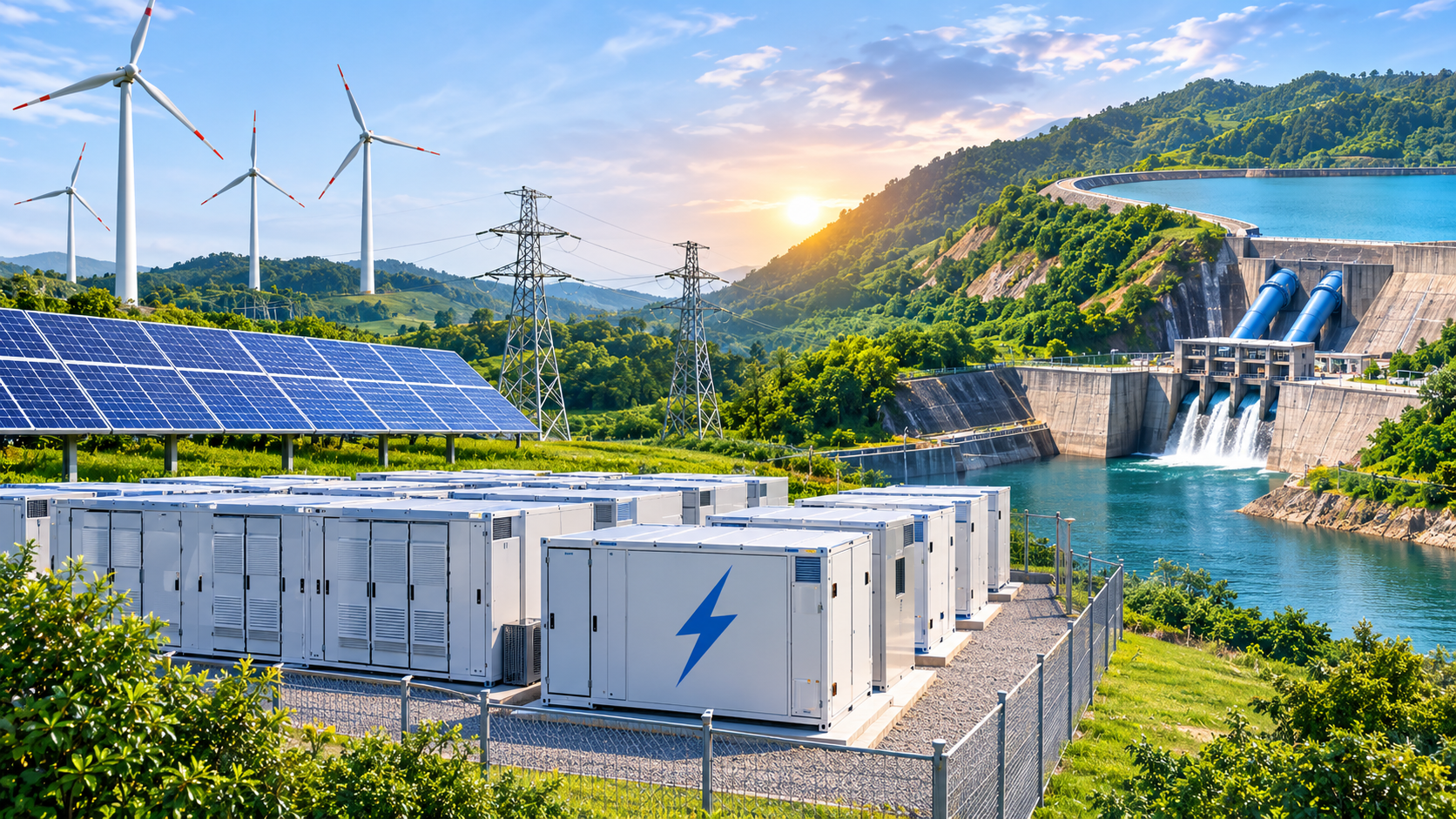
AI-related manufacturing and data centres require energy, water and physical infrastructure. Policymakers must consider whether new electricity demand can be served reliably without undermining industrial customers or households. Electricity costs affect competitiveness, especially for energy-intensive factories. Efficient cooling, stronger grids, renewable generation and storage can help, but each has capital and operational trade-offs. A sensible industrial strategy accounts for energy security and environmental safeguards from the beginning. It should avoid assuming that a high-technology investment is automatically low-impact simply because its output is digital.
Three scenarios for the next phase
In an optimistic scenario, AI applications deliver broad productivity improvements, consumer demand strengthens and technology spending supports a wider manufacturing recovery. In a mixed scenario, advanced electronics remain healthy but conventional factories experience only modest improvement; regional inequality persists. In a downside scenario, weaker global demand or a retrenchment in AI investment causes orders to fall across multiple sectors. These are analytical scenarios, not forecasts with assigned probabilities. Watching export orders, inventory levels, capital expenditure announcements, employment and real wage growth can help distinguish them over time.
How to read economic headlines critically
First, identify whether a report discusses survey sentiment, actual output, exports or GDP. Second, note the time period: a monthly change is not the same as a year-on-year trend. Third, ask whether the headline refers to one country, several economies or the whole region. Fourth, distinguish AI-related hardware from the rest of manufacturing. Fifth, check whether a numerical claim is a forecast, an estimate or an observed result. Finally, read more than one reliable source when the issue is politically or financially consequential. These habits make economic reporting more useful and reduce the risk of dramatic but misleading conclusions.
Conclusion: two economies can exist at once
The AI boom is real as an investment phenomenon, but its benefits are not automatically distributed across all factories or workers. Asia's uneven manufacturing picture is a reminder that technology headlines and everyday economic conditions can move in different directions. For India, the opportunity is to build deeper supply chains and skills while remaining realistic about global demand. For readers, the best question is not simply whether AI is booming, but who produces its equipment, who earns the income, how widely the gains spread and whether those gains endure. The answer will help determine whether today's concentrated investment wave becomes tomorrow's broad-based prosperity.
Frequently asked questions
Does weak factory activity mean Asia is in recession?
No. A manufacturing survey measures conditions in one sector. A recession assessment requires broader economic evidence, and countries may differ.
Does a PMI below 50 mean factories have stopped operating?
No. It generally signals that surveyed manufacturing activity is contracting relative to the prior month, not that production has ceased.
Why do AI chip orders not help all manufacturers equally?
AI hardware is supplied through specialized production chains. Other factories depend on different customers, financing conditions and product markets.
Can India benefit from supply-chain diversification?
Potentially, but sustainable gains require infrastructure, skills, reliable energy, competitive suppliers and stable trade access.
Is the AI investment boom certain to continue?
No. Future spending depends on demand, returns, financing, energy availability and technology progress.
What should students learn from this story?
Learn to interpret economic indicators and develop transferable skills that connect technical knowledge with practical industry needs.
Sources and further reading
Primary news reference: Reuters, 2 November 2026, “Asia’s factory activity feels the fading glimmer of AI boom.” The article above is independently written and does not reproduce the Reuters report.
Editorial disclosure: This article explains public economic developments for educational purposes. It is not financial or investment advice. Data and conditions can change after publication.
 History Geography General Science Economy
 Oxford Student Atlas India Competitive