What Happened
India has achieved an important milestone in sustainable infrastructure with a 1.85-kilometre road at Raigarh in Chhattisgarh receiving a Guinness World Record for the world's longest road built with processed steel slag aggregates. The project brings together infrastructure engineering, industrial-waste utilisation and India's circular-economy ambitions. The indigenous Steel Slag Road Technology has been developed by the CSIR-Central Road Research Institute, or CSIR-CRRI, and the record-setting road was developed in collaboration with Jindal Steel Limited.
According to the Ministry of Science and Technology, Steel Slag Road Technology can reduce road-construction costs by around 40 per cent while providing approximately four times the strength of conventional roads in suitable applications. Union Minister Dr Jitendra Singh also stated that roads constructed using the technology could substantially extend maintenance cycles, with major maintenance potentially required only after nearly 15 years under appropriate conditions. These claims make the technology significant not only from an environmental perspective but also for the economics of India's rapidly expanding infrastructure network.
Steel slag is a by-product generated during steel manufacturing. Traditionally, large quantities of such industrial material can create disposal and environmental-management challenges. The Steel Slag Road initiative processes this material so that it can be used as aggregate in road construction. Aggregates are the hard granular materials used in road layers and are conventionally obtained largely from natural stone through quarrying and mining. Substituting an industrial by-product for part of this requirement can therefore simultaneously reduce waste and conserve natural resources.
This is why the technology is closely associated with the concept of 'Waste to Wealth' and the circular economy. In a linear economic model, raw materials are extracted, converted into products and eventually discarded as waste. A circular economy attempts to keep materials in productive use for longer through reuse, recycling and resource recovery. Steel slag roads demonstrate this principle in infrastructure: a material produced as an industrial by-product is scientifically processed and converted into a useful construction resource.
The Raigarh achievement is not India's first experiment with steel slag roads. The technology has progressed through several major applications. Processed steel slag aggregates were earlier used in a six-lane road connecting an industrial area with Hazira Port in Gujarat. The technology was subsequently deployed on the NH-66 Mumbai-Goa Highway, where approximately 80,000 tonnes of steel slag were converted into processed aggregates for a one-kilometre, four-lane road section.
Steel slag technology has also been used for heavy-duty road infrastructure in Arunachal Pradesh, including a strategic border region. Another application involved construction of a 1.1-kilometre steel slag road inside Hazira Port connecting the multipurpose berth with the coal yard. Port and industrial roads are especially demanding because they regularly carry heavy commercial vehicles and therefore provide useful real-world environments for evaluating pavement performance.
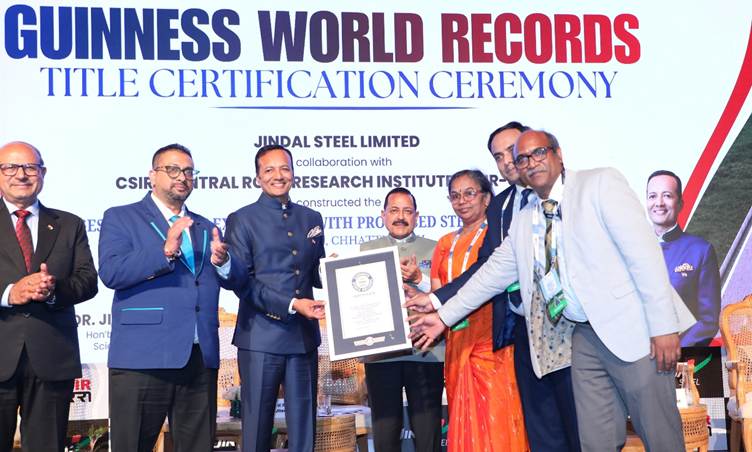
The latest 1.85-kilometre road at Raigarh has now secured the Guinness World Record for the 'World's Longest Road Built with Processed Steel Slag Aggregates'. The achievement was jointly pursued by CSIR-CRRI and Jindal Steel Limited. During the programme, the road was virtually inaugurated, a scientific documentary was released, a Technology Transfer Agreement was signed between CSIR-CRRI and Jindal Steel, and a product brand called 'Steel Grit' was launched.
The technology is already moving towards a much larger application. CSIR-CRRI has received a work order for a 40-kilometre road associated with Jindal Steel's Angul plant in Odisha. If implemented successfully at that scale, it would represent a major transition from demonstration projects to wider commercial and infrastructure deployment.
The potential economic implications are considerable. India is building highways, expressways, industrial corridors, logistics infrastructure, ports and urban roads on a massive scale. Conventional road construction requires enormous quantities of aggregates, much of which comes from quarrying. Greater use of appropriately processed industrial materials could potentially reduce pressure on natural stone resources while creating productive uses for industrial waste.
Durability is equally important. The initial construction cost of a road is only one part of its total economic cost. Repeated resurfacing, repair and maintenance create additional expenditure and can disrupt transport. If steel slag pavement systems achieve longer maintenance cycles under suitable engineering conditions, their life-cycle economic benefits could be greater than the initial construction savings alone.
The technology could have particular relevance in difficult geographical regions. High-rainfall areas and mountainous terrain can impose severe stresses on roads. Dr Jitendra Singh highlighted the challenges faced in parts of the Northeast, where heavy rainfall can restrict the road-construction season and damage infrastructure. However, the suitability of steel slag technology must still be determined through proper pavement design, processing, quality control and local engineering assessment rather than assuming that one construction method will perform identically everywhere.
Scientific processing is particularly important because raw steel slag cannot simply be dumped onto a road and treated as conventional aggregate. Appropriate processing protocols, engineering specifications and quality-control systems are necessary to ensure that the material performs safely and predictably. CSIR-CRRI has developed scientific guidelines, processing protocols and quality-control frameworks for its use.
The initiative also demonstrates collaboration between public research institutions and private industry. CSIR-CRRI provided the scientific and engineering knowledge, while industrial partners provided material, implementation capacity and opportunities for large-scale field deployment. Such collaboration can help technologies move from laboratories to commercial use.
The Government is now calling for the technology to expand from individual demonstration projects to wider adoption across states and sectors. Potential users extend beyond the Ministry of Road Transport and Highways. Railways, state governments, other government departments, ports, private infrastructure companies, contractors and industrial operators also construct roads and heavy-duty pavement infrastructure.
For competitive examinations, Steel Slag Road Technology is particularly important because it connects science and technology with environment, infrastructure and economy. UPSC aspirants should connect the topic with CSIR, CSIR-CRRI, circular economy, Waste to Wealth, industrial waste management, sustainable infrastructure, conservation of natural aggregates and resource efficiency. SSC, Railway and State PCS examinations may ask factual questions about the Guinness World Record road, its location, length and the institutions responsible for developing the technology.
क्या हुआ?
भारत ने सतत अवसंरचना के क्षेत्र में महत्वपूर्ण उपलब्धि हासिल की है। छत्तीसगढ़ के रायगढ़ में निर्मित 1.85 किलोमीटर लंबी सड़क को प्रसंस्कृत इस्पात स्लैग समुच्चयों से निर्मित विश्व की सबसे लंबी सड़क के रूप में Guinness World Record प्राप्त हुआ है। यह परियोजना अवसंरचना अभियांत्रिकी, औद्योगिक अपशिष्ट के उपयोग और भारत की परिपत्र अर्थव्यवस्था संबंधी महत्वाकांक्षाओं को एक साथ जोड़ती है। स्वदेशी Steel Slag Road Technology का विकास CSIR-Central Road Research Institute अर्थात CSIR-CRRI ने किया है और रिकॉर्ड बनाने वाली सड़क को Jindal Steel Limited के सहयोग से विकसित किया गया है।
विज्ञान और प्रौद्योगिकी मंत्रालय के अनुसार Steel Slag Road Technology उपयुक्त परिस्थितियों में सड़क निर्माण की लागत को लगभग 40 प्रतिशत तक कम कर सकती है और पारंपरिक सड़कों की तुलना में लगभग चार गुना अधिक मजबूती प्रदान कर सकती है। केंद्रीय मंत्री डॉ. जितेंद्र सिंह ने यह भी कहा कि इस तकनीक से बनी सड़कों में बड़े रखरखाव की आवश्यकता उपयुक्त परिस्थितियों में लगभग 15 वर्ष बाद पड़ सकती है। इस कारण यह तकनीक केवल पर्यावरण की दृष्टि से ही नहीं बल्कि भारत की तेजी से विकसित होती अवसंरचना की आर्थिक दृष्टि से भी महत्वपूर्ण है।
Steel Slag इस्पात निर्माण प्रक्रिया के दौरान उत्पन्न होने वाला एक उप-उत्पाद है। बड़ी मात्रा में उत्पन्न होने वाला ऐसा औद्योगिक पदार्थ निपटान और पर्यावरण प्रबंधन की समस्या पैदा कर सकता है। Steel Slag Road पहल में इस पदार्थ को वैज्ञानिक रूप से प्रसंस्कृत करके सड़क निर्माण में समुच्चय के रूप में उपयोग किया जाता है। सड़क निर्माण में प्रयुक्त कठोर दानेदार पदार्थों को समुच्चय कहा जाता है और इन्हें पारंपरिक रूप से पत्थरों के खनन और उत्खनन से प्राप्त किया जाता है। इसलिए औद्योगिक उप-उत्पाद को इसके विकल्प के रूप में उपयोग करने से एक ओर अपशिष्ट कम किया जा सकता है और दूसरी ओर प्राकृतिक संसाधनों का संरक्षण किया जा सकता है।
इसी कारण इस तकनीक को 'Waste to Wealth' और परिपत्र अर्थव्यवस्था की अवधारणा से जोड़ा जाता है। रैखिक अर्थव्यवस्था में प्राकृतिक संसाधनों का निष्कर्षण किया जाता है, उनसे उत्पाद बनाए जाते हैं और उपयोग के बाद सामग्री को अपशिष्ट के रूप में छोड़ दिया जाता है। इसके विपरीत परिपत्र अर्थव्यवस्था पुनः उपयोग, पुनर्चक्रण और संसाधन पुनर्प्राप्ति के माध्यम से सामग्री को अधिक समय तक आर्थिक उपयोग में बनाए रखने का प्रयास करती है। Steel Slag Road इस सिद्धांत का व्यावहारिक उदाहरण है क्योंकि इस्पात उद्योग से निकलने वाले उप-उत्पाद को वैज्ञानिक रूप से प्रसंस्कृत करके उपयोगी निर्माण सामग्री में बदला जाता है।
रायगढ़ की उपलब्धि भारत में Steel Slag Road Technology का पहला प्रयोग नहीं है। यह तकनीक कई महत्वपूर्ण परियोजनाओं में प्रयोग की जा चुकी है। गुजरात में Hazira Port से औद्योगिक क्षेत्र को जोड़ने वाली छह लेन की सड़क में प्रसंस्कृत Steel Slag Aggregates का उपयोग किया गया। इसके बाद NH-66 Mumbai-Goa Highway पर लगभग 80,000 टन Steel Slag को प्रसंस्कृत करके एक किलोमीटर लंबी चार लेन की सड़क के हिस्से में उपयोग किया गया।
अरुणाचल प्रदेश में भी भारी वाहनों के लिए सड़क अवसंरचना में इस तकनीक का उपयोग किया गया है, जिसमें रणनीतिक सीमा क्षेत्र भी शामिल है। Hazira Port के अंदर बहुउद्देश्यीय बर्थ को कोयला यार्ड से जोड़ने वाली 1.1 किलोमीटर लंबी Steel Slag Road भी बनाई गई। बंदरगाह और औद्योगिक क्षेत्र की सड़कें भारी व्यावसायिक वाहनों का भार सहती हैं, इसलिए ऐसी परियोजनाएँ तकनीक के वास्तविक प्रदर्शन का महत्वपूर्ण परीक्षण प्रदान करती हैं।
रायगढ़ में बनी नवीनतम 1.85 किलोमीटर सड़क को अब 'World's Longest Road Built with Processed Steel Slag Aggregates' के लिए Guinness World Record प्राप्त हुआ है। इस उपलब्धि को CSIR-CRRI और Jindal Steel Limited ने संयुक्त रूप से आगे बढ़ाया। कार्यक्रम के दौरान सड़क का आभासी उद्घाटन किया गया, वैज्ञानिक वृत्तचित्र जारी किया गया, CSIR-CRRI और Jindal Steel के बीच Technology Transfer Agreement पर हस्ताक्षर हुए और 'Steel Grit' नामक उत्पाद ब्रांड का शुभारंभ किया गया।
यह तकनीक अब कहीं बड़े स्तर की परियोजना की ओर बढ़ रही है। CSIR-CRRI को ओडिशा में Jindal Steel के Angul संयंत्र से संबंधित 40 किलोमीटर लंबी सड़क के लिए कार्यादेश प्राप्त हुआ है। यदि इतने बड़े स्तर पर तकनीक का सफलतापूर्वक उपयोग होता है तो यह प्रयोगात्मक परियोजनाओं से बड़े पैमाने पर व्यावहारिक उपयोग की दिशा में महत्वपूर्ण परिवर्तन होगा।
इस तकनीक के संभावित आर्थिक लाभ भी महत्वपूर्ण हैं। भारत बड़े पैमाने पर राजमार्ग, एक्सप्रेसवे, औद्योगिक गलियारे, बंदरगाह, लॉजिस्टिक अवसंरचना और शहरी सड़कें विकसित कर रहा है। पारंपरिक सड़क निर्माण के लिए बड़ी मात्रा में प्राकृतिक समुच्चय की आवश्यकता होती है जो मुख्य रूप से पत्थर के उत्खनन से प्राप्त होते हैं। उचित रूप से प्रसंस्कृत औद्योगिक पदार्थों का उपयोग प्राकृतिक संसाधनों पर दबाव कम करने के साथ औद्योगिक अपशिष्ट का उपयोगी समाधान प्रदान कर सकता है।
सड़क की मजबूती और रखरखाव भी आर्थिक दृष्टि से महत्वपूर्ण हैं। सड़क निर्माण की प्रारंभिक लागत उसकी कुल आर्थिक लागत का केवल एक हिस्सा होती है। बार-बार मरम्मत, पुनः सतहीकरण और रखरखाव पर अतिरिक्त धन खर्च होता है तथा यातायात भी प्रभावित होता है। यदि Steel Slag Road उचित परिस्थितियों में लंबे रखरखाव चक्र प्रदान करती है तो प्रारंभिक लागत में बचत के अतिरिक्त पूरी जीवन अवधि में भी आर्थिक लाभ प्राप्त हो सकता है।
कठिन भौगोलिक क्षेत्रों में यह तकनीक विशेष रूप से उपयोगी हो सकती है। अधिक वर्षा और पर्वतीय परिस्थितियाँ सड़कों पर गंभीर प्रभाव डाल सकती हैं। डॉ. जितेंद्र सिंह ने पूर्वोत्तर के कुछ क्षेत्रों की चुनौती का उल्लेख किया जहाँ भारी वर्षा के कारण सड़क निर्माण का मौसम सीमित रहता है। फिर भी किसी भी क्षेत्र में Steel Slag Technology की उपयोगिता का निर्धारण उचित अभियांत्रिकी अध्ययन, प्रसंस्करण, गुणवत्ता नियंत्रण और स्थानीय परिस्थितियों के आधार पर किया जाना चाहिए।
वैज्ञानिक प्रसंस्करण इस तकनीक का अत्यंत महत्वपूर्ण हिस्सा है। कच्चे Steel Slag को सीधे सड़क पर डालकर पारंपरिक समुच्चय का विकल्प नहीं बनाया जा सकता। सुरक्षित और विश्वसनीय प्रदर्शन के लिए उचित प्रसंस्करण, अभियांत्रिकी विनिर्देश और गुणवत्ता नियंत्रण आवश्यक हैं। CSIR-CRRI ने इसके लिए वैज्ञानिक दिशानिर्देश, प्रसंस्करण प्रक्रिया और गुणवत्ता नियंत्रण ढाँचा विकसित किया है।
यह परियोजना सार्वजनिक अनुसंधान संस्थान और निजी उद्योग के सहयोग का भी अच्छा उदाहरण है। CSIR-CRRI ने वैज्ञानिक और अभियांत्रिकी ज्ञान उपलब्ध कराया जबकि औद्योगिक साझेदारों ने सामग्री, क्रियान्वयन क्षमता और बड़े स्तर पर तकनीक के परीक्षण का अवसर प्रदान किया। ऐसे सहयोग से प्रयोगशाला में विकसित तकनीक को वास्तविक व्यावसायिक उपयोग तक पहुँचाया जा सकता है।
सरकार अब इस तकनीक को कुछ प्रदर्शन परियोजनाओं तक सीमित रखने के बजाय विभिन्न राज्यों और क्षेत्रों में व्यापक रूप से अपनाने पर बल दे रही है। इसका संभावित उपयोग केवल सड़क परिवहन और राजमार्ग मंत्रालय तक सीमित नहीं है। रेलवे, राज्य सरकारें, अन्य सरकारी विभाग, बंदरगाह, निजी अवसंरचना कंपनियाँ, ठेकेदार और औद्योगिक प्रतिष्ठान भी बड़े पैमाने पर सड़क तथा भारी अवसंरचना का निर्माण करते हैं।
प्रतियोगी परीक्षाओं के लिए Steel Slag Road Technology अत्यंत महत्वपूर्ण है क्योंकि यह विज्ञान एवं प्रौद्योगिकी, पर्यावरण, अवसंरचना और अर्थव्यवस्था को एक साथ जोड़ती है। UPSC अभ्यर्थियों को इसे CSIR, CSIR-CRRI, परिपत्र अर्थव्यवस्था, Waste to Wealth, औद्योगिक अपशिष्ट प्रबंधन, सतत अवसंरचना, प्राकृतिक समुच्चयों के संरक्षण और संसाधन दक्षता से जोड़कर पढ़ना चाहिए। SSC, Railway और State PCS में Guinness World Record सड़क, उसका स्थान, उसकी लंबाई और तकनीक विकसित करने वाली संस्थाओं से तथ्यात्मक प्रश्न पूछे जा सकते हैं।
Key Facts
• India has set a Guinness World Record for the world's longest road built with processed steel slag aggregates.
• The record-setting road is located at Raigarh in Chhattisgarh.
• The Guinness World Record road is 1.85 kilometres long.
• The project was jointly pursued by CSIR-CRRI and Jindal Steel Limited.
• Steel slag is a by-product of steel production.
• According to the Government, Steel Slag Road Technology can reduce construction costs by around 40 per cent in suitable applications.
• The Government states that the technology can provide approximately four times the strength of conventional roads.
• Major maintenance may be required only after nearly 15 years in suitable applications, according to the Ministry.
• The technology supports the Waste to Wealth and circular-economy approach.
• Processed steel slag was earlier used in a six-lane road connecting the industrial area with Hazira Port.
• Around 80,000 tonnes of steel slag were processed for a one-kilometre, four-lane section of the NH-66 Mumbai-Goa Highway.
• Steel slag technology has also been deployed in Arunachal Pradesh.
• A 1.1-kilometre steel slag road has been constructed inside Hazira Port.
• CSIR-CRRI has received a work order for a 40-kilometre road associated with Jindal Steel's Angul plant in Odisha.
• A Technology Transfer Agreement between CSIR-CRRI and Jindal Steel was signed during the Guinness World Record programme.
• A product brand called Steel Grit was also launched.
मुख्य तथ्य
• भारत ने प्रसंस्कृत Steel Slag Aggregates से बनी विश्व की सबसे लंबी सड़क का Guinness World Record बनाया है।
• रिकॉर्ड बनाने वाली सड़क छत्तीसगढ़ के रायगढ़ में स्थित है।
• इस सड़क की लंबाई 1.85 किलोमीटर है।
• परियोजना को CSIR-CRRI और Jindal Steel Limited ने संयुक्त रूप से आगे बढ़ाया।
• Steel Slag इस्पात उत्पादन का उप-उत्पाद है।
• सरकार के अनुसार उपयुक्त परिस्थितियों में Steel Slag Road Technology निर्माण लागत लगभग 40 प्रतिशत कम कर सकती है।
• सरकार के अनुसार यह तकनीक पारंपरिक सड़कों की तुलना में लगभग चार गुना मजबूती प्रदान कर सकती है।
• उपयुक्त परिस्थितियों में बड़े रखरखाव की आवश्यकता लगभग 15 वर्ष बाद पड़ सकती है।
• यह तकनीक Waste to Wealth और परिपत्र अर्थव्यवस्था की अवधारणा को बढ़ावा देती है।
• Hazira Port को औद्योगिक क्षेत्र से जोड़ने वाली छह लेन की सड़क में पहले भी प्रसंस्कृत Steel Slag का उपयोग किया गया था।
• NH-66 Mumbai-Goa Highway के एक किलोमीटर लंबे चार लेन हिस्से के लिए लगभग 80,000 टन Steel Slag का प्रसंस्करण किया गया।
• अरुणाचल प्रदेश में भी इस तकनीक का उपयोग किया गया है।
• Hazira Port के अंदर 1.1 किलोमीटर लंबी Steel Slag Road बनाई गई है।
• CSIR-CRRI को ओडिशा में Jindal Steel के Angul संयंत्र से संबंधित 40 किलोमीटर सड़क के लिए कार्यादेश मिला है।
• Guinness World Record कार्यक्रम में CSIR-CRRI और Jindal Steel के बीच Technology Transfer Agreement हुआ।
• कार्यक्रम में Steel Grit नामक उत्पाद ब्रांड भी शुरू किया गया।
Background
India's expanding road and industrial infrastructure requires enormous quantities of natural aggregates obtained through mining and quarrying. At the same time, the steel industry produces substantial quantities of slag. CSIR-CRRI's technology seeks to connect these two challenges by scientifically processing steel slag into road-building aggregates. The approach supports circular-economy principles by converting an industrial by-product into an infrastructure resource.
पृष्ठभूमि
भारत में तेजी से विकसित होती सड़क और औद्योगिक अवसंरचना के लिए खनन तथा उत्खनन से प्राप्त बड़ी मात्रा में प्राकृतिक समुच्चयों की आवश्यकता होती है। दूसरी ओर इस्पात उद्योग से बड़ी मात्रा में Slag उत्पन्न होता है। CSIR-CRRI की तकनीक Steel Slag को वैज्ञानिक रूप से प्रसंस्कृत करके सड़क निर्माण सामग्री में बदलते हुए इन दोनों चुनौतियों का संयुक्त समाधान प्रस्तुत करती है। यह औद्योगिक उप-उत्पाद को उपयोगी संसाधन में बदलकर परिपत्र अर्थव्यवस्था के सिद्धांतों को बढ़ावा देती है।
Why It Matters
The development matters because it demonstrates how industrial waste can potentially replace part of the natural resources used in infrastructure while improving the economics and durability of road construction. Successful large-scale adoption could reduce demand for quarried aggregates, create productive uses for steel-industry waste and support India's sustainable-infrastructure goals. The proposed 40-kilometre Odisha project will be important because it could demonstrate whether the technology can move from relatively limited projects to substantially larger deployment.
यह क्यों महत्वपूर्ण है?
यह विकास इसलिए महत्वपूर्ण है क्योंकि यह दिखाता है कि औद्योगिक अपशिष्ट को अवसंरचना में उपयोग होने वाले कुछ प्राकृतिक संसाधनों के विकल्प के रूप में इस्तेमाल किया जा सकता है और साथ ही सड़क निर्माण की आर्थिक दक्षता तथा मजबूती में सुधार की संभावना पैदा की जा सकती है। बड़े स्तर पर सफल उपयोग से पत्थर के उत्खनन की आवश्यकता कम हो सकती है, इस्पात उद्योग के अपशिष्ट का उपयोग हो सकता है और भारत के सतत अवसंरचना लक्ष्यों को सहायता मिल सकती है। ओडिशा की प्रस्तावित 40 किलोमीटर परियोजना यह समझने की दृष्टि से महत्वपूर्ण होगी कि तकनीक को सीमित परियोजनाओं से बड़े स्तर के उपयोग तक सफलतापूर्वक ले जाया जा सकता है या नहीं।
Exam Connection
High priority for UPSC GS-III Science & Technology, Environment, Infrastructure and Economy. Remember: Raigarh in Chhattisgarh; 1.85-km Guinness World Record road; CSIR-CRRI; Jindal Steel; processed steel slag aggregates; Waste to Wealth; circular economy; approximately 40 per cent lower construction cost and four times higher strength as stated by the Government. For Prelims, revise CSIR and CRRI and the meaning of steel slag. For Mains, connect the technology with circular economy, industrial waste management, resource efficiency and sustainable infrastructure.
परीक्षा से संबंध
UPSC GS-III विज्ञान एवं प्रौद्योगिकी, पर्यावरण, अवसंरचना और अर्थव्यवस्था के लिए अत्यंत महत्वपूर्ण। याद रखें: छत्तीसगढ़ का रायगढ़; 1.85 किलोमीटर Guinness World Record सड़क; CSIR-CRRI; Jindal Steel; प्रसंस्कृत Steel Slag Aggregates; Waste to Wealth; परिपत्र अर्थव्यवस्था; तथा सरकार के अनुसार लगभग 40 प्रतिशत कम निर्माण लागत और चार गुना मजबूती। प्रारंभिक परीक्षा के लिए CSIR, CRRI और Steel Slag का अर्थ पढ़ें। मुख्य परीक्षा के लिए इसे परिपत्र अर्थव्यवस्था, औद्योगिक अपशिष्ट प्रबंधन, संसाधन दक्षता और सतत अवसंरचना से जोड़कर तैयार करें।