What Happened
Indian scientists have identified how two widely used preservatives, sodium benzoate and phenoxyethanol, damage bacterial cells through a combination of physical disruption and internal biochemical stress. The Ministry of Science and Technology announced the research findings on 23 September 2026.
The study was conducted by researchers at the Institute of Nano Science and Technology (INST), Mohali, in collaboration with Unilever Research and Development, Bengaluru. INST is an autonomous institution under the Department of Science and Technology.
Using transmission electron microscopy and biochemical analysis, the researchers examined how preservatives affect two representative bacterial pathogens: Staphylococcus aureus and Pseudomonas aeruginosa.
The findings were published in the scientific journal Letters in Applied Microbiology. The research is relevant to food preservation, personal-care products, microbiology, nanoscience, biotechnology and industrial research.
1. What Happened in September 2026?
On 23 September 2026, the Ministry of Science and Technology reported a collaborative research study explaining how sodium benzoate and phenoxyethanol damage bacterial cells.
Although these preservatives have been used for many years, the detailed molecular mechanisms responsible for their antibacterial activity had not been fully understood.
The researchers combined advanced imaging with chemical and biochemical tests to observe changes in bacterial structure and internal cellular processes.
The study found that preservatives do not act only through a single pathway. They can damage the bacterial cell envelope while also triggering harmful chemical changes inside the cell.
2. Which Institutions Conducted the Research?
The research was conducted by the Institute of Nano Science and Technology, Mohali, in collaboration with Unilever R&D, Bengaluru.
INST is an autonomous institute of the Department of Science and Technology, Government of India.
The collaboration combined academic research capabilities with industrial experience in product preservation.
The research team included Ishani Sharma, S. M. Rose, Madhu Lata, Somnath Das, Nagaraja I. S. Acharya, Maheshwara Naik, Samiran Mahapatra and Sharmistha Sinha.
3. What Are Preservatives?
Preservatives are substances used to reduce or prevent undesirable changes in products during storage and use.
Some preservatives inhibit the growth of microorganisms such as bacteria, yeasts and moulds.
Microbial contamination can affect the quality, stability and safety of products.
Preservatives are therefore used in different categories of products, including certain foods, cosmetics and personal-care formulations.
Their suitability depends on the product, concentration, formulation, applicable regulations and intended use.
4. What Is Sodium Benzoate?
Sodium benzoate is the sodium salt of benzoic acid.
Its chemical formula is C7H5NaO2.
It is commonly used as a preservative in selected food and beverage products, particularly acidic formulations.
The PIB release mentions examples such as pickles, ketchup and carbonated beverages.
Sodium benzoate has a long history of use in food preservation.
The study found that its antibacterial activity increased substantially under acidic conditions.
This result helps explain why the acidity of a product can influence the performance of a preservative.
5. What Is Phenoxyethanol?
Phenoxyethanol is an organic compound used as a preservative in various formulations.
Its molecular formula is C8H10O2.
The PIB release identifies products such as shampoos, moisturisers and sunscreens among its applications.
The compound is also used in certain vaccine formulations.
The new study examined its effects on bacterial cells and compared its performance with sodium benzoate.
Unlike sodium benzoate, phenoxyethanol showed relatively consistent antibacterial effectiveness across the range of pH conditions examined in the study.
6. Which Bacteria Were Studied?
The researchers investigated two bacterial species.
The first was Staphylococcus aureus, a Gram-positive bacterium.
The second was Pseudomonas aeruginosa, a Gram-negative bacterium.
These organisms were selected to examine preservative-induced responses in bacteria with different cell-envelope structures.
Gram-positive and Gram-negative bacteria differ in important structural features of their cell envelopes.
Studying both groups helps researchers understand whether an antibacterial substance affects different bacterial structures in similar or different ways.
7. What Is Staphylococcus aureus?
Staphylococcus aureus is a Gram-positive bacterium.
It is commonly studied in microbiology because it can be associated with several types of human infection.
Gram-positive bacteria generally possess a relatively thick peptidoglycan layer in their cell wall.
Peptidoglycan is a structural polymer that contributes to the strength and shape of bacterial cells.
The research examined how sodium benzoate and phenoxyethanol affected the cellular structure and biochemical processes of S. aureus.
8. What Is Pseudomonas aeruginosa?
Pseudomonas aeruginosa is a Gram-negative bacterium.
It is an important organism in microbiological and biomedical research.
Gram-negative bacteria possess an outer membrane in addition to the inner cytoplasmic membrane.
Their cell-envelope organisation differs from that of Gram-positive bacteria.
The study used P. aeruginosa to examine how preservatives affect a bacterium with this type of cellular structure.
9. What Is the Bacterial Cell Envelope?
The bacterial cell envelope consists of the structures surrounding the internal contents of a bacterial cell.
Its exact organisation depends on the bacterial species.
It can include the cytoplasmic membrane, cell wall and, in Gram-negative bacteria, an outer membrane.
These structures help maintain cellular integrity and regulate interactions with the surrounding environment.
If the envelope is severely damaged, the bacterium may lose the ability to maintain the internal conditions required for normal cellular activity.
The researchers found that both preservatives could compromise the bacterial cell envelope.
10. What Did the Scientists Discover?
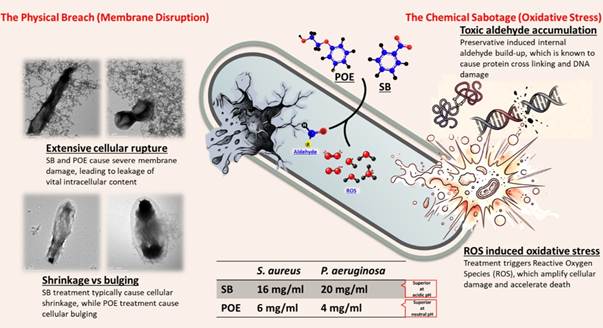
The study identified a coordinated antibacterial mechanism involving physical damage and biochemical stress.
The first component was disruption of the bacterial cell envelope.
The second component involved the accumulation of reactive chemical species inside bacterial cells.
These internal changes could affect proteins, genetic material and other essential cellular functions.
The findings indicate that the preservatives can affect multiple cellular targets rather than acting through only one isolated mechanism.
The researchers used imaging and biochemical measurements to connect visible structural changes with internal chemical disturbances.
11. How Does Sodium Benzoate Affect Bacteria?
The researchers observed that sodium benzoate caused bacterial cells to shrink and collapse under the conditions examined.
This effect was visible through advanced microscopy.
The study also found that sodium benzoate became significantly more effective in acidic environments.
According to the Ministry, its antibacterial activity increased by approximately sixteen times under acidic conditions in the reported experiments.
This finding is relevant to the design of acidic product formulations.
However, the reported sixteen-fold increase relates to the study conditions and should not be assumed to apply identically to every food, cosmetic or microorganism.
12. How Does Phenoxyethanol Affect Bacteria?
Phenoxyethanol followed a different pattern of cellular damage.
The researchers observed membrane expansion followed by rupture.
This indicates that the preservative can disrupt the structural integrity of bacterial cells.
The study also found that phenoxyethanol maintained relatively consistent antibacterial effectiveness across a broad range of pH conditions examined.
This property may be useful when developing products whose acidity can vary.
The actual suitability of a preservative must still be assessed for the specific formulation and applicable safety requirements.
13. What Is the Importance of pH?
The pH scale describes how acidic or alkaline an aqueous solution is.
A pH below 7 indicates acidity, while a pH above 7 indicates alkalinity under standard reference conditions.
A pH of 7 is considered neutral under those conditions.
The study showed that pH influenced the antibacterial performance of sodium benzoate.
Its activity increased markedly in acidic conditions.
Phenoxyethanol showed more consistent activity across the pH range examined.
This comparison is important because different products can have different acidity levels.
14. What Is Transmission Electron Microscopy?
Transmission electron microscopy, abbreviated as TEM, is an advanced imaging technique that uses electrons to examine very small structures.
Electrons are transmitted through a suitably prepared specimen to generate information about its internal structure.
TEM can reveal details that cannot be resolved using ordinary light microscopy.
The researchers used TEM to observe changes in bacterial cell shape and envelope integrity after preservative treatment.
The published images compare untreated bacterial cells with cells exposed to sodium benzoate or phenoxyethanol.
15. What Did the Microscopy Images Show?
The images revealed visible differences between untreated and preservative-treated bacteria.
Sodium benzoate treatment was associated with cellular shrinkage and collapse.
Phenoxyethanol treatment was associated with membrane expansion and rupture.
The researchers also observed evidence of cellular leakage.
These observations supported the conclusion that the preservatives physically damage bacterial cells.
The imaging results were combined with biochemical measurements to investigate what happened inside the cells.
16. What Is Oxidative Stress?
Oxidative stress occurs when reactive chemical species contribute to damage within a biological system.
Reactive oxygen species can interact with cellular molecules.
Excessive reactive activity may damage proteins, lipids and genetic material.
The study found that preservative treatment was associated with the accumulation of oxygen-derived reactive species and reactive aldehydes inside bacterial cells.
These changes were linked with disruption of essential cellular functions.
The findings therefore connect visible membrane damage with internal biochemical stress.
17. What Are Reactive Aldehydes?
Aldehydes are organic compounds containing a characteristic carbonyl functional group.
Some reactive aldehydes can interact with important biological molecules.
Their accumulation may interfere with cellular processes.
The researchers measured chemical changes associated with aldehyde formation during preservative treatment.
The results contributed to the evidence that preservatives can damage bacterial cells through more than one mechanism.
18. Which Laboratory Tests Were Used?
The research combined several experimental approaches.
Inhibition-zone tests were used to examine antibacterial activity.
Minimum inhibitory concentration assays helped assess the concentration required to inhibit visible bacterial growth under specified experimental conditions.
Transmission electron microscopy was used to examine structural changes.
Dye-leakage tests helped assess damage to bacterial membranes.
MBTH and DCFDA assays were used to investigate internal biochemical changes.
The combination of these methods allowed the researchers to connect structural damage with chemical disturbances.
19. What Is Minimum Inhibitory Concentration?
Minimum inhibitory concentration, abbreviated as MIC, is the lowest concentration of an antimicrobial substance that prevents visible growth of a microorganism under specified laboratory conditions.
MIC is commonly used in microbiology to compare antimicrobial effectiveness.
It is important to remember that MIC is a laboratory measurement.
It does not automatically establish the concentration that should be used in every commercial product.
Product formulation, regulatory limits, safety and intended use must also be considered.
20. Why Is This Research Important for Industry?
Understanding how preservatives work can help researchers select suitable substances for particular product formulations.
For example, the reported findings indicate that sodium benzoate may be especially effective in suitable acidic environments.
Phenoxyethanol may be useful in formulations where the pH varies within the range examined.
More detailed mechanistic knowledge can support the development of preservation systems that use appropriate concentrations while maintaining product quality.
The findings may also contribute to efforts to reduce spoilage and unnecessary product waste.
However, the research does not establish that either preservative is universally appropriate or safe at every concentration.
21. Where Was the Study Published?
The findings were published in Letters in Applied Microbiology.
The publication can be accessed through the DOI 10.1093/lambio/ovag022.
The official PIB release includes diagrams and transmission electron microscopy images explaining the results.
The images are useful for understanding the differences between untreated bacterial cells and cells exposed to the two preservatives.
22. Importance for Competitive Examinations
The study is relevant to microbiology, biotechnology, food preservation, chemistry and scientific instrumentation.
For UPSC General Studies Paper III, it connects indigenous research, industry–academia collaboration and the application of scientific knowledge.
For SSC and Railway examinations, remember the institutions, preservatives, bacteria and principal findings.
INST Mohali collaborated with Unilever R&D Bengaluru.
The preservatives were sodium benzoate and phenoxyethanol.
The bacteria were Staphylococcus aureus and Pseudomonas aeruginosa.
The principal finding was a combination of bacterial cell-envelope disruption and internal biochemical damage.
Sodium benzoate caused cellular shrinkage and collapse, while phenoxyethanol caused membrane expansion and rupture.
The study was reported by the Ministry of Science and Technology on 23 September 2026.
क्या हुआ?
भारतीय वैज्ञानिकों ने यह पता लगाया है कि व्यापक रूप से उपयोग किए जाने वाले दो परिरक्षक, सोडियम बेंजोएट और फिनॉक्सीएथेनॉल, किस प्रकार जीवाणु कोशिकाओं को भौतिक क्षति और आंतरिक जैवरासायनिक तनाव के संयुक्त प्रभाव से नुकसान पहुँचाते हैं। विज्ञान एवं प्रौद्योगिकी मंत्रालय ने 23 सितंबर 2026 को इन अनुसंधान निष्कर्षों की घोषणा की।
यह अध्ययन मोहाली स्थित नैनो विज्ञान एवं प्रौद्योगिकी संस्थान के शोधकर्ताओं ने बेंगलुरु स्थित यूनिलीवर अनुसंधान एवं विकास केंद्र के सहयोग से किया। यह संस्थान विज्ञान एवं प्रौद्योगिकी विभाग के अंतर्गत स्वायत्त संस्था है।
शोधकर्ताओं ने ट्रांसमिशन इलेक्ट्रॉन माइक्रोस्कोपी और जैवरासायनिक विश्लेषण की सहायता से दो जीवाणु प्रजातियों, स्टैफिलोकोकस ऑरियस और स्यूडोमोनास एरुजिनोसा, पर परिरक्षकों के प्रभाव का अध्ययन किया।
निष्कर्ष लेटर्स इन एप्लाइड माइक्रोबायोलॉजी नामक वैज्ञानिक पत्रिका में प्रकाशित हुए। यह अनुसंधान खाद्य संरक्षण, व्यक्तिगत देखभाल उत्पादों, सूक्ष्मजीव विज्ञान, नैनो विज्ञान, जैव प्रौद्योगिकी और औद्योगिक अनुसंधान के लिए महत्वपूर्ण है।
1. सितंबर 2026 में क्या हुआ?
23 सितंबर 2026 को विज्ञान एवं प्रौद्योगिकी मंत्रालय ने एक सहयोगात्मक अध्ययन की जानकारी दी जिसमें सोडियम बेंजोएट और फिनॉक्सीएथेनॉल द्वारा जीवाणु कोशिकाओं को पहुँचाई जाने वाली क्षति की प्रक्रिया स्पष्ट की गई।
इन परिरक्षकों का उपयोग लंबे समय से किया जा रहा है, लेकिन इनके जीवाणुरोधी प्रभाव के लिए जिम्मेदार विस्तृत आणविक प्रक्रियाओं को पूरी तरह नहीं समझा गया था।
शोधकर्ताओं ने उन्नत चित्रण और रासायनिक तथा जैवरासायनिक परीक्षणों को मिलाकर जीवाणुओं की संरचना और आंतरिक कोशिकीय प्रक्रियाओं में होने वाले परिवर्तनों का अध्ययन किया।
अध्ययन में पाया गया कि परिरक्षक केवल एक प्रक्रिया के माध्यम से कार्य नहीं करते। वे जीवाणु कोशिका के बाहरी आवरण को क्षति पहुँचाने के साथ कोशिका के भीतर हानिकारक रासायनिक परिवर्तन भी उत्पन्न कर सकते हैं।
2. अनुसंधान किन संस्थानों ने किया?
अनुसंधान मोहाली स्थित नैनो विज्ञान एवं प्रौद्योगिकी संस्थान ने बेंगलुरु स्थित यूनिलीवर अनुसंधान एवं विकास केंद्र के सहयोग से किया।
नैनो विज्ञान एवं प्रौद्योगिकी संस्थान भारत सरकार के विज्ञान एवं प्रौद्योगिकी विभाग के अंतर्गत स्वायत्त संस्था है।
इस सहयोग में शैक्षणिक अनुसंधान क्षमताओं और उत्पाद संरक्षण से संबंधित औद्योगिक अनुभव को एक साथ लाया गया।
अनुसंधान दल में इशानी शर्मा, एस. एम. रोज, मधु लता, सोमनाथ दास, नागराजा आई. एस. आचार्य, महेश्वर नाइक, समीरन महापात्र और शर्मिष्ठा सिन्हा शामिल थे।
3. परिरक्षक क्या होते हैं?
परिरक्षक ऐसे पदार्थ होते हैं जिनका उपयोग भंडारण और प्रयोग के दौरान उत्पादों में अवांछित परिवर्तन कम करने या रोकने के लिए किया जाता है।
कुछ परिरक्षक जीवाणु, यीस्ट और फफूँद जैसे सूक्ष्मजीवों की वृद्धि रोकते हैं।
सूक्ष्मजीवों द्वारा संदूषण उत्पादों की गुणवत्ता, स्थिरता और सुरक्षा को प्रभावित कर सकता है।
इसलिए कुछ खाद्य पदार्थों, सौंदर्य प्रसाधनों और व्यक्तिगत देखभाल उत्पादों में परिरक्षकों का उपयोग किया जाता है।
किसी परिरक्षक की उपयुक्तता उत्पाद, उसकी सांद्रता, संरचना, लागू नियमों और निर्धारित उपयोग पर निर्भर करती है।
4. सोडियम बेंजोएट क्या है?
सोडियम बेंजोएट बेंजोइक अम्ल का सोडियम लवण है।
इसका रासायनिक सूत्र C7H5NaO2 है।
इसका उपयोग चुनिंदा खाद्य और पेय उत्पादों में परिरक्षक के रूप में किया जाता है, विशेषकर अम्लीय उत्पादों में।
आधिकारिक विज्ञप्ति में अचार, केचप और कार्बोनेटेड पेय पदार्थों जैसे उदाहरण दिए गए हैं।
खाद्य संरक्षण में सोडियम बेंजोएट के उपयोग का लंबा इतिहास है।
अध्ययन में पाया गया कि अम्लीय परिस्थितियों में इसकी जीवाणुरोधी सक्रियता काफी बढ़ गई।
यह निष्कर्ष समझने में सहायता करता है कि किसी उत्पाद की अम्लता परिरक्षक के प्रदर्शन को क्यों प्रभावित कर सकती है।
5. फिनॉक्सीएथेनॉल क्या है?
फिनॉक्सीएथेनॉल एक कार्बनिक यौगिक है जिसका उपयोग विभिन्न उत्पादों में परिरक्षक के रूप में किया जाता है।
इसका आणविक सूत्र C8H10O2 है।
आधिकारिक विज्ञप्ति में शैम्पू, मॉइस्चराइजर और सनस्क्रीन जैसे उत्पादों में इसके उपयोग का उल्लेख किया गया है।
कुछ टीका उत्पादों में भी इस यौगिक का उपयोग होता है।
नए अध्ययन में जीवाणु कोशिकाओं पर इसके प्रभाव का परीक्षण किया गया और सोडियम बेंजोएट के साथ इसकी तुलना की गई।
सोडियम बेंजोएट के विपरीत फिनॉक्सीएथेनॉल ने अध्ययन में जाँची गई पीएच परिस्थितियों में अपेक्षाकृत समान जीवाणुरोधी प्रभाव दिखाया।
6. किन जीवाणुओं का अध्ययन किया गया?
शोधकर्ताओं ने दो जीवाणु प्रजातियों का अध्ययन किया।
पहली स्टैफिलोकोकस ऑरियस थी, जो ग्राम-पॉजिटिव जीवाणु है।
दूसरी स्यूडोमोनास एरुजिनोसा थी, जो ग्राम-नेगेटिव जीवाणु है।
इन जीवाणुओं को अलग-अलग कोशिका आवरण संरचनाओं पर परिरक्षकों के प्रभाव का परीक्षण करने के लिए चुना गया।
ग्राम-पॉजिटिव और ग्राम-नेगेटिव जीवाणुओं के कोशिका आवरण की संरचना में महत्वपूर्ण अंतर होते हैं।
दोनों समूहों का अध्ययन यह समझने में सहायता करता है कि जीवाणुरोधी पदार्थ अलग-अलग जीवाणु संरचनाओं को समान या अलग तरीके से प्रभावित करते हैं।
7. स्टैफिलोकोकस ऑरियस क्या है?
स्टैफिलोकोकस ऑरियस ग्राम-पॉजिटिव जीवाणु है।
सूक्ष्मजीव विज्ञान में इसका व्यापक अध्ययन किया जाता है क्योंकि यह मनुष्यों में विभिन्न प्रकार के संक्रमणों से संबंधित हो सकता है।
ग्राम-पॉजिटिव जीवाणुओं की कोशिका भित्ति में सामान्यतः पेप्टिडोग्लाइकैन की अपेक्षाकृत मोटी परत होती है।
पेप्टिडोग्लाइकैन एक संरचनात्मक बहुलक है जो जीवाणु कोशिकाओं की मजबूती और आकार बनाए रखने में योगदान देता है।
अनुसंधान में सोडियम बेंजोएट और फिनॉक्सीएथेनॉल द्वारा इस जीवाणु की कोशिकीय संरचना और जैवरासायनिक प्रक्रियाओं पर पड़ने वाले प्रभावों का अध्ययन किया गया।
8. स्यूडोमोनास एरुजिनोसा क्या है?
स्यूडोमोनास एरुजिनोसा ग्राम-नेगेटिव जीवाणु है।
यह सूक्ष्मजीव विज्ञान और जैवचिकित्सीय अनुसंधान में महत्वपूर्ण जीवाणु है।
ग्राम-नेगेटिव जीवाणुओं में आंतरिक कोशिकाद्रव्य झिल्ली के अतिरिक्त बाहरी झिल्ली भी होती है।
इनकी कोशिका आवरण संरचना ग्राम-पॉजिटिव जीवाणुओं से अलग होती है।
अध्ययन में इस जीवाणु का उपयोग यह जाँचने के लिए किया गया कि परिरक्षक इस प्रकार की कोशिकीय संरचना वाले जीवाणु को किस प्रकार प्रभावित करते हैं।
9. जीवाणु कोशिका आवरण क्या है?
जीवाणु कोशिका आवरण उन संरचनाओं से मिलकर बनता है जो जीवाणु कोशिका के आंतरिक भाग को घेरे रहती हैं।
इसकी सटीक संरचना जीवाणु प्रजाति पर निर्भर करती है।
इसमें कोशिकाद्रव्य झिल्ली, कोशिका भित्ति और ग्राम-नेगेटिव जीवाणुओं में बाहरी झिल्ली शामिल हो सकती है।
ये संरचनाएँ कोशिका की अखंडता बनाए रखने और आसपास के वातावरण के साथ उसकी अंतःक्रियाओं को नियंत्रित करने में सहायता करती हैं।
यदि आवरण गंभीर रूप से क्षतिग्रस्त हो जाए, तो जीवाणु सामान्य कोशिकीय गतिविधियों के लिए आवश्यक आंतरिक परिस्थितियाँ बनाए रखने की क्षमता खो सकता है।
शोधकर्ताओं ने पाया कि दोनों परिरक्षक जीवाणु कोशिका आवरण को क्षति पहुँचा सकते हैं।
10. वैज्ञानिकों ने क्या खोजा?
अध्ययन में भौतिक क्षति और जैवरासायनिक तनाव से जुड़ी संयुक्त जीवाणुरोधी प्रक्रिया की पहचान की गई।
पहला घटक जीवाणु कोशिका आवरण का विघटन था।
दूसरे घटक में जीवाणु कोशिकाओं के भीतर प्रतिक्रियाशील रासायनिक पदार्थों का संचय शामिल था।
ये आंतरिक परिवर्तन प्रोटीन, आनुवंशिक पदार्थ और अन्य आवश्यक कोशिकीय कार्यों को प्रभावित कर सकते हैं।
निष्कर्ष बताते हैं कि परिरक्षक केवल एक अलग प्रक्रिया के बजाय अनेक कोशिकीय लक्ष्यों को प्रभावित कर सकते हैं।
शोधकर्ताओं ने चित्रण और जैवरासायनिक मापन की सहायता से दिखाई देने वाले संरचनात्मक परिवर्तनों को आंतरिक रासायनिक गड़बड़ियों से जोड़ा।
11. सोडियम बेंजोएट जीवाणुओं को कैसे प्रभावित करता है?
शोधकर्ताओं ने देखा कि अध्ययन की परिस्थितियों में सोडियम बेंजोएट के कारण जीवाणु कोशिकाएँ सिकुड़ गईं और उनकी संरचना ढह गई।
यह प्रभाव उन्नत सूक्ष्मदर्शी तकनीक से दिखाई दिया।
अध्ययन में यह भी पाया गया कि अम्लीय वातावरण में सोडियम बेंजोएट अधिक प्रभावी हो गया।
मंत्रालय के अनुसार संबंधित प्रयोगों में अम्लीय परिस्थितियों में इसकी जीवाणुरोधी सक्रियता लगभग सोलह गुना बढ़ गई।
यह निष्कर्ष अम्लीय उत्पादों की संरचना तैयार करने के लिए प्रासंगिक है।
हालाँकि सोलह गुना वृद्धि अध्ययन की परिस्थितियों से संबंधित है। इसे प्रत्येक खाद्य पदार्थ, सौंदर्य प्रसाधन या सूक्ष्मजीव पर समान रूप से लागू नहीं मानना चाहिए।
12. फिनॉक्सीएथेनॉल जीवाणुओं को कैसे प्रभावित करता है?
फिनॉक्सीएथेनॉल के कारण कोशिकीय क्षति का अलग स्वरूप देखा गया।
शोधकर्ताओं ने झिल्ली के फैलने और उसके बाद फटने की प्रक्रिया देखी।
यह दर्शाता है कि परिरक्षक जीवाणु कोशिका की संरचनात्मक अखंडता को प्रभावित कर सकता है।
अध्ययन में यह भी पाया गया कि जाँची गई व्यापक पीएच परिस्थितियों में फिनॉक्सीएथेनॉल का जीवाणुरोधी प्रभाव अपेक्षाकृत स्थिर रहा।
यह गुण ऐसे उत्पाद विकसित करने में उपयोगी हो सकता है जिनकी अम्लता में परिवर्तन होता है।
किसी परिरक्षक की वास्तविक उपयुक्तता का मूल्यांकन संबंधित उत्पाद और लागू सुरक्षा आवश्यकताओं के अनुसार करना आवश्यक है।
13. पीएच का क्या महत्व है?
पीएच पैमाना किसी जलीय विलयन की अम्लीय या क्षारीय प्रकृति को दर्शाता है।
मानक संदर्भ परिस्थितियों में 7 से कम पीएच अम्लता और 7 से अधिक पीएच क्षारीयता दर्शाता है।
इन परिस्थितियों में पीएच 7 को उदासीन माना जाता है।
अध्ययन ने दिखाया कि पीएच सोडियम बेंजोएट के जीवाणुरोधी प्रदर्शन को प्रभावित करता है।
अम्लीय परिस्थितियों में इसकी सक्रियता काफी बढ़ गई।
फिनॉक्सीएथेनॉल ने जाँची गई पीएच सीमा में अधिक समान सक्रियता दिखाई।
यह तुलना महत्वपूर्ण है क्योंकि अलग-अलग उत्पादों की अम्लता अलग हो सकती है।
14. ट्रांसमिशन इलेक्ट्रॉन माइक्रोस्कोपी क्या है?
ट्रांसमिशन इलेक्ट्रॉन माइक्रोस्कोपी एक उन्नत चित्रण तकनीक है जिसमें अत्यंत छोटी संरचनाओं के अध्ययन के लिए इलेक्ट्रॉनों का उपयोग किया जाता है।
उचित रूप से तैयार नमूने से इलेक्ट्रॉनों को गुजारकर उसकी आंतरिक संरचना के बारे में जानकारी प्राप्त की जाती है।
यह तकनीक सामान्य प्रकाश सूक्ष्मदर्शी की तुलना में अधिक सूक्ष्म विवरण दिखा सकती है।
शोधकर्ताओं ने परिरक्षक उपचार के बाद जीवाणु कोशिकाओं के आकार और आवरण की अखंडता में हुए परिवर्तनों का निरीक्षण करने के लिए इसका उपयोग किया।
प्रकाशित चित्रों में उपचार न किए गए जीवाणुओं की तुलना सोडियम बेंजोएट या फिनॉक्सीएथेनॉल के संपर्क में आए जीवाणुओं से की गई है।
15. सूक्ष्मदर्शी चित्रों में क्या दिखाई दिया?
चित्रों में बिना उपचार वाले और परिरक्षकों से उपचारित जीवाणुओं के बीच स्पष्ट अंतर दिखाई दिए।
सोडियम बेंजोएट उपचार से कोशिकाओं का सिकुड़ना और ढहना संबंधित पाया गया।
फिनॉक्सीएथेनॉल उपचार से झिल्ली का फैलना और फटना संबंधित पाया गया।
शोधकर्ताओं ने कोशिकीय पदार्थ के बाहर निकलने के संकेत भी देखे।
इन अवलोकनों ने इस निष्कर्ष का समर्थन किया कि परिरक्षक जीवाणु कोशिकाओं को भौतिक क्षति पहुँचाते हैं।
चित्रण के परिणामों को जैवरासायनिक मापनों के साथ मिलाकर कोशिकाओं के भीतर होने वाले परिवर्तनों की जाँच की गई।
16. ऑक्सीडेटिव तनाव क्या है?
ऑक्सीडेटिव तनाव तब उत्पन्न होता है जब प्रतिक्रियाशील रासायनिक पदार्थ किसी जैविक प्रणाली के भीतर क्षति में योगदान देते हैं।
प्रतिक्रियाशील ऑक्सीजन प्रजातियाँ कोशिकीय अणुओं के साथ अंतःक्रिया कर सकती हैं।
अत्यधिक प्रतिक्रियाशील गतिविधि प्रोटीन, लिपिड और आनुवंशिक पदार्थ को नुकसान पहुँचा सकती है।
अध्ययन में पाया गया कि परिरक्षक उपचार के साथ जीवाणु कोशिकाओं के भीतर ऑक्सीजन से उत्पन्न प्रतिक्रियाशील पदार्थों और प्रतिक्रियाशील एल्डिहाइड का संचय हुआ।
इन परिवर्तनों को आवश्यक कोशिकीय कार्यों के विघटन से जोड़ा गया।
इस प्रकार निष्कर्ष दिखाई देने वाली झिल्ली क्षति को आंतरिक जैवरासायनिक तनाव से जोड़ते हैं।
17. प्रतिक्रियाशील एल्डिहाइड क्या होते हैं?
एल्डिहाइड ऐसे कार्बनिक यौगिक होते हैं जिनमें विशिष्ट कार्बोनिल क्रियात्मक समूह होता है।
कुछ प्रतिक्रियाशील एल्डिहाइड महत्वपूर्ण जैविक अणुओं के साथ अंतःक्रिया कर सकते हैं।
इनका संचय कोशिकीय प्रक्रियाओं में बाधा उत्पन्न कर सकता है।
शोधकर्ताओं ने परिरक्षक उपचार के दौरान एल्डिहाइड बनने से संबंधित रासायनिक परिवर्तनों का मापन किया।
इन परिणामों ने इस प्रमाण को मजबूत किया कि परिरक्षक एक से अधिक प्रक्रियाओं के माध्यम से जीवाणु कोशिकाओं को क्षति पहुँचा सकते हैं।
18. किन प्रयोगशाला परीक्षणों का उपयोग किया गया?
अनुसंधान में अनेक प्रायोगिक विधियों को संयोजित किया गया।
जीवाणुरोधी सक्रियता की जाँच के लिए अवरोध क्षेत्र परीक्षण किए गए।
न्यूनतम अवरोधक सांद्रता परीक्षणों से निर्धारित प्रयोगात्मक परिस्थितियों में दिखाई देने वाली जीवाणु वृद्धि रोकने के लिए आवश्यक सांद्रता का आकलन किया गया।
संरचनात्मक परिवर्तनों के अध्ययन के लिए ट्रांसमिशन इलेक्ट्रॉन माइक्रोस्कोपी का उपयोग हुआ।
रंजक रिसाव परीक्षणों से जीवाणु झिल्ली की क्षति का आकलन किया गया।
आंतरिक जैवरासायनिक परिवर्तनों की जाँच के लिए MBTH और DCFDA परीक्षणों का उपयोग किया गया।
इन विधियों के संयोजन ने संरचनात्मक क्षति और रासायनिक गड़बड़ियों के बीच संबंध समझने में सहायता की।
19. न्यूनतम अवरोधक सांद्रता क्या है?
न्यूनतम अवरोधक सांद्रता किसी सूक्ष्मजीव की दिखाई देने वाली वृद्धि को निर्धारित प्रयोगशाला परिस्थितियों में रोकने वाले रोगाणुरोधी पदार्थ की सबसे कम सांद्रता होती है।
सूक्ष्मजीव विज्ञान में रोगाणुरोधी प्रभावशीलता की तुलना के लिए इसका व्यापक उपयोग किया जाता है।
यह याद रखना महत्वपूर्ण है कि न्यूनतम अवरोधक सांद्रता प्रयोगशाला में मापा गया मान है।
इससे अपने आप यह स्थापित नहीं होता कि प्रत्येक वाणिज्यिक उत्पाद में उसी सांद्रता का उपयोग किया जाना चाहिए।
उत्पाद की संरचना, नियामकीय सीमाएँ, सुरक्षा और निर्धारित उपयोग पर भी विचार करना आवश्यक है।
20. उद्योग के लिए यह अनुसंधान क्यों महत्वपूर्ण है?
परिरक्षकों की कार्यप्रणाली समझने से शोधकर्ताओं को विशेष उत्पाद संरचनाओं के लिए उपयुक्त पदार्थ चुनने में सहायता मिल सकती है।
उदाहरण के लिए अध्ययन के निष्कर्ष बताते हैं कि सोडियम बेंजोएट उपयुक्त अम्लीय वातावरण में विशेष रूप से प्रभावी हो सकता है।
फिनॉक्सीएथेनॉल ऐसी संरचनाओं में उपयोगी हो सकता है जहाँ अम्लता अध्ययन में जाँची गई सीमा के भीतर बदलती है।
कार्यप्रणाली की विस्तृत जानकारी उपयुक्त सांद्रता का उपयोग करते हुए उत्पाद गुणवत्ता बनाए रखने वाली संरक्षण प्रणालियों के विकास में सहायता कर सकती है।
ये निष्कर्ष उत्पादों के खराब होने और अनावश्यक अपशिष्ट को कम करने के प्रयासों में भी योगदान दे सकते हैं।
हालाँकि अनुसंधान यह स्थापित नहीं करता कि कोई भी परिरक्षक प्रत्येक सांद्रता पर सभी उत्पादों के लिए उपयुक्त या सुरक्षित है।
21. अध्ययन कहाँ प्रकाशित हुआ?
निष्कर्ष लेटर्स इन एप्लाइड माइक्रोबायोलॉजी नामक वैज्ञानिक पत्रिका में प्रकाशित हुए।
प्रकाशन को DOI 10.1093/lambio/ovag022 के माध्यम से प्राप्त किया जा सकता है।
आधिकारिक पत्र सूचना कार्यालय की विज्ञप्ति में परिणाम समझाने वाले आरेख और ट्रांसमिशन इलेक्ट्रॉन माइक्रोस्कोपी चित्र शामिल हैं।
ये चित्र बिना उपचार वाली जीवाणु कोशिकाओं और दोनों परिरक्षकों के संपर्क में आई कोशिकाओं के बीच अंतर समझने में उपयोगी हैं।
22. प्रतियोगी परीक्षाओं के लिए महत्व
यह अध्ययन सूक्ष्मजीव विज्ञान, जैव प्रौद्योगिकी, खाद्य संरक्षण, रसायन विज्ञान और वैज्ञानिक उपकरणों से संबंधित है।
UPSC सामान्य अध्ययन प्रश्नपत्र III के लिए इसका संबंध स्वदेशी अनुसंधान, उद्योग–शैक्षणिक सहयोग और वैज्ञानिक ज्ञान के अनुप्रयोग से है।
SSC और Railway परीक्षाओं के लिए संस्थान, परिरक्षक, जीवाणु और प्रमुख निष्कर्ष याद रखें।
मोहाली स्थित नैनो विज्ञान एवं प्रौद्योगिकी संस्थान ने बेंगलुरु स्थित यूनिलीवर अनुसंधान एवं विकास केंद्र के साथ सहयोग किया।
परिरक्षक सोडियम बेंजोएट और फिनॉक्सीएथेनॉल थे।
जीवाणु स्टैफिलोकोकस ऑरियस और स्यूडोमोनास एरुजिनोसा थे।
मुख्य निष्कर्ष जीवाणु कोशिका आवरण के विघटन और आंतरिक जैवरासायनिक क्षति का संयुक्त प्रभाव था।
सोडियम बेंजोएट के कारण कोशिकाएँ सिकुड़ीं और ढह गईं, जबकि फिनॉक्सीएथेनॉल के कारण झिल्ली फैली और फट गई।
विज्ञान एवं प्रौद्योगिकी मंत्रालय ने 23 सितंबर 2026 को इस अध्ययन की जानकारी दी।
Key Facts
• The Ministry of Science and Technology announced the findings on 23 September 2026.
• The study involved the Institute of Nano Science and Technology, Mohali.
• INST is an autonomous institution under the Department of Science and Technology.
• The industrial collaborator was Unilever R&D, Bengaluru.
• The two preservatives studied were sodium benzoate and phenoxyethanol.
• The chemical formula of sodium benzoate is C7H5NaO2.
• The molecular formula of phenoxyethanol is C8H10O2.
• Staphylococcus aureus was one of the bacteria studied.
• Staphylococcus aureus is Gram-positive.
• Pseudomonas aeruginosa was the second bacterium studied.
• Pseudomonas aeruginosa is Gram-negative.
• The study used transmission electron microscopy.
• TEM stands for Transmission Electron Microscopy.
• The researchers also used biochemical analyses.
• The preservatives damaged bacterial cell envelopes.
• The preservatives were associated with internal biochemical stress.
• Reactive aldehydes and oxygen-derived species accumulated inside treated bacterial cells.
• Sodium benzoate caused cellular shrinkage and collapse.
• Phenoxyethanol caused membrane expansion and rupture.
• Sodium benzoate showed approximately sixteen-fold higher activity under acidic conditions in the reported experiments.
• Phenoxyethanol showed relatively consistent activity across the pH range examined.
• MIC stands for Minimum Inhibitory Concentration.
• The study used inhibition-zone and MIC assays.
• The research also used dye-leakage, MBTH and DCFDA assays.
• The findings were published in Letters in Applied Microbiology.
• The publication DOI is 10.1093/lambio/ovag022.
मुख्य तथ्य
• विज्ञान एवं प्रौद्योगिकी मंत्रालय ने 23 सितंबर 2026 को निष्कर्षों की घोषणा की।
• अध्ययन में मोहाली स्थित नैनो विज्ञान एवं प्रौद्योगिकी संस्थान शामिल था।
• यह संस्थान विज्ञान एवं प्रौद्योगिकी विभाग के अंतर्गत स्वायत्त संस्था है।
• औद्योगिक सहयोगी बेंगलुरु स्थित यूनिलीवर अनुसंधान एवं विकास केंद्र था।
• अध्ययन किए गए दो परिरक्षक सोडियम बेंजोएट और फिनॉक्सीएथेनॉल थे।
• सोडियम बेंजोएट का रासायनिक सूत्र C7H5NaO2 है।
• फिनॉक्सीएथेनॉल का आणविक सूत्र C8H10O2 है।
• स्टैफिलोकोकस ऑरियस अध्ययन में शामिल जीवाणुओं में से एक था।
• स्टैफिलोकोकस ऑरियस ग्राम-पॉजिटिव जीवाणु है।
• स्यूडोमोनास एरुजिनोसा दूसरा अध्ययन किया गया जीवाणु था।
• स्यूडोमोनास एरुजिनोसा ग्राम-नेगेटिव जीवाणु है।
• अध्ययन में ट्रांसमिशन इलेक्ट्रॉन माइक्रोस्कोपी का उपयोग किया गया।
• TEM का पूरा नाम Transmission Electron Microscopy है।
• शोधकर्ताओं ने जैवरासायनिक विश्लेषण भी किया।
• परिरक्षकों ने जीवाणु कोशिका आवरण को क्षति पहुँचाई।
• परिरक्षकों के प्रभाव के साथ आंतरिक जैवरासायनिक तनाव पाया गया।
• उपचारित जीवाणु कोशिकाओं के भीतर प्रतिक्रियाशील एल्डिहाइड और ऑक्सीजन से उत्पन्न पदार्थों का संचय हुआ।
• सोडियम बेंजोएट के कारण कोशिकाएँ सिकुड़ीं और ढह गईं।
• फिनॉक्सीएथेनॉल के कारण झिल्ली फैली और फट गई।
• संबंधित प्रयोगों में अम्लीय परिस्थितियों में सोडियम बेंजोएट की सक्रियता लगभग सोलह गुना अधिक पाई गई।
• फिनॉक्सीएथेनॉल ने जाँची गई पीएच सीमा में अपेक्षाकृत समान सक्रियता दिखाई।
• MIC का पूरा नाम Minimum Inhibitory Concentration है।
• अध्ययन में अवरोध क्षेत्र और न्यूनतम अवरोधक सांद्रता परीक्षण किए गए।
• अनुसंधान में रंजक रिसाव, MBTH और DCFDA परीक्षण भी किए गए।
• निष्कर्ष लेटर्स इन एप्लाइड माइक्रोबायोलॉजी में प्रकाशित हुए।
• प्रकाशन का DOI 10.1093/lambio/ovag022 है।
Background
Sodium benzoate and phenoxyethanol are preservatives used in selected food, personal-care and other formulations. Researchers at INST Mohali and Unilever R&D Bengaluru investigated how these compounds affect Staphylococcus aureus and Pseudomonas aeruginosa. The study combined transmission electron microscopy with biochemical assays and identified both cell-envelope disruption and internal biochemical damage. The findings were announced by the Ministry of Science and Technology on 23 September 2026.
पृष्ठभूमि
सोडियम बेंजोएट और फिनॉक्सीएथेनॉल ऐसे परिरक्षक हैं जिनका उपयोग चुनिंदा खाद्य, व्यक्तिगत देखभाल और अन्य उत्पादों में होता है। मोहाली स्थित नैनो विज्ञान एवं प्रौद्योगिकी संस्थान और बेंगलुरु स्थित यूनिलीवर अनुसंधान एवं विकास केंद्र के शोधकर्ताओं ने स्टैफिलोकोकस ऑरियस तथा स्यूडोमोनास एरुजिनोसा पर इन यौगिकों के प्रभाव का अध्ययन किया। अनुसंधान में ट्रांसमिशन इलेक्ट्रॉन माइक्रोस्कोपी और जैवरासायनिक परीक्षणों को मिलाकर कोशिका आवरण के विघटन तथा आंतरिक जैवरासायनिक क्षति की पहचान की गई। विज्ञान एवं प्रौद्योगिकी मंत्रालय ने 23 सितंबर 2026 को निष्कर्षों की घोषणा की।
Why It Matters
The findings provide a more detailed explanation of how two established preservatives affect bacteria. They may help researchers develop preservation systems suited to particular product formulations and pH conditions. The work also demonstrates collaboration between an Indian scientific institution and industrial researchers. The reported results do not replace product-specific safety testing or applicable regulatory requirements.
यह क्यों महत्वपूर्ण है?
निष्कर्ष दो प्रचलित परिरक्षकों द्वारा जीवाणुओं पर पड़ने वाले प्रभाव की अधिक विस्तृत व्याख्या प्रदान करते हैं। ये शोधकर्ताओं को विशेष उत्पाद संरचनाओं और पीएच परिस्थितियों के अनुरूप संरक्षण प्रणालियाँ विकसित करने में सहायता कर सकते हैं। यह कार्य भारतीय वैज्ञानिक संस्था और औद्योगिक शोधकर्ताओं के सहयोग को भी दर्शाता है। रिपोर्ट किए गए परिणाम उत्पाद-विशिष्ट सुरक्षा परीक्षण या लागू नियामकीय आवश्यकताओं का विकल्प नहीं हैं।
Exam Connection
Important for UPSC GS-III, SSC, Railway, State PCS and science examinations. Remember: announcement date—23 September 2026; institution—INST Mohali; collaborator—Unilever R&D Bengaluru; preservatives—sodium benzoate and phenoxyethanol; bacteria—Staphylococcus aureus and Pseudomonas aeruginosa; technique—Transmission Electron Microscopy; main mechanism—cell-envelope disruption and internal biochemical stress; sodium benzoate—cell shrinkage and collapse; phenoxyethanol—membrane expansion and rupture; journal—Letters in Applied Microbiology.
परीक्षा से संबंध
UPSC सामान्य अध्ययन प्रश्नपत्र III, SSC, Railway, राज्य लोक सेवा आयोग और विज्ञान संबंधी परीक्षाओं के लिए महत्वपूर्ण। याद रखें: घोषणा तिथि—23 सितंबर 2026; संस्थान—नैनो विज्ञान एवं प्रौद्योगिकी संस्थान, मोहाली; सहयोगी—यूनिलीवर अनुसंधान एवं विकास केंद्र, बेंगलुरु; परिरक्षक—सोडियम बेंजोएट और फिनॉक्सीएथेनॉल; जीवाणु—स्टैफिलोकोकस ऑरियस और स्यूडोमोनास एरुजिनोसा; तकनीक—ट्रांसमिशन इलेक्ट्रॉन माइक्रोस्कोपी; मुख्य प्रक्रिया—कोशिका आवरण का विघटन और आंतरिक जैवरासायनिक तनाव; सोडियम बेंजोएट—कोशिका का सिकुड़ना और ढहना; फिनॉक्सीएथेनॉल—झिल्ली का फैलना और फटना; पत्रिका—लेटर्स इन एप्लाइड माइक्रोबायोलॉजी।