What Happened
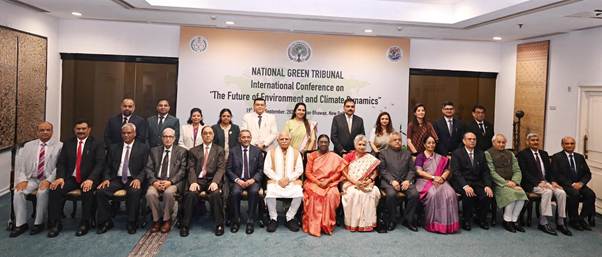
The National Green Tribunal organised a two-day International Conference on 'The Future of Environment and Climate Dynamics' in New Delhi on 19–20 September 2026. The conference brought together judges, policymakers, scientists, environmental experts, academicians and representatives of international organisations to discuss environmental governance, climate justice, biodiversity conservation and sustainable development.
Prime Minister Narendra Modi inaugurated the conference on 19 September 2026 and launched the National Green Tribunal Mobile Application. President Droupadi Murmu addressed the valedictory session on 20 September 2026.
The event is important for competitive examinations because it connects environmental law, constitutional rights, climate change, international cooperation and the institutional framework for environmental protection in India.
The conference included participants from 17 countries, along with representatives of the United Nations Environment Programme and the Asian Development Bank. Its objective was to encourage the exchange of judicial, scientific and institutional knowledge and explore practical approaches to environmental and climate-related challenges.
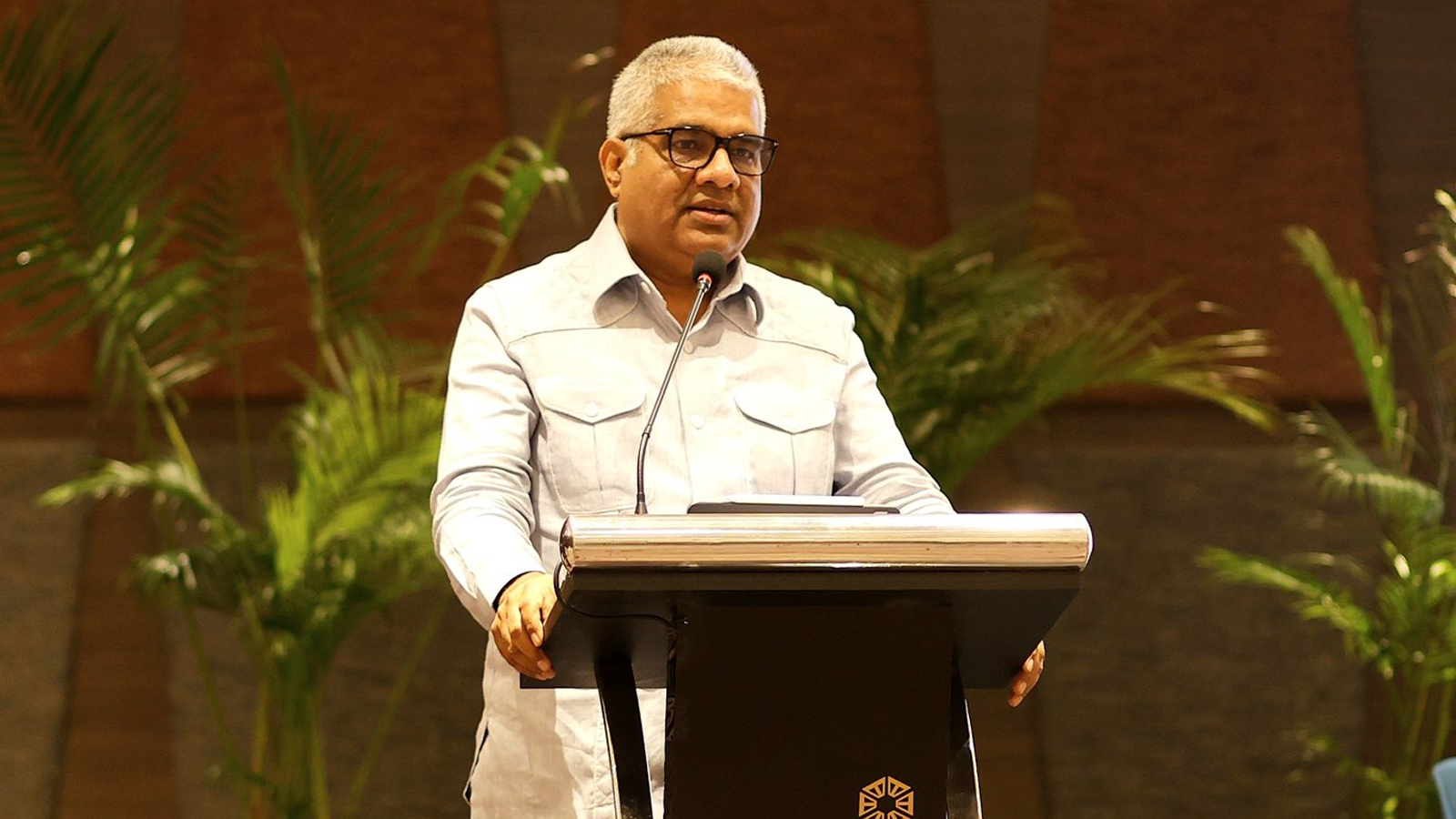
The inaugural session was attended by Chief Justice of India Justice Surya Kant, Attorney General for India R. Venkataramani, Union Environment Minister Bhupender Yadav and National Green Tribunal Chairperson Justice Prakash Shrivastava.
The National Green Tribunal Mobile Application was launched during the inaugural session. The official conference announcement confirmed the launch but did not provide detailed technical specifications or a complete list of application features. Therefore, students should remember the launch and its institutional association without assuming that particular filing or case-management services are available through the application.
The conference was organised around four technical sessions. The first session, 'Climate Justice, Equity and Inclusion: From Principles to Action', examined the unequal effects of climate change and environmental degradation. It discussed environmental and social safeguards and the importance of including vulnerable communities in climate-related decisions.
Climate justice refers to the idea that the consequences of climate change and the responsibilities associated with addressing it are not distributed equally. Countries and communities differ in their historical emissions, economic resources, exposure to climate hazards and capacity to adapt. Climate justice therefore connects environmental policy with questions of equity, livelihoods and development.
The second technical session, 'The Future of Environmental Law and Governance', examined environmental institutions, enforcement mechanisms, sustainable cities, energy transition, green infrastructure and green finance.
Environmental governance refers to the laws, institutions, administrative processes and public-participation mechanisms through which environmental decisions are made and implemented. Effective governance requires more than the announcement of environmental objectives. It also depends on monitoring, compliance, accountability, scientific evidence and access to remedies when environmental harm occurs.
The third technical session, 'Planetary Environmental Challenges and Cooperation', was held on the second day. It considered interconnected environmental challenges, shared natural resources, competing national interests and transboundary cooperation.
Transboundary environmental problems are those whose causes or effects extend across national boundaries. Examples include air pollution transported by atmospheric circulation, pollution affecting shared rivers, biodiversity loss involving migratory species and climate change. Such problems require cooperation because action within one country may be insufficient to address their wider effects.
The fourth session, 'Forests for the Future: A Dialogue on Forest Protection & Restoration', examined sustainable forest management, community participation, biodiversity conservation, emerging threats to forests and the use of technology in environmental monitoring.
Satellite-based monitoring was among the approaches discussed in connection with forest protection. Remote sensing can help identify changes in land cover, forest extent and vegetation conditions. However, satellite observations are most useful when combined with ground verification, ecological research and effective institutional responses.
During the inaugural session, Chief Justice of India Justice Surya Kant discussed the development of environmental jurisprudence in India. He referred to principles including the precautionary principle, polluter pays principle, absolute liability and public trust doctrine.
These principles are important for UPSC examinations because they help explain how courts and environmental institutions approach pollution, industrial hazards and the protection of natural resources.
The precautionary principle means that the absence of complete scientific certainty should not automatically justify postponing preventive measures when there is a risk of serious environmental harm. It encourages decision-makers to consider potential damage before it occurs.
The polluter pays principle concerns the responsibility of those causing pollution to bear the costs associated with preventing, controlling or remedying environmental damage, subject to the applicable legal framework.
The public trust doctrine recognises that certain natural resources are held by the State in trust for public use and protection. It is relevant to the governance of resources such as rivers, forests and other environmentally significant assets.
Absolute liability is associated with the responsibility of enterprises engaged in hazardous or inherently dangerous activities. It is an important concept in Indian environmental and industrial-safety jurisprudence.
The constitutional dimension of environmental protection was also highlighted. Indian environmental jurisprudence has connected environmental quality with fundamental rights, particularly Article 21 of the Constitution, which protects life and personal liberty. Climate-related harm may also raise questions concerning equality, health and livelihoods.
At the conference, Union Environment Minister Bhupender Yadav stated that non-fossil sources accounted for 54.18% of India's installed electricity capacity. This figure was presented in the official release dated 19 September 2026.
Students must distinguish installed electricity capacity from actual electricity generation. Installed capacity represents the rated generating capability of power plants, while electricity generation measures the amount of electricity actually produced over a period. A particular source can have a substantial share of installed capacity without producing the same percentage of total electricity.
The Minister also referred to India's forest and tree cover of approximately 8.27 lakh square kilometres and cited the Global Forest Resources Assessment 2025 of the Food and Agriculture Organization of the United Nations.
The conference concluded on 20 September with President Droupadi Murmu addressing the valedictory session. She emphasised climate resilience through community-based and people-centred adaptation approaches that can incorporate traditional knowledge.
Climate adaptation refers to adjustments in human and natural systems in response to actual or expected climate impacts. Examples include improving water management, strengthening flood preparedness, developing climate-resilient agriculture and protecting coastal communities.
Adaptation differs from mitigation. Climate mitigation seeks to reduce greenhouse-gas emissions or increase their removal, whereas adaptation focuses on reducing vulnerability to climate-related impacts.
Justice B. V. Nagarathna, who attended the concluding session, discussed the relationship between development, conservation and the interests of future generations. She also highlighted the importance of environmental institutions, enforcement, transparency, accountability and access to justice.
The concluding discussions emphasised the need to convert environmental principles and commitments into practical action through institutions, partnerships and implementation mechanisms.
During the valedictory session, Union Minister Manohar Lal released the NGT souvenir titled 'Harit Nyayam' and presented its first copy to President Droupadi Murmu. The publication documents the establishment, development and achievements of the Tribunal.
The National Green Tribunal itself is a specialised environmental adjudicatory institution established under the National Green Tribunal Act, 2010. It deals with specified civil cases relating to environmental protection, conservation of forests and other natural resources, and enforcement of legal rights relating to the environment.
The Tribunal is particularly important because environmental disputes frequently require scientific and technical understanding alongside legal analysis. Its institutional structure provides for judicial and expert members.
For UPSC, SSC, Railway and State PCS examinations, the conference should be studied alongside the National Green Tribunal Act, 2010; Article 21; environmental principles; climate justice; sustainable development; climate mitigation and adaptation; and international environmental cooperation.
The central lesson of the conference is that environmental protection requires the combined contribution of law, science, public institutions, communities and international cooperation. Scientific knowledge can identify environmental risks, but effective protection also depends on institutions capable of translating that knowledge into enforceable decisions and practical action.
क्या हुआ?
राष्ट्रीय हरित अधिकरण ने 19 और 20 सितंबर 2026 को नई दिल्ली में 'पर्यावरण और जलवायु गतिशीलता का भविष्य' विषय पर दो दिवसीय अंतरराष्ट्रीय सम्मेलन आयोजित किया। इस सम्मेलन में न्यायाधीशों, नीति निर्माताओं, वैज्ञानिकों, पर्यावरण विशेषज्ञों, शिक्षाविदों और अंतरराष्ट्रीय संगठनों के प्रतिनिधियों ने पर्यावरण शासन, जलवायु न्याय, जैव विविधता संरक्षण तथा सतत विकास से जुड़े विषयों पर चर्चा की।
प्रधानमंत्री नरेंद्र मोदी ने 19 सितंबर 2026 को सम्मेलन का उद्घाटन किया और राष्ट्रीय हरित अधिकरण के मोबाइल अनुप्रयोग का शुभारंभ किया। राष्ट्रपति द्रौपदी मुर्मु ने 20 सितंबर 2026 को सम्मेलन के समापन सत्र को संबोधित किया।
यह कार्यक्रम प्रतियोगी परीक्षाओं के लिए महत्वपूर्ण है क्योंकि इससे पर्यावरण कानून, संवैधानिक अधिकार, जलवायु परिवर्तन, अंतरराष्ट्रीय सहयोग और भारत की पर्यावरण संरक्षण संबंधी संस्थागत व्यवस्था जैसे विषय जुड़ते हैं।
सम्मेलन में 17 देशों के प्रतिभागियों के साथ संयुक्त राष्ट्र पर्यावरण कार्यक्रम और एशियाई विकास बैंक के प्रतिनिधियों ने भाग लिया। इसका उद्देश्य न्यायिक, वैज्ञानिक और संस्थागत ज्ञान का आदान-प्रदान करना तथा पर्यावरण एवं जलवायु संबंधी चुनौतियों के व्यावहारिक समाधान पर चर्चा करना था।
उद्घाटन सत्र में भारत के मुख्य न्यायाधीश न्यायमूर्ति सूर्यकांत, भारत के महान्यायवादी आर. वेंकटरमणी, केंद्रीय पर्यावरण मंत्री भूपेंद्र यादव और राष्ट्रीय हरित अधिकरण के अध्यक्ष न्यायमूर्ति प्रकाश श्रीवास्तव उपस्थित थे।
उद्घाटन सत्र के दौरान राष्ट्रीय हरित अधिकरण के मोबाइल अनुप्रयोग का शुभारंभ किया गया। आधिकारिक विज्ञप्ति में इसके शुभारंभ की पुष्टि की गई है, लेकिन अनुप्रयोग की सभी तकनीकी विशेषताओं और सेवाओं की विस्तृत सूची उपलब्ध नहीं कराई गई। इसलिए विद्यार्थियों को इसके शुभारंभ और संबंधित संस्था का तथ्य याद रखना चाहिए।
सम्मेलन में चार तकनीकी सत्र आयोजित किए गए। पहला सत्र 'जलवायु न्याय, समानता और समावेशन: सिद्धांतों से कार्रवाई तक' विषय पर केंद्रित था। इसमें जलवायु परिवर्तन और पर्यावरण क्षरण के असमान प्रभावों, सामाजिक सुरक्षा उपायों और जलवायु संबंधी निर्णयों में संवेदनशील समुदायों की भागीदारी पर चर्चा हुई।
जलवायु न्याय का संबंध इस विचार से है कि जलवायु परिवर्तन के परिणाम और उससे निपटने की जिम्मेदारियाँ सभी देशों तथा समुदायों पर समान रूप से नहीं पड़तीं। विभिन्न देशों के ऐतिहासिक उत्सर्जन, आर्थिक संसाधन, जलवायु जोखिम और अनुकूलन क्षमता अलग-अलग होते हैं। इसलिए जलवायु न्याय पर्यावरण नीति को समानता, आजीविका और विकास के प्रश्नों से जोड़ता है।
दूसरा तकनीकी सत्र 'पर्यावरण कानून और शासन का भविष्य' विषय पर आयोजित हुआ। इसमें पर्यावरण संस्थाओं, कानून प्रवर्तन, सतत शहरों, ऊर्जा संक्रमण, हरित अवसंरचना और हरित वित्त पर विचार किया गया।
पर्यावरण शासन से आशय उन कानूनों, संस्थाओं, प्रशासनिक प्रक्रियाओं और जनभागीदारी व्यवस्थाओं से है जिनके माध्यम से पर्यावरण संबंधी निर्णय लिए और लागू किए जाते हैं। प्रभावी पर्यावरण शासन के लिए केवल लक्ष्य घोषित करना पर्याप्त नहीं है। निगरानी, नियमों का अनुपालन, जवाबदेही, वैज्ञानिक प्रमाण और पर्यावरणीय क्षति होने पर न्याय प्राप्त करने की व्यवस्था भी आवश्यक है।
तीसरा तकनीकी सत्र सम्मेलन के दूसरे दिन 'वैश्विक पर्यावरणीय चुनौतियाँ और सहयोग' विषय पर आयोजित हुआ। इसमें परस्पर जुड़ी पर्यावरणीय समस्याओं, साझा प्राकृतिक संसाधनों, राष्ट्रीय हितों और सीमापार सहयोग पर चर्चा की गई।
सीमापार पर्यावरणीय समस्याएँ वे होती हैं जिनके कारण या प्रभाव किसी एक देश की सीमा तक सीमित नहीं रहते। उदाहरण के लिए वायुमंडलीय प्रवाह के माध्यम से फैलने वाला वायु प्रदूषण, साझा नदियों का प्रदूषण, प्रवासी जीवों से संबंधित जैव विविधता हानि और जलवायु परिवर्तन। ऐसी समस्याओं के समाधान के लिए अंतरराष्ट्रीय सहयोग आवश्यक होता है।
चौथा सत्र 'भविष्य के लिए वन: वन संरक्षण और पुनर्स्थापन पर संवाद' विषय पर केंद्रित था। इसमें सतत वन प्रबंधन, सामुदायिक भागीदारी, जैव विविधता संरक्षण, वनों के सामने उभरते खतरे और पर्यावरण निगरानी में तकनीक के उपयोग पर चर्चा हुई।
वन संरक्षण के संदर्भ में उपग्रह आधारित निगरानी भी महत्वपूर्ण विषय रहा। सुदूर संवेदन तकनीक भूमि आवरण, वन क्षेत्र और वनस्पति की स्थिति में परिवर्तन की पहचान करने में सहायता कर सकती है। हालाँकि उपग्रह प्रेक्षणों को जमीनी सत्यापन, पारिस्थितिक अनुसंधान और प्रभावी संस्थागत कार्रवाई के साथ जोड़ना आवश्यक है।
उद्घाटन सत्र में भारत के मुख्य न्यायाधीश न्यायमूर्ति सूर्यकांत ने भारत में पर्यावरण न्यायशास्त्र के विकास पर चर्चा की। उन्होंने पूर्व-सावधानी सिद्धांत, प्रदूषक भुगतान सिद्धांत, पूर्ण दायित्व और सार्वजनिक न्यास सिद्धांत का उल्लेख किया।
ये सिद्धांत UPSC के लिए महत्वपूर्ण हैं क्योंकि इनके माध्यम से यह समझा जा सकता है कि न्यायालय और पर्यावरण संबंधी संस्थाएँ प्रदूषण, औद्योगिक जोखिम तथा प्राकृतिक संसाधनों के संरक्षण से जुड़े मामलों को किस प्रकार देखती हैं।
पूर्व-सावधानी सिद्धांत का आशय है कि गंभीर पर्यावरणीय क्षति का जोखिम होने पर पूर्ण वैज्ञानिक निश्चितता का अभाव निवारक उपायों को टालने का स्वतः आधार नहीं होना चाहिए। यह सिद्धांत क्षति होने से पहले संभावित जोखिम पर विचार करने को प्रोत्साहित करता है।
प्रदूषक भुगतान सिद्धांत का संबंध प्रदूषण उत्पन्न करने वालों की उस जिम्मेदारी से है जिसके अंतर्गत लागू कानूनी व्यवस्था के अनुसार उन्हें प्रदूषण की रोकथाम, नियंत्रण अथवा पर्यावरणीय क्षति के उपचार से जुड़ी लागत वहन करनी पड़ सकती है।
सार्वजनिक न्यास सिद्धांत के अनुसार कुछ प्राकृतिक संसाधन राज्य द्वारा जनता के उपयोग और संरक्षण के लिए न्यास के रूप में रखे जाते हैं। यह सिद्धांत नदियों, वनों और अन्य पर्यावरणीय दृष्टि से महत्वपूर्ण संसाधनों के शासन से संबंधित है।
पूर्ण दायित्व का संबंध खतरनाक अथवा स्वभावतः जोखिमपूर्ण गतिविधियों में संलग्न उद्यमों की जिम्मेदारी से है। भारतीय पर्यावरण और औद्योगिक सुरक्षा न्यायशास्त्र में यह महत्वपूर्ण अवधारणा है।
सम्मेलन में पर्यावरण संरक्षण के संवैधानिक पहलू पर भी चर्चा हुई। भारतीय पर्यावरण न्यायशास्त्र ने पर्यावरण की गुणवत्ता को मौलिक अधिकारों से जोड़ा है, विशेषकर संविधान के अनुच्छेद 21 से, जो जीवन और व्यक्तिगत स्वतंत्रता की रक्षा करता है। जलवायु परिवर्तन से उत्पन्न क्षति समानता, स्वास्थ्य और आजीविका से संबंधित प्रश्न भी उत्पन्न कर सकती है।
सम्मेलन में केंद्रीय पर्यावरण मंत्री भूपेंद्र यादव ने कहा कि भारत की कुल स्थापित विद्युत उत्पादन क्षमता में गैर-जीवाश्म स्रोतों की हिस्सेदारी 54.18 प्रतिशत हो गई है। यह आँकड़ा 19 सितंबर 2026 की आधिकारिक विज्ञप्ति में प्रस्तुत किया गया था।
विद्यार्थियों को स्थापित विद्युत उत्पादन क्षमता और वास्तविक विद्युत उत्पादन के बीच अंतर समझना चाहिए। स्थापित क्षमता किसी विद्युत संयंत्र की निर्धारित उत्पादन क्षमता को दर्शाती है, जबकि वास्तविक उत्पादन किसी अवधि में उत्पन्न बिजली की मात्रा है। किसी स्रोत की स्थापित क्षमता में बड़ी हिस्सेदारी होने का अर्थ यह नहीं है कि वास्तविक विद्युत उत्पादन में भी उसकी हिस्सेदारी उतनी ही होगी।
मंत्री ने भारत के वन और वृक्ष आवरण का क्षेत्रफल लगभग 8.27 लाख वर्ग किलोमीटर बताया तथा संयुक्त राष्ट्र के खाद्य और कृषि संगठन के वैश्विक वन संसाधन आकलन 2025 का उल्लेख किया।
सम्मेलन का समापन 20 सितंबर को राष्ट्रपति द्रौपदी मुर्मु के संबोधन के साथ हुआ। उन्होंने सामुदायिक और जन-केंद्रित अनुकूलन उपायों के माध्यम से जलवायु सहनशीलता मजबूत करने पर जोर दिया। ऐसे उपायों में पारंपरिक ज्ञान का भी उपयोग किया जा सकता है।
जलवायु अनुकूलन का अर्थ वास्तविक अथवा अपेक्षित जलवायु प्रभावों के अनुसार मानव और प्राकृतिक प्रणालियों में आवश्यक समायोजन करना है। उदाहरण के लिए जल प्रबंधन में सुधार, बाढ़ संबंधी तैयारी, जलवायु-सहिष्णु कृषि और तटीय समुदायों की सुरक्षा।
अनुकूलन और शमन अलग-अलग अवधारणाएँ हैं। जलवायु शमन का उद्देश्य ग्रीनहाउस गैस उत्सर्जन कम करना अथवा वातावरण से उनके निष्कासन को बढ़ाना है, जबकि अनुकूलन जलवायु प्रभावों से उत्पन्न संवेदनशीलता कम करने पर केंद्रित होता है।
समापन सत्र में उपस्थित न्यायमूर्ति बी. वी. नागरत्ना ने विकास, संरक्षण और भावी पीढ़ियों के हितों के बीच संबंध पर चर्चा की। उन्होंने पर्यावरण संस्थाओं, कानून प्रवर्तन, पारदर्शिता, जवाबदेही और न्याय तक पहुँच के महत्व को भी रेखांकित किया।
समापन चर्चाओं में पर्यावरणीय सिद्धांतों और प्रतिबद्धताओं को संस्थाओं, साझेदारियों और कार्यान्वयन व्यवस्थाओं के माध्यम से वास्तविक कार्रवाई में बदलने की आवश्यकता पर जोर दिया गया।
समापन सत्र में केंद्रीय मंत्री मनोहर लाल ने राष्ट्रीय हरित अधिकरण की स्मारिका 'हरित न्यायम्' का विमोचन किया और इसकी पहली प्रति राष्ट्रपति द्रौपदी मुर्मु को प्रदान की। इस प्रकाशन में अधिकरण की स्थापना, विकास और उपलब्धियों का विवरण प्रस्तुत किया गया है।
राष्ट्रीय हरित अधिकरण एक विशेष पर्यावरणीय न्यायनिर्णयन संस्था है जिसकी स्थापना राष्ट्रीय हरित अधिकरण अधिनियम, 2010 के अंतर्गत हुई थी। यह पर्यावरण संरक्षण, वनों और अन्य प्राकृतिक संसाधनों के संरक्षण तथा पर्यावरण संबंधी कानूनी अधिकारों के प्रवर्तन से जुड़े निर्दिष्ट दीवानी मामलों की सुनवाई करता है।
यह अधिकरण इसलिए महत्वपूर्ण है क्योंकि पर्यावरणीय विवादों में कानूनी विश्लेषण के साथ वैज्ञानिक और तकनीकी समझ भी आवश्यक होती है। इसकी संस्थागत संरचना में न्यायिक और विशेषज्ञ सदस्य शामिल होते हैं।
UPSC, SSC, Railway और State PCS के विद्यार्थियों को इस सम्मेलन को राष्ट्रीय हरित अधिकरण अधिनियम, 2010; अनुच्छेद 21; पर्यावरणीय सिद्धांतों; जलवायु न्याय; सतत विकास; जलवायु शमन एवं अनुकूलन; और अंतरराष्ट्रीय पर्यावरण सहयोग के साथ जोड़कर पढ़ना चाहिए।
इस सम्मेलन का व्यापक संदेश यह है कि पर्यावरण संरक्षण के लिए कानून, विज्ञान, सार्वजनिक संस्थाओं, समुदायों और अंतरराष्ट्रीय सहयोग का संयुक्त योगदान आवश्यक है। वैज्ञानिक ज्ञान पर्यावरणीय जोखिमों की पहचान कर सकता है, लेकिन प्रभावी संरक्षण के लिए ऐसी संस्थाएँ भी आवश्यक हैं जो उस ज्ञान को लागू किए जा सकने वाले निर्णयों और व्यावहारिक कार्रवाई में बदल सकें।
Key Facts
• The National Green Tribunal organised the International Conference on 'The Future of Environment and Climate Dynamics' in New Delhi on 19–20 September 2026.
• Prime Minister Narendra Modi inaugurated the conference on 19 September 2026.
• The National Green Tribunal Mobile Application was launched during the inaugural session.
• President Droupadi Murmu addressed the valedictory session on 20 September 2026.
• The conference included participants from 17 countries.
• The United Nations Environment Programme and Asian Development Bank participated.
• NGT Chairperson Justice Prakash Shrivastava attended the conference.
• The conference included four technical sessions on climate justice, environmental law, planetary environmental challenges and forests.
• The inaugural discussions referred to the precautionary principle, polluter pays principle, absolute liability and public trust doctrine.
• The Environment Minister cited a 54.18% share of non-fossil sources in India's installed electricity capacity on 19 September 2026.
• The Environment Minister referred to India's forest and tree cover of approximately 8.27 lakh square kilometres.
• The concluding session highlighted community-based climate adaptation and traditional knowledge.
• The NGT souvenir 'Harit Nyayam' was released during the valedictory session.
• The National Green Tribunal was established under the National Green Tribunal Act, 2010.
• The conference concluded on 20 September 2026.
मुख्य तथ्य
• राष्ट्रीय हरित अधिकरण ने 19–20 सितंबर 2026 को नई दिल्ली में 'पर्यावरण और जलवायु गतिशीलता का भविष्य' विषय पर अंतरराष्ट्रीय सम्मेलन आयोजित किया।
• प्रधानमंत्री नरेंद्र मोदी ने 19 सितंबर 2026 को सम्मेलन का उद्घाटन किया।
• उद्घाटन सत्र में राष्ट्रीय हरित अधिकरण के मोबाइल अनुप्रयोग का शुभारंभ हुआ।
• राष्ट्रपति द्रौपदी मुर्मु ने 20 सितंबर 2026 को समापन सत्र को संबोधित किया।
• सम्मेलन में 17 देशों के प्रतिभागियों ने भाग लिया।
• संयुक्त राष्ट्र पर्यावरण कार्यक्रम और एशियाई विकास बैंक ने सम्मेलन में भाग लिया।
• राष्ट्रीय हरित अधिकरण के अध्यक्ष न्यायमूर्ति प्रकाश श्रीवास्तव सम्मेलन में उपस्थित थे।
• सम्मेलन में जलवायु न्याय, पर्यावरण कानून, वैश्विक पर्यावरणीय चुनौतियों और वनों पर चार तकनीकी सत्र आयोजित हुए।
• उद्घाटन चर्चाओं में पूर्व-सावधानी सिद्धांत, प्रदूषक भुगतान सिद्धांत, पूर्ण दायित्व और सार्वजनिक न्यास सिद्धांत का उल्लेख हुआ।
• पर्यावरण मंत्री ने 19 सितंबर 2026 को भारत की स्थापित विद्युत क्षमता में गैर-जीवाश्म स्रोतों की हिस्सेदारी 54.18 प्रतिशत बताई।
• पर्यावरण मंत्री ने भारत का वन और वृक्ष आवरण लगभग 8.27 लाख वर्ग किलोमीटर बताया।
• समापन सत्र में सामुदायिक जलवायु अनुकूलन और पारंपरिक ज्ञान के महत्व पर चर्चा हुई।
• समापन सत्र में राष्ट्रीय हरित अधिकरण की स्मारिका 'हरित न्यायम्' का विमोचन हुआ।
• राष्ट्रीय हरित अधिकरण की स्थापना राष्ट्रीय हरित अधिकरण अधिनियम, 2010 के अंतर्गत हुई थी।
• सम्मेलन 20 सितंबर 2026 को संपन्न हुआ।
Background
The National Green Tribunal was established under the National Green Tribunal Act, 2010, to provide a specialised forum for specified environmental disputes. The conference held in September 2026 brought together legal, scientific and policy perspectives on environmental protection. Its themes included climate justice, environmental governance, sustainable development, biodiversity, forest conservation and international cooperation.
पृष्ठभूमि
राष्ट्रीय हरित अधिकरण की स्थापना राष्ट्रीय हरित अधिकरण अधिनियम, 2010 के अंतर्गत निर्दिष्ट पर्यावरणीय विवादों के लिए विशेष न्यायिक मंच उपलब्ध कराने के उद्देश्य से की गई थी। सितंबर 2026 में आयोजित सम्मेलन ने पर्यावरण संरक्षण से संबंधित कानूनी, वैज्ञानिक और नीतिगत दृष्टिकोणों को एक साथ प्रस्तुत किया। इसके प्रमुख विषयों में जलवायु न्याय, पर्यावरण शासन, सतत विकास, जैव विविधता, वन संरक्षण और अंतरराष्ट्रीय सहयोग शामिल थे।
Why It Matters
The conference is significant for understanding the relationship between environmental law and climate policy. It demonstrates how legal principles, scientific evidence, institutional accountability and international cooperation contribute to environmental governance. The launch of the NGT Mobile Application and the discussions on climate justice, forest protection and environmental rights also make the event relevant to current affairs and competitive examinations.
यह क्यों महत्वपूर्ण है?
यह सम्मेलन पर्यावरण कानून और जलवायु नीति के बीच संबंध समझने के लिए महत्वपूर्ण है। इससे स्पष्ट होता है कि कानूनी सिद्धांत, वैज्ञानिक प्रमाण, संस्थागत जवाबदेही और अंतरराष्ट्रीय सहयोग पर्यावरण शासन में किस प्रकार योगदान करते हैं। राष्ट्रीय हरित अधिकरण के मोबाइल अनुप्रयोग का शुभारंभ तथा जलवायु न्याय, वन संरक्षण और पर्यावरणीय अधिकारों पर चर्चा इसे समसामयिक घटनाओं और प्रतियोगी परीक्षाओं के लिए महत्वपूर्ण बनाती है।
Exam Connection
UPSC Prelims and Mains: National Green Tribunal Act, 2010; Article 21; precautionary principle; polluter pays principle; absolute liability; public trust doctrine; climate justice; mitigation and adaptation; sustainable development; environmental governance. Current affairs: NGT International Conference, New Delhi, 19–20 September 2026; NGT Mobile Application launched on 19 September; participation from 17 countries; UNEP and ADB; souvenir 'Harit Nyayam'.
परीक्षा से संबंध
UPSC प्रारंभिक एवं मुख्य परीक्षा: राष्ट्रीय हरित अधिकरण अधिनियम, 2010; अनुच्छेद 21; पूर्व-सावधानी सिद्धांत; प्रदूषक भुगतान सिद्धांत; पूर्ण दायित्व; सार्वजनिक न्यास सिद्धांत; जलवायु न्याय; शमन एवं अनुकूलन; सतत विकास; पर्यावरण शासन। समसामयिक तथ्य: राष्ट्रीय हरित अधिकरण का अंतरराष्ट्रीय सम्मेलन, नई दिल्ली, 19–20 सितंबर 2026; 19 सितंबर को मोबाइल अनुप्रयोग का शुभारंभ; 17 देशों की भागीदारी; संयुक्त राष्ट्र पर्यावरण कार्यक्रम और एशियाई विकास बैंक; स्मारिका 'हरित न्यायम्'।