What Happened
The National Statistics Office, under the Ministry of Statistics and Programme Implementation, has launched the third Forward-Looking Survey on Private Corporate Sector CAPEX Investment Intentions, known as CAPEX 2026. The survey is being conducted from October to December 2026 and is designed to generate timely information on capital expenditure already undertaken, provisional investment in the current financial year and investment intentions for the forthcoming financial year among selected large private corporate enterprises in India.
The survey is important because private corporate capital expenditure is a major component of investment in productive capacity. Investment in factories, machinery, transport equipment, information technology, energy infrastructure and other productive assets can influence future production capacity, productivity, employment and economic growth. By collecting forward-looking information, the Government seeks to understand not merely what companies invested in the past, but also where they intend to invest in the future.
1. What Happened?
The National Statistics Office has launched CAPEX 2026, the third round of its Forward-Looking Survey on Private Corporate Sector CAPEX Investment Intentions.
The official announcement was issued on 1 October 2026 by the Ministry of Statistics and Programme Implementation.
The survey period is October to December 2026.
2. What Does CAPEX Mean?
CAPEX stands for capital expenditure.
Capital expenditure refers broadly to spending on acquiring, creating, upgrading or extending assets that can contribute to an enterprise's productive capacity over a relatively long period.
Examples can include machinery, industrial equipment, buildings, transport assets, information technology infrastructure and other fixed assets.
3. Who Is Conducting CAPEX 2026?
The survey is being conducted by the National Statistics Office, or NSO.
NSO functions under the Ministry of Statistics and Programme Implementation, commonly abbreviated as MoSPI.
The survey therefore forms part of India's official statistical system.
4. When Is the Survey Being Conducted?
CAPEX 2026 is being conducted during October-December 2026.
The Government announced the launch on 1 October 2026.
It is the third survey in the series, following CAPEX 2024 and CAPEX 2025.
5. What Is the Main Objective of CAPEX 2026?
The primary objective is to obtain information on private corporate capital expenditure across different time periods.
The survey seeks information on capital expenditure undertaken in recent financial years, provisional capital expenditure during the current financial year and investment intentions for the forthcoming financial year.
This makes it both a backward-looking and forward-looking statistical exercise.
6. Which Enterprises Are Covered?
The survey covers selected large private corporate sector enterprises operating across different sectors of the Indian economy.
The survey frame is prepared using information relating to active enterprises registered with the Ministry of Corporate Affairs.
The selection is subject to prescribed eligibility and turnover criteria.
7. Under Which Law Is the Survey Conducted?
CAPEX 2026 is conducted under the provisions of the Collection of Statistics Act, 2008.
This is an important examination fact because the Act provides the legal framework for collection of statistical information for specified purposes.
8. How Is the Information Collected?
Information is collected through a dedicated and secure web portal.
Selected enterprises can compile and submit their responses online.
The portal provides assistance to respondents in understanding the questionnaire, statistical concepts and definitions.
9. What Digital Support Is Available?
CAPEX 2026 includes several digital assistance features.
These include an instruction manual, a video guide and an AI chatbot to help respondents navigate the portal and report information correctly.
The questionnaire is also bilingual.
10. What Information Will CAPEX 2026 Collect?
The survey covers past, current and future capital expenditure.
It gathers information across different asset groups and industry sectors.
It also examines investment intentions, investment strategies, investment objectives and sources of financing.
11. Does the Survey Cover Green Energy?
Yes. One of the important features of CAPEX 2026 is collection of information relating to investment in green energy.
This can help provide a better understanding of how private corporate investment is responding to India's energy transition and changing technology requirements.
12. Does CAPEX 2026 Cover Robotics?
Yes. Investment in robotics is explicitly included in the information sought under the survey.
This is significant because automation and robotics are increasingly relevant to manufacturing productivity, industrial modernisation and technological transformation.
13. Does the Survey Examine Why Companies Invest?
Yes. CAPEX 2026 collects information on the objectives of investment.
These objectives include capacity expansion, upgradation and other investment purposes.
Understanding the purpose of investment is important because the economic implications of expanding productive capacity can differ from expenditure undertaken primarily to replace or upgrade existing assets.
14. Does It Examine Sources of Finance?
Yes. The survey collects information on sources used by companies to finance their capital expenditure.
Companies can finance investment through mechanisms such as internal accruals, domestic debt and other sources.
Knowing the financing structure helps analysts understand how corporate investment is being funded.
15. What Was CAPEX 2024?
The first Forward-Looking Survey on Private Sector CAPEX Investment Intentions was conducted by NSO between November 2024 and January 2025.
It marked the beginning of this systematic forward-looking statistical exercise on private corporate investment intentions.
CAPEX 2026 builds upon the experience of the first two rounds.
16. Which Sector Dominated CAPEX in 2024-25?
According to the results of the first CAPEX survey, manufacturing accounted for the largest share of aggregate capital expenditure among the principal activity categories during 2024-25.
Manufacturing accounted for 43.80 percent.
Information and communication accounted for 15.60 percent, while transportation and storage accounted for 14.00 percent.
17. What Did CAPEX 2025 Show?
The second CAPEX survey was conducted during October-December 2025.
Its findings provided updated information on private corporate capital expenditure and investment intentions.
The results showed that manufacturing remained the dominant principal activity category in provisional aggregate capital expenditure for 2025-26.
18. How Much Manufacturing CAPEX Was Reported for 2025-26?
Manufacturing accounted for 50.17 percent of provisional aggregate capital expenditure among the principal activity categories in CAPEX 2025.
This represented ₹5,73,900 crore.
The figure shows the major role of manufacturing in the investment plans of the surveyed private corporate enterprises.
19. What Was the Share of Information and Communication?
Information and communication accounted for 16.38 percent of provisional aggregate CAPEX in 2025-26.
The corresponding amount was ₹1,87,395 crore.
The substantial share reflects the importance of digital infrastructure, communications and related investment in the corporate economy.
20. What Was the Share of Electricity and Related Activities?
Electricity, gas, steam and air-conditioning supply accounted for 8.96 percent of provisional aggregate CAPEX.
The corresponding amount was ₹1,02,448 crore.
This category is particularly relevant to infrastructure and energy-sector investment.
21. What Was the Share of Transportation and Storage?
Transportation and storage accounted for 5.55 percent of provisional aggregate capital expenditure in the CAPEX 2025 findings.
The corresponding amount was ₹63,517 crore.
Investment in this category can include productive assets associated with logistics, transportation and storage infrastructure.
22. What Did the Previous Survey Reveal About Robotics?
According to CAPEX 2025, nearly 21.16 percent of enterprises planned to allocate more than 80 percent of their total CAPEX to robotics.
Around 78.84 percent stated that less than 20 percent of their total CAPEX would be devoted to robotics investments.
These figures show substantial variation in the intensity of robotics investment across surveyed enterprises.
23. What Is the Realisation Ratio?
The realisation ratio compares actual capital expenditure with the investment intentions previously reported by enterprises.
A high realisation ratio suggests that actual expenditure was relatively close to the investment intentions reported earlier.
This helps assess whether corporate investment plans are eventually translated into actual expenditure.
24. What Was the Realisation Ratio in CAPEX 2025?
According to the latest CAPEX 2025 estimates cited in the October 2026 release, actual CAPEX during 2024-25 for the relevant panel was estimated at ₹173.5 crore per enterprise.
The overall realisation ratio was 96.3 percent.
NSO stated that this indicated actual expenditure was broadly in line with investment intentions at the aggregate level.
25. How Many Enterprises Were Included in the Fixed Panel Analysis?
CAPEX 2025 included an aggregate analysis based on a fixed panel of 3,819 enterprises.
The panel covered the years 2024-25, 2025-26 and 2026-27.
Using a fixed panel allows investment patterns to be compared across the same group of responding enterprises over different periods.
26. What Were the Fixed Panel CAPEX Figures?
The official CAPEX 2026 release presents fixed-panel aggregate CAPEX estimates for 3,819 enterprises.
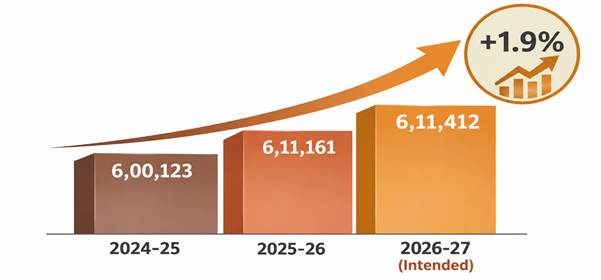
Actual CAPEX for 2024-25 was ₹6,00,123 crore.
The figure for 2025-26 was ₹6,11,161 crore, while intended CAPEX for 2026-27 was ₹6,11,412 crore.
The official chart describes this as a modest 1.9 percent growth over the actual CAPEX reported by these enterprises in 2024-25.
27. Why Should the Fixed-Panel Figures Be Interpreted Carefully?
These figures relate to a fixed panel of 3,819 enterprises rather than every private company operating in India.
Therefore, they should not be presented as the total capital expenditure of the entire Indian private corporate sector.
They are survey estimates based on the enterprises covered by the relevant panel.
28. Is CAPEX 2026 Publishing New Investment Results Already?
No. CAPEX 2026 has been launched for data collection during October-December 2026.
The October 1 announcement primarily describes the survey methodology, coverage and features while providing findings from previous CAPEX surveys as background.
Students should therefore not confuse earlier CAPEX 2024 and CAPEX 2025 findings with final results of CAPEX 2026.
29. Why Is Timely Response Important?
NSO has emphasised that the quality and usefulness of the survey estimates depend significantly on adequate coverage and timely responses from selected enterprises.
Complete and timely responses allow NSO to validate and process information within the survey schedule.
This helps make reliable statistics available to policymakers and other users in a timely manner.
30. Will Company-Level Investment Plans Be Published?
No. NSO has assured enterprises that their individual information will remain confidential.
Unit-level CAPEX data will not be disseminated.
While publishing survey results, measures are taken to prevent disclosure of information that could identify an individual enterprise.
31. Why Is Confidentiality Important?
Future investment plans can contain commercially sensitive information.
If company-specific plans were publicly disclosed, businesses might be reluctant to provide detailed and accurate information.
Confidentiality therefore supports respondent trust and can improve the quality of official statistics.
32. Why Is Private CAPEX Important for the Economy?
Private capital expenditure can expand productive capacity by creating factories, purchasing machinery, building infrastructure, adopting new technologies and upgrading existing assets.
Such investment can influence future production, productivity, employment and competitiveness.
However, investment intentions do not automatically translate into actual expenditure, which is why surveys that track both intentions and realised expenditure are useful.
33. How Can Policymakers Use the Survey?
Forward-looking investment information can help policymakers identify emerging trends across industries and asset classes.
For example, changes in investment intentions in manufacturing, energy, digital infrastructure or transportation may provide signals about future capacity creation.
The information can complement other official indicators when assessing the direction of the economy.
34. Why Are Green Energy and Robotics Important Additions?
Green energy and robotics represent two important dimensions of structural transformation.
Green-energy investment is associated with changes in India's energy system and decarbonisation efforts, while robotics is associated with automation, productivity and industrial technology.
Collecting dedicated information on these areas can help measure how corporate investment patterns are adapting to technological and environmental changes.
35. Why Is the Bilingual Questionnaire Important?
The CAPEX 2026 portal provides a bilingual questionnaire.
A bilingual interface can make the reporting process more accessible to respondents and reduce difficulties arising from language.
It forms part of the wider effort to improve the usability of the survey portal.
36. What Is the Role of the AI Chatbot?
An AI chatbot has been incorporated as a digital assistance feature for CAPEX 2026.
Its purpose is to facilitate portal navigation and reporting by participating enterprises.
It accompanies other support tools such as the instruction manual and video guide.
37. Why Is CAPEX 2026 Important for UPSC?
CAPEX 2026 is relevant to GS Paper III topics including Indian economy, investment models, industrial growth, manufacturing, infrastructure, private-sector investment and technological transformation.
It can also be used to explain the importance of forward-looking economic statistics. Unlike conventional statistics that describe only completed economic activity, an investment-intentions survey attempts to provide information about future plans.
A balanced answer should note that intentions are not guaranteed expenditure. Economic conditions, financing costs, demand, regulation and business expectations can cause actual investment to differ from previously announced plans.
38. What Is Important for SSC, Railway and State Exams?
Remember the direct facts: CAPEX 2026 — third Forward-Looking Survey on Private Corporate Sector CAPEX Investment Intentions; conducting agency — National Statistics Office; Ministry — Ministry of Statistics and Programme Implementation; survey period — October to December 2026; legal basis — Collection of Statistics Act, 2008; data collection — dedicated secure web portal; special areas — green energy and robotics; digital support — instruction manual, video guide and AI chatbot; questionnaire — bilingual.
Also remember previous survey facts: manufacturing share in provisional 2025-26 CAPEX — 50.17 percent or ₹5,73,900 crore; information and communication — 16.38 percent or ₹1,87,395 crore; electricity, gas, steam and air-conditioning supply — 8.96 percent or ₹1,02,448 crore; transportation and storage — 5.55 percent or ₹63,517 crore.
39. What Should Students Remember?
NSO launched CAPEX 2026 in October 2026 as the third Forward-Looking Survey on Private Corporate Sector CAPEX Investment Intentions. It is being conducted from October to December 2026 among selected large private corporate enterprises.
The survey collects information on past, current and intended future capital expenditure, asset groups, industries, investment strategies, green energy, robotics, capacity expansion, upgradation and sources of financing.
The survey is conducted under the Collection of Statistics Act, 2008 and uses a secure web portal with online self-reporting, a bilingual questionnaire, instruction manual, video guide and AI chatbot.
Previous CAPEX 2025 findings showed manufacturing as the largest category of provisional aggregate capital expenditure in 2025-26, accounting for 50.17 percent or ₹5,73,900 crore. A fixed panel of 3,819 enterprises reported aggregate CAPEX of ₹6,00,123 crore in 2024-25, ₹6,11,161 crore in 2025-26 and intended CAPEX of ₹6,11,412 crore in 2026-27.
Quick revision: CAPEX 2026 — NSO — MoSPI — third survey — October-December 2026 — private corporate sector — Collection of Statistics Act 2008 — secure portal — bilingual questionnaire — AI chatbot — green energy — robotics — investment intentions — sources of finance.
क्या हुआ?
राष्ट्रीय सांख्यिकी कार्यालय ने सांख्यिकी और कार्यक्रम कार्यान्वयन मंत्रालय के अंतर्गत निजी कॉरपोरेट क्षेत्र की पूंजीगत व्यय निवेश योजनाओं से संबंधित तीसरा अग्रदर्शी सर्वेक्षण CAPEX 2026 शुरू किया है। यह सर्वेक्षण अक्टूबर से दिसंबर 2026 के दौरान किया जा रहा है। इसका उद्देश्य भारत के चयनित बड़े निजी कॉरपोरेट उद्यमों द्वारा पहले किए गए पूंजीगत व्यय, वर्तमान वित्त वर्ष के अस्थायी पूंजीगत व्यय और आगामी वित्त वर्ष की निवेश योजनाओं के बारे में समयबद्ध तथा व्यापक जानकारी प्राप्त करना है।
यह सर्वेक्षण महत्वपूर्ण है क्योंकि निजी कॉरपोरेट पूंजीगत व्यय उत्पादक क्षमता में निवेश का प्रमुख हिस्सा है। कारखानों, मशीनों, परिवहन उपकरणों, सूचना प्रौद्योगिकी अवसंरचना, ऊर्जा परिसंपत्तियों और अन्य उत्पादक साधनों में निवेश भविष्य की उत्पादन क्षमता, उत्पादकता, रोजगार और आर्थिक वृद्धि को प्रभावित कर सकता है। अग्रदर्शी जानकारी एकत्र करके सरकार केवल पिछले निवेश को ही नहीं, बल्कि भविष्य में कंपनियाँ कहाँ और किस उद्देश्य से निवेश करना चाहती हैं, इसे भी समझना चाहती है।
1. क्या हुआ?
राष्ट्रीय सांख्यिकी कार्यालय ने CAPEX 2026 नाम से निजी कॉरपोरेट क्षेत्र की पूंजीगत व्यय निवेश योजनाओं का तीसरा अग्रदर्शी सर्वेक्षण शुरू किया है।
सांख्यिकी और कार्यक्रम कार्यान्वयन मंत्रालय ने 1 अक्टूबर 2026 को इसकी आधिकारिक घोषणा की।
सर्वेक्षण की अवधि अक्टूबर से दिसंबर 2026 है।
2. CAPEX का क्या अर्थ है?
CAPEX का अर्थ Capital Expenditure अर्थात पूंजीगत व्यय है।
पूंजीगत व्यय सामान्यतः ऐसी परिसंपत्तियों को प्राप्त करने, बनाने, उन्नत करने या विस्तार करने पर होने वाला व्यय है जो किसी उद्यम की उत्पादन क्षमता में अपेक्षाकृत लंबे समय तक योगदान दे सकती हैं।
मशीनें, औद्योगिक उपकरण, भवन, परिवहन परिसंपत्तियाँ और सूचना प्रौद्योगिकी अवसंरचना इसके उदाहरण हो सकते हैं।
3. CAPEX 2026 कौन आयोजित कर रहा है?
यह सर्वेक्षण राष्ट्रीय सांख्यिकी कार्यालय अर्थात NSO द्वारा किया जा रहा है।
NSO सांख्यिकी और कार्यक्रम कार्यान्वयन मंत्रालय अर्थात MoSPI के अंतर्गत कार्य करता है।
इस प्रकार यह भारत की आधिकारिक सांख्यिकीय व्यवस्था का हिस्सा है।
4. सर्वेक्षण कब किया जा रहा है?
CAPEX 2026 अक्टूबर से दिसंबर 2026 के दौरान किया जा रहा है।
सरकार ने 1 अक्टूबर 2026 को इसके आरंभ की घोषणा की।
यह CAPEX 2024 और CAPEX 2025 के बाद इस शृंखला का तीसरा सर्वेक्षण है।
5. CAPEX 2026 का मुख्य उद्देश्य क्या है?
इसका प्रमुख उद्देश्य अलग-अलग समयावधियों में निजी कॉरपोरेट पूंजीगत व्यय की जानकारी प्राप्त करना है।
इसमें पिछले वित्त वर्षों में किए गए पूंजीगत व्यय, वर्तमान वित्त वर्ष के अस्थायी पूंजीगत व्यय और आगामी वित्त वर्ष की निवेश योजनाओं की जानकारी ली जाती है।
इसलिए यह पिछले निवेश के साथ भविष्य की निवेश योजनाओं का भी अध्ययन करता है।
6. किन उद्यमों को शामिल किया गया है?
सर्वेक्षण में भारतीय अर्थव्यवस्था के विभिन्न क्षेत्रों में कार्यरत चयनित बड़े निजी कॉरपोरेट उद्यम शामिल किए जाते हैं।
सर्वेक्षण का आधार कॉरपोरेट कार्य मंत्रालय में पंजीकृत सक्रिय उद्यमों से संबंधित जानकारी के आधार पर तैयार किया जाता है।
चयन निर्धारित पात्रता और कारोबार संबंधी मानदंडों के अधीन होता है।
7. सर्वेक्षण किस कानून के अंतर्गत किया जाता है?
CAPEX 2026 का संचालन Collection of Statistics Act, 2008 के प्रावधानों के अंतर्गत किया जाता है।
प्रतियोगी परीक्षाओं के लिए यह महत्वपूर्ण तथ्य है।
8. जानकारी कैसे एकत्र की जाती है?
आँकड़े एक समर्पित और सुरक्षित वेब पोर्टल के माध्यम से एकत्र किए जाते हैं।
चयनित उद्यम अपनी जानकारी स्वयं संकलित करके ऑनलाइन जमा कर सकते हैं।
पोर्टल प्रश्नावली, सांख्यिकीय अवधारणाओं और परिभाषाओं को समझने में भी सहायता प्रदान करता है।
9. कौन सी डिजिटल सहायता उपलब्ध है?
CAPEX 2026 में निर्देश पुस्तिका, वीडियो मार्गदर्शिका और कृत्रिम बुद्धिमत्ता आधारित संवाद सहायक उपलब्ध कराया गया है।
इनका उद्देश्य उद्यमों को पोर्टल के उपयोग और सही जानकारी प्रस्तुत करने में सहायता देना है।
प्रश्नावली द्विभाषी भी है।
10. CAPEX 2026 में कौन-कौन सी जानकारी ली जाएगी?
सर्वेक्षण में पिछले, वर्तमान और भविष्य के पूंजीगत व्यय की जानकारी ली जाती है।
अलग-अलग परिसंपत्ति समूहों और उद्योग क्षेत्रों के निवेश का विवरण एकत्र किया जाता है।
इसके अतिरिक्त निवेश योजना, निवेश रणनीति, निवेश के उद्देश्य और वित्तपोषण के स्रोतों की जानकारी भी ली जाती है।
11. क्या हरित ऊर्जा निवेश भी शामिल है?
हाँ। CAPEX 2026 में हरित ऊर्जा से संबंधित निवेश की जानकारी विशेष रूप से एकत्र की जाएगी।
इससे यह समझने में सहायता मिल सकती है कि निजी कॉरपोरेट निवेश भारत के ऊर्जा परिवर्तन और बदलती तकनीकी आवश्यकताओं के अनुरूप किस प्रकार विकसित हो रहा है।
12. क्या रोबोटिक्स भी शामिल है?
हाँ। सर्वेक्षण में रोबोटिक्स में निवेश की जानकारी भी शामिल है।
स्वचालन और रोबोटिक्स विनिर्माण उत्पादकता, औद्योगिक आधुनिकीकरण और तकनीकी परिवर्तन की दृष्टि से महत्वपूर्ण हैं।
13. क्या निवेश का उद्देश्य भी पूछा जाता है?
हाँ। CAPEX 2026 निवेश के उद्देश्यों से संबंधित जानकारी भी एकत्र करता है।
इन उद्देश्यों में क्षमता विस्तार, उन्नयन और अन्य निवेश प्रयोजन शामिल हैं।
इससे यह समझने में सहायता मिलती है कि कंपनियाँ नई क्षमता बनाने के लिए निवेश कर रही हैं या मौजूदा परिसंपत्तियों को बेहतर बनाने के लिए।
14. क्या वित्तपोषण के स्रोतों की जानकारी ली जाती है?
हाँ। सर्वेक्षण यह भी जानने का प्रयास करता है कि कंपनियाँ अपने पूंजीगत व्यय के लिए धन कहाँ से प्राप्त करती हैं।
कंपनियाँ आंतरिक संसाधनों, घरेलू ऋण और अन्य माध्यमों से निवेश का वित्तपोषण कर सकती हैं।
वित्तपोषण की संरचना समझना कॉरपोरेट निवेश का विश्लेषण करने के लिए महत्वपूर्ण है।
15. CAPEX 2024 क्या था?
निजी क्षेत्र की पूंजीगत व्यय निवेश योजनाओं का पहला अग्रदर्शी सर्वेक्षण नवंबर 2024 से जनवरी 2025 के बीच किया गया था।
इससे निजी कॉरपोरेट निवेश योजनाओं को व्यवस्थित रूप से मापने की इस सांख्यिकीय पहल की शुरुआत हुई।
CAPEX 2026 पहले दो सर्वेक्षणों के अनुभव पर आधारित है।
16. 2024-25 में किस क्षेत्र का पूंजीगत व्यय सबसे अधिक था?
पहले CAPEX सर्वेक्षण के अनुसार 2024-25 में प्रमुख गतिविधि श्रेणियों में विनिर्माण का कुल पूंजीगत व्यय में सबसे बड़ा हिस्सा था।
विनिर्माण की हिस्सेदारी 43.80 प्रतिशत थी।
सूचना एवं संचार की हिस्सेदारी 15.60 प्रतिशत और परिवहन एवं भंडारण की हिस्सेदारी 14.00 प्रतिशत थी।
17. CAPEX 2025 से क्या पता चला?
दूसरा CAPEX सर्वेक्षण अक्टूबर से दिसंबर 2025 के दौरान किया गया था।
इससे निजी कॉरपोरेट पूंजीगत व्यय और निवेश योजनाओं के बारे में अद्यतन जानकारी प्राप्त हुई।
इसके अनुसार 2025-26 के अस्थायी कुल पूंजीगत व्यय में भी विनिर्माण प्रमुख गतिविधि श्रेणी रहा।
18. 2025-26 में विनिर्माण का पूंजीगत व्यय कितना था?
CAPEX 2025 के अनुसार प्रमुख गतिविधि श्रेणियों में 2025-26 के अस्थायी कुल पूंजीगत व्यय में विनिर्माण की हिस्सेदारी 50.17 प्रतिशत थी।
इसका मूल्य ₹5,73,900 करोड़ था।
यह सर्वेक्षण में शामिल निजी कॉरपोरेट उद्यमों की निवेश गतिविधि में विनिर्माण की प्रमुख भूमिका दर्शाता है।
19. सूचना एवं संचार की हिस्सेदारी कितनी थी?
2025-26 के अस्थायी कुल पूंजीगत व्यय में सूचना एवं संचार की हिस्सेदारी 16.38 प्रतिशत थी।
इसका मूल्य ₹1,87,395 करोड़ था।
यह डिजिटल अवसंरचना, संचार और संबंधित क्षेत्रों में निवेश के महत्व को दर्शाता है।
20. बिजली और संबंधित गतिविधियों की हिस्सेदारी कितनी थी?
बिजली, गैस, भाप और वातानुकूलन आपूर्ति की हिस्सेदारी 8.96 प्रतिशत थी।
इसका मूल्य ₹1,02,448 करोड़ था।
यह श्रेणी ऊर्जा और अवसंरचना निवेश की दृष्टि से महत्वपूर्ण है।
21. परिवहन एवं भंडारण की हिस्सेदारी कितनी थी?
CAPEX 2025 के अनुसार परिवहन एवं भंडारण की हिस्सेदारी 5.55 प्रतिशत थी।
इसका मूल्य ₹63,517 करोड़ था।
इस श्रेणी में परिवहन, रसद और भंडारण से संबंधित उत्पादक परिसंपत्तियों में निवेश शामिल हो सकता है।
22. पिछले सर्वेक्षण में रोबोटिक्स के बारे में क्या सामने आया?
CAPEX 2025 के अनुसार लगभग 21.16 प्रतिशत उद्यमों ने अपने कुल पूंजीगत व्यय का 80 प्रतिशत से अधिक रोबोटिक्स में लगाने की योजना बताई थी।
लगभग 78.84 प्रतिशत उद्यमों ने कहा था कि उनके कुल पूंजीगत व्यय का 20 प्रतिशत से कम हिस्सा रोबोटिक्स निवेश के लिए होगा।
यह विभिन्न उद्यमों में रोबोटिक्स निवेश की तीव्रता में बड़े अंतर को दर्शाता है।
23. प्राप्ति अनुपात क्या है?
प्राप्ति अनुपात वास्तविक पूंजीगत व्यय की तुलना पहले बताई गई निवेश योजनाओं से करता है।
उच्च प्राप्ति अनुपात यह संकेत देता है कि वास्तविक व्यय पहले व्यक्त की गई निवेश योजना के अपेक्षाकृत निकट रहा।
इससे यह समझने में सहायता मिलती है कि कंपनियों की निवेश योजनाएँ वास्तविक व्यय में कितनी परिवर्तित हुईं।
24. CAPEX 2025 में प्राप्ति अनुपात कितना था?
अक्टूबर 2026 की आधिकारिक विज्ञप्ति में उद्धृत CAPEX 2025 अनुमान के अनुसार संबंधित उद्यम समूह में 2024-25 का वास्तविक पूंजीगत व्यय प्रति उद्यम ₹173.5 करोड़ था।
समग्र प्राप्ति अनुपात 96.3 प्रतिशत रहा।
NSO के अनुसार इससे पता चलता है कि समग्र स्तर पर वास्तविक व्यय निवेश योजनाओं के काफी अनुरूप था।
25. निश्चित उद्यम समूह में कितने उद्यम थे?
CAPEX 2025 में 3,819 उद्यमों के निश्चित समूह के आधार पर समग्र विश्लेषण किया गया।
इसमें 2024-25, 2025-26 और 2026-27 की अवधि शामिल की गई।
एक निश्चित समूह का उपयोग करने से समान उद्यमों की निवेश प्रवृत्ति की अलग-अलग अवधियों में तुलना की जा सकती है।
26. निश्चित समूह के पूंजीगत व्यय के आँकड़े क्या थे?
3,819 उद्यमों के निश्चित समूह के लिए 2024-25 का वास्तविक कुल पूंजीगत व्यय ₹6,00,123 करोड़ था।
2025-26 का आँकड़ा ₹6,11,161 करोड़ था।
2026-27 के लिए नियोजित पूंजीगत व्यय ₹6,11,412 करोड़ था।
आधिकारिक आलेख इसे 2024-25 के वास्तविक पूंजीगत व्यय की तुलना में 1.9 प्रतिशत की सीमित वृद्धि के रूप में प्रस्तुत करता है।
27. इन आँकड़ों को सावधानी से क्यों समझना चाहिए?
ये आँकड़े भारत की प्रत्येक निजी कंपनी के कुल पूंजीगत व्यय को नहीं दर्शाते।
ये 3,819 उद्यमों के निश्चित समूह से संबंधित सर्वेक्षण आँकड़े हैं।
इसलिए इन्हें पूरे भारतीय निजी कॉरपोरेट क्षेत्र के कुल पूंजीगत व्यय के रूप में प्रस्तुत नहीं करना चाहिए।
28. क्या CAPEX 2026 के नए परिणाम अभी जारी हो गए हैं?
नहीं। CAPEX 2026 अक्टूबर-दिसंबर 2026 में आँकड़े एकत्र करने के लिए शुरू किया गया है।
1 अक्टूबर की घोषणा में मुख्य रूप से सर्वेक्षण की पद्धति, दायरा और विशेषताएँ बताई गई हैं तथा पृष्ठभूमि के रूप में पिछले सर्वेक्षणों के परिणाम दिए गए हैं।
इसलिए CAPEX 2024 और CAPEX 2025 के आँकड़ों को CAPEX 2026 के अंतिम परिणाम नहीं समझना चाहिए।
29. समय पर उत्तर देना क्यों महत्वपूर्ण है?
NSO ने कहा है कि सर्वेक्षण से प्राप्त अनुमानों की गुणवत्ता और उपयोगिता चयनित उद्यमों की पर्याप्त भागीदारी और समय पर उत्तर पर निर्भर करती है।
पूर्ण और समयबद्ध जानकारी मिलने से NSO निर्धारित समय में आँकड़ों का सत्यापन और प्रसंस्करण कर सकता है।
इससे नीति निर्माताओं और अन्य उपयोगकर्ताओं को विश्वसनीय आँकड़े समय पर उपलब्ध कराने में सहायता मिलती है।
30. क्या किसी कंपनी की व्यक्तिगत निवेश योजना प्रकाशित होगी?
नहीं। NSO ने उद्यमों को आश्वासन दिया है कि उनकी व्यक्तिगत जानकारी गोपनीय रखी जाएगी।
इकाई-स्तरीय पूंजीगत व्यय आँकड़े सार्वजनिक नहीं किए जाएंगे।
परिणाम जारी करते समय ऐसी सावधानियाँ अपनाई जाएंगी जिससे किसी व्यक्तिगत उद्यम की पहचान न हो सके।
31. गोपनीयता क्यों महत्वपूर्ण है?
भविष्य की निवेश योजनाओं में व्यावसायिक रूप से संवेदनशील जानकारी हो सकती है।
यदि कंपनी-विशिष्ट योजनाएँ सार्वजनिक कर दी जाएँ तो उद्यम विस्तृत और सही जानकारी देने में संकोच कर सकते हैं।
इसलिए गोपनीयता उत्तरदाताओं का विश्वास बनाए रखने और आधिकारिक आँकड़ों की गुणवत्ता सुधारने में महत्वपूर्ण है।
32. निजी पूंजीगत व्यय अर्थव्यवस्था के लिए क्यों महत्वपूर्ण है?
निजी पूंजीगत व्यय नए कारखाने बनाने, मशीनें खरीदने, अवसंरचना विकसित करने, नई तकनीक अपनाने और मौजूदा परिसंपत्तियों का उन्नयन करने के माध्यम से उत्पादन क्षमता बढ़ा सकता है।
ऐसा निवेश भविष्य के उत्पादन, उत्पादकता, रोजगार और प्रतिस्पर्धात्मकता को प्रभावित कर सकता है।
लेकिन निवेश योजना हमेशा वास्तविक व्यय में परिवर्तित नहीं होती। इसी कारण योजना और वास्तविक व्यय दोनों को मापने वाले सर्वेक्षण उपयोगी होते हैं।
33. नीति निर्माता इस सर्वेक्षण का उपयोग कैसे कर सकते हैं?
भविष्य की निवेश योजनाओं की जानकारी से विभिन्न उद्योगों और परिसंपत्ति वर्गों में उभरती प्रवृत्तियों को समझा जा सकता है।
उदाहरण के लिए विनिर्माण, ऊर्जा, डिजिटल अवसंरचना या परिवहन में निवेश योजनाओं में बदलाव भविष्य की क्षमता निर्माण के संकेत दे सकता है।
यह जानकारी अर्थव्यवस्था की दिशा का आकलन करते समय अन्य आधिकारिक संकेतकों की पूरक हो सकती है।
34. हरित ऊर्जा और रोबोटिक्स क्यों महत्वपूर्ण हैं?
हरित ऊर्जा और रोबोटिक्स संरचनात्मक आर्थिक परिवर्तन के दो महत्वपूर्ण आयाम हैं।
हरित ऊर्जा निवेश भारत की ऊर्जा व्यवस्था में बदलाव और कार्बन उत्सर्जन घटाने के प्रयासों से जुड़ा है, जबकि रोबोटिक्स स्वचालन, उत्पादकता और औद्योगिक तकनीक से संबंधित है।
इन क्षेत्रों पर अलग जानकारी एकत्र करने से यह समझने में सहायता मिलेगी कि कॉरपोरेट निवेश तकनीकी और पर्यावरणीय बदलावों के अनुरूप किस प्रकार बदल रहा है।
35. द्विभाषी प्रश्नावली क्यों महत्वपूर्ण है?
CAPEX 2026 पोर्टल पर द्विभाषी प्रश्नावली उपलब्ध है।
इससे उत्तरदाताओं के लिए जानकारी प्रस्तुत करना अधिक सुलभ हो सकता है और भाषा संबंधी कठिनाइयाँ कम हो सकती हैं।
यह सर्वेक्षण पोर्टल को अधिक उपयोगकर्ता-अनुकूल बनाने के प्रयास का हिस्सा है।
36. कृत्रिम बुद्धिमत्ता आधारित संवाद सहायक की क्या भूमिका है?
CAPEX 2026 में कृत्रिम बुद्धिमत्ता आधारित संवाद सहायक को डिजिटल सहायता सुविधा के रूप में शामिल किया गया है।
इसका उद्देश्य भाग लेने वाले उद्यमों को पोर्टल के उपयोग और जानकारी प्रस्तुत करने में सहायता देना है।
इसके साथ निर्देश पुस्तिका और वीडियो मार्गदर्शिका भी उपलब्ध हैं।
37. UPSC के लिए CAPEX 2026 क्यों महत्वपूर्ण है?
CAPEX 2026 GS Paper III के भारतीय अर्थव्यवस्था, निवेश, औद्योगिक वृद्धि, विनिर्माण, अवसंरचना, निजी क्षेत्र के निवेश और तकनीकी परिवर्तन जैसे विषयों से जुड़ा है।
यह अग्रदर्शी आर्थिक आँकड़ों के महत्व को समझाने के लिए भी उपयोगी है। पारंपरिक आँकड़े मुख्यतः पहले हो चुकी आर्थिक गतिविधियों का विवरण देते हैं, जबकि निवेश योजना सर्वेक्षण भविष्य की योजनाओं के बारे में जानकारी प्राप्त करने का प्रयास करता है।
संतुलित उत्तर में यह उल्लेख करना चाहिए कि निवेश योजना वास्तविक निवेश की गारंटी नहीं होती। आर्थिक परिस्थितियाँ, वित्तपोषण लागत, मांग, नियम और व्यावसायिक अपेक्षाएँ वास्तविक निवेश को प्रभावित कर सकती हैं।
38. SSC, Railway और State Exams के लिए क्या महत्वपूर्ण है?
मुख्य तथ्य याद रखें: CAPEX 2026 — निजी कॉरपोरेट क्षेत्र की पूंजीगत व्यय निवेश योजनाओं का तीसरा अग्रदर्शी सर्वेक्षण; संस्था — राष्ट्रीय सांख्यिकी कार्यालय; मंत्रालय — सांख्यिकी और कार्यक्रम कार्यान्वयन मंत्रालय; अवधि — अक्टूबर से दिसंबर 2026; कानूनी आधार — Collection of Statistics Act, 2008; आँकड़ा संग्रह — सुरक्षित समर्पित वेब पोर्टल; विशेष क्षेत्र — हरित ऊर्जा और रोबोटिक्स; डिजिटल सहायता — निर्देश पुस्तिका, वीडियो मार्गदर्शिका और कृत्रिम बुद्धिमत्ता आधारित संवाद सहायक; प्रश्नावली — द्विभाषी।
पिछले सर्वेक्षण के तथ्य भी याद रखें: 2025-26 के अस्थायी पूंजीगत व्यय में विनिर्माण — 50.17 प्रतिशत या ₹5,73,900 करोड़; सूचना एवं संचार — 16.38 प्रतिशत या ₹1,87,395 करोड़; बिजली, गैस, भाप और वातानुकूलन आपूर्ति — 8.96 प्रतिशत या ₹1,02,448 करोड़; परिवहन एवं भंडारण — 5.55 प्रतिशत या ₹63,517 करोड़।
39. विद्यार्थियों को क्या याद रखना चाहिए?
NSO ने अक्टूबर 2026 में CAPEX 2026 को निजी कॉरपोरेट क्षेत्र की पूंजीगत व्यय निवेश योजनाओं के तीसरे अग्रदर्शी सर्वेक्षण के रूप में शुरू किया। इसे अक्टूबर से दिसंबर 2026 के दौरान चयनित बड़े निजी कॉरपोरेट उद्यमों के बीच किया जा रहा है।
सर्वेक्षण में पिछले, वर्तमान और भविष्य के पूंजीगत व्यय, परिसंपत्ति समूहों, उद्योग क्षेत्रों, निवेश रणनीतियों, हरित ऊर्जा, रोबोटिक्स, क्षमता विस्तार, उन्नयन और वित्तपोषण के स्रोतों की जानकारी ली जाती है।
यह सर्वेक्षण Collection of Statistics Act, 2008 के अंतर्गत संचालित होता है और इसमें सुरक्षित वेब पोर्टल, ऑनलाइन स्व-रिपोर्टिंग, द्विभाषी प्रश्नावली, निर्देश पुस्तिका, वीडियो मार्गदर्शिका और कृत्रिम बुद्धिमत्ता आधारित संवाद सहायक उपलब्ध हैं।
CAPEX 2025 के पिछले निष्कर्षों में 2025-26 के अस्थायी कुल पूंजीगत व्यय में विनिर्माण सबसे बड़ी श्रेणी थी, जिसकी हिस्सेदारी 50.17 प्रतिशत या ₹5,73,900 करोड़ थी। 3,819 उद्यमों के निश्चित समूह में 2024-25 का पूंजीगत व्यय ₹6,00,123 करोड़, 2025-26 का ₹6,11,161 करोड़ और 2026-27 के लिए नियोजित पूंजीगत व्यय ₹6,11,412 करोड़ था।
त्वरित पुनरावृत्ति: CAPEX 2026 — NSO — MoSPI — तीसरा सर्वेक्षण — अक्टूबर-दिसंबर 2026 — निजी कॉरपोरेट क्षेत्र — Collection of Statistics Act 2008 — सुरक्षित पोर्टल — द्विभाषी प्रश्नावली — कृत्रिम बुद्धिमत्ता आधारित संवाद सहायक — हरित ऊर्जा — रोबोटिक्स — निवेश योजना — वित्तपोषण के स्रोत।
Key Facts
• NSO launched the third Forward-Looking Survey on Private Corporate Sector CAPEX Investment Intentions in October 2026.
• The survey is known as CAPEX 2026.
• The survey period is October to December 2026.
• NSO functions under the Ministry of Statistics and Programme Implementation.
• The survey covers selected large private corporate sector enterprises.
• The survey frame uses information on active enterprises registered with the Ministry of Corporate Affairs.
• Eligibility and turnover criteria are applied while preparing the survey frame.
• The survey is conducted under the Collection of Statistics Act, 2008.
• Data are collected through a dedicated secure web portal.
• The questionnaire is bilingual.
• An instruction manual and video guide are provided.
• An AI chatbot is included to assist portal navigation and reporting.
• CAPEX 2026 collects information on past, current and future capital expenditure.
• The survey covers different asset groups and industry sectors.
• Investment intentions and investment strategies are covered.
• Green-energy investment is included.
• Robotics investment is included.
• Investment objectives such as capacity expansion and upgradation are covered.
• Sources of CAPEX financing are also examined.
• The first CAPEX survey was conducted between November 2024 and January 2025.
• Manufacturing accounted for 43.80 percent of aggregate expenditure among principal activity categories in 2024-25 in the first survey.
• CAPEX 2025 showed manufacturing at 50.17 percent or ₹5,73,900 crore of provisional aggregate CAPEX in 2025-26.
• Information and communication accounted for 16.38 percent or ₹1,87,395 crore.
• Electricity, gas, steam and air-conditioning supply accounted for 8.96 percent or ₹1,02,448 crore.
• Transportation and storage accounted for 5.55 percent or ₹63,517 crore.
• The realisation ratio for the relevant 2024-25 estimates was 96.3 percent.
• The fixed panel used for aggregate comparison contained 3,819 enterprises.
• Fixed-panel CAPEX was ₹6,00,123 crore in 2024-25.
• The corresponding 2025-26 figure was ₹6,11,161 crore.
• Intended CAPEX for 2026-27 in the fixed panel was ₹6,11,412 crore.
• The official chart indicates 1.9 percent growth relative to actual CAPEX of the fixed panel in 2024-25.
• Unit-level investment data will not be disseminated.
• Individual enterprise information is to remain confidential.
• CAPEX 2026 is currently a data-collection exercise and its final results should not be confused with earlier CAPEX 2024 or CAPEX 2025 findings.
मुख्य तथ्य
• NSO ने अक्टूबर 2026 में निजी कॉरपोरेट क्षेत्र की पूंजीगत व्यय निवेश योजनाओं का तीसरा अग्रदर्शी सर्वेक्षण शुरू किया।
• इस सर्वेक्षण का नाम CAPEX 2026 है।
• सर्वेक्षण की अवधि अक्टूबर से दिसंबर 2026 है।
• NSO सांख्यिकी और कार्यक्रम कार्यान्वयन मंत्रालय के अंतर्गत कार्य करता है।
• सर्वेक्षण में चयनित बड़े निजी कॉरपोरेट उद्यम शामिल हैं।
• सर्वेक्षण का आधार कॉरपोरेट कार्य मंत्रालय में पंजीकृत सक्रिय उद्यमों की जानकारी से तैयार किया जाता है।
• सर्वेक्षण आधार तैयार करते समय पात्रता और कारोबार संबंधी मानदंड लागू होते हैं।
• सर्वेक्षण Collection of Statistics Act, 2008 के अंतर्गत किया जाता है।
• आँकड़े सुरक्षित और समर्पित वेब पोर्टल के माध्यम से एकत्र किए जाते हैं।
• प्रश्नावली द्विभाषी है।
• निर्देश पुस्तिका और वीडियो मार्गदर्शिका उपलब्ध हैं।
• पोर्टल के उपयोग और जानकारी प्रस्तुत करने में सहायता के लिए कृत्रिम बुद्धिमत्ता आधारित संवाद सहायक उपलब्ध है।
• CAPEX 2026 पिछले, वर्तमान और भविष्य के पूंजीगत व्यय की जानकारी एकत्र करता है।
• सर्वेक्षण विभिन्न परिसंपत्ति समूहों और उद्योग क्षेत्रों को शामिल करता है।
• निवेश योजनाओं और निवेश रणनीतियों की जानकारी ली जाती है।
• हरित ऊर्जा में निवेश शामिल है।
• रोबोटिक्स में निवेश शामिल है।
• क्षमता विस्तार और उन्नयन जैसे निवेश उद्देश्यों की जानकारी ली जाती है।
• पूंजीगत व्यय के वित्तपोषण के स्रोतों का भी अध्ययन किया जाता है।
• पहला CAPEX सर्वेक्षण नवंबर 2024 से जनवरी 2025 के बीच किया गया था।
• पहले सर्वेक्षण में 2024-25 के प्रमुख गतिविधि क्षेत्रों के कुल व्यय में विनिर्माण की हिस्सेदारी 43.80 प्रतिशत थी।
• CAPEX 2025 में 2025-26 के अस्थायी कुल पूंजीगत व्यय में विनिर्माण की हिस्सेदारी 50.17 प्रतिशत या ₹5,73,900 करोड़ थी।
• सूचना एवं संचार की हिस्सेदारी 16.38 प्रतिशत या ₹1,87,395 करोड़ थी।
• बिजली, गैस, भाप और वातानुकूलन आपूर्ति की हिस्सेदारी 8.96 प्रतिशत या ₹1,02,448 करोड़ थी।
• परिवहन एवं भंडारण की हिस्सेदारी 5.55 प्रतिशत या ₹63,517 करोड़ थी।
• संबंधित 2024-25 अनुमान के लिए प्राप्ति अनुपात 96.3 प्रतिशत था।
• समग्र तुलना के निश्चित समूह में 3,819 उद्यम शामिल थे।
• इस निश्चित समूह का 2024-25 का पूंजीगत व्यय ₹6,00,123 करोड़ था।
• 2025-26 का संबंधित आँकड़ा ₹6,11,161 करोड़ था।
• 2026-27 के लिए नियोजित पूंजीगत व्यय ₹6,11,412 करोड़ था।
• आधिकारिक आलेख 2024-25 के वास्तविक पूंजीगत व्यय की तुलना में 1.9 प्रतिशत वृद्धि दर्शाता है।
• इकाई-स्तरीय निवेश आँकड़े सार्वजनिक नहीं किए जाएंगे।
• व्यक्तिगत उद्यम की जानकारी गोपनीय रखी जाएगी।
• CAPEX 2026 अभी आँकड़ा संग्रह की प्रक्रिया है और इसके अंतिम परिणामों को CAPEX 2024 या CAPEX 2025 के पुराने निष्कर्षों के साथ नहीं मिलाना चाहिए।
Background
NSO began the Forward-Looking Survey on Private Sector CAPEX Investment Intentions with CAPEX 2024, conducted between November 2024 and January 2025. A second round followed during October-December 2025. CAPEX 2026 is the third round and expands the statistical framework with information on green energy, robotics, investment objectives and financing sources, while using a secure portal with a bilingual questionnaire and digital assistance. Previous findings showed manufacturing as the dominant category of surveyed private corporate capital expenditure.
पृष्ठभूमि
NSO ने निजी क्षेत्र की पूंजीगत व्यय निवेश योजनाओं के अग्रदर्शी सर्वेक्षण की शुरुआत CAPEX 2024 से की थी, जिसे नवंबर 2024 से जनवरी 2025 के बीच आयोजित किया गया। दूसरा सर्वेक्षण अक्टूबर-दिसंबर 2025 में हुआ। CAPEX 2026 इस शृंखला का तीसरा सर्वेक्षण है। इसमें हरित ऊर्जा, रोबोटिक्स, निवेश के उद्देश्य और वित्तपोषण के स्रोतों से संबंधित जानकारी को शामिल किया गया है। सुरक्षित पोर्टल, द्विभाषी प्रश्नावली और डिजिटल सहायता भी इसकी प्रमुख विशेषताएँ हैं। पिछले सर्वेक्षणों में विनिर्माण निजी कॉरपोरेट पूंजीगत व्यय की प्रमुख श्रेणी के रूप में सामने आया था।
Why It Matters
CAPEX 2026 is important because investment today can influence the productive capacity of the economy in future years. A forward-looking survey can provide policymakers, researchers and other stakeholders with information on where large private enterprises intend to deploy capital. Its inclusion of green energy and robotics also makes the survey useful for understanding structural changes in Indian industry. At the same time, investment intentions must be distinguished from realised investment because future plans can change with demand, financing conditions and the wider economic environment.
यह क्यों महत्वपूर्ण है?
CAPEX 2026 महत्वपूर्ण है क्योंकि आज किया गया निवेश आने वाले वर्षों में अर्थव्यवस्था की उत्पादन क्षमता को प्रभावित कर सकता है। अग्रदर्शी सर्वेक्षण नीति निर्माताओं, शोधकर्ताओं और अन्य हितधारकों को यह समझने में सहायता कर सकता है कि बड़े निजी उद्यम भविष्य में किन क्षेत्रों में पूंजी लगाने की योजना बना रहे हैं। हरित ऊर्जा और रोबोटिक्स को शामिल करने से भारतीय उद्योग में संरचनात्मक परिवर्तन का अध्ययन भी संभव होता है। साथ ही निवेश योजना और वास्तविक निवेश में अंतर करना आवश्यक है क्योंकि मांग, वित्तपोषण की स्थिति और व्यापक आर्थिक परिस्थितियों के कारण भविष्य की योजनाएँ बदल सकती हैं।
Exam Connection
Remember: CAPEX 2026 is the third Forward-Looking Survey on Private Corporate Sector CAPEX Investment Intentions conducted by NSO under MoSPI. Survey period: October-December 2026. Legal basis: Collection of Statistics Act, 2008. It covers past, current and future CAPEX, asset groups, industry sectors, investment strategies, green energy, robotics, investment objectives and financing sources. The portal includes a bilingual questionnaire, instruction manual, video guide and AI chatbot. CAPEX 2025 showed manufacturing at 50.17 percent or ₹5,73,900 crore of provisional aggregate CAPEX in 2025-26.
परीक्षा से संबंध
याद रखें: CAPEX 2026 निजी कॉरपोरेट क्षेत्र की पूंजीगत व्यय निवेश योजनाओं का तीसरा अग्रदर्शी सर्वेक्षण है, जिसे MoSPI के अंतर्गत NSO आयोजित कर रहा है। अवधि: अक्टूबर-दिसंबर 2026। कानूनी आधार: Collection of Statistics Act, 2008। इसमें पिछले, वर्तमान और भविष्य के पूंजीगत व्यय, परिसंपत्ति समूह, उद्योग क्षेत्र, निवेश रणनीति, हरित ऊर्जा, रोबोटिक्स, निवेश के उद्देश्य और वित्तपोषण के स्रोत शामिल हैं। पोर्टल पर द्विभाषी प्रश्नावली, निर्देश पुस्तिका, वीडियो मार्गदर्शिका और कृत्रिम बुद्धिमत्ता आधारित संवाद सहायक उपलब्ध हैं। CAPEX 2025 में 2025-26 के अस्थायी कुल पूंजीगत व्यय में विनिर्माण की हिस्सेदारी 50.17 प्रतिशत या ₹5,73,900 करोड़ थी।
 SSC CGL 2026 Ultimate Chapterwise
 SSC CHSL 2026 Ultimate Chapterwise