What Happened
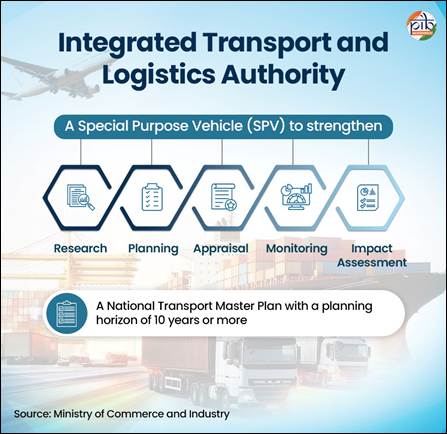
The Union Cabinet, chaired by Prime Minister Narendra Modi, approved the establishment of the Integrated Transport & Logistics Authority (ITLA) on 6 October 2026. ITLA will be established as a Special Purpose Vehicle and will function as India's apex institutional mechanism for integrated transport and logistics planning, research, technical project appraisal, monitoring, impact assessment, policy support and data analytics.
The reform seeks to address a long-standing structural challenge in India's infrastructure sector: transport systems such as roads, railways, ports, shipping, aviation, inland waterways, coastal shipping and urban mobility are handled by different ministries and agencies, which can lead to fragmented planning. ITLA is intended to provide a common institutional framework for long-term multimodal planning and coordination.
One of ITLA's most important responsibilities will be preparation of a comprehensive National Transport Master Plan with a planning horizon of at least 10 years. It will also technically appraise Government of India infrastructure projects costing ₹500 crore or more, monitor transport and infrastructure projects above ₹500 crore, undertake post-implementation impact assessments and develop a National Transport Data Repository integrating information from GSTN e-way bills, FASTag, Vahan, GPS-based systems, urban traffic management systems and other relevant databases.
1. What Did the Union Cabinet Approve?
The Union Cabinet approved the establishment of the Integrated Transport & Logistics Authority, abbreviated ITLA, on 6 October 2026.
ITLA will be established as a Special Purpose Vehicle.
Its broad mandate covers research, planning, project appraisal, monitoring and impact assessment in transportation and logistics.
The decision represents an institutional reform aimed at improving coordination across India's rapidly expanding transport infrastructure system.
2. What Does ITLA Stand For?
ITLA stands for Integrated Transport & Logistics Authority.
For competitive examinations, students should remember the full form because ITLA is likely to become an important institution in India's infrastructure and logistics policy framework.
3. What Is the Institutional Form of ITLA?
ITLA will be established as a Special Purpose Vehicle, commonly abbreviated SPV.
An SPV is an institutional entity created for a specific set of objectives or functions.
In this case, the SPV will provide a specialised institutional mechanism for integrated transport and logistics research, planning, appraisal, monitoring and evaluation.
4. Why Was ITLA Needed?
India's transport system is spread across multiple ministries, departments and agencies.
Roads, railways, ports, shipping, civil aviation, inland waterways, coastal shipping, urban transport and logistics have their own institutional structures and sectoral planning processes.
The Government identified fragmented planning and implementation across these organisations as a long-standing challenge.
ITLA is intended to create greater coordination and multimodal integration.
5. What Does Fragmented Transport Planning Mean?
Fragmented planning occurs when individual transport sectors or agencies develop infrastructure without sufficient coordination with other modes.
For example, the economic value of a port can depend on efficient road and rail connectivity, while an industrial or logistics hub may require coordinated access to highways, railways, airports and freight terminals.
A multimodal approach considers these systems as interconnected parts of a larger transport network.
6. Will ITLA Be a National Apex Institution?
Yes. The Cabinet decision states that ITLA will function as the apex body for integrated transport and logistics planning.
Its functions will include research, project appraisal, monitoring, policy support and data analytics.
This central institutional role is intended to strengthen coordinated decision-making across transport sectors.
7. What Is the National Transport Master Plan?
One of ITLA's central responsibilities will be preparation of a comprehensive National Transport Master Plan.
The plan will have a planning horizon of 10 years or more.
This is important because major transport infrastructure requires long-term planning rather than isolated annual decisions.
8. Which Transport Sectors Will the Master Plan Cover?
The National Transport Master Plan will cover roads, railways, ports and shipping, civil aviation, inland waterways, coastal shipping, urban mobility and logistics.
This broad coverage reflects ITLA's multimodal approach.
Students should remember that ITLA is not limited to road transport or freight logistics alone.
9. What Is Multimodal Transport Planning?
Multimodal transport planning involves coordinating different modes of transport so that they function as parts of an integrated network.
These modes can include road, rail, air, sea, inland waterways and urban transport.
For freight movement, multimodal connectivity can improve the movement of goods between factories, warehouses, logistics parks, railway terminals, ports and markets.
10. How Will ITLA Coordinate Short-Term Plans?
ITLA will evaluate short-term sectoral plans of approximately five years as well as annual plans of transport ministries.
The objective will be to ensure that these plans are consistent with the long-term National Transport Master Plan.
This creates a link between long-term national infrastructure strategy and shorter sector-specific investment plans.
11. What Is the ₹500 Crore Threshold?
ITLA will undertake technical appraisal of Government of India infrastructure projects costing ₹500 crore or more.
This is one of the most important numerical facts associated with the new authority.
Students should remember: ITLA technical appraisal threshold — ₹500 crore or more.
12. Will ITLA Conduct Financial Appraisal of These Projects?
No. The Cabinet announcement specifically distinguishes technical appraisal from financial appraisal.
ITLA will undertake technical appraisal of qualifying infrastructure projects.
Financial appraisal will continue through the existing financial appraisal mechanisms.
This distinction is important because ITLA does not replace the existing system of financial appraisal.
13. What Will Technical Appraisal Involve?
Technical appraisal can examine the transport and infrastructure logic of a project, including its relationship with broader networks, multimodal connectivity and planning objectives.
The exact procedures will depend on the operational framework developed for ITLA.
The Cabinet release establishes ITLA's responsibility for technical appraisal but does not state that existing financial appraisal institutions will be abolished.
14. Will ITLA Monitor Infrastructure Projects?
Yes. ITLA will monitor transport and infrastructure projects costing above ₹500 crore.
It will provide a coordinated mechanism for resolving implementation issues.
This can help identify problems affecting projects that involve multiple transport systems, agencies or institutional responsibilities.
15. What Is Post-Implementation Impact Assessment?
ITLA will not stop its work once an infrastructure project is completed.
It will also undertake post-implementation impact assessments of relevant projects.
Such assessment can help determine whether completed infrastructure has delivered the intended transport, connectivity, efficiency or economic outcomes.
16. Why Is Post-Implementation Evaluation Important?
Infrastructure projects involve large amounts of public investment.
Assessing actual outcomes after completion can provide evidence about whether projected benefits were realised and can generate lessons for future projects.
This creates a feedback mechanism between completed projects and future infrastructure planning.
17. What Is the National Transport Data Repository?
ITLA will establish a National Transport Data Repository, abbreviated NTDR.
It will function as a unified repository for relevant transport and logistics datasets obtained from multiple systems.
This is one of the most technologically significant components of the new authority.
18. Which Data Sources Will Be Integrated?
The Cabinet announcement specifically identifies GSTN e-way bills, FASTag, Vahan, GPS-based systems and urban traffic management systems among the data sources.
Other relevant databases may also be integrated.
This will create a broader evidence base for infrastructure planning, monitoring and impact assessment.
19. Why Are GSTN E-Way Bill Data Important?
E-way bill data can provide information related to movement of goods within the formal goods-transport ecosystem.
When analysed in aggregate and in accordance with applicable data-governance frameworks, such information can help understand freight movement patterns.
ITLA plans to use relevant transport and logistics datasets for analytical purposes.
20. Why Is FASTag Data Relevant?
FASTag is widely used for electronic toll collection on India's highway network.
Aggregated traffic information from such systems can help provide insight into vehicle movement across major road corridors.
Combining such information with other transport datasets can support more evidence-based infrastructure planning.
21. What Is Vahan?
Vahan is the national digital platform associated with vehicle registration information and related transport administration.
Vahan data is among the sources identified for the National Transport Data Repository.
Its inclusion reflects ITLA's intention to use multiple administrative datasets rather than relying only on periodic surveys.
22. How Will GPS-Based Systems Help?
GPS-based systems can generate location and movement information for transport operations.
When appropriately aggregated and analysed, such information can contribute to understanding travel patterns, freight corridors and network utilisation.
The Cabinet announcement specifically includes GPS-based systems among the potential data sources for NTDR.
23. What Is Freight Flow Analysis?
Freight-flow analysis examines how goods move between production centres, warehouses, logistics hubs, ports, markets and consumption centres.
Understanding freight flows can help identify congested corridors, missing transport links and areas requiring additional infrastructure capacity.
ITLA will use data analytics for such planning purposes.
24. What Is Origin-Destination Analysis?
Origin-destination analysis studies where journeys or freight movements begin and where they end.
It is commonly abbreviated O-D analysis.
The PIB factsheet specifically identifies freight-flow and origin-destination analytics as examples of how ITLA can use integrated transport data.
25. What Role Will ITLA Play in the National Logistics Policy?
ITLA will advise and assist in reviewing and updating the National Logistics Policy of 2022.
This connects the new authority directly with India's broader logistics reform agenda.
The National Logistics Policy seeks to strengthen logistics efficiency through improved coordination, digital systems, processes and institutional mechanisms.
26. What Is the Connection with PM GatiShakti?
The official PIB factsheet states that ITLA will complement existing initiatives such as the PM GatiShakti National Master Plan.
PM GatiShakti promotes integrated infrastructure planning across ministries and sectors.
ITLA adds a specialised institutional mechanism for transport and logistics research, appraisal, monitoring, data analysis and long-term planning.
27. Does ITLA Replace PM GatiShakti?
No. The official factsheet says ITLA will complement PM GatiShakti and the National Logistics Policy.
Therefore, students should not describe ITLA as a replacement for these initiatives.
Instead, it should be understood as an additional institutional mechanism intended to strengthen integrated transport and logistics planning.
28. Will ITLA Support Capacity Building?
Yes. Capacity building, training and skilling in the logistics sector are specifically included among ITLA's responsibilities.
Modern logistics increasingly requires expertise in multimodal planning, digital systems, data analytics, supply-chain management and infrastructure evaluation.
Institutional capacity is therefore an important component of logistics reform.
29. Will ITLA Promote Research and Innovation?
Yes. ITLA will promote research and innovation in transportation and logistics.
This can support development and adoption of improved planning methods, analytical tools, technologies and international best practices.
Research will also support evidence-based policy and infrastructure investment decisions.
30. Why Is Data-Driven Planning Important?
Traditional infrastructure planning can be weakened if decisions are based on incomplete or isolated datasets.
Combining information from multiple transport systems can provide a more comprehensive understanding of how people and goods move across India.
This can help policymakers identify bottlenecks, forecast demand and prioritise infrastructure investments more effectively.
31. How Can ITLA Help Reduce Logistics Costs?
Poorly coordinated infrastructure can increase travel distance, waiting time, congestion, transshipment costs and delays.
Better multimodal planning can help create more efficient connections among roads, railways, ports, waterways and logistics facilities.
The Government expects ITLA to contribute to reduced logistics costs by improving infrastructure efficiency and coordination.
However, the Cabinet release does not prescribe a specific numerical logistics-cost reduction target for ITLA itself.
32. How Can ITLA Improve Public Investment Efficiency?
Integrated appraisal can help identify whether proposed infrastructure fits into broader transport networks and whether complementary connectivity is available.
Monitoring can identify implementation problems, while post-project assessment can measure outcomes.
Together, these functions can strengthen the quality of public infrastructure planning and investment decisions.
33. Why Is Coordination Between Ministries Important?
Different transport ministries can pursue sector-specific priorities, but transport networks interact with one another.
A new railway freight corridor may require road access to terminals; a port expansion may require rail and highway connectivity; and an airport may depend on efficient urban transport links.
ITLA is intended to provide an institutional mechanism for greater inter-ministerial coordination.
34. What International Practices Are Relevant?
The PIB factsheet notes that ITLA's central institutional approach follows global practices found in countries such as Korea, Japan, the United States, China and Australia.
The broader principle is that integrated transport planning benefits from specialised institutional capacity and long-term analysis.
The factsheet does not state that India's ITLA will be identical to any one foreign institution.
35. What Is ITLA's Connection with Vision 2047?
The Government has linked ITLA with India's Vision 2047.
By strengthening multimodal connectivity, improving infrastructure efficiency, reducing logistics costs and enhancing global logistics competitiveness, ITLA is expected to contribute to India's long-term development objectives.
Its 10-year-plus master-planning approach is particularly relevant to long-duration infrastructure strategy.
36. How Can ITLA Improve India's Global Competitiveness?
Efficient logistics can reduce the time and cost required to move raw materials, intermediate goods and finished products.
For exporters, better connectivity to ports, airports and freight corridors can improve reliability and delivery performance.
Therefore, integrated transport planning can contribute indirectly to manufacturing and export competitiveness.
37. What Are the Potential Challenges?
Creating an authority alone will not automatically eliminate infrastructure fragmentation.
Its effectiveness will depend on access to reliable data, cooperation among ministries, clear institutional responsibilities, technical expertise, timely project information and the ability to translate analysis into policy and investment decisions.
Data integration will also require appropriate governance, security and privacy safeguards.
38. Why Is ITLA Important for UPSC GS Paper III?
ITLA connects directly with infrastructure, logistics, investment, transport, economic development, digital governance and institutional reform.
It can be used as a contemporary example in answers discussing multimodal infrastructure, PM GatiShakti, logistics efficiency and evidence-based infrastructure planning.
A balanced answer can highlight both benefits and implementation challenges, including inter-ministerial coordination, data quality and institutional capacity.
39. What Is Important for SSC, Railway and State Exams?
Remember: ITLA — Integrated Transport & Logistics Authority — approved by Union Cabinet on 6 October 2026 — established as an SPV — National Transport Master Plan with a horizon of 10 years or more — technical appraisal of Government of India infrastructure projects costing ₹500 crore or more — monitoring of transport and infrastructure projects above ₹500 crore — National Transport Data Repository.
Important data sources: GSTN e-way bill, FASTag, Vahan, GPS-based systems and urban traffic management systems.
40. What Should Students Remember?
The Union Cabinet approved ITLA on 6 October 2026 as a Special Purpose Vehicle for integrated transport and logistics planning.
ITLA will serve as the national apex institution for planning, research, technical appraisal, monitoring, policy support and data analytics.
It will prepare a National Transport Master Plan with a planning horizon of 10 years or more covering roads, railways, ports and shipping, civil aviation, inland waterways, coastal shipping, urban mobility and logistics.
ITLA will technically appraise Government of India infrastructure projects costing ₹500 crore or more and monitor transport and infrastructure projects above ₹500 crore. Financial appraisal will remain with existing mechanisms.
It will establish the National Transport Data Repository by integrating datasets such as GSTN e-way bills, FASTag, Vahan, GPS-based systems and urban traffic management systems.
It will also support review of the National Logistics Policy 2022, capacity building, training, skilling, research and innovation.
Quick revision: ITLA — 6 October 2026 — SPV — national apex institution — multimodal planning — 10+ year National Transport Master Plan — ₹500 crore technical appraisal threshold — NTDR — GSTN e-way bill + FASTag + Vahan + GPS — National Logistics Policy 2022 — PM GatiShakti — Vision 2047.
क्या हुआ?
प्रधानमंत्री नरेंद्र मोदी की अध्यक्षता में केंद्रीय मंत्रिमंडल ने 6 अक्टूबर 2026 को Integrated Transport & Logistics Authority अर्थात एकीकृत परिवहन एवं लॉजिस्टिक्स प्राधिकरण की स्थापना को मंजूरी दी। ITLA को एक विशेष प्रयोजन वाहन के रूप में स्थापित किया जाएगा और यह एकीकृत परिवहन एवं लॉजिस्टिक्स योजना, अनुसंधान, तकनीकी परियोजना मूल्यांकन, निगरानी, प्रभाव आकलन, नीतिगत सहायता तथा आँकड़ा विश्लेषण के लिए राष्ट्रीय शीर्ष संस्थागत व्यवस्था के रूप में कार्य करेगा।
यह सुधार भारत के अवसंरचना क्षेत्र की एक दीर्घकालिक संरचनात्मक चुनौती को संबोधित करता है। सड़क, रेलवे, बंदरगाह, पोत परिवहन, नागरिक उड्डयन, अंतर्देशीय जलमार्ग, तटीय पोत परिवहन और शहरी गतिशीलता जैसी व्यवस्थाएँ अलग-अलग मंत्रालयों और संस्थाओं के अंतर्गत आती हैं, जिससे योजनाओं में बिखराव हो सकता है। ITLA का उद्देश्य दीर्घकालिक बहु-माध्यम परिवहन योजना और समन्वय के लिए एक साझा संस्थागत ढाँचा उपलब्ध कराना है।
ITLA की सबसे महत्वपूर्ण जिम्मेदारियों में कम-से-कम 10 वर्ष की योजना अवधि वाला व्यापक राष्ट्रीय परिवहन मास्टर प्लान तैयार करना शामिल होगा। यह ₹500 करोड़ या उससे अधिक लागत वाली भारत सरकार की अवसंरचना परियोजनाओं का तकनीकी मूल्यांकन करेगा, ₹500 करोड़ से अधिक लागत वाली परिवहन एवं अवसंरचना परियोजनाओं की निगरानी करेगा, परियोजनाएँ पूरी होने के बाद उनके प्रभाव का आकलन करेगा तथा GSTN ई-वे बिल, FASTag, Vahan, GPS आधारित प्रणालियों, शहरी यातायात प्रबंधन प्रणालियों और अन्य संबंधित डेटाबेस को जोड़कर National Transport Data Repository विकसित करेगा।
1. केंद्रीय मंत्रिमंडल ने क्या मंजूरी दी?
केंद्रीय मंत्रिमंडल ने 6 अक्टूबर 2026 को Integrated Transport & Logistics Authority की स्थापना को मंजूरी दी।
ITLA को Special Purpose Vehicle अर्थात विशेष प्रयोजन वाहन के रूप में स्थापित किया जाएगा।
इसका व्यापक कार्यक्षेत्र परिवहन और लॉजिस्टिक्स में अनुसंधान, योजना, परियोजना मूल्यांकन, निगरानी और प्रभाव आकलन होगा।
यह निर्णय भारत की तेजी से बढ़ती परिवहन अवसंरचना में बेहतर समन्वय के उद्देश्य से किया गया संस्थागत सुधार है।
2. ITLA का पूरा नाम क्या है?
ITLA का पूरा नाम Integrated Transport & Logistics Authority है।
प्रतियोगी परीक्षाओं के लिए इसका पूरा नाम याद रखना महत्वपूर्ण है क्योंकि यह भारत की अवसंरचना और लॉजिस्टिक्स नीति व्यवस्था का महत्वपूर्ण संस्थान बनने जा रहा है।
3. ITLA का संस्थागत स्वरूप क्या होगा?
ITLA को Special Purpose Vehicle अर्थात SPV के रूप में स्थापित किया जाएगा।
SPV किसी विशिष्ट उद्देश्य या कार्य के लिए बनाई गई संस्थागत इकाई होती है।
इस मामले में SPV एकीकृत परिवहन और लॉजिस्टिक्स अनुसंधान, योजना, मूल्यांकन, निगरानी तथा परिणाम आकलन के लिए विशेष संस्थागत व्यवस्था प्रदान करेगा।
4. ITLA की आवश्यकता क्यों पड़ी?
भारत की परिवहन व्यवस्था अनेक मंत्रालयों, विभागों और संस्थाओं में विभाजित है।
सड़क, रेलवे, बंदरगाह, पोत परिवहन, नागरिक उड्डयन, अंतर्देशीय जलमार्ग, तटीय पोत परिवहन, शहरी परिवहन और लॉजिस्टिक्स की अपनी अलग-अलग संस्थागत तथा क्षेत्रीय योजना व्यवस्थाएँ हैं।
सरकार ने इन संगठनों के बीच बिखरी हुई योजना और कार्यान्वयन को दीर्घकालिक चुनौती के रूप में पहचाना है।
ITLA का उद्देश्य बेहतर समन्वय और बहु-माध्यम एकीकरण विकसित करना है।
5. बिखरी हुई परिवहन योजना का क्या अर्थ है?
जब अलग-अलग परिवहन क्षेत्र या संस्थाएँ अन्य परिवहन माध्यमों के साथ पर्याप्त समन्वय के बिना अवसंरचना विकसित करती हैं तो इसे बिखरी हुई योजना कहा जा सकता है।
उदाहरण के लिए किसी बंदरगाह की आर्थिक उपयोगिता कुशल सड़क और रेलवे संपर्क पर निर्भर कर सकती है, जबकि किसी औद्योगिक या लॉजिस्टिक्स केंद्र को राजमार्ग, रेलवे, हवाई अड्डे और माल ढुलाई टर्मिनल से समन्वित संपर्क की आवश्यकता हो सकती है।
बहु-माध्यम दृष्टिकोण इन सभी व्यवस्थाओं को एक बड़े परिवहन नेटवर्क के परस्पर जुड़े हिस्सों के रूप में देखता है।
6. क्या ITLA राष्ट्रीय शीर्ष संस्था होगी?
हाँ। मंत्रिमंडल के निर्णय के अनुसार ITLA एकीकृत परिवहन और लॉजिस्टिक्स योजना की शीर्ष संस्था के रूप में कार्य करेगा।
इसके कार्यों में अनुसंधान, परियोजना मूल्यांकन, निगरानी, नीतिगत सहायता और आँकड़ा विश्लेषण शामिल होंगे।
इस केंद्रीय संस्थागत भूमिका का उद्देश्य परिवहन क्षेत्रों में समन्वित निर्णय प्रक्रिया को मजबूत करना है।
7. National Transport Master Plan क्या है?
ITLA की मुख्य जिम्मेदारियों में व्यापक National Transport Master Plan तैयार करना शामिल होगा।
इसकी योजना अवधि 10 वर्ष या उससे अधिक होगी।
यह महत्वपूर्ण है क्योंकि बड़ी परिवहन अवसंरचना के लिए अलग-अलग वार्षिक निर्णयों के बजाय दीर्घकालिक योजना आवश्यक होती है।
8. मास्टर प्लान में कौन-कौन से क्षेत्र शामिल होंगे?
National Transport Master Plan में सड़क, रेलवे, बंदरगाह और पोत परिवहन, नागरिक उड्डयन, अंतर्देशीय जलमार्ग, तटीय पोत परिवहन, शहरी गतिशीलता और लॉजिस्टिक्स शामिल होंगे।
यह व्यापक दायरा ITLA के बहु-माध्यम दृष्टिकोण को दर्शाता है।
विद्यार्थियों को याद रखना चाहिए कि ITLA केवल सड़क परिवहन या माल ढुलाई तक सीमित नहीं है।
9. बहु-माध्यम परिवहन योजना क्या है?
बहु-माध्यम परिवहन योजना में विभिन्न परिवहन साधनों का ऐसा समन्वय किया जाता है कि वे एकीकृत नेटवर्क के हिस्से के रूप में कार्य करें।
इनमें सड़क, रेलवे, वायु, समुद्री परिवहन, अंतर्देशीय जलमार्ग और शहरी परिवहन शामिल हो सकते हैं।
माल परिवहन में यह व्यवस्था कारखानों, गोदामों, लॉजिस्टिक्स पार्कों, रेलवे टर्मिनलों, बंदरगाहों और बाजारों के बीच वस्तुओं की आवाजाही को अधिक कुशल बना सकती है।
10. ITLA अल्पकालिक योजनाओं का समन्वय कैसे करेगा?
ITLA लगभग पाँच वर्ष की अवधि वाली क्षेत्रीय योजनाओं तथा परिवहन मंत्रालयों की वार्षिक योजनाओं का मूल्यांकन करेगा।
उद्देश्य यह सुनिश्चित करना होगा कि ये योजनाएँ दीर्घकालिक National Transport Master Plan के अनुरूप हों।
इससे दीर्घकालिक राष्ट्रीय अवसंरचना रणनीति और अल्पकालिक क्षेत्रीय निवेश योजनाओं के बीच संबंध स्थापित होगा।
11. ₹500 करोड़ की सीमा क्या है?
ITLA ₹500 करोड़ या उससे अधिक लागत वाली भारत सरकार की अवसंरचना परियोजनाओं का तकनीकी मूल्यांकन करेगा।
यह नए प्राधिकरण से जुड़ा सबसे महत्वपूर्ण संख्यात्मक तथ्य है।
याद रखें: ITLA तकनीकी मूल्यांकन सीमा — ₹500 करोड़ या उससे अधिक।
12. क्या ITLA परियोजनाओं का वित्तीय मूल्यांकन भी करेगा?
नहीं। मंत्रिमंडल की घोषणा तकनीकी और वित्तीय मूल्यांकन के बीच स्पष्ट अंतर करती है।
ITLA पात्र परियोजनाओं का तकनीकी मूल्यांकन करेगा।
वित्तीय मूल्यांकन मौजूदा वित्तीय मूल्यांकन व्यवस्थाओं के माध्यम से जारी रहेगा।
इसलिए ITLA वर्तमान वित्तीय मूल्यांकन व्यवस्था को प्रतिस्थापित नहीं करेगा।
13. तकनीकी मूल्यांकन में क्या शामिल हो सकता है?
तकनीकी मूल्यांकन किसी परियोजना के परिवहन और अवसंरचना संबंधी औचित्य, व्यापक नेटवर्क से उसके संबंध, बहु-माध्यम संपर्क और योजना उद्देश्यों की जाँच में सहायता कर सकता है।
विस्तृत प्रक्रिया ITLA के परिचालन ढाँचे पर निर्भर करेगी।
मंत्रिमंडल की विज्ञप्ति ITLA को तकनीकी मूल्यांकन की जिम्मेदारी देती है लेकिन यह नहीं कहती कि मौजूदा वित्तीय मूल्यांकन संस्थाओं को समाप्त किया जाएगा।
14. क्या ITLA अवसंरचना परियोजनाओं की निगरानी करेगा?
हाँ। ITLA ₹500 करोड़ से अधिक लागत वाली परिवहन और अवसंरचना परियोजनाओं की निगरानी करेगा।
यह कार्यान्वयन संबंधी समस्याओं के समाधान के लिए समन्वित व्यवस्था भी प्रदान करेगा।
इससे अनेक परिवहन प्रणालियों या संस्थाओं से जुड़ी परियोजनाओं में उत्पन्न समस्याओं की पहचान और समाधान में सहायता मिल सकती है।
15. परियोजना पूर्ण होने के बाद प्रभाव आकलन क्या है?
ITLA का कार्य किसी अवसंरचना परियोजना के पूरा होने के साथ समाप्त नहीं होगा।
यह संबंधित परियोजनाओं के पूरा होने के बाद उनके प्रभाव का आकलन भी करेगा।
इससे यह समझने में सहायता मिलेगी कि पूरी की गई अवसंरचना ने अपेक्षित परिवहन, संपर्क, दक्षता या आर्थिक परिणाम दिए या नहीं।
16. परियोजना के बाद मूल्यांकन क्यों महत्वपूर्ण है?
अवसंरचना परियोजनाओं में बड़ी मात्रा में सार्वजनिक निवेश होता है।
परियोजना पूरी होने के बाद वास्तविक परिणामों का आकलन यह बता सकता है कि अनुमानित लाभ प्राप्त हुए या नहीं और भविष्य की परियोजनाओं के लिए क्या सीख मिली।
इससे पूर्ण परियोजनाओं और भविष्य की अवसंरचना योजना के बीच प्रतिक्रिया व्यवस्था विकसित होती है।
17. National Transport Data Repository क्या है?
ITLA National Transport Data Repository अर्थात NTDR स्थापित करेगा।
यह अनेक प्रणालियों से प्राप्त संबंधित परिवहन और लॉजिस्टिक्स आँकड़ों के एकीकृत भंडार के रूप में कार्य करेगा।
यह नए प्राधिकरण का तकनीकी दृष्टि से अत्यंत महत्वपूर्ण घटक है।
18. किन आँकड़ा स्रोतों को जोड़ा जाएगा?
मंत्रिमंडल की घोषणा में GSTN ई-वे बिल, FASTag, Vahan, GPS आधारित प्रणालियाँ और शहरी यातायात प्रबंधन प्रणालियाँ प्रमुख स्रोतों के रूप में बताई गई हैं।
अन्य संबंधित डेटाबेस भी जोड़े जा सकते हैं।
इससे अवसंरचना योजना, निगरानी और प्रभाव आकलन के लिए व्यापक तथ्य-आधारित आधार तैयार होगा।
19. GSTN ई-वे बिल आँकड़े क्यों महत्वपूर्ण हैं?
ई-वे बिल आँकड़े औपचारिक माल परिवहन व्यवस्था में वस्तुओं की आवाजाही से संबंधित जानकारी प्रदान कर सकते हैं।
लागू आँकड़ा शासन व्यवस्था के अनुसार समेकित विश्लेषण से माल परिवहन के स्वरूप को समझने में सहायता मिल सकती है।
ITLA योजना संबंधी विश्लेषण के लिए संबंधित परिवहन और लॉजिस्टिक्स आँकड़ों का उपयोग करेगा।
20. FASTag आँकड़े क्यों उपयोगी हैं?
FASTag भारत के राजमार्ग नेटवर्क पर इलेक्ट्रॉनिक टोल संग्रह के लिए व्यापक रूप से उपयोग किया जाता है।
ऐसी प्रणालियों से प्राप्त समेकित यातायात जानकारी प्रमुख सड़क गलियारों में वाहनों की आवाजाही को समझने में सहायता कर सकती है।
इसे अन्य परिवहन आँकड़ों के साथ जोड़ने से अधिक तथ्य-आधारित अवसंरचना योजना संभव हो सकती है।
21. Vahan क्या है?
Vahan वाहन पंजीकरण और संबंधित परिवहन प्रशासन से जुड़ा राष्ट्रीय डिजिटल मंच है।
Vahan आँकड़े National Transport Data Repository के लिए बताए गए स्रोतों में शामिल हैं।
इसका समावेश दिखाता है कि ITLA केवल समय-समय पर होने वाले सर्वेक्षणों के बजाय अनेक प्रशासनिक आँकड़ा स्रोतों का उपयोग करेगा।
22. GPS आधारित प्रणालियाँ कैसे सहायता करेंगी?
GPS आधारित प्रणालियाँ परिवहन गतिविधियों से संबंधित स्थान और गति की जानकारी उत्पन्न कर सकती हैं।
उचित रूप से समेकित और विश्लेषित जानकारी यात्रा स्वरूप, माल गलियारों और नेटवर्क उपयोग को समझने में सहायक हो सकती है।
मंत्रिमंडल की घोषणा में GPS आधारित प्रणालियों को NTDR के संभावित आँकड़ा स्रोतों में स्पष्ट रूप से शामिल किया गया है।
23. Freight Flow Analysis क्या है?
Freight Flow Analysis यह अध्ययन करता है कि वस्तुएँ उत्पादन केंद्रों, गोदामों, लॉजिस्टिक्स केंद्रों, बंदरगाहों, बाजारों और उपभोग केंद्रों के बीच कैसे चलती हैं।
माल प्रवाह को समझने से भीड़भाड़ वाले गलियारों, अनुपस्थित संपर्क और अतिरिक्त अवसंरचना क्षमता की आवश्यकता वाले क्षेत्रों की पहचान हो सकती है।
ITLA योजना के लिए ऐसे आँकड़ा विश्लेषण का उपयोग करेगा।
24. Origin-Destination Analysis क्या है?
Origin-Destination Analysis यह अध्ययन करता है कि यात्रा या माल परिवहन कहाँ से शुरू होता है और कहाँ समाप्त होता है।
इसे संक्षेप में O-D Analysis कहा जाता है।
PIB तथ्य-पत्र में माल प्रवाह और Origin-Destination Analysis को ITLA द्वारा एकीकृत परिवहन आँकड़ों के उपयोग के उदाहरण के रूप में बताया गया है।
25. National Logistics Policy में ITLA की क्या भूमिका होगी?
ITLA National Logistics Policy 2022 की समीक्षा और अद्यतन में सलाह और सहायता देगा।
इससे नया प्राधिकरण भारत की व्यापक लॉजिस्टिक्स सुधार नीति से सीधे जुड़ता है।
National Logistics Policy बेहतर समन्वय, डिजिटल व्यवस्था, प्रक्रियाओं और संस्थागत तंत्र के माध्यम से लॉजिस्टिक्स दक्षता बढ़ाने का प्रयास करती है।
26. PM GatiShakti से इसका क्या संबंध है?
आधिकारिक PIB तथ्य-पत्र के अनुसार ITLA PM GatiShakti National Master Plan जैसी मौजूदा पहलों का पूरक होगा।
PM GatiShakti मंत्रालयों और क्षेत्रों में एकीकृत अवसंरचना योजना को बढ़ावा देता है।
ITLA परिवहन और लॉजिस्टिक्स अनुसंधान, मूल्यांकन, निगरानी, आँकड़ा विश्लेषण और दीर्घकालिक योजना के लिए विशेष संस्थागत व्यवस्था जोड़ेगा।
27. क्या ITLA PM GatiShakti की जगह लेगा?
नहीं। आधिकारिक तथ्य-पत्र स्पष्ट करता है कि ITLA PM GatiShakti और National Logistics Policy का पूरक होगा।
इसलिए ITLA को इन पहलों का प्रतिस्थापन नहीं माना जाना चाहिए।
इसे एकीकृत परिवहन और लॉजिस्टिक्स योजना को मजबूत करने वाली अतिरिक्त संस्थागत व्यवस्था के रूप में समझना चाहिए।
28. क्या ITLA क्षमता निर्माण में सहायता करेगा?
हाँ। लॉजिस्टिक्स क्षेत्र में क्षमता निर्माण, प्रशिक्षण और कौशल विकास ITLA की जिम्मेदारियों में स्पष्ट रूप से शामिल हैं।
आधुनिक लॉजिस्टिक्स में बहु-माध्यम योजना, डिजिटल प्रणालियों, आँकड़ा विश्लेषण, आपूर्ति शृंखला प्रबंधन और अवसंरचना मूल्यांकन में विशेषज्ञता की आवश्यकता बढ़ रही है।
इसलिए संस्थागत क्षमता लॉजिस्टिक्स सुधार का महत्वपूर्ण हिस्सा है।
29. क्या ITLA अनुसंधान और नवाचार को बढ़ावा देगा?
हाँ। ITLA परिवहन और लॉजिस्टिक्स क्षेत्रों में अनुसंधान और नवाचार को प्रोत्साहित करेगा।
इससे बेहतर योजना पद्धतियों, विश्लेषण उपकरणों, प्रौद्योगिकियों और अंतरराष्ट्रीय सर्वोत्तम प्रथाओं के विकास तथा उपयोग को सहायता मिल सकती है।
अनुसंधान तथ्य-आधारित नीति और अवसंरचना निवेश निर्णयों को भी मजबूत करेगा।
30. आँकड़ा आधारित योजना क्यों महत्वपूर्ण है?
यदि निर्णय अधूरे या अलग-अलग आँकड़ा स्रोतों पर आधारित हों तो पारंपरिक अवसंरचना योजना कमजोर हो सकती है।
अनेक परिवहन प्रणालियों की जानकारी को जोड़ने से भारत में लोगों और वस्तुओं की आवाजाही की अधिक व्यापक तस्वीर प्राप्त हो सकती है।
इससे नीति निर्माता अवरोधों की पहचान, भविष्य की माँग का अनुमान और अवसंरचना निवेश की प्राथमिकता अधिक प्रभावी ढंग से तय कर सकते हैं।
31. ITLA लॉजिस्टिक्स लागत कम करने में कैसे सहायता कर सकता है?
खराब समन्वित अवसंरचना यात्रा दूरी, प्रतीक्षा समय, भीड़, माल हस्तांतरण लागत और देरी बढ़ा सकती है।
बेहतर बहु-माध्यम योजना सड़क, रेलवे, बंदरगाह, जलमार्ग और लॉजिस्टिक्स सुविधाओं के बीच अधिक कुशल संपर्क विकसित कर सकती है।
सरकार को उम्मीद है कि ITLA अवसंरचना दक्षता और समन्वय सुधारकर लॉजिस्टिक्स लागत कम करने में योगदान देगा।
हालांकि मंत्रिमंडल की विज्ञप्ति ITLA के लिए लॉजिस्टिक्स लागत में कमी का कोई निश्चित संख्यात्मक लक्ष्य नहीं देती।
32. ITLA सार्वजनिक निवेश की दक्षता कैसे बढ़ा सकता है?
एकीकृत मूल्यांकन यह समझने में सहायता कर सकता है कि प्रस्तावित अवसंरचना व्यापक परिवहन नेटवर्क में उचित रूप से फिट होती है या नहीं और उसके लिए आवश्यक पूरक संपर्क उपलब्ध है या नहीं।
निगरानी से कार्यान्वयन समस्याओं की पहचान की जा सकती है, जबकि परियोजना पूर्ण होने के बाद मूल्यांकन वास्तविक परिणामों को माप सकता है।
इन कार्यों से सार्वजनिक अवसंरचना योजना और निवेश निर्णयों की गुणवत्ता मजबूत हो सकती है।
33. मंत्रालयों के बीच समन्वय क्यों महत्वपूर्ण है?
अलग-अलग परिवहन मंत्रालय अपनी क्षेत्रीय प्राथमिकताओं पर काम करते हैं, लेकिन परिवहन नेटवर्क एक-दूसरे से जुड़े होते हैं।
नए रेलवे माल गलियारे को टर्मिनल तक सड़क संपर्क चाहिए हो सकता है; बंदरगाह विस्तार को रेलवे और राजमार्ग संपर्क की आवश्यकता हो सकती है; हवाई अड्डे की उपयोगिता कुशल शहरी परिवहन संपर्क पर निर्भर हो सकती है।
ITLA का उद्देश्य ऐसे अंतर-मंत्रालयी समन्वय के लिए संस्थागत व्यवस्था प्रदान करना है।
34. कौन-सी अंतरराष्ट्रीय प्रथाएँ प्रासंगिक हैं?
PIB तथ्य-पत्र के अनुसार ITLA जैसी केंद्रीय संस्थागत व्यवस्था कोरिया, जापान, अमेरिका, चीन और ऑस्ट्रेलिया जैसे देशों में देखी जाने वाली वैश्विक प्रथाओं के अनुरूप है।
मूल सिद्धांत यह है कि एकीकृत परिवहन योजना के लिए विशेष संस्थागत क्षमता और दीर्घकालिक विश्लेषण लाभकारी होता है।
तथ्य-पत्र यह नहीं कहता कि भारत का ITLA किसी एक विदेशी संस्था की हूबहू प्रतिकृति होगा।
35. Vision 2047 से ITLA का क्या संबंध है?
सरकार ने ITLA को भारत के Vision 2047 से जोड़ा है।
बहु-माध्यम संपर्क मजबूत करके, अवसंरचना दक्षता सुधारकर, लॉजिस्टिक्स लागत कम करने में योगदान देकर और वैश्विक लॉजिस्टिक्स प्रतिस्पर्धात्मकता बढ़ाकर ITLA से भारत के दीर्घकालिक विकास उद्देश्यों में योगदान की अपेक्षा है।
10 वर्ष या उससे अधिक की मास्टर योजना अवधि दीर्घकालिक अवसंरचना रणनीति के लिए विशेष रूप से महत्वपूर्ण है।
36. ITLA भारत की वैश्विक प्रतिस्पर्धात्मकता कैसे बढ़ा सकता है?
कुशल लॉजिस्टिक्स कच्चे माल, मध्यवर्ती वस्तुओं और तैयार उत्पादों को स्थानांतरित करने में लगने वाले समय और लागत को कम कर सकता है।
निर्यातकों के लिए बंदरगाहों, हवाई अड्डों और माल गलियारों से बेहतर संपर्क आपूर्ति की विश्वसनीयता और समयबद्धता में सुधार कर सकता है।
इसलिए एकीकृत परिवहन योजना विनिर्माण और निर्यात प्रतिस्पर्धात्मकता में अप्रत्यक्ष योगदान दे सकती है।
37. संभावित चुनौतियाँ क्या हैं?
केवल नया प्राधिकरण बना देने से अवसंरचना योजना का बिखराव स्वतः समाप्त नहीं होगा।
इसकी प्रभावशीलता विश्वसनीय आँकड़ों की उपलब्धता, मंत्रालयों के सहयोग, स्पष्ट संस्थागत जिम्मेदारियों, तकनीकी विशेषज्ञता, समय पर परियोजना जानकारी और विश्लेषण को वास्तविक नीति तथा निवेश निर्णयों में बदलने की क्षमता पर निर्भर करेगी।
आँकड़ों के एकीकरण में उपयुक्त शासन, सुरक्षा और गोपनीयता उपाय भी आवश्यक होंगे।
38. UPSC GS Paper III के लिए ITLA क्यों महत्वपूर्ण है?
ITLA अवसंरचना, लॉजिस्टिक्स, निवेश, परिवहन, आर्थिक विकास, डिजिटल शासन और संस्थागत सुधार से सीधे जुड़ा है।
बहु-माध्यम अवसंरचना, PM GatiShakti, लॉजिस्टिक्स दक्षता और तथ्य-आधारित अवसंरचना योजना पर उत्तर लिखते समय इसे समसामयिक उदाहरण के रूप में उपयोग किया जा सकता है।
संतुलित उत्तर में लाभों के साथ अंतर-मंत्रालयी समन्वय, आँकड़ों की गुणवत्ता और संस्थागत क्षमता जैसी कार्यान्वयन चुनौतियों का उल्लेख किया जा सकता है।
39. SSC, Railway और State Exams के लिए क्या महत्वपूर्ण है?
याद रखें: ITLA — Integrated Transport & Logistics Authority — 6 अक्टूबर 2026 को केंद्रीय मंत्रिमंडल द्वारा मंजूर — SPV के रूप में स्थापना — 10 वर्ष या उससे अधिक अवधि वाला National Transport Master Plan — ₹500 करोड़ या उससे अधिक लागत वाली भारत सरकार की अवसंरचना परियोजनाओं का तकनीकी मूल्यांकन — ₹500 करोड़ से अधिक की परिवहन और अवसंरचना परियोजनाओं की निगरानी — National Transport Data Repository।
महत्वपूर्ण आँकड़ा स्रोत: GSTN ई-वे बिल, FASTag, Vahan, GPS आधारित प्रणालियाँ और शहरी यातायात प्रबंधन प्रणालियाँ।
40. विद्यार्थियों को क्या याद रखना चाहिए?
केंद्रीय मंत्रिमंडल ने 6 अक्टूबर 2026 को एकीकृत परिवहन और लॉजिस्टिक्स योजना के लिए ITLA को Special Purpose Vehicle के रूप में स्थापित करने की मंजूरी दी।
ITLA योजना, अनुसंधान, तकनीकी मूल्यांकन, निगरानी, नीतिगत सहायता और आँकड़ा विश्लेषण के लिए राष्ट्रीय शीर्ष संस्था के रूप में कार्य करेगा।
यह सड़क, रेलवे, बंदरगाह और पोत परिवहन, नागरिक उड्डयन, अंतर्देशीय जलमार्ग, तटीय पोत परिवहन, शहरी गतिशीलता और लॉजिस्टिक्स को शामिल करते हुए 10 वर्ष या उससे अधिक अवधि वाला National Transport Master Plan तैयार करेगा।
ITLA ₹500 करोड़ या उससे अधिक लागत वाली भारत सरकार की अवसंरचना परियोजनाओं का तकनीकी मूल्यांकन करेगा और ₹500 करोड़ से अधिक लागत वाली परिवहन तथा अवसंरचना परियोजनाओं की निगरानी करेगा। वित्तीय मूल्यांकन मौजूदा व्यवस्था से जारी रहेगा।
यह GSTN ई-वे बिल, FASTag, Vahan, GPS आधारित प्रणालियों और शहरी यातायात प्रबंधन प्रणालियों जैसे स्रोतों को जोड़कर National Transport Data Repository बनाएगा।
यह National Logistics Policy 2022 की समीक्षा, क्षमता निर्माण, प्रशिक्षण, कौशल विकास, अनुसंधान और नवाचार में भी सहायता करेगा।
त्वरित पुनरावृत्ति: ITLA — 6 अक्टूबर 2026 — SPV — राष्ट्रीय शीर्ष संस्था — बहु-माध्यम योजना — 10+ वर्ष का National Transport Master Plan — ₹500 करोड़ तकनीकी मूल्यांकन सीमा — NTDR — GSTN ई-वे बिल + FASTag + Vahan + GPS — National Logistics Policy 2022 — PM GatiShakti — Vision 2047।
Key Facts
• The Union Cabinet approved the establishment of ITLA on 6 October 2026.
• ITLA stands for Integrated Transport & Logistics Authority.
• ITLA will be established as a Special Purpose Vehicle.
• It will serve as the national apex institution for integrated transport and logistics planning.
• Its functions include research, project appraisal and monitoring.
• ITLA will provide policy support and data analytics.
• ITLA will prepare a comprehensive National Transport Master Plan.
• The National Transport Master Plan will have a planning horizon of 10 years or more.
• The Master Plan will cover roads.
• It will cover railways.
• It will cover ports and shipping.
• It will cover civil aviation.
• It will cover inland waterways.
• It will cover coastal shipping.
• It will cover urban mobility.
• It will cover logistics.
• ITLA will evaluate short-term sectoral plans of around five years.
• It will also evaluate annual plans of transport ministries for alignment with the Master Plan.
• ITLA will technically appraise Government of India infrastructure projects costing ₹500 crore or more.
• Financial appraisal will continue through existing financial appraisal mechanisms.
• ITLA will monitor transport and infrastructure projects costing above ₹500 crore.
• It will provide a coordinated mechanism for issue resolution.
• ITLA will conduct post-implementation impact assessment.
• ITLA will establish the National Transport Data Repository.
• NTDR stands for National Transport Data Repository.
• GSTN e-way bill data is among the identified data sources.
• FASTag data is among the identified data sources.
• Vahan is among the identified data sources.
• GPS-based systems are among the identified data sources.
• Urban traffic management systems are among the identified data sources.
• ITLA will use data for freight-flow and origin-destination analysis.
• ITLA will advise and assist in reviewing and updating the National Logistics Policy 2022.
• ITLA will support capacity building, training and skilling in logistics.
• ITLA will promote research and innovation in transport and logistics.
• ITLA will complement PM GatiShakti and the National Logistics Policy.
• The Government links ITLA with India's Vision 2047.
• ITLA aims to strengthen multimodal connectivity.
• It is expected to improve infrastructure efficiency.
• It is intended to contribute to reducing logistics costs.
• It is intended to enhance India's global logistics competitiveness.
मुख्य तथ्य
• केंद्रीय मंत्रिमंडल ने 6 अक्टूबर 2026 को ITLA की स्थापना को मंजूरी दी।
• ITLA का पूरा नाम Integrated Transport & Logistics Authority है।
• ITLA को Special Purpose Vehicle के रूप में स्थापित किया जाएगा।
• यह एकीकृत परिवहन और लॉजिस्टिक्स योजना की राष्ट्रीय शीर्ष संस्था के रूप में कार्य करेगा।
• इसके कार्यों में अनुसंधान, परियोजना मूल्यांकन और निगरानी शामिल हैं।
• ITLA नीतिगत सहायता और आँकड़ा विश्लेषण प्रदान करेगा।
• ITLA व्यापक National Transport Master Plan तैयार करेगा।
• National Transport Master Plan की योजना अवधि 10 वर्ष या उससे अधिक होगी।
• मास्टर प्लान में सड़क क्षेत्र शामिल होगा।
• इसमें रेलवे शामिल होगा।
• इसमें बंदरगाह और पोत परिवहन शामिल होंगे।
• इसमें नागरिक उड्डयन शामिल होगा।
• इसमें अंतर्देशीय जलमार्ग शामिल होंगे।
• इसमें तटीय पोत परिवहन शामिल होगा।
• इसमें शहरी गतिशीलता शामिल होगी।
• इसमें लॉजिस्टिक्स शामिल होगा।
• ITLA लगभग पाँच वर्ष की अल्पकालिक क्षेत्रीय योजनाओं का मूल्यांकन करेगा।
• यह परिवहन मंत्रालयों की वार्षिक योजनाओं को मास्टर प्लान के अनुरूप बनाने के लिए उनका भी मूल्यांकन करेगा।
• ITLA ₹500 करोड़ या उससे अधिक लागत वाली भारत सरकार की अवसंरचना परियोजनाओं का तकनीकी मूल्यांकन करेगा।
• वित्तीय मूल्यांकन मौजूदा वित्तीय मूल्यांकन व्यवस्था से जारी रहेगा।
• ITLA ₹500 करोड़ से अधिक लागत वाली परिवहन और अवसंरचना परियोजनाओं की निगरानी करेगा।
• यह समस्याओं के समाधान के लिए समन्वित व्यवस्था प्रदान करेगा।
• ITLA परियोजना पूर्ण होने के बाद प्रभाव आकलन करेगा।
• ITLA National Transport Data Repository स्थापित करेगा।
• NTDR का पूरा नाम National Transport Data Repository है।
• GSTN ई-वे बिल इसके बताए गए आँकड़ा स्रोतों में शामिल हैं।
• FASTag आँकड़े इसके स्रोतों में शामिल हैं।
• Vahan इसके स्रोतों में शामिल है।
• GPS आधारित प्रणालियाँ इसके स्रोतों में शामिल हैं।
• शहरी यातायात प्रबंधन प्रणालियाँ इसके स्रोतों में शामिल हैं।
• ITLA माल प्रवाह और Origin-Destination विश्लेषण के लिए आँकड़ों का उपयोग करेगा।
• ITLA National Logistics Policy 2022 की समीक्षा और अद्यतन में सलाह तथा सहायता देगा।
• ITLA लॉजिस्टिक्स क्षेत्र में क्षमता निर्माण, प्रशिक्षण और कौशल विकास को समर्थन देगा।
• ITLA परिवहन और लॉजिस्टिक्स में अनुसंधान तथा नवाचार को बढ़ावा देगा।
• ITLA PM GatiShakti और National Logistics Policy का पूरक होगा।
• सरकार ने ITLA को भारत के Vision 2047 से जोड़ा है।
• ITLA का उद्देश्य बहु-माध्यम संपर्क मजबूत करना है।
• इससे अवसंरचना दक्षता में सुधार की अपेक्षा है।
• इसका उद्देश्य लॉजिस्टिक्स लागत कम करने में योगदान देना है।
• इसका उद्देश्य भारत की वैश्विक लॉजिस्टिक्स प्रतिस्पर्धात्मकता बढ़ाना है।
Background
India's transport infrastructure is administered through multiple sector-specific ministries and agencies. As the economy and freight volumes expand, isolated planning can create missing links, duplication and inefficient connections among roads, railways, ports, airports, waterways and urban transport systems. Existing initiatives such as PM GatiShakti and the National Logistics Policy have already emphasised integrated infrastructure and logistics reform. ITLA adds a specialised apex institutional mechanism for long-term transport planning, technical project appraisal, monitoring, post-implementation assessment, data integration, research and policy support.
पृष्ठभूमि
भारत की परिवहन अवसंरचना अनेक क्षेत्र-विशिष्ट मंत्रालयों और संस्थाओं के माध्यम से संचालित होती है। अर्थव्यवस्था और माल परिवहन बढ़ने के साथ अलग-अलग योजना बनाने से सड़क, रेलवे, बंदरगाह, हवाई अड्डे, जलमार्ग और शहरी परिवहन प्रणालियों के बीच अनुपस्थित संपर्क, दोहराव और कम दक्षता वाली व्यवस्था उत्पन्न हो सकती है। PM GatiShakti और National Logistics Policy जैसी मौजूदा पहलों ने पहले ही एकीकृत अवसंरचना और लॉजिस्टिक्स सुधार पर जोर दिया है। ITLA दीर्घकालिक परिवहन योजना, तकनीकी परियोजना मूल्यांकन, निगरानी, परियोजना पूर्ण होने के बाद आकलन, आँकड़ा एकीकरण, अनुसंधान और नीतिगत सहायता के लिए विशेष राष्ट्रीय शीर्ष संस्थागत व्यवस्था जोड़ेगा।
Why It Matters
ITLA is important because transport infrastructure produces maximum economic value when different modes work as an integrated network rather than isolated assets. A port without adequate road or rail connectivity, a logistics park without efficient freight links, or a transport corridor planned without reliable demand data can reduce the effectiveness of public investment. ITLA attempts to address these problems through a long-term master plan, technical appraisal of major projects, project monitoring, post-implementation evaluation and integrated transport data. Its effectiveness will ultimately depend on strong inter-ministerial coordination, high-quality data, technical expertise and the ability to convert analysis into better infrastructure decisions.
यह क्यों महत्वपूर्ण है?
ITLA इसलिए महत्वपूर्ण है क्योंकि परिवहन अवसंरचना का अधिकतम आर्थिक लाभ तब मिलता है जब विभिन्न परिवहन साधन अलग-अलग परिसंपत्तियों के बजाय एकीकृत नेटवर्क के रूप में काम करते हैं। पर्याप्त सड़क या रेलवे संपर्क के बिना बंदरगाह, कुशल माल संपर्क के बिना लॉजिस्टिक्स पार्क या विश्वसनीय माँग आँकड़ों के बिना बनाया गया परिवहन गलियारा सार्वजनिक निवेश की प्रभावशीलता कम कर सकता है। ITLA दीर्घकालिक मास्टर प्लान, बड़ी परियोजनाओं के तकनीकी मूल्यांकन, परियोजना निगरानी, परियोजना पूर्ण होने के बाद आकलन और एकीकृत परिवहन आँकड़ों के माध्यम से इन समस्याओं को संबोधित करने का प्रयास करता है। इसकी वास्तविक प्रभावशीलता मजबूत अंतर-मंत्रालयी समन्वय, उच्च गुणवत्ता वाले आँकड़ों, तकनीकी विशेषज्ञता और विश्लेषण को बेहतर अवसंरचना निर्णयों में बदलने की क्षमता पर निर्भर करेगी।
Exam Connection
For exams remember: ITLA stands for Integrated Transport & Logistics Authority. The Union Cabinet approved it on 6 October 2026 as a Special Purpose Vehicle. It will prepare a National Transport Master Plan with a planning horizon of 10 years or more and cover roads, railways, ports and shipping, civil aviation, inland waterways, coastal shipping, urban mobility and logistics. ITLA will technically appraise Government of India infrastructure projects costing ₹500 crore or more and monitor transport and infrastructure projects above ₹500 crore. Financial appraisal remains with existing mechanisms. ITLA will create the National Transport Data Repository using sources including GSTN e-way bills, FASTag, Vahan, GPS-based systems and urban traffic management systems. It will complement PM GatiShakti and support review of National Logistics Policy 2022.
परीक्षा से संबंध
परीक्षा के लिए याद रखें: ITLA का पूरा नाम Integrated Transport & Logistics Authority है। केंद्रीय मंत्रिमंडल ने 6 अक्टूबर 2026 को इसे Special Purpose Vehicle के रूप में स्थापित करने की मंजूरी दी। यह 10 वर्ष या उससे अधिक की योजना अवधि वाला National Transport Master Plan तैयार करेगा, जिसमें सड़क, रेलवे, बंदरगाह और पोत परिवहन, नागरिक उड्डयन, अंतर्देशीय जलमार्ग, तटीय पोत परिवहन, शहरी गतिशीलता और लॉजिस्टिक्स शामिल होंगे। ITLA ₹500 करोड़ या उससे अधिक लागत वाली भारत सरकार की अवसंरचना परियोजनाओं का तकनीकी मूल्यांकन करेगा और ₹500 करोड़ से अधिक लागत वाली परिवहन तथा अवसंरचना परियोजनाओं की निगरानी करेगा। वित्तीय मूल्यांकन मौजूदा व्यवस्था के माध्यम से जारी रहेगा। ITLA GSTN ई-वे बिल, FASTag, Vahan, GPS आधारित प्रणालियों और शहरी यातायात प्रबंधन प्रणालियों सहित अनेक स्रोतों का उपयोग करके National Transport Data Repository बनाएगा। यह PM GatiShakti का पूरक होगा और National Logistics Policy 2022 की समीक्षा में सहायता करेगा।
 SSC CGL 2026 Ultimate Chapterwise
 SSC CHSL 2026 Ultimate Chapterwise