Updated: 20 October 2026 | Reading time: 11–13 minutes | Category: Technology & World Affairs
In brief: AI is creating a surge in demand for electricity, grid capacity and cooling. New international research and policy developments show why this matters for consumers, India and the global economy.
The AI revolution has a power problem
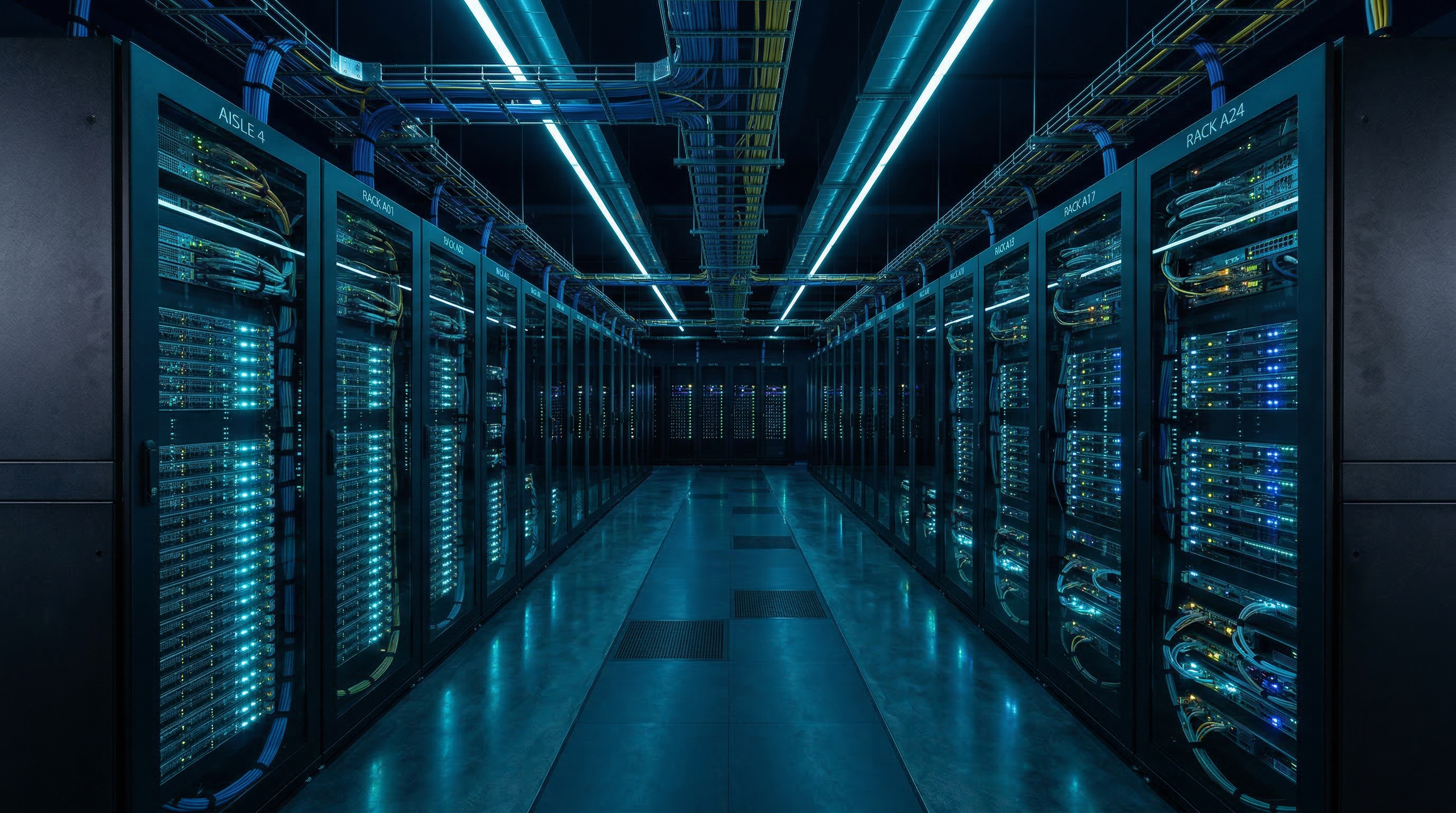
The world usually discusses artificial intelligence as a race for better models, faster chips and smarter products. But there is another contest unfolding behind the screen: who can supply the electricity, grid connections, cooling and capital required to run the machines? A chatbot response may appear almost weightless, yet it depends on physical servers in buildings that must operate reliably every hour. In October 2026, the energy side of AI has become a major economic and policy story, not merely an environmental footnote.
What changed in October 2026?
On 14 October 2026, the International Energy Agency (IEA) published Powering Artificial Intelligence, a report examining policies across 34 jurisdictions covering approximately 90% of global data-centre capacity. It found 134 relevant policies and regulations, with nearly 40% announced or implemented in the preceding twelve months. On the same date, Reuters reported that India was preparing a data-centre policy intended to manage the sector's electricity demands and protect consumers from higher costs. On 20 October, Axios reported a Goldman Sachs assessment highlighting electricity infrastructure as a significant constraint on AI investment. These developments together suggest a shift in the debate: from whether AI can improve to whether its supporting infrastructure can grow fast enough.
How much electricity do data centres use?
An IEA analysis released in April 2026 estimated that data centres used approximately 485 terawatt-hours (TWh) of electricity in 2025. Its central projection puts consumption at roughly 950 TWh by 2030, close to 3% of global electricity demand. AI-focused data-centre electricity use is projected to grow faster than the overall sector and approximately triple over that period. These are scenarios rather than guarantees. They depend on demand for AI services, hardware efficiency, financing, grid availability and construction timelines. Importantly, data centres also support ordinary cloud services, banking, streaming and websites; not all of their electricity is attributable to AI.
Why the grid cannot simply grow overnight
Building a model or ordering advanced processors can happen faster than constructing substations, transmission lines and new generating capacity. Electricity projects face engineering work, equipment lead times, land access, permitting, financing and public consultation. A proposed data centre may reserve substantial grid capacity years before it begins operating. If utilities build too much infrastructure for speculative projects, other customers may shoulder unnecessary costs. If they build too little, genuine investments are delayed. This planning dilemma is one of the most consequential issues identified by the IEA.
The hidden cost of cooling and water
Computer processors convert much of their electrical input into heat. Facilities therefore require cooling systems, which may use air, evaporative methods, liquid cooling or combinations of technologies. Water impacts vary dramatically by climate, cooling design, local water scarcity and the electricity supply. The IEA's October analysis says nearly 40% of identified AI-dedicated data-centre capacity is located in areas with high or extremely high baseline water stress. That does not mean every facility consumes the same amount of water. A responsible comparison should distinguish water withdrawn, water consumed on site and water used indirectly to generate electricity.
Will AI increase household electricity bills?
The answer depends on how electricity networks and contracts are designed. When a large new facility requires expensive grid upgrades and the costs are spread across all customers, household bills may rise. But if a facility pays for the capacity it reserves and makes better use of existing infrastructure, it may help distribute fixed grid costs across more electricity sales. Regulators can use minimum-payment commitments, long-term contracts and connection charges to reduce the risk that ordinary consumers subsidise speculative developments. There is no universal rule that every new data centre raises bills; the outcome depends on local policy and economics.
Why India matters in this debate
India is expanding its digital infrastructure while also facing major priorities in power access, industrial growth, renewable integration and affordability. The October 2026 Reuters report about a forthcoming data-centre policy illustrates the policy challenge: attracting investment and jobs without shifting avoidable electricity costs to households and smaller businesses. India could benefit from facilities that support domestic AI research, cloud services and digital sovereignty, but decisions about location, energy procurement and water resources matter. The strongest policy would make demand forecasts transparent, require fair grid-cost allocation and encourage efficient designs.
Could renewable energy solve the problem?
Wind and solar can reduce the emissions associated with data-centre electricity, especially when new clean generation is added to the grid. However, the timing of electricity production matters: solar output drops after sunset, while many computing workloads continue overnight. Storage, flexible demand, stronger transmission networks, geothermal energy and other firm low-carbon sources can all play roles. The IEA reports that data-centre operators signed about 45 TWh of power purchase agreements in the first half of 2026, nearly 20% more than a year earlier. A renewable-energy contract is not automatically proof that every hour of a facility's electricity consumption is carbon-free.
The emerging solution: flexible AI computing
Not every computing job must run at exactly the same moment. Some AI training, testing and batch processing tasks can potentially shift to hours when electricity is plentiful, while latency-sensitive services need more consistent availability. Flexible demand could reduce pressure during grid peaks. But it requires reliable scheduling software, customer agreements, pricing incentives and careful distinction between interruptible and essential workloads. Flexibility can help; it cannot replace the need for dependable infrastructure.
What this means for investors and workers
The AI boom reaches beyond software companies. Demand can benefit makers of transformers, cables, cooling equipment, power-management systems and grid infrastructure. It can also create work for electrical engineers, technicians, energy analysts, construction specialists and environmental planners. Yet infrastructure investment carries risks: high borrowing costs, changing model efficiency, overoptimistic demand forecasts and community opposition can undermine projected returns. Readers should not mistake a promising long-term trend for a guarantee about any company's shares.
Five questions policymakers should ask
Before approving a large project, authorities should ask: How much electricity will it need, and when? Who pays for new grid capacity if the project is delayed? What are its local water impacts? Can some workloads shift away from peak hours? And will emissions and electricity use be disclosed in a way that communities can understand? These questions do not oppose innovation. They make innovation more accountable to the public.
The bigger picture
Artificial intelligence may improve scientific discovery, accessibility, education and business productivity. It may also increase the demand for physical infrastructure at extraordinary speed. The choice is not between supporting AI and protecting the environment. The more useful challenge is designing an AI economy in which investment, efficient computation, clean power and fair consumer protections develop together. The next phase of the AI race will be fought not only in laboratories, but also in electricity networks, planning offices and communities.
Frequently asked questions
Does every AI question use the same amount of electricity?
No. Energy use depends on the model, hardware, response length, workload and data-centre efficiency. A single universal figure is misleading.
Is all data-centre electricity used for AI?
No. Data centres also power ordinary internet and cloud services.
Will AI electricity demand definitely double by 2030?
No. The IEA figure is a central projection, not a certainty.
Can clean energy eliminate the problem?
It can reduce emissions, but grid capacity, timing, equipment and water impacts still require attention.
Why should Indian students follow this story?
It connects technology with economics, climate, infrastructure, governance and public policy—subjects relevant to general awareness and competitive examinations.
Explore the original research
For deeper reading, consult the IEA reports and independent reporting below. Figures and forecasts may change as new evidence emerges.
Read the IEA October 2026 Report ↗
Explore IEA Energy and AI Data ↗
Sources and editorial note
This article is an original explanatory synthesis, not a reproduction of source reporting. Data-centre projections are estimates and should not be treated as guaranteed outcomes. Featured image is illustrative, not a photograph of a named facility.
- IEA: Powering Artificial Intelligence (14 October 2026)
- IEA: Key Questions on Energy and AI (16 April 2026)
- Reuters: India data-centre policy (14 October 2026)
- Our World in Data: Data centre electricity (20 July 2026)
- Axios: The AI race is hitting an energy wall (20 October 2026)
 History Geography General Science Economy
 Oxford Student Atlas India Competitive