What Happened
1. Why in News?
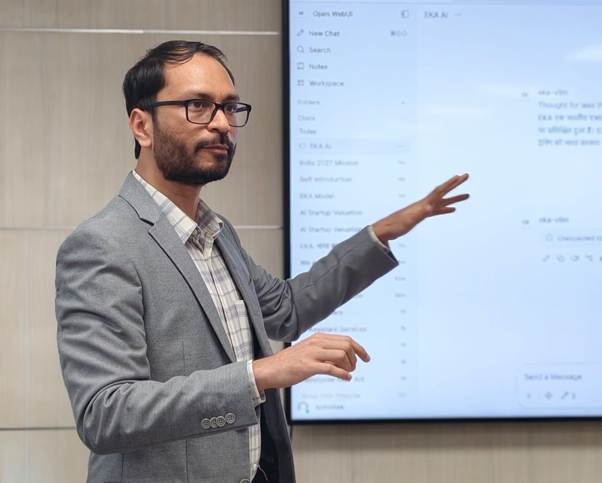
On 3 November 2026, the IndiaAI Mission under the Ministry of Electronics and Information Technology announced the release of three indigenous artificial intelligence foundation models: EKA-1, Dhīr 2B and Dhīr 5B. The models were developed by Indian technology companies with support from the IndiaAI Mission.
2. Date and Place
The models were unveiled at a press event in New Delhi on 3 November 2026. The official announcement was published by the Press Information Bureau on the same day.
3. Responsible Ministry
The initiative comes under the Ministry of Electronics and Information Technology, commonly abbreviated as MeitY. This ministry is responsible for major national programmes involving digital technology, electronics and information technology.
4. IndiaAI Mission
The IndiaAI Mission is a Government of India initiative designed to strengthen the country's artificial intelligence ecosystem. Its objectives include developing domestic capabilities, supporting innovation and making AI technologies more accessible.
5. Cabinet Approval
The Union Cabinet approved the IndiaAI Mission on 7 March 2024. The mission follows the vision of Making AI in India and Making AI Work for India.
6. IndiaAI Innovation Centre
The newly released models were developed under the IndiaAI Innovation Centre pillar, particularly its foundation-model development component. This pillar supports the development of Indian AI models and related research capabilities.
7. Three Models Released
The announcement covered EKA-1 by Soket Labs and Dhīr 2B and Dhīr 5B by ZenteiQ AiTech Innovations. Although the models were released together, they were designed for different computational environments and applications.
8. What Is a Foundation Model?
A foundation model is an AI model trained on substantial amounts of data that can be adapted to perform different tasks. Language foundation models may support question answering, text generation, summarisation, reasoning and other language-based activities.
9. What Is a Large Language Model?
A large language model is a computational system trained to recognise and generate patterns in language. Such models can process natural-language instructions and produce text-based responses, although their outputs may contain errors.
10. EKA-1 Developer
EKA-1 was developed by Soket Labs Technology and Research Private Limited, an Indian company selected under the IndiaAI Mission's foundation-model initiative.
11. EKA-1 Parameters
EKA-1 contains 26.3 billion parameters. Parameters are numerical values adjusted during model training that help determine how the model processes information and generates outputs.
12. EKA-1 Training Data
According to the official announcement, EKA-1 was trained on approximately 7.5 trillion tokens. Tokens are units into which text or other information is divided for processing by AI models.
13. Language Coverage
EKA-1 supports all 22 scheduled Indian languages and English. This is especially relevant to India's multilingual population and the development of AI services in Indian languages.
14. Scheduled Languages
The 22 scheduled languages are listed in the Eighth Schedule of the Constitution of India. These include Hindi, Bengali, Tamil, Telugu, Kannada, Malayalam, Marathi, Gujarati, Punjabi, Assamese, Odia, Urdu, Sanskrit and other scheduled languages.
15. EKA-1 Architecture
The official announcement describes EKA-1 as an open, sparse hybrid language model. Sparse architectures are designed so that only selected parts of a model may be activated for particular computational tasks, depending on the architecture.
16. EKA-1 Capabilities
EKA-1 is designed for mathematical tasks, programming, reasoning and agentic applications. Agentic applications involve AI systems that can plan or coordinate steps towards completing specified tasks.
17. Sector-Specific Applications
Soket Labs highlighted banking, financial services and cybersecurity as important application areas for EKA-1. These sectors require attention to reliability, privacy, security and specialised terminology.
18. Soket Labs Leadership
Abhishek Upperwal, Chief Executive Officer of Soket Labs, explained the company's objective of developing AI capabilities suited to India's financial and cybersecurity requirements.
19. Dhīr Models
The second development was the release of Dhīr 2B and Dhīr 5B by ZenteiQ AiTech Innovations. These are open-source multilingual models designed for practical deployment across different computing environments.
20. Dhīr 2B
Dhīr 2B is a relatively lightweight language model. The 2B designation indicates a model in the approximately two-billion-parameter class.
21. Dhīr 5B
Dhīr 5B is a larger model in the approximately five-billion-parameter class. The availability of different model sizes allows developers to consider trade-offs between computational requirements and task performance.
22. Languages Supported by Dhīr
The official announcement states that Dhīr supports English and 10 Indian languages. This enables multilingual applications without relying exclusively on English-language interfaces.
23. Open-Source Models
ZenteiQ introduced Dhīr 2B and Dhīr 5B as open-source models. Open-source availability can support examination, adaptation and further development, subject to the applicable model licences and distribution conditions.
24. On-Premise Deployment
The Dhīr models are designed for on-premise deployment. This means organisations can operate AI systems on infrastructure under their own control rather than necessarily sending information to an external cloud service.
25. Offline-Capable AI
The models support offline-capable deployment. This can be useful where internet connectivity is unreliable, restricted or unavailable.
26. Mobile and Edge Devices
ZenteiQ stated that the lightweight architecture can enable deployment on mobile phones and other local computing systems. Actual performance depends on the device's memory, processing power and software configuration.
27. Privacy and Security
Local processing can help organisations retain greater control over sensitive information. However, secure deployment still requires appropriate access controls, software maintenance and data protection practices.
28. Document-Grounded Automation
The Dhīr models are intended to support document-grounded automation. Such systems use relevant documents as a source of context when answering questions or completing tasks, helping users work with organisational knowledge.
29. Knowledge Retrieval
Knowledge retrieval refers to finding relevant information from stored documents or other information sources. AI-assisted retrieval can help users locate and interpret material more efficiently.
30. Defence Applications
The official announcement identifies defence as a potential application sector for Dhīr. In sensitive environments, locally controlled computing infrastructure may be important for operational and information-security requirements.
31. Government Applications
Government departments may use appropriately tested multilingual AI systems to support information access, document processing and citizen services. Such applications require accuracy, accountability and protection of personal data.
32. Industrial Applications
Industrial organisations may explore AI tools for technical documentation, operational knowledge and internal information systems. The suitability of a model depends on its performance in the specific task.
33. Educational Applications
Educational institutions may use multilingual AI systems for learning assistance, document search and educational administration. AI-generated explanations should be checked against reliable educational sources.
34. Computing Hardware
ZenteiQ stated that the Dhīr models can operate across different computing platforms, including graphics processing units and tensor processing units. These processors are commonly used for AI workloads.
35. IndiaAI Compute Support
The developers received access to subsidised national AI computing infrastructure under the IndiaAI Mission. This support helps reduce some of the infrastructure barriers associated with AI model development.
36. Research Expense Support
The mission also supported eligible ancillary research expenses. Financial and infrastructure assistance can help selected research teams develop and test indigenous AI systems.
37. AIKosh Platform
AIKosh is the IndiaAI Datasets Platform. The official announcement identified it as a channel through which AI resources can be made accessible to researchers, students, innovators and the wider public.
38. Secretary of MeitY
S. Krishnan, Secretary of the Ministry of Electronics and Information Technology, attended the launch. He highlighted the contribution of indigenous models to technological and strategic autonomy.
39. IndiaAI Chief Operating Officer
Sudeep Shrivastava, Chief Operating Officer of IndiaAI, discussed the value of developing AI systems ranging from lightweight models for everyday devices to more capable systems for complex applications.
40. ZenteiQ Leadership
Professor Sashikumar, Chief Executive Officer of ZenteiQ AiTech Innovations, highlighted the models' ability to operate across computing platforms and support local deployment.
41. Seven Pillars of IndiaAI Mission
The seven pillars are IndiaAI Compute Capacity, IndiaAI Innovation Centre, IndiaAI Datasets Platform, IndiaAI Application Development Initiative, IndiaAI FutureSkills, IndiaAI Startup Financing, and Safe & Trusted AI.
42. Digital Inclusion
AI systems supporting Indian languages may improve accessibility for people who prefer to interact with technology in their mother tongue. However, language coverage alone does not guarantee equal accuracy or quality across all languages.
43. Technological Self-Reliance
Domestic development of AI models can strengthen India's capacity to research, customise and deploy advanced technology according to national requirements. It can also encourage Indian research and startup ecosystems.
44. Important Clarification
The announcement confirms the release of the models and describes their design objectives. It does not establish that EKA-1 or Dhīr outperforms every international AI model. Such comparisons require independent benchmarks and consistent evaluation methods.
45. Overall Significance
The release of EKA-1, Dhīr 2B and Dhīr 5B represents an important step in India's indigenous artificial intelligence development. It combines multilingual capabilities, domestic research, public computing support and deployment options for different sectors.
क्या हुआ?
1. चर्चा में क्यों?
3 नवंबर 2026 को इलेक्ट्रॉनिकी और सूचना प्रौद्योगिकी मंत्रालय के अंतर्गत इंडिया एआई मिशन ने तीन स्वदेशी कृत्रिम बुद्धिमत्ता आधारभूत मॉडल जारी करने की घोषणा की। इन मॉडलों के नाम EKA-1, Dhīr 2B और Dhīr 5B हैं। इन्हें भारतीय प्रौद्योगिकी कंपनियों ने इंडिया एआई मिशन के सहयोग से विकसित किया है।
2. तिथि और स्थान
इन मॉडलों का अनावरण 3 नवंबर 2026 को नई दिल्ली में आयोजित एक पत्रकार सम्मेलन में किया गया। प्रेस सूचना ब्यूरो ने उसी दिन आधिकारिक घोषणा प्रकाशित की।
3. संबंधित मंत्रालय
यह पहल भारत सरकार के इलेक्ट्रॉनिकी और सूचना प्रौद्योगिकी मंत्रालय के अंतर्गत आती है। यह मंत्रालय डिजिटल प्रौद्योगिकी, इलेक्ट्रॉनिकी और सूचना प्रौद्योगिकी से संबंधित प्रमुख राष्ट्रीय कार्यक्रमों के लिए उत्तरदायी है।
4. इंडिया एआई मिशन
इंडिया एआई मिशन भारत में कृत्रिम बुद्धिमत्ता के पारिस्थितिकी तंत्र को मजबूत करने की सरकारी पहल है। इसके उद्देश्यों में स्वदेशी क्षमताओं का विकास, नवाचार को समर्थन और कृत्रिम बुद्धिमत्ता प्रौद्योगिकियों की उपलब्धता बढ़ाना शामिल है।
5. मंत्रिमंडल की स्वीकृति
केंद्रीय मंत्रिमंडल ने 7 मार्च 2024 को इंडिया एआई मिशन को स्वीकृति दी थी। यह मिशन भारत में कृत्रिम बुद्धिमत्ता का निर्माण करने और उसे भारत के लिए उपयोगी बनाने की परिकल्पना पर आधारित है।
6. इंडिया एआई नवाचार केंद्र
नए मॉडल इंडिया एआई नवाचार केंद्र के अंतर्गत विकसित किए गए हैं। इस घटक का एक महत्वपूर्ण उद्देश्य भारत में आधारभूत कृत्रिम बुद्धिमत्ता मॉडल और संबंधित अनुसंधान क्षमताएं विकसित करना है।
7. जारी किए गए तीन मॉडल
घोषणा में सोकेट लैब्स द्वारा विकसित EKA-1 तथा जेनटेईक्यू एआईटेक इनोवेशंस द्वारा विकसित Dhīr 2B और Dhīr 5B शामिल हैं। ये मॉडल एक साथ जारी किए गए, लेकिन इनके उपयोग और संगणकीय आवश्यकताएं अलग-अलग हैं।
8. आधारभूत मॉडल क्या है?
आधारभूत मॉडल कृत्रिम बुद्धिमत्ता की ऐसी प्रणाली है जिसे बड़ी मात्रा में आंकड़ों पर प्रशिक्षित किया जाता है और बाद में विभिन्न कार्यों के लिए अनुकूलित किया जा सकता है। भाषा आधारित मॉडल प्रश्नों के उत्तर देने, लेखन, सारांश तैयार करने और तर्क संबंधी कार्यों में सहायता कर सकते हैं।
9. विशाल भाषा मॉडल क्या है?
विशाल भाषा मॉडल ऐसी संगणकीय प्रणाली है जिसे भाषा के प्रतिरूप पहचानने और भाषा उत्पन्न करने के लिए प्रशिक्षित किया जाता है। यह प्राकृतिक भाषा में दिए गए निर्देशों को समझकर पाठ आधारित उत्तर तैयार कर सकता है, हालांकि इसके उत्तरों में त्रुटियां संभव हैं।
10. EKA-1 का विकासकर्ता
EKA-1 को सोकेट लैब्स टेक्नोलॉजी एंड रिसर्च प्राइवेट लिमिटेड ने विकसित किया है। यह इंडिया एआई मिशन की आधारभूत मॉडल विकास पहल के अंतर्गत चयनित भारतीय कंपनी है।
11. EKA-1 के पैरामीटर
EKA-1 में 26.3 अरब पैरामीटर हैं। पैरामीटर वे संख्यात्मक मान होते हैं जो प्रशिक्षण के दौरान समायोजित किए जाते हैं और मॉडल द्वारा जानकारी संसाधित करने तथा उत्तर तैयार करने के तरीके को प्रभावित करते हैं।
12. प्रशिक्षण संबंधी आंकड़े
आधिकारिक घोषणा के अनुसार EKA-1 को लगभग 7.5 लाख करोड़ टोकन पर प्रशिक्षित किया गया। टोकन पाठ या अन्य जानकारी की वे इकाइयां हैं जिनमें सामग्री को कृत्रिम बुद्धिमत्ता मॉडल द्वारा संसाधित करने के लिए विभाजित किया जाता है।
13. भाषाई क्षमता
EKA-1 भारत की सभी 22 अनुसूचित भाषाओं और अंग्रेजी का समर्थन करता है। भारत की बहुभाषी आबादी और भारतीय भाषाओं में डिजिटल सेवाओं के विकास के लिए यह विशेष रूप से महत्वपूर्ण है।
14. अनुसूचित भाषाएं
भारत की 22 अनुसूचित भाषाएं संविधान की आठवीं अनुसूची में सूचीबद्ध हैं। इनमें हिंदी, बंगाली, तमिल, तेलुगु, कन्नड़, मलयालम, मराठी, गुजराती, पंजाबी, असमिया, ओड़िया, उर्दू, संस्कृत तथा अन्य अनुसूचित भाषाएं शामिल हैं।
15. EKA-1 की संरचना
आधिकारिक घोषणा में EKA-1 को एक मुक्त और विरल संकर भाषा मॉडल बताया गया है। विरल संरचनाओं में डिजाइन के अनुसार किसी कार्य के लिए मॉडल के केवल चयनित भाग सक्रिय किए जा सकते हैं।
16. EKA-1 की क्षमताएं
EKA-1 को गणित, कंप्यूटर प्रोग्रामिंग, तार्किक विश्लेषण और स्वायत्त कार्य-संचालन संबंधी अनुप्रयोगों के लिए तैयार किया गया है। ऐसे अनुप्रयोगों में कृत्रिम बुद्धिमत्ता किसी निर्धारित उद्देश्य को पूरा करने के लिए विभिन्न चरणों की योजना बना सकती है।
17. विशेष क्षेत्रों में उपयोग
सोकेट लैब्स ने बैंकिंग, वित्तीय सेवाओं और साइबर सुरक्षा को EKA-1 के महत्वपूर्ण उपयोग क्षेत्रों के रूप में बताया। इन क्षेत्रों में विश्वसनीयता, गोपनीयता, सुरक्षा और विशेष तकनीकी शब्दावली पर ध्यान देना आवश्यक है।
18. सोकेट लैब्स का नेतृत्व
सोकेट लैब्स के मुख्य कार्यकारी अधिकारी अभिषेक अपरवाल ने भारत की वित्तीय सेवाओं और साइबर सुरक्षा संबंधी आवश्यकताओं के अनुरूप कृत्रिम बुद्धिमत्ता विकसित करने के उद्देश्य की जानकारी दी।
19. धीर मॉडल
दूसरी प्रमुख उपलब्धि जेनटेईक्यू एआईटेक इनोवेशंस द्वारा Dhīr 2B और Dhīr 5B मॉडलों का जारी किया जाना है। ये मुक्त स्रोत वाले बहुभाषी मॉडल हैं जिन्हें विभिन्न संगणकीय वातावरणों में उपयोग के लिए विकसित किया गया है।
20. Dhīr 2B
Dhīr 2B अपेक्षाकृत हल्का भाषा मॉडल है। इसके नाम में 2B लगभग दो अरब पैरामीटर वाले मॉडल वर्ग को दर्शाता है।
21. Dhīr 5B
Dhīr 5B लगभग पांच अरब पैरामीटर वाले बड़े मॉडल वर्ग से संबंधित है। अलग-अलग आकार के मॉडल उपलब्ध होने से विकासकर्ता संगणकीय आवश्यकताओं और कार्य निष्पादन के बीच उपयुक्त संतुलन चुन सकते हैं।
22. धीर की भाषाएं
आधिकारिक घोषणा के अनुसार धीर मॉडल अंग्रेजी और 10 भारतीय भाषाओं का समर्थन करते हैं। इससे केवल अंग्रेजी पर निर्भर हुए बिना बहुभाषी अनुप्रयोग विकसित किए जा सकते हैं।
23. मुक्त स्रोत मॉडल
जेनटेईक्यू ने Dhīr 2B और Dhīr 5B को मुक्त स्रोत मॉडल के रूप में प्रस्तुत किया है। इससे लागू लाइसेंस और वितरण शर्तों के अधीन इनका अध्ययन, अनुकूलन तथा आगे विकास किया जा सकता है।
24. स्थानीय संस्थागत संचालन
धीर मॉडल संस्थाओं के अपने कंप्यूटर ढांचे पर चलाए जा सकते हैं। इसका अर्थ है कि प्रत्येक कार्य के लिए जानकारी किसी बाहरी क्लाउड सेवा को भेजना आवश्यक नहीं होगा।
25. इंटरनेट के बिना संचालन
धीर मॉडल ऐसे वातावरण में भी उपयोग किए जा सकते हैं जहां इंटरनेट उपलब्ध नहीं है या सीमित है। यह सुविधा दूरस्थ क्षेत्रों और संवेदनशील संस्थानों के लिए महत्वपूर्ण हो सकती है।
26. मोबाइल और स्थानीय उपकरण
जेनटेईक्यू के अनुसार इन मॉडलों की हल्की संरचना मोबाइल फोन और अन्य स्थानीय उपकरणों पर संचालन की संभावना प्रदान करती है। वास्तविक प्रदर्शन उपकरण की स्मृति, प्रसंस्करण क्षमता और सॉफ्टवेयर व्यवस्था पर निर्भर करेगा।
27. गोपनीयता और सुरक्षा
स्थानीय स्तर पर जानकारी संसाधित करने से संस्थाओं को संवेदनशील आंकड़ों पर अधिक नियंत्रण मिल सकता है। हालांकि सुरक्षित संचालन के लिए उचित पहुंच नियंत्रण, सॉफ्टवेयर रखरखाव और आंकड़ा सुरक्षा उपाय आवश्यक हैं।
28. दस्तावेज आधारित स्वचालन
धीर मॉडल दस्तावेज आधारित स्वचालन में सहायता कर सकते हैं। ऐसी प्रणालियां प्रश्नों के उत्तर देने या कार्य पूरा करने के दौरान संबंधित दस्तावेजों को संदर्भ के रूप में उपयोग करती हैं।
29. ज्ञान की खोज
ज्ञान की खोज का अर्थ संग्रहित दस्तावेजों या अन्य स्रोतों से प्रासंगिक जानकारी प्राप्त करना है। कृत्रिम बुद्धिमत्ता आधारित प्रणालियां उपयोगकर्ताओं को जानकारी खोजने और समझने में सहायता कर सकती हैं।
30. रक्षा क्षेत्र में उपयोग
आधिकारिक घोषणा में रक्षा क्षेत्र को धीर मॉडल के संभावित उपयोग क्षेत्रों में शामिल किया गया है। संवेदनशील वातावरण में स्थानीय नियंत्रण वाला संगणकीय ढांचा सूचना सुरक्षा के लिए महत्वपूर्ण हो सकता है।
31. सरकारी सेवाओं में उपयोग
सरकारी विभाग उपयुक्त परीक्षण के बाद बहुभाषी कृत्रिम बुद्धिमत्ता प्रणालियों का उपयोग जानकारी उपलब्ध कराने, दस्तावेजों के प्रसंस्करण और नागरिक सेवाओं में कर सकते हैं। ऐसे उपयोगों में सटीकता, जवाबदेही और व्यक्तिगत जानकारी की सुरक्षा आवश्यक है।
32. औद्योगिक उपयोग
उद्योग तकनीकी दस्तावेजों, परिचालन संबंधी ज्ञान और आंतरिक सूचना प्रणालियों के लिए कृत्रिम बुद्धिमत्ता उपकरणों का उपयोग कर सकते हैं। किसी मॉडल की उपयोगिता उसके विशेष कार्य में वास्तविक प्रदर्शन पर निर्भर करती है।
33. शिक्षा में उपयोग
शैक्षणिक संस्थान बहुभाषी कृत्रिम बुद्धिमत्ता का उपयोग अध्ययन सहायता, दस्तावेज खोज और प्रशासनिक कार्यों में कर सकते हैं। इसके द्वारा तैयार व्याख्याओं का विश्वसनीय शैक्षणिक स्रोतों से सत्यापन करना चाहिए।
34. संगणकीय उपकरण
जेनटेईक्यू के अनुसार धीर मॉडल ग्राफिक्स प्रोसेसिंग यूनिट और टेंसर प्रोसेसिंग यूनिट सहित विभिन्न संगणकीय प्रणालियों पर चल सकते हैं। इन प्रोसेसरों का उपयोग कृत्रिम बुद्धिमत्ता संबंधी गणनाओं में किया जाता है।
35. इंडिया एआई की कंप्यूटिंग सहायता
विकासकर्ताओं को इंडिया एआई मिशन के अंतर्गत रियायती राष्ट्रीय कृत्रिम बुद्धिमत्ता कंप्यूटिंग अवसंरचना तक पहुंच प्रदान की गई। इससे मॉडल विकास से संबंधित कुछ बुनियादी लागत संबंधी बाधाएं कम हो सकती हैं।
36. अनुसंधान व्यय में सहायता
मिशन ने संबंधित अनुसंधान व्ययों के लिए भी सहायता प्रदान की। वित्तीय और अवसंरचनात्मक सहयोग चयनित दलों को स्वदेशी कृत्रिम बुद्धिमत्ता प्रणालियां विकसित करने तथा जांचने में मदद करता है।
37. एआईकोष मंच
एआईकोष इंडिया एआई मिशन का आंकड़ा मंच है। आधिकारिक घोषणा में इसे ऐसे माध्यम के रूप में बताया गया है जिसके जरिए कृत्रिम बुद्धिमत्ता संसाधन शोधकर्ताओं, विद्यार्थियों, नवाचारकर्ताओं और आम जनता को उपलब्ध कराए जा सकते हैं।
38. मंत्रालय के सचिव
इलेक्ट्रॉनिकी और सूचना प्रौद्योगिकी मंत्रालय के सचिव एस. कृष्णन ने कार्यक्रम में भाग लिया। उन्होंने स्वदेशी मॉडलों के विकास को तकनीकी और रणनीतिक आत्मनिर्भरता के लिए महत्वपूर्ण बताया।
39. इंडिया एआई के मुख्य परिचालन अधिकारी
इंडिया एआई के मुख्य परिचालन अधिकारी सुदीप श्रीवास्तव ने सामान्य उपकरणों के लिए हल्के मॉडलों से लेकर जटिल अनुप्रयोगों के लिए अधिक सक्षम प्रणालियों तक स्वदेशी विकास के महत्व पर चर्चा की।
40. जेनटेईक्यू का नेतृत्व
जेनटेईक्यू एआईटेक इनोवेशंस के मुख्य कार्यकारी अधिकारी प्रोफेसर शशिकुमार ने विभिन्न संगणकीय मंचों पर मॉडलों के संचालन और स्थानीय उपयोग की संभावनाओं को रेखांकित किया।
41. इंडिया एआई मिशन के सात स्तंभ
मिशन के सात स्तंभ हैं: इंडिया एआई कंप्यूट क्षमता, इंडिया एआई नवाचार केंद्र, इंडिया एआई आंकड़ा मंच, इंडिया एआई अनुप्रयोग विकास पहल, इंडिया एआई भविष्य कौशल, इंडिया एआई स्टार्टअप वित्तपोषण और सुरक्षित एवं विश्वसनीय कृत्रिम बुद्धिमत्ता।
42. डिजिटल समावेशन
भारतीय भाषाओं का समर्थन करने वाली कृत्रिम बुद्धिमत्ता प्रणालियां मातृभाषा में तकनीक का उपयोग करने वाले लोगों के लिए पहुंच बढ़ा सकती हैं। हालांकि किसी भाषा का समर्थन उपलब्ध होने का अर्थ यह नहीं कि सभी भाषाओं में मॉडल की सटीकता समान होगी।
43. तकनीकी आत्मनिर्भरता
स्वदेशी कृत्रिम बुद्धिमत्ता मॉडल विकसित करने से भारत अपनी राष्ट्रीय आवश्यकताओं के अनुसार उन्नत प्रौद्योगिकी पर अनुसंधान, अनुकूलन और उपयोग करने की क्षमता मजबूत कर सकता है। इससे भारतीय शोध और स्टार्टअप पारिस्थितिकी तंत्र को भी प्रोत्साहन मिल सकता है।
44. महत्वपूर्ण स्पष्टीकरण
आधिकारिक घोषणा मॉडलों के जारी होने और उनके उद्देश्यों की पुष्टि करती है। इससे यह सिद्ध नहीं होता कि EKA-1 या धीर दुनिया के सभी अंतरराष्ट्रीय मॉडलों से बेहतर हैं। ऐसी तुलना के लिए स्वतंत्र परीक्षण और समान मूल्यांकन पद्धति आवश्यक है।
45. समग्र महत्व
EKA-1, Dhīr 2B और Dhīr 5B का जारी होना भारत में स्वदेशी कृत्रिम बुद्धिमत्ता विकास की महत्वपूर्ण उपलब्धि है। यह बहुभाषी क्षमता, घरेलू अनुसंधान, सार्वजनिक कंप्यूटिंग सहायता और विभिन्न क्षेत्रों में उपयोग की संभावनाओं को एक साथ जोड़ता है।
Key Facts
• The IndiaAI Mission released the indigenous EKA-1 and Dhīr models on 3 November 2026.
• The release took place in New Delhi.
• The responsible ministry was the Ministry of Electronics and Information Technology.
• MeitY stands for Ministry of Electronics and Information Technology.
• The Union Cabinet approved the IndiaAI Mission on 7 March 2024.
• The mission follows the vision Making AI in India and Making AI Work for India.
• The models were developed under the IndiaAI Innovation Centre pillar.
• EKA-1 was developed by Soket Labs Technology and Research Private Limited.
• EKA-1 contains 26.3 billion parameters.
• EKA-1 was trained on approximately 7.5 trillion tokens.
• EKA-1 supports all 22 scheduled Indian languages and English.
• The scheduled Indian languages are listed in the Eighth Schedule of the Constitution.
• EKA-1 is described as an open, sparse hybrid language model.
• EKA-1 is designed for mathematics, coding, reasoning and agentic applications.
• Banking, financial services and cybersecurity are important intended applications of EKA-1.
• Abhishek Upperwal is the Chief Executive Officer of Soket Labs.
• Dhīr 2B and Dhīr 5B were developed by ZenteiQ AiTech Innovations.
• Dhīr 2B belongs to the approximately two-billion-parameter model class.
• Dhīr 5B belongs to the approximately five-billion-parameter model class.
• The Dhīr models support English and 10 Indian languages.
• Dhīr 2B and Dhīr 5B were introduced as open-source models.
• Dhīr supports on-premise deployment.
• Dhīr supports offline-capable deployment.
• Dhīr can support document-grounded automation.
• Dhīr can support knowledge retrieval.
• Dhīr is intended for applications in defence and government.
• Dhīr is also intended for industrial and educational applications.
• The Dhīr architecture is designed to support deployment on local devices.
• The developers identified GPUs and TPUs as supported computing platforms.
• GPU stands for Graphics Processing Unit.
• TPU stands for Tensor Processing Unit.
• The IndiaAI Mission provided subsidised AI compute infrastructure to selected developers.
• The mission also supported ancillary research expenses.
• AIKosh is the IndiaAI Datasets Platform.
• S. Krishnan attended the launch as Secretary of MeitY.
• Sudeep Shrivastava was identified as Chief Operating Officer of IndiaAI.
• Professor Sashikumar was identified as Chief Executive Officer of ZenteiQ.
• The IndiaAI Mission has seven principal pillars.
• IndiaAI Compute Capacity is one of the seven pillars.
• IndiaAI Innovation Centre is one of the seven pillars.
• IndiaAI Datasets Platform is one of the seven pillars.
• IndiaAI Application Development Initiative is one of the seven pillars.
• IndiaAI FutureSkills is one of the seven pillars.
• IndiaAI Startup Financing is one of the seven pillars.
• Safe & Trusted AI is one of the seven pillars.
• The official PIB release number is 2332315.
मुख्य तथ्य
• इंडिया एआई मिशन ने 3 नवंबर 2026 को स्वदेशी EKA-1 और धीर मॉडल जारी किए।
• मॉडलों का अनावरण नई दिल्ली में हुआ।
• संबंधित मंत्रालय इलेक्ट्रॉनिकी और सूचना प्रौद्योगिकी मंत्रालय था।
• MeitY का पूरा नाम Ministry of Electronics and Information Technology है।
• केंद्रीय मंत्रिमंडल ने 7 मार्च 2024 को इंडिया एआई मिशन को स्वीकृति दी।
• मिशन भारत में कृत्रिम बुद्धिमत्ता विकसित करने और उसे भारत के लिए उपयोगी बनाने की परिकल्पना पर आधारित है।
• मॉडल इंडिया एआई नवाचार केंद्र के अंतर्गत विकसित किए गए।
• EKA-1 को सोकेट लैब्स टेक्नोलॉजी एंड रिसर्च प्राइवेट लिमिटेड ने विकसित किया।
• EKA-1 में 26.3 अरब पैरामीटर हैं।
• EKA-1 को लगभग 7.5 लाख करोड़ टोकन पर प्रशिक्षित किया गया।
• EKA-1 सभी 22 अनुसूचित भारतीय भाषाओं और अंग्रेजी का समर्थन करता है।
• अनुसूचित भारतीय भाषाएं संविधान की आठवीं अनुसूची में सूचीबद्ध हैं।
• EKA-1 को मुक्त और विरल संकर भाषा मॉडल बताया गया है।
• EKA-1 गणित, प्रोग्रामिंग, तर्क और स्वायत्त कार्य-संचालन के लिए बनाया गया है।
• बैंकिंग, वित्तीय सेवाएं और साइबर सुरक्षा EKA-1 के महत्वपूर्ण संभावित उपयोग क्षेत्र हैं।
• अभिषेक अपरवाल सोकेट लैब्स के मुख्य कार्यकारी अधिकारी हैं।
• Dhīr 2B और Dhīr 5B को जेनटेईक्यू एआईटेक इनोवेशंस ने विकसित किया।
• Dhīr 2B लगभग दो अरब पैरामीटर वाले मॉडल वर्ग में आता है।
• Dhīr 5B लगभग पांच अरब पैरामीटर वाले मॉडल वर्ग में आता है।
• धीर मॉडल अंग्रेजी और 10 भारतीय भाषाओं का समर्थन करते हैं।
• Dhīr 2B और Dhīr 5B को मुक्त स्रोत मॉडल के रूप में प्रस्तुत किया गया।
• धीर मॉडल संस्थाओं के अपने कंप्यूटर ढांचे पर चलाए जा सकते हैं।
• धीर मॉडल इंटरनेट के बिना संचालन का समर्थन करते हैं।
• धीर मॉडल दस्तावेज आधारित स्वचालन में सहायता कर सकते हैं।
• धीर मॉडल ज्ञान की खोज में सहायता कर सकते हैं।
• धीर रक्षा और सरकारी क्षेत्रों के उपयोग के लिए विकसित किया गया है।
• धीर औद्योगिक और शैक्षणिक क्षेत्रों के उपयोग के लिए भी विकसित किया गया है।
• धीर की संरचना स्थानीय उपकरणों पर संचालन का समर्थन करती है।
• विकासकर्ताओं ने GPU और TPU को समर्थित संगणकीय मंच बताया।
• GPU का पूरा नाम Graphics Processing Unit है।
• TPU का पूरा नाम Tensor Processing Unit है।
• इंडिया एआई मिशन ने चयनित विकासकर्ताओं को रियायती कंप्यूटिंग अवसंरचना उपलब्ध कराई।
• मिशन ने संबंधित अनुसंधान व्ययों में भी सहायता दी।
• एआईकोष इंडिया एआई का आंकड़ा मंच है।
• एस. कृष्णन ने मंत्रालय के सचिव के रूप में कार्यक्रम में भाग लिया।
• सुदीप श्रीवास्तव इंडिया एआई के मुख्य परिचालन अधिकारी के रूप में उपस्थित थे।
• प्रोफेसर शशिकुमार जेनटेईक्यू के मुख्य कार्यकारी अधिकारी हैं।
• इंडिया एआई मिशन के सात प्रमुख स्तंभ हैं।
• इंडिया एआई कंप्यूट क्षमता सात स्तंभों में से एक है।
• इंडिया एआई नवाचार केंद्र सात स्तंभों में से एक है।
• इंडिया एआई आंकड़ा मंच सात स्तंभों में से एक है।
• इंडिया एआई अनुप्रयोग विकास पहल सात स्तंभों में से एक है।
• इंडिया एआई भविष्य कौशल सात स्तंभों में से एक है।
• इंडिया एआई स्टार्टअप वित्तपोषण सात स्तंभों में से एक है।
• सुरक्षित एवं विश्वसनीय कृत्रिम बुद्धिमत्ता सात स्तंभों में से एक है।
• आधिकारिक PIB विज्ञप्ति संख्या 2332315 है।
Background
Artificial intelligence has become increasingly important for public services, education, industry, research and digital innovation. Developing large AI models requires substantial computing infrastructure, training data, technical expertise and financial resources. India approved the IndiaAI Mission on 7 March 2024 to strengthen domestic AI capabilities and make advanced technologies more widely accessible. The mission operates through seven pillars covering computing infrastructure, foundation-model innovation, datasets, applications, skills, startup financing and trustworthy AI. Under the IndiaAI Innovation Centre pillar, Soket Labs and ZenteiQ were selected to develop indigenous models. On 3 November 2026, the Ministry of Electronics and Information Technology announced EKA-1, a 26.3-billion-parameter multilingual model trained on approximately 7.5 trillion tokens, alongside the open-source Dhīr 2B and Dhīr 5B models. The developments reflect different approaches to AI deployment, from larger foundation models to lightweight systems capable of operating locally.
पृष्ठभूमि
कृत्रिम बुद्धिमत्ता सार्वजनिक सेवाओं, शिक्षा, उद्योग, अनुसंधान और डिजिटल नवाचार के लिए तेजी से महत्वपूर्ण हो रही है। बड़े कृत्रिम बुद्धिमत्ता मॉडल विकसित करने के लिए व्यापक कंप्यूटिंग अवसंरचना, प्रशिक्षण आंकड़े, तकनीकी विशेषज्ञता और वित्तीय संसाधनों की आवश्यकता होती है। भारत ने स्वदेशी क्षमताओं को मजबूत करने और उन्नत प्रौद्योगिकियों की उपलब्धता बढ़ाने के लिए 7 मार्च 2024 को इंडिया एआई मिशन को स्वीकृति दी। यह मिशन कंप्यूटिंग अवसंरचना, आधारभूत मॉडल नवाचार, आंकड़ा मंच, अनुप्रयोग, कौशल, स्टार्टअप वित्तपोषण और विश्वसनीय कृत्रिम बुद्धिमत्ता से संबंधित सात स्तंभों के माध्यम से संचालित होता है। इंडिया एआई नवाचार केंद्र के अंतर्गत सोकेट लैब्स और जेनटेईक्यू को स्वदेशी मॉडल विकसित करने के लिए चुना गया। 3 नवंबर 2026 को इलेक्ट्रॉनिकी और सूचना प्रौद्योगिकी मंत्रालय ने लगभग 7.5 लाख करोड़ टोकन पर प्रशिक्षित 26.3 अरब पैरामीटर वाले बहुभाषी EKA-1 मॉडल के साथ मुक्त स्रोत Dhīr 2B और Dhīr 5B मॉडल जारी करने की घोषणा की। ये विकास बड़े आधारभूत मॉडलों से लेकर स्थानीय स्तर पर चल सकने वाली हल्की प्रणालियों तक कृत्रिम बुद्धिमत्ता के विभिन्न उपयोगों को दर्शाते हैं।
Why It Matters
The release of these models is significant for India's technological self-reliance and digital inclusion. EKA-1's support for all 22 scheduled Indian languages addresses an important challenge in developing AI systems for a multilingual society. Its focus on mathematics, programming, reasoning and specialised sectors may encourage further domestic research and application development. Dhīr 2B and Dhīr 5B demonstrate a different approach: smaller, open-source models designed for secure local deployment and use in environments with limited connectivity. This may be useful for government institutions, education and organisations handling sensitive information. The initiative also illustrates how publicly supported computing infrastructure can help Indian research teams build advanced AI systems. Nevertheless, responsible deployment requires independent performance evaluation, security testing, reliable language support and appropriate human oversight.
यह क्यों महत्वपूर्ण है?
इन मॉडलों का जारी होना भारत की तकनीकी आत्मनिर्भरता और डिजिटल समावेशन के लिए महत्वपूर्ण है। EKA-1 द्वारा सभी 22 अनुसूचित भारतीय भाषाओं का समर्थन बहुभाषी समाज के लिए कृत्रिम बुद्धिमत्ता विकसित करने की प्रमुख चुनौती से संबंधित है। गणित, प्रोग्रामिंग, तर्क और विशेष क्षेत्रों पर इसका ध्यान घरेलू अनुसंधान तथा अनुप्रयोग विकास को प्रोत्साहित कर सकता है। Dhīr 2B और Dhīr 5B एक अलग दृष्टिकोण प्रस्तुत करते हैं। ये अपेक्षाकृत छोटे मुक्त स्रोत मॉडल हैं जिन्हें सुरक्षित स्थानीय संचालन और सीमित इंटरनेट वाले वातावरण में उपयोग के लिए बनाया गया है। यह सरकारी संस्थानों, शिक्षा और संवेदनशील जानकारी संभालने वाले संगठनों के लिए उपयोगी हो सकता है। यह पहल यह भी दर्शाती है कि सार्वजनिक सहायता वाली कंप्यूटिंग अवसंरचना भारतीय शोध दलों को उन्नत कृत्रिम बुद्धिमत्ता प्रणालियां विकसित करने में कैसे सहायता दे सकती है। हालांकि जिम्मेदार उपयोग के लिए स्वतंत्र प्रदर्शन मूल्यांकन, सुरक्षा परीक्षण, विश्वसनीय भाषाई क्षमता और उचित मानवीय निगरानी आवश्यक है।
Exam Connection
Important Examination Facts: Date: 3 November 2026. Ministry: Ministry of Electronics and Information Technology. Mission: IndiaAI Mission. Cabinet approval date: 7 March 2024. Pillar: IndiaAI Innovation Centre. Models released: EKA-1, Dhīr 2B and Dhīr 5B. EKA-1 developer: Soket Labs Technology and Research Private Limited. EKA-1 parameters: 26.3 billion. EKA-1 training volume: Approximately 7.5 trillion tokens. EKA-1 language coverage: All 22 scheduled Indian languages and English. Constitutional provision: Eighth Schedule. EKA-1 architecture: Open, sparse hybrid language model. EKA-1 applications: Mathematics, coding, reasoning and agentic tasks. Dhīr developer: ZenteiQ AiTech Innovations. Dhīr model sizes: Approximately 2-billion and 5-billion parameter classes. Dhīr language coverage: English and 10 Indian languages. Dhīr characteristics: Open-source, multilingual, on-premise and offline-capable. Dhīr applications: Defence, government, industry and education. MeitY Secretary: S. Krishnan. IndiaAI COO: Sudeep Shrivastava. Soket Labs CEO: Abhishek Upperwal. ZenteiQ CEO: Professor Sashikumar. IndiaAI Datasets Platform: AIKosh. Number of mission pillars: Seven. Official PIB release: 2332315. UPSC relevance: GS3 science and technology, artificial intelligence, innovation and technological self-reliance.
परीक्षा से संबंध
परीक्षा के महत्वपूर्ण तथ्य: तिथि: 3 नवंबर 2026। मंत्रालय: इलेक्ट्रॉनिकी और सूचना प्रौद्योगिकी मंत्रालय। मिशन: इंडिया एआई मिशन। मंत्रिमंडल की स्वीकृति: 7 मार्च 2024। संबंधित स्तंभ: इंडिया एआई नवाचार केंद्र। जारी मॉडल: EKA-1, Dhīr 2B और Dhīr 5B। EKA-1 का विकासकर्ता: सोकेट लैब्स टेक्नोलॉजी एंड रिसर्च प्राइवेट लिमिटेड। EKA-1 के पैरामीटर: 26.3 अरब। प्रशिक्षण सामग्री: लगभग 7.5 लाख करोड़ टोकन। भाषाएं: सभी 22 अनुसूचित भारतीय भाषाएं और अंग्रेजी। संवैधानिक प्रावधान: आठवीं अनुसूची। संरचना: मुक्त और विरल संकर भाषा मॉडल। उपयोग: गणित, प्रोग्रामिंग, तर्क और स्वायत्त कार्य-संचालन। धीर का विकासकर्ता: जेनटेईक्यू एआईटेक इनोवेशंस। मॉडल आकार: लगभग दो अरब और पांच अरब पैरामीटर वर्ग। भाषाएं: अंग्रेजी और 10 भारतीय भाषाएं। विशेषताएं: मुक्त स्रोत, बहुभाषी, स्थानीय संचालन और इंटरनेट के बिना उपयोग की क्षमता। उपयोग क्षेत्र: रक्षा, सरकार, उद्योग और शिक्षा। मंत्रालय के सचिव: एस. कृष्णन। इंडिया एआई के मुख्य परिचालन अधिकारी: सुदीप श्रीवास्तव। सोकेट लैब्स के मुख्य कार्यकारी अधिकारी: अभिषेक अपरवाल। जेनटेईक्यू के मुख्य कार्यकारी अधिकारी: प्रोफेसर शशिकुमार। इंडिया एआई का आंकड़ा मंच: एआईकोष। मिशन के स्तंभ: सात। आधिकारिक PIB विज्ञप्ति: 2332315। UPSC महत्व: GS3 विज्ञान एवं प्रौद्योगिकी, कृत्रिम बुद्धिमत्ता, नवाचार और तकनीकी आत्मनिर्भरता।
 History Geography General Science Economy
 SSC CGL 2026 Ultimate Chapterwise