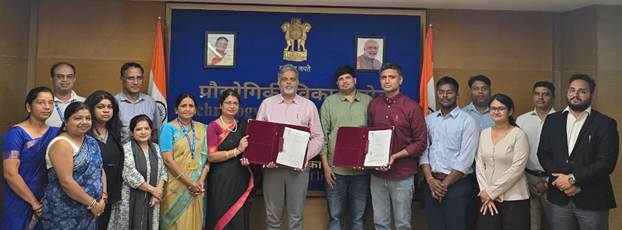
What Happened
India is preparing to move into the next phase of its Additive Manufacturing journey through NSAM 2.0, with a stronger focus on intellectual property, digital integration, commercialisation, affordable machines and materials, defence applications, start-ups and international technology partnerships. A Press Information Bureau backgrounder released on 7 October 2026 highlighted the progress achieved under the National Strategy for Additive Manufacturing since its introduction in 2022 and outlined the priorities being conceptualised for its next phase.
Additive Manufacturing, commonly associated with 3D printing, represents a major shift from conventional manufacturing. Instead of removing material from a larger block through cutting, drilling or machining, an additive system builds an object by depositing or joining material layer by layer according to a digital design. This convergence of computing, electronics, design software and materials science is increasingly being applied in aerospace, defence, healthcare, electronics, energy, food processing and other advanced industries.
According to PIB, more than 1,54,000 individuals have already been trained in additive-manufacturing-related skills under India's developing ecosystem. Fifty-six AM start-ups have been supported, while the network of national centres has enabled development of 65 India-specific technologies involving materials, machines, Design for Additive Manufacturing and printed products. NSAM 2.0 is now being conceptualised to accelerate this ecosystem further.
1. What Is the Latest Development?
On 7 October 2026, PIB released a detailed backgrounder titled Additive Manufacturing in India: Building India's Future with Next Generation Digital Manufacturing.
The backgrounder highlighted progress under the National Strategy for Additive Manufacturing and stated that the strategy is moving towards its NSAM 2.0 phase.
NSAM 2.0 is being conceptualised to accelerate India's Additive Manufacturing market and strengthen domestic technological capability.
2. What Is Additive Manufacturing?
Additive Manufacturing, abbreviated AM, is a digital manufacturing approach in which a digital file controls the manufacturing process and an object is generally created by adding material layer by layer.
It is commonly associated with 3D printing, although industrial Additive Manufacturing includes a much broader range of technologies and materials than ordinary consumer 3D printers.
The technology combines digital design, computing, electronics, software and materials science.
3. How Is Additive Manufacturing Different from Conventional Manufacturing?
Many conventional manufacturing processes are subtractive. They begin with a larger piece of material and remove portions of it through cutting, milling, drilling or machining to obtain the required shape.
Additive Manufacturing follows the opposite principle: the object is built up progressively by adding material according to digital instructions.
This can enable production of complex geometries that may be difficult to manufacture using conventional processes.
4. How Does the Additive Manufacturing Process Begin?
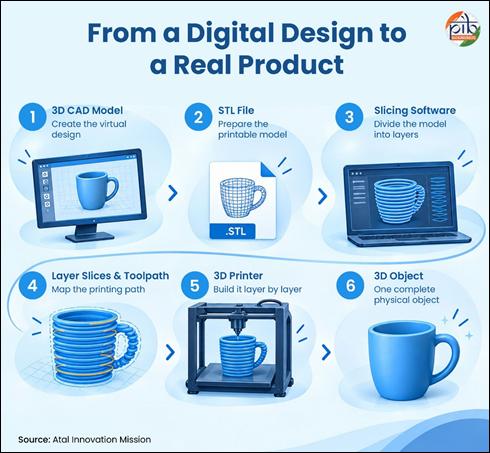
Every AM object begins with a digital design.
According to the PIB backgrounder, the design can be prepared using Computer-Aided Design software, captured using a 3D scanner or, increasingly, created with artificial-intelligence-based tools using images.
The digital model provides the basic instructions for manufacturing the physical object.
5. What Is CAD?
CAD stands for Computer-Aided Design.
CAD software enables engineers and designers to create precise digital models of components and products.
Because Additive Manufacturing begins with a digital model, CAD forms an important part of the AM production workflow.
6. What Is an STL File?
STL stands for Standard Tessellation Language.
An STL file represents a three-dimensional model using a collection of triangular surfaces.
PIB identifies STL as one of the commonly used file formats for preparing digital models for Additive Manufacturing.
7. What Is Slicing?
Before printing, slicing software divides the three-dimensional digital model into hundreds or thousands of horizontal layers.
These digital layers provide instructions to the Additive Manufacturing machine about how the physical object should be constructed layer by layer.
Slicing therefore acts as an important bridge between digital design and physical manufacturing.
8. How Is the Object Printed?
The sliced digital file is supplied to the AM machine.
The machine reads the instructions for individual layers and progressively builds the object.
Successive layers of material are deposited, fused or otherwise formed according to the particular Additive Manufacturing process being used.
9. How Many Additive Manufacturing Processes Exist?
The PIB backgrounder states that more than 40 Additive Manufacturing processes are currently in the market or research and development stage.
Different processes are suited to different materials, applications, production scales and precision requirements.
This shows that Additive Manufacturing is not a single manufacturing technique but a broad technological family.
10. Which Materials Can Be Used in Additive Manufacturing?
Additive Manufacturing can work with multiple material categories.
PIB identifies polymers, metals, composites, ceramics and semiconductor-grade materials as important areas in which India can build competitive AM platforms.
Thermoplastic materials used in various applications include ABS, polycarbonate and PLA, while PVA can be used for temporary support structures.
11. What Is NSAM?
NSAM stands for National Strategy for Additive Manufacturing.
It was introduced in 2022 to build and strengthen India's Additive Manufacturing ecosystem.
The strategy seeks to develop domestic capabilities in areas such as technology, machines, materials, skills, research, start-ups and industrial applications.
12. Which Ministry Is Associated with NSAM?
The National Strategy for Additive Manufacturing is associated with the Ministry of Electronics and Information Technology, commonly abbreviated MeitY.
MeitY has supported the development of India's AM ecosystem through research centres, technology programmes, skills and ecosystem-building initiatives.
For competitive examinations, remember: NSAM — Additive Manufacturing — MeitY — launched in 2022.
13. How Many People Have Been Trained?
According to PIB's 7 October 2026 backgrounder, more than 1,54,000 individuals have been trained in Additive Manufacturing-related skills.
This represents one of the most important measurable outcomes highlighted under NSAM.
Developing a skilled workforce is essential because industrial AM requires expertise in design, materials, machine operation, software, post-processing and quality assurance.
14. How Many AM Start-Ups Have Been Supported?
Fifty-six Additive Manufacturing start-ups have been supported.
These start-ups strengthen India's innovation and entrepreneurship ecosystem and can contribute technologies, materials, machines, software and specialised manufacturing solutions.
NSAM 2.0 proposes to expand the AM start-up base further.
15. How Many India-Specific Technologies Have Been Developed?
The network of national centres has enabled development of 65 India-specific technologies.
These include materials, machines, Design for Additive Manufacturing and printed products.
This is another important examination figure: 65 India-specific AM technologies.
16. What Is Design for Additive Manufacturing?
Design for Additive Manufacturing is commonly abbreviated DfAM.
It refers to designing components specifically to exploit the capabilities of Additive Manufacturing rather than simply reproducing parts originally designed for conventional manufacturing.
DfAM can enable complex geometries, lightweight structures and integrated components that may be difficult to create through traditional methods.
17. Which Sectors Are Using India's AM Capabilities?
According to PIB, India's developing Additive Manufacturing capabilities are supporting products and prototypes across aerospace, medical devices, electronics, energy, food processing and photonics.
The range demonstrates that AM is not confined to one industry.
It has both industrial and societal applications.
18. What Is NSAM 2.0?
NSAM 2.0 is the proposed next phase of India's National Strategy for Additive Manufacturing.
As of 7 October 2026, PIB describes NSAM 2.0 as being conceptualised. Therefore, it should not be incorrectly described as a fully launched and completed programme.
Its purpose is to support acceleration of India's AM market and deepen domestic technological capabilities.
19. What Will NSAM 2.0 Do for Intellectual Property?
One proposed priority is acceleration of Intellectual Property Rights generation.
Developing indigenous intellectual property can help Indian companies and research organisations move beyond technology adoption towards ownership of commercially valuable technologies.
This is particularly important in advanced manufacturing, where patents, proprietary materials, processes and machine designs can provide strategic and commercial advantages.
20. How Will Digital Integration Be Used?
NSAM 2.0 plans to grow India's Additive Manufacturing network through digital integration.
This reflects the fundamentally digital nature of AM, where design files, software, machine instructions and production systems can be integrated into digital manufacturing networks.
Digital integration can also support distributed and flexible production models.
21. What Is the Commercialisation Objective?
NSAM 2.0 proposes to develop globally competitive Additive Manufacturing technologies for commercialisation.
Research is valuable, but technological impact increases when innovations can be converted into reliable products, machines, materials or industrial solutions.
Commercialisation can therefore help Indian technologies move from laboratories to factories and markets.
22. Will NSAM 2.0 Address the Cost of Machines and Materials?
Yes. PIB states that NSAM 2.0 aims to improve the affordability of machines and materials through clusters.
Cost can be an important barrier to wider adoption of advanced manufacturing technologies, particularly for smaller companies and institutions.
A stronger domestic supply ecosystem can potentially reduce dependence on imported equipment and specialised materials.
23. What Is the AM Electronics Value Chain?
NSAM 2.0 proposes to strengthen the Additive Manufacturing electronics value chain.
AM can be applied to electronics manufacturing and related advanced materials and components.
The PIB backgrounder states that the global AM-electronics supply chain is projected to grow from USD 18 billion to USD 112 billion.
24. What Is the Projected Global AM Machines Market?
PIB states that the global Additive Manufacturing machines market is projected to reach USD 149 billion by 2035.
This large projected market creates an opportunity for India to develop competitive machines, materials and related technologies.
For examinations remember: global AM machines market projection — USD 149 billion by 2035.
25. What Is the Defence Connection?
NSAM 2.0 plans to provide extensive support to Indian defence.
Additive Manufacturing can be particularly useful in defence and aerospace because it can produce complex components, enable lightweight designs and support manufacturing of specialised or low-volume parts.
Domestic AM capability can also contribute to reducing dependence on imported manufacturing technologies and components.
26. How Can AM Support Aerospace?
Aerospace systems often require components with complex shapes, strict weight requirements and high-performance materials.
Additive Manufacturing can enable engineers to create geometries that may be difficult to manufacture conventionally and potentially consolidate multiple components into more integrated designs.
India's existing AM ecosystem is already supporting aerospace products and prototypes according to PIB.
27. How Can AM Support Healthcare?
Additive Manufacturing can support development of medical devices and customised products.
Because manufacturing begins with a digital model, designs can potentially be adapted for specific medical requirements before production.
PIB lists medical devices among the sectors already supported by India's AM capabilities.
28. What Is the Connection with Sustainable Development Goals?
NSAM 2.0 proposes to promote SDG-driven pilot programmes.
PIB notes that Additive Manufacturing can support sustainable development through resource efficiency, localised production and sustainable solutions.
Its precise environmental benefit, however, depends on the material, energy source, process and application involved and should not be assumed to be automatically positive in every case.
29. How Can AM Improve Resource Efficiency?
Additive processes build objects by adding material where required rather than always removing large amounts of material from a larger workpiece.
In suitable applications, this can reduce material waste.
However, overall resource efficiency depends on factors such as energy consumption, feedstock preparation, support structures and post-processing requirements.
30. What Is Distributed Manufacturing?
Distributed manufacturing refers to producing goods closer to the place where they are required rather than concentrating all production in a small number of distant factories.
Because AM relies heavily on digital designs and programmable machines, a validated design can potentially be manufactured at different suitably equipped locations.
PIB links AM with distributed and flexible manufacturing under the broader Industry 5.0 framework.
31. What Is the Connection with Industry 5.0?
PIB states that Additive Manufacturing supports Industry 5.0 through digital production, advanced automation and distributed and flexible manufacturing.
Industry 5.0 discussions generally emphasise advanced technology alongside human-centric, resilient and sustainable industrial systems.
AM can contribute by enabling flexible and digitally controlled production.
32. What International Cooperation Is Proposed Under NSAM 2.0?
NSAM 2.0 proposes deeper international cooperation through standards, joint research and technology partnerships.
International standards are important because advanced manufactured components must meet quality, safety and performance requirements, particularly in sectors such as aerospace, healthcare and defence.
Joint research can also accelerate technological learning and innovation.
33. What Is NAMS?
NAMS stands for National Additive Manufacturing Symposium.
It is a national platform bringing together policymakers, scientists, industry, start-ups, academia and other Additive Manufacturing stakeholders.
Its purpose is to promote coordinated progress across policy, research, innovation and industry.
34. When Was the Second NAMS Held?
MeitY organised the second edition of the National Additive Manufacturing Symposium on 13 March 2026 in New Delhi.
The event strengthened collaboration across India's AM ecosystem.
MoUs were exchanged, new AM products were launched and discussions covered NSAM 2.0, defence adoption, industry perspectives and MeitY-supported research and development centres.
35. How Are Schools Being Connected to 3D Printing?
The Government is also nurturing exposure to 3D printing through Atal Tinkering Labs.
According to PIB, each Atal Tinkering Lab receives a grant of ₹20 lakh to establish a dedicated innovation workspace of approximately 1,200 to 1,500 square feet equipped with Do-it-Yourself kits that can include 3D printers, robotics and Internet of Things tools.
Students from Classes VI to XII receive hands-on exposure to such technologies.
36. Why Is Early Skill Development Important?
Advanced manufacturing requires engineers, designers, machine operators, researchers and technicians who understand digital design as well as physical manufacturing.
Exposure at school and university levels can help develop a future workforce familiar with emerging technologies.
The training of more than 1,54,000 individuals under the developing ecosystem demonstrates the importance being given to skills.
37. How Can AM Contribute to Atmanirbhar Bharat?
Domestic capability in AM machines, materials, software, processes and design can reduce dependence on imported advanced manufacturing solutions.
It can also help Indian companies create locally designed products and specialised components.
PIB therefore positions Additive Manufacturing as a building block for Atmanirbhar Bharat.
38. How Is AM Connected to Viksit Bharat?
Advanced manufacturing capability can strengthen productivity, technological sophistication, skilled employment and industrial competitiveness.
PIB connects NSAM 2.0 and the expansion of Additive Manufacturing with India's Viksit Bharat vision.
The broader objective is to move India from being only a consumer of advanced technologies towards becoming a developer and manufacturer of them.
39. What Are the Main Challenges Ahead?
India will need to address several challenges as it expands Additive Manufacturing.
These include the cost of specialised machines and materials, development of domestic feedstocks, intellectual-property creation, standards, certification, skilled manpower, commercialisation of research, quality assurance and wider industrial adoption.
NSAM 2.0's proposed focus on affordability, IPR, clusters, digital integration, commercialisation and international standards reflects many of these challenges.
40. What Should Students Remember for Exams?
National Strategy for Additive Manufacturing was introduced in 2022.
NSAM is associated with MeitY.
As highlighted by PIB on 7 October 2026, more than 1,54,000 individuals have been trained in AM-related skills, 56 AM start-ups have been supported and 65 India-specific technologies have been developed through the national-centre network.
NSAM 2.0 is being conceptualised to accelerate IPR generation, digital integration, commercialisation, affordable machines and materials, AM electronics, start-ups, defence applications, SDG-driven pilots and international cooperation.
The global AM machines market is projected by the PIB backgrounder to reach USD 149 billion by 2035, while the AM-electronics supply chain is projected to grow from USD 18 billion to USD 112 billion.
The second National Additive Manufacturing Symposium was organised by MeitY in New Delhi on 13 March 2026.
Quick revision: Additive Manufacturing — 3D printing — layer-by-layer production — NSAM launched 2022 — MeitY — 1.54 lakh+ trained — 56 start-ups — 65 India-specific technologies — NSAM 2.0 being conceptualised — IPR + digital integration + commercialisation + defence + SDGs — global AM machines market USD 149 billion by 2035 — NAMS — Industry 5.0 — Atmanirbhar Bharat — Viksit Bharat.
क्या हुआ?
भारत Additive Manufacturing अर्थात योज्य विनिर्माण की अपनी यात्रा को NSAM 2.0 के माध्यम से अगले चरण में ले जाने की तैयारी कर रहा है। इस चरण में बौद्धिक संपदा, डिजिटल एकीकरण, प्रौद्योगिकियों के व्यावसायीकरण, मशीनों और पदार्थों की लागत कम करने, रक्षा क्षेत्र में उपयोग, नवउद्यमों के विस्तार और अंतरराष्ट्रीय तकनीकी साझेदारी पर अधिक जोर देने की योजना है। 7 अक्टूबर 2026 को जारी प्रेस सूचना ब्यूरो के एक विस्तृत पृष्ठभूमि-पत्र में 2022 में शुरू की गई National Strategy for Additive Manufacturing के अंतर्गत हुई प्रगति और प्रस्तावित अगले चरण की प्राथमिकताओं की जानकारी दी गई।
Additive Manufacturing, जिसे सामान्यतः 3D Printing से जोड़ा जाता है, पारंपरिक विनिर्माण से अलग दृष्टिकोण प्रस्तुत करता है। किसी बड़े पदार्थ से काटकर, ड्रिल करके या मशीनिंग के माध्यम से सामग्री हटाने के बजाय इसमें डिजिटल डिजाइन के अनुसार परत-दर-परत पदार्थ जोड़कर वस्तु बनाई जाती है। कंप्यूटिंग, इलेक्ट्रॉनिक्स, डिजाइन सॉफ्टवेयर और पदार्थ विज्ञान के इस संयोजन का उपयोग विमानन, रक्षा, स्वास्थ्य उपकरण, इलेक्ट्रॉनिक्स, ऊर्जा, खाद्य प्रसंस्करण और अन्य उन्नत उद्योगों में बढ़ रहा है।
PIB के अनुसार भारत की विकसित होती Additive Manufacturing व्यवस्था में अब तक 1,54,000 से अधिक लोगों को संबंधित कौशल का प्रशिक्षण दिया जा चुका है। 56 AM नवउद्यमों को सहायता मिली है और राष्ट्रीय केंद्रों के नेटवर्क के माध्यम से पदार्थ, मशीन, Additive Manufacturing के लिए डिजाइन तथा मुद्रित उत्पादों सहित 65 भारत-विशिष्ट प्रौद्योगिकियों का विकास संभव हुआ है। अब NSAM 2.0 के माध्यम से इस व्यवस्था को और तेज करने की योजना बनाई जा रही है।
1. नवीनतम विकास क्या है?
7 अक्टूबर 2026 को PIB ने Additive Manufacturing in India: Building India's Future with Next Generation Digital Manufacturing शीर्षक से विस्तृत पृष्ठभूमि-पत्र जारी किया।
इसमें National Strategy for Additive Manufacturing के अंतर्गत हुई प्रगति का विवरण दिया गया और बताया गया कि रणनीति अब NSAM 2.0 चरण की ओर बढ़ रही है।
NSAM 2.0 की परिकल्पना भारत के Additive Manufacturing बाजार को गति देने और घरेलू तकनीकी क्षमता मजबूत करने के लिए की जा रही है।
2. Additive Manufacturing क्या है?
Additive Manufacturing को संक्षेप में AM कहा जाता है। यह डिजिटल विनिर्माण पद्धति है जिसमें डिजिटल फाइल विनिर्माण प्रक्रिया को नियंत्रित करती है और सामान्यतः पदार्थ को परत-दर-परत जोड़कर वस्तु बनाई जाती है।
इसे सामान्य रूप से 3D Printing से जोड़ा जाता है, लेकिन औद्योगिक Additive Manufacturing साधारण घरेलू 3D Printer की तुलना में कहीं अधिक व्यापक तकनीकों और पदार्थों को शामिल करता है।
इसमें डिजिटल डिजाइन, कंप्यूटिंग, इलेक्ट्रॉनिक्स, सॉफ्टवेयर और पदार्थ विज्ञान का संयोजन होता है।
3. यह पारंपरिक विनिर्माण से कैसे अलग है?
अनेक पारंपरिक विनिर्माण प्रक्रियाएँ घटाव आधारित होती हैं। उनमें बड़े पदार्थ से काटकर, मिलिंग, ड्रिलिंग या मशीनिंग के माध्यम से हिस्से हटाए जाते हैं और आवश्यक आकार बनाया जाता है।
Additive Manufacturing इसके विपरीत सिद्धांत पर काम करता है। इसमें डिजिटल निर्देशों के अनुसार पदार्थ जोड़ते हुए वस्तु का निर्माण किया जाता है।
इससे ऐसी जटिल आकृतियों का निर्माण संभव हो सकता है जिन्हें पारंपरिक प्रक्रियाओं से बनाना कठिन होता है।
4. Additive Manufacturing प्रक्रिया कैसे शुरू होती है?
प्रत्येक AM वस्तु की शुरुआत डिजिटल डिजाइन से होती है।
PIB के अनुसार डिजाइन Computer-Aided Design सॉफ्टवेयर से बनाया जा सकता है, 3D Scanner से प्राप्त किया जा सकता है या अब कृत्रिम बुद्धिमत्ता आधारित उपकरणों की सहायता से चित्रों से भी विकसित किया जा सकता है।
यही डिजिटल मॉडल वास्तविक वस्तु बनाने के मूल निर्देश प्रदान करता है।
5. CAD क्या है?
CAD का पूरा नाम Computer-Aided Design है।
CAD सॉफ्टवेयर अभियंताओं और डिजाइनरों को किसी घटक या उत्पाद का सटीक डिजिटल मॉडल तैयार करने में सहायता करता है।
चूँकि Additive Manufacturing डिजिटल मॉडल से शुरू होता है, इसलिए CAD इसकी उत्पादन प्रक्रिया का महत्वपूर्ण हिस्सा है।
6. STL File क्या है?
STL का पूरा नाम Standard Tessellation Language है।
STL फाइल त्रिकोणीय सतहों के समूह के माध्यम से त्रि-आयामी मॉडल को दर्शाती है।
PIB ने इसे Additive Manufacturing के लिए डिजिटल मॉडल तैयार करने में सामान्यतः उपयोग होने वाले फाइल प्रारूपों में शामिल किया है।
7. Slicing क्या है?
मुद्रण से पहले Slicing Software त्रि-आयामी डिजिटल मॉडल को सैकड़ों या हजारों क्षैतिज परतों में विभाजित करता है।
ये डिजिटल परतें Additive Manufacturing मशीन को बताती हैं कि वास्तविक वस्तु को परत-दर-परत कैसे बनाया जाना है।
इसलिए Slicing डिजिटल डिजाइन और वास्तविक विनिर्माण के बीच महत्वपूर्ण कड़ी है।
8. वस्तु का मुद्रण कैसे होता है?
Slicing के बाद तैयार डिजिटल फाइल AM मशीन को दी जाती है।
मशीन प्रत्येक परत के निर्देश पढ़ती है और धीरे-धीरे वस्तु का निर्माण करती है।
उपयोग की जा रही विशेष Additive Manufacturing प्रक्रिया के अनुसार पदार्थ की लगातार परतें जमा, जोड़ी या अन्य विधि से बनाई जाती हैं।
9. Additive Manufacturing की कितनी प्रक्रियाएँ हैं?
PIB के अनुसार वर्तमान में बाजार या अनुसंधान एवं विकास अवस्था में 40 से अधिक Additive Manufacturing प्रक्रियाएँ मौजूद हैं।
अलग-अलग प्रक्रियाएँ अलग पदार्थों, उपयोगों, उत्पादन पैमानों और सटीकता आवश्यकताओं के लिए उपयुक्त होती हैं।
इससे स्पष्ट है कि Additive Manufacturing कोई एक तकनीक नहीं बल्कि प्रौद्योगिकियों का व्यापक समूह है।
10. Additive Manufacturing में किन पदार्थों का उपयोग हो सकता है?
इसमें अनेक प्रकार के पदार्थों का उपयोग किया जा सकता है।
PIB ने Polymer, Metal, Composite, Ceramic और Semiconductor-grade पदार्थों को ऐसे प्रमुख क्षेत्र बताया है जिनमें भारत प्रतिस्पर्धी AM मंच विकसित कर सकता है।
विभिन्न उपयोगों में ABS, Polycarbonate और PLA जैसे Thermoplastic पदार्थ प्रयुक्त होते हैं, जबकि PVA का उपयोग अस्थायी सहायक संरचना बनाने के लिए किया जा सकता है।
11. NSAM क्या है?
NSAM का पूरा नाम National Strategy for Additive Manufacturing है।
इसे 2022 में भारत की Additive Manufacturing व्यवस्था के निर्माण और सुदृढ़ीकरण के लिए शुरू किया गया था।
इस रणनीति का उद्देश्य प्रौद्योगिकी, मशीन, पदार्थ, कौशल, अनुसंधान, नवउद्यम और औद्योगिक उपयोग जैसे क्षेत्रों में घरेलू क्षमता विकसित करना है।
12. NSAM किस मंत्रालय से संबंधित है?
National Strategy for Additive Manufacturing इलेक्ट्रॉनिक्स और सूचना प्रौद्योगिकी मंत्रालय अर्थात MeitY से संबंधित है।
MeitY ने अनुसंधान केंद्रों, प्रौद्योगिकी कार्यक्रमों, कौशल विकास और पारिस्थितिकी तंत्र निर्माण के माध्यम से भारत की AM क्षमता के विकास को समर्थन दिया है।
परीक्षा के लिए याद रखें: NSAM — Additive Manufacturing — MeitY — 2022।
13. कितने लोगों को प्रशिक्षण दिया गया है?
7 अक्टूबर 2026 के PIB पृष्ठभूमि-पत्र के अनुसार 1,54,000 से अधिक लोगों को Additive Manufacturing से संबंधित कौशल का प्रशिक्षण दिया गया है।
यह NSAM के अंतर्गत बताई गई सबसे महत्वपूर्ण मापनीय उपलब्धियों में से एक है।
औद्योगिक AM के लिए डिजाइन, पदार्थ, मशीन संचालन, सॉफ्टवेयर, अंतिम प्रसंस्करण और गुणवत्ता आश्वासन में विशेषज्ञता आवश्यक होती है।
14. कितने AM नवउद्यमों को सहायता दी गई है?
56 Additive Manufacturing नवउद्यमों को सहायता दी गई है।
ये नवउद्यम प्रौद्योगिकी, पदार्थ, मशीन, सॉफ्टवेयर और विशेष विनिर्माण समाधान विकसित करके भारत की नवाचार और उद्यमिता व्यवस्था को मजबूत कर सकते हैं।
NSAM 2.0 में इस नवउद्यम आधार को और बढ़ाने की योजना है।
15. कितनी भारत-विशिष्ट प्रौद्योगिकियाँ विकसित हुई हैं?
राष्ट्रीय केंद्रों के नेटवर्क के माध्यम से 65 भारत-विशिष्ट प्रौद्योगिकियों का विकास संभव हुआ है।
इनमें पदार्थ, मशीन, Design for Additive Manufacturing और मुद्रित उत्पाद शामिल हैं।
परीक्षा के लिए यह महत्वपूर्ण संख्या है: 65 भारत-विशिष्ट AM प्रौद्योगिकियाँ।
16. Design for Additive Manufacturing क्या है?
इसे संक्षेप में DfAM कहा जाता है।
इसका अर्थ घटकों को विशेष रूप से Additive Manufacturing की क्षमताओं का लाभ उठाने के लिए डिजाइन करना है, न कि केवल पारंपरिक विनिर्माण के लिए बनाए गए घटकों की नकल करना।
इससे जटिल आकृतियाँ, हल्की संरचनाएँ और एकीकृत घटक विकसित किए जा सकते हैं जिन्हें पारंपरिक विधियों से बनाना कठिन हो सकता है।
17. भारत की AM क्षमता किन क्षेत्रों में उपयोग हो रही है?
PIB के अनुसार भारत की विकसित होती Additive Manufacturing क्षमता विमानन, चिकित्सा उपकरण, इलेक्ट्रॉनिक्स, ऊर्जा, खाद्य प्रसंस्करण और Photonics क्षेत्रों में उत्पादों तथा नमूना मॉडलों के विकास को समर्थन दे रही है।
इससे स्पष्ट है कि AM किसी एक उद्योग तक सीमित नहीं है।
इसके औद्योगिक और सामाजिक दोनों प्रकार के उपयोग हैं।
18. NSAM 2.0 क्या है?
NSAM 2.0 भारत की National Strategy for Additive Manufacturing का प्रस्तावित अगला चरण है।
7 अक्टूबर 2026 की स्थिति में PIB ने इसे विकसित की जा रही अवधारणा के रूप में बताया है। इसलिए इसे पहले से पूरी तरह शुरू और लागू कार्यक्रम नहीं बताना चाहिए।
इसका उद्देश्य भारत के AM बाजार को गति देना और घरेलू तकनीकी क्षमता को अधिक गहरा बनाना है।
19. बौद्धिक संपदा के लिए NSAM 2.0 क्या करेगा?
इसके प्रस्तावित उद्देश्यों में Intellectual Property Rights के निर्माण को तेज करना शामिल है।
स्वदेशी बौद्धिक संपदा विकसित होने से भारतीय कंपनियाँ और अनुसंधान संस्थान केवल तकनीक का उपयोग करने वाले न रहकर व्यावसायिक रूप से महत्वपूर्ण तकनीकों के स्वामी भी बन सकते हैं।
उन्नत विनिर्माण में पेटेंट, विशेष पदार्थ, प्रक्रियाएँ और मशीन डिजाइन रणनीतिक तथा व्यावसायिक लाभ दे सकते हैं।
20. डिजिटल एकीकरण की क्या भूमिका होगी?
NSAM 2.0 डिजिटल एकीकरण के माध्यम से भारत के Additive Manufacturing नेटवर्क को बढ़ाने की योजना बनाता है।
AM मूल रूप से डिजिटल प्रकृति की तकनीक है जिसमें डिजाइन फाइल, सॉफ्टवेयर, मशीन निर्देश और उत्पादन प्रणालियों को डिजिटल विनिर्माण नेटवर्क से जोड़ा जा सकता है।
डिजिटल एकीकरण विकेन्द्रीकृत और लचीले उत्पादन को भी समर्थन दे सकता है।
21. व्यावसायीकरण का उद्देश्य क्या है?
NSAM 2.0 वैश्विक स्तर पर प्रतिस्पर्धी Additive Manufacturing प्रौद्योगिकियों को व्यावसायिक उपयोग के लिए विकसित करने का प्रस्ताव करता है।
अनुसंधान महत्वपूर्ण है, लेकिन उसका प्रभाव तब बढ़ता है जब नवाचार को विश्वसनीय उत्पाद, मशीन, पदार्थ या औद्योगिक समाधान में बदला जा सके।
इसलिए व्यावसायीकरण भारतीय तकनीकों को प्रयोगशाला से कारखानों और बाजार तक पहुँचाने में सहायता कर सकता है।
22. क्या मशीन और पदार्थ की लागत पर ध्यान दिया जाएगा?
हाँ। PIB के अनुसार NSAM 2.0 समूह आधारित व्यवस्था के माध्यम से मशीनों और पदार्थों को अधिक किफायती बनाने का लक्ष्य रखता है।
उन्नत विनिर्माण तकनीकों को व्यापक रूप से अपनाने में लागत एक महत्वपूर्ण बाधा हो सकती है, विशेष रूप से छोटी कंपनियों और संस्थानों के लिए।
मजबूत घरेलू आपूर्ति व्यवस्था आयातित उपकरणों और विशेष पदार्थों पर निर्भरता कम करने में सहायता कर सकती है।
23. AM Electronics Value Chain क्या है?
NSAM 2.0 Additive Manufacturing Electronics Value Chain को मजबूत करने का प्रस्ताव करता है।
AM का उपयोग इलेक्ट्रॉनिक्स विनिर्माण और उससे संबंधित उन्नत पदार्थों तथा घटकों में भी किया जा सकता है।
PIB के अनुसार वैश्विक AM Electronics Supply Chain के USD 18 billion से बढ़कर USD 112 billion होने का अनुमान है।
24. वैश्विक AM Machines Market कितना बड़ा हो सकता है?
PIB के अनुसार वैश्विक Additive Manufacturing मशीन बाजार 2035 तक USD 149 billion तक पहुँचने का अनुमान है।
यह विशाल संभावित बाजार भारत के लिए प्रतिस्पर्धी मशीन, पदार्थ और संबंधित प्रौद्योगिकियाँ विकसित करने का अवसर प्रस्तुत करता है।
परीक्षा के लिए याद रखें: वैश्विक AM Machines Market — 2035 तक USD 149 billion का अनुमान।
25. रक्षा क्षेत्र से इसका क्या संबंध है?
NSAM 2.0 भारतीय रक्षा क्षेत्र को व्यापक सहायता देने की योजना बनाता है।
Additive Manufacturing रक्षा और विमानन में विशेष रूप से उपयोगी हो सकता है क्योंकि इससे जटिल घटक, हल्के डिजाइन और कम संख्या में आवश्यक विशेष हिस्से बनाए जा सकते हैं।
घरेलू AM क्षमता आयातित विनिर्माण तकनीकों और घटकों पर निर्भरता कम करने में भी योगदान दे सकती है।
26. विमानन क्षेत्र में AM कैसे उपयोगी है?
विमानन प्रणालियों में जटिल आकार, कम भार और उच्च प्रदर्शन वाले पदार्थों की आवश्यकता होती है।
Additive Manufacturing अभियंताओं को ऐसी आकृतियाँ बनाने में सक्षम कर सकता है जिन्हें पारंपरिक तरीके से बनाना कठिन हो और कई घटकों को अधिक एकीकृत डिजाइन में बदला जा सके।
PIB के अनुसार भारत की मौजूदा AM व्यवस्था विमानन क्षेत्र के उत्पादों और नमूना मॉडलों को पहले से समर्थन दे रही है।
27. स्वास्थ्य क्षेत्र में AM कैसे उपयोगी है?
Additive Manufacturing चिकित्सा उपकरणों और आवश्यकता के अनुसार बनाए जाने वाले उत्पादों के विकास में सहायता कर सकता है।
चूँकि उत्पादन डिजिटल मॉडल से शुरू होता है, इसलिए विनिर्माण से पहले डिजाइन को विशिष्ट चिकित्सा आवश्यकता के अनुसार बदला जा सकता है।
PIB ने चिकित्सा उपकरणों को भारत की AM क्षमता से लाभ पाने वाले क्षेत्रों में शामिल किया है।
28. Sustainable Development Goals से इसका क्या संबंध है?
NSAM 2.0 SDG आधारित प्रायोगिक कार्यक्रमों को बढ़ावा देने का प्रस्ताव करता है।
PIB के अनुसार Additive Manufacturing संसाधन दक्षता, स्थानीय उत्पादन और टिकाऊ समाधानों के माध्यम से सतत विकास में योगदान दे सकता है।
हालांकि इसका वास्तविक पर्यावरणीय लाभ प्रयुक्त पदार्थ, ऊर्जा स्रोत, प्रक्रिया और उपयोग पर निर्भर करेगा। इसलिए प्रत्येक परिस्थिति में इसे स्वतः पर्यावरण-अनुकूल नहीं मानना चाहिए।
29. AM संसाधन दक्षता कैसे बढ़ा सकता है?
Additive प्रक्रिया में किसी बड़े पदार्थ से बहुत अधिक हिस्सा काटकर हटाने के बजाय आवश्यक स्थान पर पदार्थ जोड़कर वस्तु बनाई जाती है।
उपयुक्त उपयोग में इससे पदार्थ की बर्बादी कम हो सकती है।
हालांकि समग्र संसाधन दक्षता ऊर्जा उपयोग, कच्चे पदार्थ की तैयारी, सहायक संरचना और अंतिम प्रसंस्करण जैसी आवश्यकताओं पर भी निर्भर करती है।
30. Distributed Manufacturing क्या है?
Distributed Manufacturing का अर्थ सभी उत्पादन को कुछ दूरस्थ कारखानों में केंद्रित करने के बजाय आवश्यकता वाले स्थान के निकट वस्तुओं का उत्पादन करना है।
चूँकि AM डिजिटल डिजाइन और प्रोग्राम योग्य मशीनों पर आधारित है, इसलिए प्रमाणित डिजाइन को आवश्यक उपकरण वाले अलग-अलग स्थानों पर निर्मित किया जा सकता है।
PIB ने AM को Industry 5.0 के अंतर्गत विकेन्द्रीकृत और लचीले विनिर्माण से जोड़ा है।
31. Industry 5.0 से इसका क्या संबंध है?
PIB के अनुसार Additive Manufacturing डिजिटल उत्पादन, उन्नत स्वचालन तथा विकेन्द्रीकृत और लचीले विनिर्माण के माध्यम से Industry 5.0 को समर्थन देता है।
Industry 5.0 में उन्नत तकनीक के साथ मानव-केंद्रित, मजबूत और टिकाऊ औद्योगिक व्यवस्था पर जोर दिया जाता है।
AM लचीले और डिजिटल रूप से नियंत्रित उत्पादन को सक्षम करके इसमें योगदान दे सकता है।
32. NSAM 2.0 में अंतरराष्ट्रीय सहयोग कैसे बढ़ेगा?
NSAM 2.0 मानकों, संयुक्त अनुसंधान और प्रौद्योगिकी साझेदारी के माध्यम से अंतरराष्ट्रीय सहयोग को गहरा करने का प्रस्ताव करता है।
अंतरराष्ट्रीय मानक महत्वपूर्ण हैं क्योंकि विशेष रूप से विमानन, स्वास्थ्य और रक्षा क्षेत्रों में उन्नत विनिर्मित घटकों को गुणवत्ता, सुरक्षा और प्रदर्शन मानकों को पूरा करना होता है।
संयुक्त अनुसंधान तकनीकी सीख और नवाचार को भी तेज कर सकता है।
33. NAMS क्या है?
NAMS का पूरा नाम National Additive Manufacturing Symposium है।
यह नीति निर्माताओं, वैज्ञानिकों, उद्योग, नवउद्यमों, शिक्षण संस्थानों और अन्य Additive Manufacturing हितधारकों को एक साझा मंच पर लाता है।
इसका उद्देश्य नीति, अनुसंधान, नवाचार और उद्योग में समन्वित प्रगति को बढ़ावा देना है।
34. दूसरा NAMS कब आयोजित हुआ?
MeitY ने National Additive Manufacturing Symposium का दूसरा संस्करण 13 मार्च 2026 को नई दिल्ली में आयोजित किया।
इस आयोजन ने भारत की AM व्यवस्था में सहयोग को मजबूत किया।
इसमें समझौता ज्ञापनों का आदान-प्रदान, नए AM उत्पादों का शुभारंभ और NSAM 2.0, रक्षा उपयोग, उद्योग तथा MeitY समर्थित अनुसंधान एवं विकास केंद्रों पर चर्चा हुई।
35. विद्यालयों को 3D Printing से कैसे जोड़ा जा रहा है?
सरकार Atal Tinkering Labs के माध्यम से विद्यार्थियों को 3D Printing से परिचित करा रही है।
PIB के अनुसार प्रत्येक Atal Tinkering Lab को लगभग 1,200 से 1,500 वर्ग फुट का नवाचार कार्यक्षेत्र स्थापित करने के लिए ₹20 लाख का अनुदान मिलता है, जिसमें 3D Printer, Robotics और Internet of Things से संबंधित उपकरण शामिल हो सकते हैं।
कक्षा VI से XII तक के विद्यार्थियों को इन तकनीकों का व्यावहारिक अनुभव मिलता है।
36. प्रारंभिक कौशल विकास क्यों महत्वपूर्ण है?
उन्नत विनिर्माण के लिए ऐसे अभियंता, डिजाइनर, मशीन संचालक, शोधकर्ता और तकनीशियन चाहिए जो डिजिटल डिजाइन और वास्तविक विनिर्माण दोनों को समझते हों।
विद्यालय और विश्वविद्यालय स्तर पर शुरुआती परिचय भविष्य के ऐसे कार्यबल को विकसित करने में सहायता कर सकता है जो उभरती तकनीकों से परिचित हो।
1,54,000 से अधिक लोगों का प्रशिक्षण कौशल विकास को दिए जा रहे महत्व को दर्शाता है।
37. AM आत्मनिर्भर भारत में कैसे योगदान दे सकता है?
AM मशीन, पदार्थ, सॉफ्टवेयर, प्रक्रिया और डिजाइन में घरेलू क्षमता आयातित उन्नत विनिर्माण समाधानों पर निर्भरता कम कर सकती है।
यह भारतीय कंपनियों को देश में डिजाइन किए गए उत्पाद और विशेष घटक बनाने में भी सहायता कर सकती है।
इसी कारण PIB ने Additive Manufacturing को आत्मनिर्भर भारत के महत्वपूर्ण निर्माण तत्व के रूप में प्रस्तुत किया है।
38. AM विकसित भारत से कैसे जुड़ता है?
उन्नत विनिर्माण क्षमता उत्पादकता, तकनीकी परिपक्वता, कुशल रोजगार और औद्योगिक प्रतिस्पर्धात्मकता मजबूत कर सकती है।
PIB ने NSAM 2.0 और Additive Manufacturing के विस्तार को विकसित भारत की परिकल्पना से जोड़ा है।
व्यापक उद्देश्य भारत को केवल उन्नत तकनीकों का उपभोक्ता बने रहने के बजाय उनका विकासकर्ता और निर्माता बनाना है।
39. आगे की मुख्य चुनौतियाँ क्या हैं?
Additive Manufacturing का विस्तार करते समय भारत को अनेक चुनौतियों का समाधान करना होगा।
इनमें विशेष मशीनों और पदार्थों की लागत, घरेलू कच्चे पदार्थ का विकास, बौद्धिक संपदा निर्माण, मानक, प्रमाणन, कुशल मानव संसाधन, अनुसंधान का व्यावसायीकरण, गुणवत्ता आश्वासन और उद्योग में व्यापक उपयोग शामिल हैं।
NSAM 2.0 में किफायती तकनीक, IPR, औद्योगिक समूह, डिजिटल एकीकरण, व्यावसायीकरण और अंतरराष्ट्रीय मानकों पर प्रस्तावित जोर इन्हीं चुनौतियों को दर्शाता है।
40. परीक्षा के लिए क्या याद रखना चाहिए?
National Strategy for Additive Manufacturing की शुरुआत 2022 में हुई थी।
NSAM इलेक्ट्रॉनिक्स और सूचना प्रौद्योगिकी मंत्रालय अर्थात MeitY से संबंधित है।
7 अक्टूबर 2026 को PIB द्वारा बताए गए आँकड़ों के अनुसार 1,54,000 से अधिक लोगों को AM से संबंधित प्रशिक्षण मिला है, 56 AM नवउद्यमों को सहायता दी गई है और राष्ट्रीय केंद्रों के नेटवर्क के माध्यम से 65 भारत-विशिष्ट प्रौद्योगिकियाँ विकसित हुई हैं।
NSAM 2.0 की परिकल्पना IPR निर्माण, डिजिटल एकीकरण, व्यावसायीकरण, किफायती मशीन और पदार्थ, AM Electronics, नवउद्यम, रक्षा उपयोग, SDG आधारित प्रायोगिक कार्यक्रम और अंतरराष्ट्रीय सहयोग को तेज करने के लिए की जा रही है।
PIB के अनुसार वैश्विक AM Machines Market के 2035 तक USD 149 billion तक पहुँचने और AM Electronics Supply Chain के USD 18 billion से बढ़कर USD 112 billion होने का अनुमान है।
National Additive Manufacturing Symposium का दूसरा संस्करण MeitY द्वारा 13 मार्च 2026 को नई दिल्ली में आयोजित किया गया था।
त्वरित पुनरावृत्ति: Additive Manufacturing — 3D Printing — परत-दर-परत उत्पादन — NSAM 2022 — MeitY — 1.54 लाख से अधिक प्रशिक्षित — 56 नवउद्यम — 65 भारत-विशिष्ट तकनीक — NSAM 2.0 की परिकल्पना — IPR + डिजिटल एकीकरण + व्यावसायीकरण + रक्षा + SDG — 2035 तक वैश्विक AM मशीन बाजार USD 149 billion — NAMS — Industry 5.0 — आत्मनिर्भर भारत — विकसित भारत।
Key Facts
• PIB released its Additive Manufacturing in India backgrounder on 7 October 2026.
• AM stands for Additive Manufacturing.
• Additive Manufacturing is commonly associated with 3D printing.
• AM builds objects using digitally controlled layer-by-layer manufacturing.
• NSAM stands for National Strategy for Additive Manufacturing.
• NSAM was introduced in 2022.
• NSAM is associated with the Ministry of Electronics and Information Technology.
• More than 1,54,000 individuals have been trained in AM-related skills.
• Fifty-six Additive Manufacturing start-ups have been supported.
• The national-centre network has enabled development of 65 India-specific technologies.
• These technologies include materials and machines.
• They also include Design for Additive Manufacturing and printed products.
• AM capabilities are supporting aerospace applications.
• They are supporting medical-device applications.
• They are supporting electronics.
• They are supporting energy applications.
• They are supporting food-processing applications.
• They are supporting photonics.
• NSAM 2.0 is being conceptualised as the next phase.
• NSAM 2.0 aims to accelerate Intellectual Property Rights generation.
• It plans to expand the AM network through digital integration.
• It proposes globally competitive technologies for commercialisation.
• It aims to improve affordability of AM machines and materials through clusters.
• It proposes strengthening the AM electronics value chain.
• It plans to expand India's AM start-up base.
• It plans extensive support for Indian defence.
• It proposes SDG-driven pilot programmes.
• It proposes international cooperation through standards.
• Joint research is another proposed area of international cooperation.
• Technology partnerships are also proposed.
• The global AM machines market is projected to reach USD 149 billion by 2035.
• The AM-electronics supply chain is projected to grow from USD 18 billion to USD 112 billion.
• PIB states that there are more than 40 AM processes in the market or R&D stage.
• CAD stands for Computer-Aided Design.
• STL stands for Standard Tessellation Language.
• Slicing divides a digital model into layers for manufacturing.
• NAMS stands for National Additive Manufacturing Symposium.
• The second NAMS was organised on 13 March 2026 in New Delhi.
• MeitY organised the second NAMS.
• Atal Tinkering Labs expose school students to technologies including 3D printing.
• Each Atal Tinkering Lab receives a ₹20 lakh grant according to the PIB backgrounder.
• The dedicated ATL innovation workspace is around 1,200–1,500 square feet.
• ATL exposure covers students from Classes VI to XII.
• AM supports the broader idea of flexible and distributed manufacturing.
• PIB connects Additive Manufacturing with Industry 5.0.
• PIB positions AM as a contributor to Atmanirbhar Bharat and Viksit Bharat.
मुख्य तथ्य
• PIB ने 7 अक्टूबर 2026 को Additive Manufacturing in India पृष्ठभूमि-पत्र जारी किया।
• AM का पूरा नाम Additive Manufacturing है।
• Additive Manufacturing को सामान्यतः 3D Printing से जोड़ा जाता है।
• AM डिजिटल नियंत्रण के आधार पर परत-दर-परत वस्तु बनाता है।
• NSAM का पूरा नाम National Strategy for Additive Manufacturing है।
• NSAM की शुरुआत 2022 में हुई थी।
• NSAM इलेक्ट्रॉनिक्स और सूचना प्रौद्योगिकी मंत्रालय से संबंधित है।
• 1,54,000 से अधिक लोगों को AM से संबंधित कौशल प्रशिक्षण दिया गया है।
• 56 Additive Manufacturing नवउद्यमों को सहायता दी गई है।
• राष्ट्रीय केंद्रों के नेटवर्क से 65 भारत-विशिष्ट प्रौद्योगिकियों का विकास संभव हुआ है।
• इन प्रौद्योगिकियों में पदार्थ और मशीन शामिल हैं।
• इनमें Design for Additive Manufacturing और मुद्रित उत्पाद भी शामिल हैं।
• AM क्षमता विमानन क्षेत्र में उपयोग हो रही है।
• यह चिकित्सा उपकरण क्षेत्र को समर्थन दे रही है।
• यह इलेक्ट्रॉनिक्स क्षेत्र को समर्थन दे रही है।
• यह ऊर्जा क्षेत्र में उपयोग हो रही है।
• यह खाद्य प्रसंस्करण क्षेत्र में उपयोग हो रही है।
• यह Photonics क्षेत्र में भी उपयोग हो रही है।
• NSAM 2.0 की परिकल्पना अगले चरण के रूप में की जा रही है।
• NSAM 2.0 का उद्देश्य Intellectual Property Rights निर्माण को तेज करना है।
• इसमें डिजिटल एकीकरण के माध्यम से AM नेटवर्क बढ़ाने की योजना है।
• इसमें वैश्विक प्रतिस्पर्धी तकनीकों के व्यावसायीकरण का प्रस्ताव है।
• इसका उद्देश्य औद्योगिक समूहों के माध्यम से मशीनों और पदार्थों को अधिक किफायती बनाना है।
• इसमें AM Electronics Value Chain को मजबूत करने का प्रस्ताव है।
• भारत के AM नवउद्यम आधार को बढ़ाने की योजना है।
• भारतीय रक्षा क्षेत्र को व्यापक सहायता देने की योजना है।
• SDG आधारित प्रायोगिक कार्यक्रम प्रस्तावित हैं।
• मानकों के माध्यम से अंतरराष्ट्रीय सहयोग बढ़ाने का प्रस्ताव है।
• संयुक्त अनुसंधान भी अंतरराष्ट्रीय सहयोग का प्रस्तावित क्षेत्र है।
• प्रौद्योगिकी साझेदारी भी प्रस्तावित है।
• वैश्विक AM मशीन बाजार के 2035 तक USD 149 billion तक पहुँचने का अनुमान है।
• AM Electronics Supply Chain के USD 18 billion से बढ़कर USD 112 billion होने का अनुमान है।
• PIB के अनुसार बाजार या अनुसंधान एवं विकास अवस्था में 40 से अधिक AM प्रक्रियाएँ हैं।
• CAD का पूरा नाम Computer-Aided Design है।
• STL का पूरा नाम Standard Tessellation Language है।
• Slicing डिजिटल मॉडल को विनिर्माण के लिए परतों में विभाजित करता है।
• NAMS का पूरा नाम National Additive Manufacturing Symposium है।
• दूसरा NAMS 13 मार्च 2026 को नई दिल्ली में आयोजित हुआ।
• दूसरे NAMS का आयोजन MeitY ने किया।
• Atal Tinkering Labs विद्यार्थियों को 3D Printing जैसी तकनीकों से परिचित कराती हैं।
• PIB के अनुसार प्रत्येक Atal Tinkering Lab को ₹20 लाख का अनुदान मिलता है।
• ATL का समर्पित नवाचार कार्यक्षेत्र लगभग 1,200 से 1,500 वर्ग फुट होता है।
• ATL में कक्षा VI से XII तक के विद्यार्थियों को तकनीकी अनुभव मिलता है।
• AM लचीले और विकेन्द्रीकृत विनिर्माण की अवधारणा को समर्थन देता है।
• PIB ने Additive Manufacturing को Industry 5.0 से जोड़ा है।
• PIB ने AM को आत्मनिर्भर भारत और विकसित भारत में योगदान देने वाली तकनीक के रूप में प्रस्तुत किया है।
Background
India introduced the National Strategy for Additive Manufacturing in 2022 to develop a domestic ecosystem covering skills, machines, materials, research, start-ups and industrial applications. Additive Manufacturing converts digital designs into physical objects through digitally controlled production and can work with polymers, metals, composites, ceramics and other advanced materials. Government-supported national centres and skilling initiatives have gradually expanded India's capabilities. By October 2026, more than 1.54 lakh people had been trained, 56 AM start-ups supported and 65 India-specific technologies developed through the national-centre network. NSAM 2.0 is now being conceptualised to move from ecosystem creation towards faster market growth, stronger intellectual property, commercialisation, defence adoption and global competitiveness.
पृष्ठभूमि
भारत ने 2022 में National Strategy for Additive Manufacturing की शुरुआत कौशल, मशीन, पदार्थ, अनुसंधान, नवउद्यम और औद्योगिक उपयोग को शामिल करने वाली घरेलू व्यवस्था विकसित करने के लिए की थी। Additive Manufacturing डिजिटल डिजाइन को डिजिटल रूप से नियंत्रित उत्पादन के माध्यम से वास्तविक वस्तु में बदलता है और इसमें Polymer, Metal, Composite, Ceramic तथा अन्य उन्नत पदार्थों का उपयोग हो सकता है। सरकार समर्थित राष्ट्रीय केंद्रों और कौशल पहलों से भारत की क्षमता धीरे-धीरे बढ़ी है। अक्टूबर 2026 तक 1.54 लाख से अधिक लोगों को प्रशिक्षण दिया जा चुका था, 56 AM नवउद्यमों को सहायता मिली थी और राष्ट्रीय केंद्रों के नेटवर्क के माध्यम से 65 भारत-विशिष्ट तकनीक विकसित हुई थीं। अब NSAM 2.0 की परिकल्पना व्यवस्था निर्माण से आगे बढ़कर बाजार विस्तार, मजबूत बौद्धिक संपदा, व्यावसायीकरण, रक्षा उपयोग और वैश्विक प्रतिस्पर्धात्मकता बढ़ाने के लिए की जा रही है।
Why It Matters
Additive Manufacturing is strategically important because manufacturing competitiveness increasingly depends on the ability to move rapidly from digital design to advanced physical production. Domestic capability in machines, materials, software, design and intellectual property can reduce technological dependence while opening opportunities in aerospace, defence, medical devices, electronics and other high-value sectors. NSAM 2.0 is particularly significant because its proposed focus moves beyond basic ecosystem creation towards commercialisation, affordable domestic technologies, IPR, defence applications and global partnerships. If effectively implemented, it can strengthen India's position in next-generation digital manufacturing while creating demand for highly skilled technical employment.
यह क्यों महत्वपूर्ण है?
Additive Manufacturing रणनीतिक रूप से महत्वपूर्ण है क्योंकि आधुनिक विनिर्माण प्रतिस्पर्धात्मकता तेजी से डिजिटल डिजाइन को उन्नत वास्तविक उत्पादन में बदलने की क्षमता पर निर्भर हो रही है। मशीन, पदार्थ, सॉफ्टवेयर, डिजाइन और बौद्धिक संपदा में घरेलू क्षमता तकनीकी निर्भरता कम करने के साथ विमानन, रक्षा, चिकित्सा उपकरण, इलेक्ट्रॉनिक्स और अन्य उच्च-मूल्य क्षेत्रों में अवसर पैदा कर सकती है। NSAM 2.0 विशेष रूप से महत्वपूर्ण है क्योंकि इसका प्रस्तावित ध्यान केवल पारिस्थितिकी तंत्र बनाने तक सीमित नहीं है, बल्कि व्यावसायीकरण, किफायती घरेलू तकनीक, बौद्धिक संपदा, रक्षा उपयोग और वैश्विक साझेदारी तक जाता है। प्रभावी कार्यान्वयन होने पर यह अगली पीढ़ी के डिजिटल विनिर्माण में भारत की स्थिति मजबूत कर सकता है और उच्च कौशल वाले तकनीकी रोजगार की माँग बढ़ा सकता है।
Exam Connection
For exams remember: National Strategy for Additive Manufacturing was introduced in 2022 and is associated with MeitY. PIB's 7 October 2026 backgrounder states that more than 1,54,000 people have been trained in AM-related skills, 56 AM start-ups supported and 65 India-specific technologies developed through the national-centre network. NSAM 2.0 is being conceptualised and proposes faster IPR generation, digital integration, commercialisation, affordable machines and materials, a stronger AM-electronics value chain, defence support, start-up expansion, SDG pilots and international cooperation. Global AM machines market projection: USD 149 billion by 2035. AM-electronics supply chain projection: USD 18 billion to USD 112 billion. Second NAMS: 13 March 2026, New Delhi.
परीक्षा से संबंध
परीक्षा के लिए याद रखें: National Strategy for Additive Manufacturing की शुरुआत 2022 में हुई और यह MeitY से संबंधित है। 7 अक्टूबर 2026 के PIB पृष्ठभूमि-पत्र के अनुसार 1,54,000 से अधिक लोगों को AM से संबंधित कौशल प्रशिक्षण दिया गया, 56 AM नवउद्यमों को सहायता मिली और राष्ट्रीय केंद्रों के नेटवर्क से 65 भारत-विशिष्ट तकनीक विकसित हुईं। NSAM 2.0 की अभी परिकल्पना की जा रही है और इसमें IPR निर्माण, डिजिटल एकीकरण, व्यावसायीकरण, किफायती मशीन एवं पदार्थ, मजबूत AM Electronics Value Chain, रक्षा सहायता, नवउद्यम विस्तार, SDG आधारित कार्यक्रम और अंतरराष्ट्रीय सहयोग को बढ़ाने का प्रस्ताव है। वैश्विक AM मशीन बाजार का अनुमान: 2035 तक USD 149 billion। AM Electronics Supply Chain: USD 18 billion से USD 112 billion तक बढ़ने का अनुमान। दूसरा NAMS: 13 मार्च 2026, नई दिल्ली।
 History Geography General Science Economy
 SSC CGL 2026 Ultimate Chapterwise