What Happened
India began the sixth cycle of Management Effectiveness Evaluation of Tiger Reserves, known as MEE-TR, on 25 September 2026. The inception workshop was launched in New Delhi by Union Minister for Environment, Forest and Climate Change Bhupender Yadav. The exercise is being organised by the National Tiger Conservation Authority in collaboration with the Wildlife Institute of India and will cover all 58 Tiger Reserves in the country.
1. What Happened on 25 September 2026?
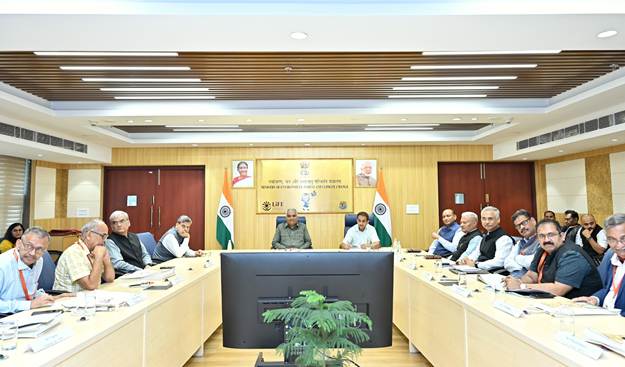
The Ministry of Environment, Forest and Climate Change launched the inception workshop for the sixth cycle of Management Effectiveness Evaluation of Tiger Reserves in New Delhi.
The workshop formally marked the beginning of MEE-TR 2026. Representatives of the National Tiger Conservation Authority, Wildlife Institute of India, State Forest Departments, Tiger Reserve management teams and experts participated in discussions on the methodology and implementation of the exercise.
The Technical Manual for MEE-TR 2026 was also released during the inaugural session.
2. What Is MEE-TR?
MEE-TR stands for Management Effectiveness Evaluation of Tiger Reserves.
It is a systematic and evidence-based process used to assess how effectively a Tiger Reserve is being managed to achieve its conservation objectives.
The evaluation does not simply count tigers. It examines whether planning, resources, management systems and conservation actions are adequate and whether those efforts are producing the desired results.
3. How Many Tiger Reserves Will Be Covered?
The sixth MEE-TR cycle will cover all 58 Tiger Reserves in India.
This makes the 2026 exercise broader than previous assessment cycles.
The evaluation will examine management performance across Tiger Reserves with different ecological, geographical and socio-economic conditions.
4. How Much Area Has India Demarcated for Tiger Conservation?
During the launch, the Environment Minister stated that India has demarcated more than 85,000 square kilometres for tiger conservation.
This area represents landscapes being managed with tiger conservation as an important objective.
The figure is useful for competitive examinations because it provides context for the geographical scale of India's tiger conservation effort.
5. Who Is Conducting MEE-TR 2026?
The National Tiger Conservation Authority is conducting the exercise in collaboration with the Wildlife Institute of India.
State Forest Departments, Tiger Reserve management teams and experts are also involved in the evaluation process.
Independent multidisciplinary evaluation teams will undertake the assessments.
6. What Is the National Tiger Conservation Authority?
The National Tiger Conservation Authority, commonly abbreviated as NTCA, is the principal statutory body associated with tiger conservation at the national level.
It works under the Ministry of Environment, Forest and Climate Change.
Its responsibilities include strengthening tiger conservation and supporting management of Tiger Reserves.
For examinations, NTCA should be associated with Project Tiger and India's institutional framework for tiger conservation.
7. What Is the Wildlife Institute of India?
The Wildlife Institute of India, commonly abbreviated as WII, is a major institution involved in wildlife research, training and conservation science in India.
It is located in Dehradun, Uttarakhand.
WII provides scientific and technical expertise for wildlife management and biodiversity conservation.
Its collaboration with NTCA provides the scientific and methodological support required for the MEE-TR exercise.
8. What Framework Is Used for MEE?
India's Management Effectiveness Evaluation system uses a framework adapted from the International Union for Conservation of Nature World Commission on Protected Areas Framework for Assessing Management Effectiveness.
The framework is commonly associated with the abbreviation IUCN-WCPA.
It provides a structured approach for examining whether protected areas are being managed effectively.
9. What Are the Six Elements of the MEE Framework?
The framework evaluates six major elements: Context, Planning, Inputs, Processes, Outputs and Outcomes.
Context examines the importance, threats and surrounding conditions of the protected area.
Planning examines objectives and management strategies.
Inputs consider resources such as personnel, infrastructure and finance.
Processes examine how management activities are implemented.
Outputs examine what management actions and services have actually been delivered.
Outcomes examine whether conservation objectives and desired results are being achieved.
10. When Did MEE Begin in India?
Management Effectiveness Evaluation for Tiger Reserves was initiated in India in 2006.
Since then, five assessment cycles have been completed before the sixth cycle launched in 2026.
The previous cycles were conducted in 2006, 2010, 2014, 2018 and 2022.
This makes MEE-TR a continuing assessment process rather than a one-time conservation exercise.
11. How Many Tiger Reserves Were Covered in Previous Cycles?
The first cycle in 2006 covered 28 Tiger Reserves.
The second cycle in 2010 covered 39 Tiger Reserves.
The third cycle in 2014 covered 43 Tiger Reserves.
The fourth cycle in 2018 covered 50 Tiger Reserves.
The fifth cycle in 2022 covered 51 Tiger Reserves.
The sixth cycle in 2026 is designed to cover all 58 Tiger Reserves.
These figures show how the scope of the assessment has expanded alongside India's Tiger Reserve network.
12. What Is New in MEE-TR 2026?
One of the most important changes is the introduction of Solid Waste Management as a separate evaluation criterion.
This means evaluators will specifically assess how waste is managed within Tiger Reserves.
The criterion reflects the increasing importance of managing human-generated waste in ecologically sensitive protected areas.
13. What Types of Waste Will Be Evaluated?
The new Solid Waste Management criterion will pay particular attention to waste generated at forest chowkis, waste generated by tourism activities and biomedical waste generated at wildlife rescue centres.
Each of these waste streams can create different ecological and management challenges.
Poorly managed waste can affect wildlife, habitats, water quality and the overall ecological integrity of protected areas.
14. Why Is Tourism Waste Important in Tiger Reserves?
Tiger Reserves attract large numbers of visitors for wildlife tourism.
Tourism can provide conservation awareness and local economic opportunities, but it can also generate plastic, packaging, food waste and other forms of solid waste.
If such waste is not managed properly, animals may ingest it or become attracted to human food sources.
Including waste management as a separate criterion therefore connects tourism management with ecological conservation.
15. What Other Components Will Be Evaluated?
MEE-TR 2026 will examine tiger and prey conservation, habitat management, protection and wildlife crime, wildlife monitoring and health, fire and disaster management, human-wildlife coexistence, community engagement, tourism management, landscape connectivity, management planning and availability of resources.
The broad scope shows that successful tiger conservation depends on far more than the number of tigers present in a reserve.
16. Why Is Prey Conservation Important?
Tigers are large carnivores and require adequate populations of prey animals to survive and reproduce.
A Tiger Reserve cannot maintain a healthy tiger population if its prey base becomes severely depleted.
Therefore, management must consider populations and habitats of species that form part of the tiger's natural prey base.
MEE-TR evaluates tiger and prey conservation together as an important component of reserve management.
17. Why Is Habitat Management Important?
Tigers require suitable habitats containing vegetation, water, prey and adequate space.
Habitat degradation can reduce the ecological carrying capacity of a landscape.
Management activities may therefore involve habitat restoration, water management, grassland management and control of invasive species depending on local ecological conditions.
MEE-TR examines whether such interventions are appropriate and effective for each reserve.
18. How Does MEE Address Wildlife Crime?
Protection and wildlife crime are among the major components of the assessment.
Tiger conservation requires measures against poaching and illegal wildlife trade as well as protection of habitats and prey species.
Evaluators can examine whether protection systems, patrolling arrangements, intelligence mechanisms and management processes are adequate for the specific challenges faced by a reserve.
19. Why Are Fire and Disaster Management Included?
Forest fires, floods, extreme weather and other disasters can affect habitats, wildlife and conservation infrastructure.
Preparedness and response capacity are therefore important parts of protected-area management.
The sixth MEE cycle will assess fire and disaster management as part of the wider evaluation of Tiger Reserve effectiveness.
20. What Is Human-Wildlife Coexistence?
Many Tiger Reserves are surrounded by villages, agricultural areas and other human-use landscapes.
Tigers and other wildlife may sometimes move beyond reserve boundaries, creating interactions or conflicts with people and livestock.
MEE-TR 2026 will examine human-wildlife coexistence and the management responses used in different landscapes.
The Environment Minister also called for area-based assessment of human-wildlife conflict rather than treating every reserve as if it faced identical circumstances.
21. Why Is Community Engagement Important?
Conservation areas exist within broader social landscapes.
Communities living around Tiger Reserves may depend on surrounding natural resources and can also play an important role in conservation.
The 2026 approach emphasises the need to consider local socio-economic conditions when evaluating management.
The Environment Minister also suggested greater involvement of local ecological and sociological experts and local youth in the MEE process.
22. What Is Landscape Connectivity?
Landscape connectivity refers to the ability of wildlife to move between suitable habitats across a wider landscape.
Tiger populations cannot always remain isolated within individual reserve boundaries.
Connections between forests and other suitable habitats can allow movement, dispersal and genetic exchange between populations.
The sixth MEE cycle therefore includes landscape connectivity among its major assessment components.
23. What Does Site-Specific Landscape Management Mean?
Tiger Reserves differ greatly in ecology, geography, tourism pressure, nearby human populations and conservation challenges.
A management solution appropriate for one reserve may not be appropriate for another.
Site-specific landscape management means developing conservation responses based on the actual ecological and socio-economic conditions of each location.
The 2026 evaluation places emphasis on such adaptive conservation practices.
24. What Is Adaptive Conservation?
Adaptive conservation is an approach in which management strategies are adjusted as new evidence, monitoring results and changing conditions become available.
Instead of assuming that one fixed strategy will remain effective indefinitely, managers assess results and modify their actions when required.
The sixth MEE cycle seeks to strengthen the use of field-based evidence, management outcomes, emerging threats, digital information and spatial information.
25. What Role Will Technology Play?
The 2026 evaluation places increased emphasis on digital and spatial information.
Modern conservation management can use tools such as geographic information systems, remote sensing, digital monitoring systems, camera traps and spatial databases.
These technologies can help managers analyse habitat conditions, wildlife distribution, threats and landscape connectivity.
The official launch also emphasised the need to integrate evolving scientific processes and technologies into wildlife conservation and evaluation.
26. Who Will Conduct the Actual Assessments?
Independent multidisciplinary evaluation teams will undertake the assessment.
A multidisciplinary team can combine expertise from fields such as wildlife biology, forestry, ecology, protected-area management and related disciplines.
The objective is to identify management strengths, gaps and areas requiring improvement.
The results can then provide a basis for prioritising management actions and resources.
27. Is MEE a Tiger Census?
No. Management Effectiveness Evaluation should not be confused with tiger population estimation.
A tiger census or population estimation primarily seeks to determine the number, distribution and status of tigers.
MEE-TR examines how effectively the reserve itself is being managed.
Tiger and prey conservation are part of the assessment, but the evaluation also covers planning, resources, tourism, community engagement, protection, habitat, waste, disasters and management outcomes.
28. What Was Released at the Workshop?
The Technical Manual of MEE 2026 was released during the inaugural session.
The manual provides the framework for the sixth-cycle evaluation.
Technical sessions at the workshop discussed the origin and evolution of MEE-TR, assessment criteria and indicators, operational procedures and logistics for field visits.
The manual is therefore an important methodological document for conducting the 2026 evaluation consistently across Tiger Reserves.
29. Why Is MEE Important for Conservation Policy?
Simply declaring an area protected does not guarantee effective conservation.
Protected areas require appropriate planning, sufficient resources, trained personnel, scientific monitoring, protection systems and engagement with surrounding communities.
MEE provides a structured way to determine whether these components are functioning effectively.
The assessment can identify successful management practices as well as areas where additional attention or resources are needed.
30. What Should Students Remember for Competitive Examinations?
MEE-TR stands for Management Effectiveness Evaluation of Tiger Reserves. The sixth cycle began on 25 September 2026. It will cover all 58 Tiger Reserves in India. NTCA is conducting the exercise in collaboration with the Wildlife Institute of India. MEE began in India in 2006. Earlier cycles were conducted in 2006, 2010, 2014, 2018 and 2022. They covered 28, 39, 43, 50 and 51 Tiger Reserves respectively. The MEE framework assesses six elements: Context, Planning, Inputs, Processes, Outputs and Outcomes. A major new feature in 2026 is the inclusion of Solid Waste Management as a separate evaluation criterion. India has demarcated more than 85,000 square kilometres for tiger conservation. The Technical Manual for MEE-TR 2026 was also released.
For UPSC, the subject is important for Environment and Ecology, biodiversity conservation, protected-area management, human-wildlife coexistence and governance. For SSC, Railway and State PCS examinations, NTCA, WII, 58 Tiger Reserves, the six MEE elements, the year 2006 and the new Solid Waste Management criterion are particularly important factual points.
क्या हुआ?
भारत ने 25 सितंबर 2026 को टाइगर रिजर्व के Management Effectiveness Evaluation अर्थात MEE-TR के छठे चक्र की शुरुआत की। केंद्रीय पर्यावरण, वन एवं जलवायु परिवर्तन मंत्री भूपेंद्र यादव ने नई दिल्ली में इसके प्रारंभिक कार्यशाला का शुभारंभ किया। यह मूल्यांकन National Tiger Conservation Authority अर्थात NTCA द्वारा Wildlife Institute of India अर्थात WII के सहयोग से किया जा रहा है और इसमें देश के सभी 58 टाइगर रिजर्व शामिल होंगे।
1. 25 सितंबर 2026 को क्या हुआ?
पर्यावरण, वन एवं जलवायु परिवर्तन मंत्रालय ने नई दिल्ली में टाइगर रिजर्व के Management Effectiveness Evaluation के छठे चक्र की प्रारंभिक कार्यशाला शुरू की।
इस कार्यशाला के साथ MEE-TR 2026 की औपचारिक शुरुआत हुई। इसमें NTCA, Wildlife Institute of India, राज्य वन विभागों, टाइगर रिजर्व प्रबंधन दलों और विशेषज्ञों ने मूल्यांकन की रूपरेखा, कार्यप्रणाली और क्रियान्वयन पर चर्चा की।
उद्घाटन सत्र के दौरान MEE-TR 2026 का Technical Manual भी जारी किया गया।
2. MEE-TR क्या है?
MEE-TR का पूरा नाम Management Effectiveness Evaluation of Tiger Reserves है।
यह एक व्यवस्थित और प्रमाण-आधारित मूल्यांकन प्रक्रिया है जिसके माध्यम से यह जाँचा जाता है कि कोई टाइगर रिजर्व अपने संरक्षण उद्देश्यों को प्राप्त करने के लिए कितनी प्रभावी ढंग से प्रबंधित किया जा रहा है।
यह केवल बाघों की संख्या की गणना नहीं करता। इसमें योजना, संसाधन, प्रबंधन प्रणाली, संरक्षण गतिविधियों और उनके वास्तविक परिणामों का मूल्यांकन किया जाता है।
3. कितने टाइगर रिजर्व का मूल्यांकन होगा?
छठे MEE-TR चक्र में भारत के सभी 58 टाइगर रिजर्व शामिल होंगे।
इस प्रकार 2026 का मूल्यांकन पिछले सभी चक्रों की तुलना में अधिक व्यापक है।
इन रिजर्वों की पारिस्थितिक, भौगोलिक और सामाजिक-आर्थिक परिस्थितियाँ अलग-अलग हैं, इसलिए मूल्यांकन में स्थानीय परिस्थितियों को भी महत्व दिया जाएगा।
4. भारत में बाघ संरक्षण के लिए कितना क्षेत्र निर्धारित है?
कार्यक्रम के दौरान पर्यावरण मंत्री ने बताया कि भारत ने बाघ संरक्षण के लिए 85,000 वर्ग किलोमीटर से अधिक क्षेत्र निर्धारित किया है।
यह आँकड़ा भारत में बाघ संरक्षण प्रयासों के भौगोलिक पैमाने को समझने में महत्वपूर्ण है।
प्रतियोगी परीक्षाओं के लिए 85,000 वर्ग किलोमीटर से अधिक का यह तथ्य उपयोगी है।
5. MEE-TR 2026 कौन कर रहा है?
National Tiger Conservation Authority इस मूल्यांकन को Wildlife Institute of India के सहयोग से कर रहा है।
राज्य वन विभाग, टाइगर रिजर्व प्रबंधन दल और विशेषज्ञ भी इस प्रक्रिया में शामिल होंगे।
वास्तविक मूल्यांकन स्वतंत्र बहुविषयक मूल्यांकन दलों द्वारा किया जाएगा।
6. National Tiger Conservation Authority क्या है?
National Tiger Conservation Authority को संक्षेप में NTCA कहा जाता है। यह राष्ट्रीय स्तर पर बाघ संरक्षण से संबंधित प्रमुख वैधानिक संस्था है।
यह पर्यावरण, वन एवं जलवायु परिवर्तन मंत्रालय के अंतर्गत कार्य करती है।
इसका संबंध भारत में बाघ संरक्षण और टाइगर रिजर्व प्रबंधन व्यवस्था को मजबूत करने से है।
प्रतियोगी परीक्षाओं में NTCA को Project Tiger और भारत की बाघ संरक्षण व्यवस्था से जोड़कर याद रखना चाहिए।
7. Wildlife Institute of India क्या है?
Wildlife Institute of India अर्थात WII भारत का प्रमुख वन्यजीव अनुसंधान, प्रशिक्षण और संरक्षण विज्ञान संस्थान है।
यह देहरादून, उत्तराखंड में स्थित है।
WII वन्यजीव प्रबंधन और जैव विविधता संरक्षण के लिए वैज्ञानिक तथा तकनीकी विशेषज्ञता प्रदान करता है।
MEE-TR में NTCA के साथ इसका सहयोग मूल्यांकन को वैज्ञानिक और तकनीकी आधार प्रदान करता है।
8. MEE में किस ढाँचे का उपयोग किया जाता है?
भारत की Management Effectiveness Evaluation प्रणाली International Union for Conservation of Nature की World Commission on Protected Areas द्वारा विकसित प्रबंधन प्रभावशीलता मूल्यांकन ढाँचे से अनुकूलित है।
इसे सामान्यतः IUCN-WCPA Framework से जोड़ा जाता है।
यह संरक्षित क्षेत्रों के प्रबंधन की प्रभावशीलता का व्यवस्थित मूल्यांकन करने के लिए संरचित दृष्टिकोण प्रदान करता है।
9. MEE Framework के छह तत्व कौन-से हैं?
MEE Framework छह प्रमुख तत्वों का मूल्यांकन करता है: Context, Planning, Inputs, Processes, Outputs और Outcomes।
Context संरक्षित क्षेत्र की परिस्थितियों, महत्व और खतरों को देखता है।
Planning उद्देश्यों और प्रबंधन रणनीतियों का मूल्यांकन करता है।
Inputs मानव संसाधन, आधारभूत संरचना और वित्त जैसे उपलब्ध संसाधनों को देखते हैं।
Processes यह देखते हैं कि प्रबंधन गतिविधियाँ कैसे लागू की जा रही हैं।
Outputs यह देखते हैं कि कौन-सी गतिविधियाँ और सेवाएँ वास्तव में पूरी की गईं।
Outcomes यह देखते हैं कि संरक्षण के इच्छित परिणाम प्राप्त हुए या नहीं।
10. भारत में MEE कब शुरू हुआ?
भारत में टाइगर रिजर्व के लिए Management Effectiveness Evaluation की शुरुआत 2006 में हुई थी।
2026 में शुरू हुए छठे चक्र से पहले पाँच मूल्यांकन चक्र पूरे हो चुके थे।
ये चक्र 2006, 2010, 2014, 2018 और 2022 में आयोजित किए गए थे।
इसलिए MEE-TR एक निरंतर मूल्यांकन प्रक्रिया है, न कि एक बार किया जाने वाला संरक्षण कार्यक्रम।
11. पिछले चक्रों में कितने टाइगर रिजर्व शामिल थे?
2006 के पहले चक्र में 28 टाइगर रिजर्व शामिल थे।
2010 के दूसरे चक्र में 39 टाइगर रिजर्व शामिल थे।
2014 के तीसरे चक्र में 43 टाइगर रिजर्व शामिल थे।
2018 के चौथे चक्र में 50 टाइगर रिजर्व शामिल थे।
2022 के पाँचवें चक्र में 51 टाइगर रिजर्व शामिल थे।
2026 के छठे चक्र में सभी 58 टाइगर रिजर्व शामिल होंगे।
ये आँकड़े दिखाते हैं कि भारत के टाइगर रिजर्व नेटवर्क के विस्तार के साथ मूल्यांकन का दायरा भी बढ़ा है।
12. MEE-TR 2026 में नया क्या है?
2026 के मूल्यांकन की सबसे महत्वपूर्ण नई विशेषताओं में Solid Waste Management को अलग मूल्यांकन मानदंड के रूप में शामिल करना है।
अब मूल्यांकन दल विशेष रूप से यह जाँचेंगे कि टाइगर रिजर्व के भीतर ठोस कचरे का प्रबंधन किस प्रकार किया जा रहा है।
यह परिवर्तन पारिस्थितिक रूप से संवेदनशील संरक्षित क्षेत्रों में मानव-जनित कचरे के बढ़ते महत्व को दर्शाता है।
13. किस प्रकार के कचरे का मूल्यांकन किया जाएगा?
नए Solid Waste Management मानदंड में वन चौकियों से उत्पन्न कचरा, पर्यटन गतिविधियों से उत्पन्न कचरा और वन्यजीव बचाव केंद्रों से उत्पन्न जैव-चिकित्सीय कचरा विशेष रूप से शामिल होगा।
इन सभी प्रकार के कचरे से अलग-अलग पारिस्थितिक और प्रबंधन संबंधी समस्याएँ उत्पन्न हो सकती हैं।
गलत तरीके से प्रबंधित कचरा वन्यजीवों, आवास, जल गुणवत्ता और संरक्षित क्षेत्र की पारिस्थितिक अखंडता को प्रभावित कर सकता है।
14. टाइगर रिजर्व में पर्यटन से उत्पन्न कचरा क्यों महत्वपूर्ण है?
टाइगर रिजर्व वन्यजीव पर्यटन के लिए बड़ी संख्या में पर्यटकों को आकर्षित करते हैं।
पर्यटन संरक्षण जागरूकता और स्थानीय आर्थिक अवसर प्रदान कर सकता है, लेकिन इससे प्लास्टिक, पैकेजिंग और खाद्य कचरा भी उत्पन्न हो सकता है।
यदि इसका उचित प्रबंधन न हो तो वन्यजीव इसे खा सकते हैं या मानव भोजन की ओर आकर्षित हो सकते हैं।
इसी कारण कचरा प्रबंधन को अलग मूल्यांकन मानदंड बनाना महत्वपूर्ण है।
15. किन अन्य क्षेत्रों का मूल्यांकन किया जाएगा?
MEE-TR 2026 में बाघ और शिकार प्रजातियों का संरक्षण, आवास प्रबंधन, सुरक्षा और वन्यजीव अपराध, वन्यजीव निगरानी और स्वास्थ्य, आग और आपदा प्रबंधन, मानव-वन्यजीव सह-अस्तित्व, सामुदायिक भागीदारी, पर्यटन प्रबंधन, landscape connectivity, प्रबंधन योजना और संसाधनों का मूल्यांकन किया जाएगा।
इससे स्पष्ट है कि सफल बाघ संरक्षण केवल टाइगर की संख्या पर निर्भर नहीं करता।
16. शिकार प्रजातियों का संरक्षण क्यों महत्वपूर्ण है?
बाघ बड़े मांसाहारी जीव हैं और जीवित रहने तथा प्रजनन के लिए पर्याप्त शिकार प्रजातियों पर निर्भर करते हैं।
यदि किसी टाइगर रिजर्व में प्राकृतिक शिकार की संख्या बहुत कम हो जाए तो वहाँ स्वस्थ बाघ आबादी बनाए रखना कठिन हो सकता है।
इसी कारण MEE-TR में बाघों के साथ उनकी शिकार प्रजातियों के संरक्षण का भी मूल्यांकन किया जाता है।
17. Habitat Management क्यों महत्वपूर्ण है?
बाघों को उपयुक्त वनस्पति, पानी, शिकार और पर्याप्त स्थान वाले आवास की आवश्यकता होती है।
आवास के क्षरण से किसी क्षेत्र की वन्यजीवों को बनाए रखने की क्षमता कम हो सकती है।
स्थानीय परिस्थितियों के अनुसार आवास पुनर्स्थापन, जल प्रबंधन, घासभूमि प्रबंधन और आक्रामक प्रजातियों का नियंत्रण आवश्यक हो सकता है।
MEE-TR यह देखता है कि ऐसे प्रबंधन उपाय उपयुक्त और प्रभावी हैं या नहीं।
18. वन्यजीव अपराध का मूल्यांकन कैसे होगा?
Protection and Wildlife Crime मूल्यांकन के प्रमुख घटकों में शामिल है।
बाघ संरक्षण के लिए अवैध शिकार और वन्यजीवों के अवैध व्यापार को रोकना आवश्यक है।
मूल्यांकन में सुरक्षा व्यवस्था, गश्त, सूचना तंत्र और अन्य प्रबंधन प्रणालियों की प्रभावशीलता देखी जा सकती है।
19. आग और आपदा प्रबंधन क्यों शामिल है?
जंगल की आग, बाढ़, अत्यधिक मौसम और अन्य आपदाएँ वन्यजीव आवास तथा संरक्षण आधारभूत संरचना को प्रभावित कर सकती हैं।
इसलिए किसी टाइगर रिजर्व की तैयारी और प्रतिक्रिया क्षमता प्रभावी प्रबंधन का महत्वपूर्ण हिस्सा है।
छठे MEE चक्र में Fire and Disaster Management का भी मूल्यांकन किया जाएगा।
20. Human-Wildlife Coexistence क्या है?
कई टाइगर रिजर्व के आसपास गाँव, कृषि क्षेत्र और मानव उपयोग वाले भू-दृश्य स्थित हैं।
बाघ और अन्य वन्यजीव कभी-कभी रिजर्व की सीमाओं से बाहर जा सकते हैं, जिससे मनुष्यों और पशुधन के साथ संघर्ष की स्थिति उत्पन्न हो सकती है।
MEE-TR 2026 मानव-वन्यजीव सह-अस्तित्व और अलग-अलग क्षेत्रों में अपनाए गए प्रबंधन उपायों का मूल्यांकन करेगा।
21. सामुदायिक भागीदारी क्यों महत्वपूर्ण है?
संरक्षित क्षेत्र व्यापक सामाजिक भू-दृश्य का हिस्सा होते हैं।
टाइगर रिजर्व के आसपास रहने वाले समुदाय प्राकृतिक संसाधनों पर निर्भर हो सकते हैं और संरक्षण में महत्वपूर्ण भूमिका भी निभा सकते हैं।
2026 के दृष्टिकोण में स्थानीय सामाजिक-आर्थिक परिस्थितियों को प्रबंधन मूल्यांकन में शामिल करने पर जोर दिया गया है।
स्थानीय पारिस्थितिक और समाजशास्त्रीय विशेषज्ञों तथा स्थानीय युवाओं की भागीदारी का भी सुझाव दिया गया।
22. Landscape Connectivity क्या है?
Landscape Connectivity का अर्थ व्यापक भू-दृश्य में उपयुक्त आवासों के बीच वन्यजीवों के आवागमन की क्षमता है।
बाघों की आबादी हमेशा किसी एक टाइगर रिजर्व की सीमा के भीतर अलग-थलग नहीं रह सकती।
जंगलों और अन्य उपयुक्त आवासों के बीच संपर्क से बाघों का आवागमन, फैलाव और अलग-अलग आबादियों के बीच आनुवंशिक आदान-प्रदान संभव हो सकता है।
इसी कारण landscape connectivity भी मूल्यांकन का प्रमुख घटक है।
23. Site-Specific Landscape Management क्या है?
अलग-अलग टाइगर रिजर्व की पारिस्थितिकी, भूगोल, पर्यटन दबाव, आसपास की मानव आबादी और संरक्षण चुनौतियाँ अलग होती हैं।
एक रिजर्व के लिए उपयुक्त समाधान दूसरे रिजर्व के लिए समान रूप से प्रभावी नहीं हो सकता।
Site-specific management का अर्थ प्रत्येक स्थान की वास्तविक पारिस्थितिक और सामाजिक-आर्थिक परिस्थितियों के आधार पर संरक्षण उपाय तैयार करना है।
24. Adaptive Conservation क्या है?
Adaptive Conservation में नई जानकारी, निगरानी के परिणाम और बदलती परिस्थितियों के अनुसार प्रबंधन रणनीतियों में सुधार किया जाता है।
इसमें यह मानकर नहीं चला जाता कि एक ही रणनीति हमेशा प्रभावी रहेगी।
2026 का मूल्यांकन field-based evidence, management outcomes, emerging threats, digital information और spatial information पर अधिक जोर देगा।
25. तकनीक की क्या भूमिका होगी?
2026 के मूल्यांकन में digital और spatial information पर अधिक जोर दिया गया है।
आधुनिक वन्यजीव संरक्षण में Geographic Information System, remote sensing, camera traps, digital monitoring systems और spatial databases जैसे उपकरण उपयोगी हो सकते हैं।
इनकी सहायता से आवास की स्थिति, वन्यजीव वितरण, खतरों और landscape connectivity का अध्ययन किया जा सकता है।
26. वास्तविक मूल्यांकन कौन करेगा?
मूल्यांकन स्वतंत्र बहुविषयक evaluation teams द्वारा किया जाएगा।
इन दलों में वन्यजीव जीवविज्ञान, वानिकी, पारिस्थितिकी, संरक्षित क्षेत्र प्रबंधन और संबंधित क्षेत्रों की विशेषज्ञता शामिल हो सकती है।
इसका उद्देश्य प्रबंधन की मजबूत विशेषताओं, कमियों और सुधार की आवश्यकता वाले क्षेत्रों की पहचान करना है।
27. क्या MEE Tiger Census है?
नहीं। Management Effectiveness Evaluation को बाघ जनसंख्या अनुमान से भ्रमित नहीं करना चाहिए।
Tiger population estimation मुख्य रूप से बाघों की संख्या, वितरण और स्थिति का आकलन करता है।
MEE-TR यह जाँचता है कि टाइगर रिजर्व का प्रबंधन कितना प्रभावी है।
इसमें बाघ और शिकार संरक्षण के साथ योजना, संसाधन, पर्यटन, समुदाय, सुरक्षा, आवास, कचरा और आपदा प्रबंधन जैसे विषय भी शामिल होते हैं।
28. कार्यशाला में क्या जारी किया गया?
उद्घाटन सत्र के दौरान Technical Manual of MEE 2026 जारी किया गया।
यह Manual छठे चक्र के मूल्यांकन की रूपरेखा प्रदान करता है।
कार्यशाला के तकनीकी सत्रों में MEE-TR की शुरुआत और विकास, मूल्यांकन मानदंड, indicators, field visits की प्रक्रिया और operational arrangements पर चर्चा हुई।
29. संरक्षण नीति के लिए MEE क्यों महत्वपूर्ण है?
किसी क्षेत्र को केवल संरक्षित घोषित कर देना प्रभावी संरक्षण की गारंटी नहीं देता।
संरक्षित क्षेत्रों के लिए उचित योजना, पर्याप्त संसाधन, प्रशिक्षित कर्मचारी, वैज्ञानिक निगरानी, सुरक्षा व्यवस्था और स्थानीय समुदायों के साथ सहयोग आवश्यक है।
MEE यह जाँचने के लिए व्यवस्थित तरीका प्रदान करता है कि ये व्यवस्थाएँ वास्तव में प्रभावी हैं या नहीं।
इसके परिणाम सफल प्रबंधन उपायों के साथ उन क्षेत्रों की भी पहचान कर सकते हैं जहाँ अतिरिक्त संसाधनों या सुधार की आवश्यकता है।
30. प्रतियोगी परीक्षाओं के लिए क्या याद रखें?
MEE-TR का पूरा नाम Management Effectiveness Evaluation of Tiger Reserves है। छठा चक्र 25 सितंबर 2026 को शुरू हुआ। इसमें भारत के सभी 58 टाइगर रिजर्व शामिल होंगे। NTCA यह मूल्यांकन Wildlife Institute of India के सहयोग से कर रहा है। भारत में MEE की शुरुआत 2006 में हुई थी। पिछले चक्र 2006, 2010, 2014, 2018 और 2022 में हुए और उनमें क्रमशः 28, 39, 43, 50 और 51 टाइगर रिजर्व शामिल थे। MEE Framework के छह तत्व Context, Planning, Inputs, Processes, Outputs और Outcomes हैं। 2026 में Solid Waste Management को अलग मूल्यांकन मानदंड के रूप में जोड़ा गया है। भारत ने बाघ संरक्षण के लिए 85,000 वर्ग किलोमीटर से अधिक क्षेत्र निर्धारित किया है। MEE-TR 2026 का Technical Manual भी जारी किया गया।
UPSC के लिए यह Environment and Ecology, biodiversity conservation, protected-area management, human-wildlife coexistence और governance से संबंधित महत्वपूर्ण विषय है। SSC, Railway और State PCS के लिए NTCA, WII, 58 Tiger Reserves, MEE के छह तत्व, वर्ष 2006 और नया Solid Waste Management criterion विशेष रूप से महत्वपूर्ण हैं।
Key Facts
• The sixth cycle of MEE-TR was launched on 25 September 2026.
• MEE-TR stands for Management Effectiveness Evaluation of Tiger Reserves.
• The sixth cycle will cover all 58 Tiger Reserves in India.
• The inception workshop was held in New Delhi.
• Union Environment Minister Bhupender Yadav launched the workshop.
• The National Tiger Conservation Authority is organising the exercise.
• The Wildlife Institute of India is collaborating with NTCA.
• Independent multidisciplinary teams will undertake the evaluations.
• India has demarcated more than 85,000 square kilometres for tiger conservation.
• MEE is an evidence-based assessment of Tiger Reserve management effectiveness.
• India's MEE framework is adapted from the IUCN World Commission on Protected Areas framework.
• The six MEE elements are Context, Planning, Inputs, Processes, Outputs and Outcomes.
• MEE for Tiger Reserves began in India in 2006.
• The first MEE cycle in 2006 covered 28 Tiger Reserves.
• The 2010 cycle covered 39 Tiger Reserves.
• The 2014 cycle covered 43 Tiger Reserves.
• The 2018 cycle covered 50 Tiger Reserves.
• The 2022 cycle covered 51 Tiger Reserves.
• Solid Waste Management is a separate evaluation criterion in MEE-TR 2026.
• The waste criterion includes waste from forest chowkis.
• It also includes tourism-related waste.
• Biomedical waste from wildlife rescue centres will also be evaluated.
• Human-wildlife coexistence is included in the assessment.
• Landscape connectivity is included in the assessment.
• The Technical Manual of MEE 2026 was released during the inaugural session.
मुख्य तथ्य
• MEE-TR का छठा चक्र 25 सितंबर 2026 को शुरू किया गया।
• MEE-TR का पूरा नाम Management Effectiveness Evaluation of Tiger Reserves है।
• छठे चक्र में भारत के सभी 58 टाइगर रिजर्व शामिल होंगे।
• प्रारंभिक कार्यशाला नई दिल्ली में आयोजित हुई।
• केंद्रीय पर्यावरण मंत्री भूपेंद्र यादव ने कार्यशाला का शुभारंभ किया।
• National Tiger Conservation Authority इस मूल्यांकन का आयोजन कर रहा है।
• Wildlife Institute of India, NTCA के साथ सहयोग कर रहा है।
• स्वतंत्र बहुविषयक दल वास्तविक मूल्यांकन करेंगे।
• भारत ने बाघ संरक्षण के लिए 85,000 वर्ग किलोमीटर से अधिक क्षेत्र निर्धारित किया है।
• MEE टाइगर रिजर्व प्रबंधन की प्रभावशीलता का प्रमाण-आधारित मूल्यांकन है।
• भारत का MEE Framework IUCN World Commission on Protected Areas Framework से अनुकूलित है।
• MEE के छह तत्व Context, Planning, Inputs, Processes, Outputs और Outcomes हैं।
• भारत में टाइगर रिजर्व के लिए MEE की शुरुआत 2006 में हुई।
• 2006 के पहले चक्र में 28 टाइगर रिजर्व शामिल थे।
• 2010 के चक्र में 39 टाइगर रिजर्व शामिल थे।
• 2014 के चक्र में 43 टाइगर रिजर्व शामिल थे।
• 2018 के चक्र में 50 टाइगर रिजर्व शामिल थे।
• 2022 के चक्र में 51 टाइगर रिजर्व शामिल थे।
• MEE-TR 2026 में Solid Waste Management अलग मूल्यांकन मानदंड है।
• कचरा प्रबंधन मानदंड में वन चौकियों का कचरा शामिल होगा।
• पर्यटन गतिविधियों से उत्पन्न कचरा भी शामिल होगा।
• वन्यजीव बचाव केंद्रों का biomedical waste भी मूल्यांकन में शामिल होगा।
• Human-wildlife coexistence मूल्यांकन का हिस्सा है।
• Landscape connectivity भी मूल्यांकन का हिस्सा है।
• उद्घाटन सत्र में MEE 2026 का Technical Manual जारी किया गया।
Background
India began Management Effectiveness Evaluation of Tiger Reserves in 2006. Five cycles were completed in 2006, 2010, 2014, 2018 and 2022, covering 28, 39, 43, 50 and 51 Tiger Reserves respectively. On 25 September 2026, the National Tiger Conservation Authority and Wildlife Institute of India began the sixth cycle, which will cover all 58 Tiger Reserves. The evaluation uses a framework adapted from the IUCN World Commission on Protected Areas model and examines Context, Planning, Inputs, Processes, Outputs and Outcomes.
पृष्ठभूमि
भारत में टाइगर रिजर्व के Management Effectiveness Evaluation की शुरुआत 2006 में हुई। 2006, 2010, 2014, 2018 और 2022 में पाँच चक्र पूरे किए गए, जिनमें क्रमशः 28, 39, 43, 50 और 51 टाइगर रिजर्व शामिल थे। 25 सितंबर 2026 को National Tiger Conservation Authority और Wildlife Institute of India ने छठे चक्र की शुरुआत की, जिसमें सभी 58 टाइगर रिजर्व शामिल होंगे। मूल्यांकन IUCN World Commission on Protected Areas के ढाँचे से अनुकूलित प्रणाली का उपयोग करता है और Context, Planning, Inputs, Processes, Outputs तथा Outcomes का आकलन करता है।
Why It Matters
MEE-TR is important because effective tiger conservation requires more than declaring protected areas or estimating tiger numbers. Reserve management also depends on habitat quality, prey populations, anti-poaching measures, wildlife monitoring, disaster preparedness, community engagement, tourism management, landscape connectivity and adequate resources. The 2026 addition of Solid Waste Management as a separate criterion reflects emerging conservation challenges within protected areas.
यह क्यों महत्वपूर्ण है?
MEE-TR महत्वपूर्ण है क्योंकि प्रभावी बाघ संरक्षण केवल संरक्षित क्षेत्र घोषित करने या बाघों की संख्या का अनुमान लगाने तक सीमित नहीं है। रिजर्व प्रबंधन आवास की गुणवत्ता, शिकार प्रजातियों की उपलब्धता, अवैध शिकार रोकने की व्यवस्था, वन्यजीव निगरानी, आपदा तैयारी, सामुदायिक भागीदारी, पर्यटन प्रबंधन, landscape connectivity और पर्याप्त संसाधनों पर भी निर्भर करता है। 2026 में Solid Waste Management को अलग मानदंड बनाना संरक्षित क्षेत्रों में उभरती संरक्षण चुनौतियों को दर्शाता है।
Exam Connection
Remember: launch date—25 September 2026; exercise—6th cycle of Management Effectiveness Evaluation of Tiger Reserves; coverage—all 58 Tiger Reserves; institutions—NTCA and Wildlife Institute of India; MEE started in India—2006; previous cycles—2006, 2010, 2014, 2018 and 2022; six elements—Context, Planning, Inputs, Processes, Outputs and Outcomes; major new criterion in 2026—Solid Waste Management; tiger conservation area—more than 85,000 sq km.
परीक्षा से संबंध
याद रखें: शुरुआत—25 सितंबर 2026; कार्यक्रम—Management Effectiveness Evaluation of Tiger Reserves का छठा चक्र; कवरेज—सभी 58 टाइगर रिजर्व; संस्थाएँ—NTCA और Wildlife Institute of India; भारत में MEE की शुरुआत—2006; पिछले चक्र—2006, 2010, 2014, 2018 और 2022; छह तत्व—Context, Planning, Inputs, Processes, Outputs और Outcomes; 2026 का प्रमुख नया मानदंड—Solid Waste Management; बाघ संरक्षण के लिए निर्धारित क्षेत्र—85,000 वर्ग किलोमीटर से अधिक।
 SSC CGL 2026 Ultimate Chapterwise
 SSC CHSL 2026 Ultimate Chapterwise