What Happened
India's urban plastic-waste management efforts are increasingly combining regulation with local innovation, community participation, recycling and livelihood generation. A Press Information Bureau backgrounder released on 25 September 2026 highlighted examples from Tamil Nadu, Maharashtra, the Andaman and Nicobar Islands, Karnataka and Punjab to demonstrate how cities are addressing different stages of the plastic-waste cycle. The examples follow five broad ideas: Reduce, Reuse, Return, Recover and Recreate.
1. What Is the Latest Development?
The Press Information Bureau highlighted a series of city-level initiatives showing how plastic waste can be reduced, collected, recovered and converted into useful materials instead of simply being sent to dumpsites or landfills.
The initiatives include plastic-free farmers' markets in Tiruchirappalli, cloth-bag vending machines in Maharashtra, a milk-pouch buy-back programme in the Andaman and Nicobar Islands, a plastic Material Recovery Facility in Bengaluru and conversion of difficult-to-recycle multilayered plastic into chipboards in Patiala.
Together, these examples demonstrate different stages of a circular approach to plastic: reduce consumption, reuse alternatives, return used material, recover recyclable waste and recreate waste into useful products.
2. What Is India's Broader Plastic-Waste Strategy?
India's approach combines restrictions on selected single-use plastic products with source segregation, door-to-door waste collection, material recovery, recycling, public awareness and community participation.
The Swachh Bharat Mission, launched on 2 October 2014, has strengthened systems for collection, segregation and scientific processing of municipal waste.
Identified single-use plastic items have been prohibited since 1 July 2022. However, regulation alone cannot eliminate plastic pollution. Local governments, businesses, communities, consumers, waste workers and recyclers all have roles in changing how plastic is used and discarded.
3. What Does Reduce, Reuse, Return, Recover and Recreate Mean?
Reduce means preventing unnecessary plastic consumption before waste is generated.
Reuse means replacing disposable products with alternatives that can be used repeatedly.
Return means creating systems through which consumers can bring used material back for proper collection or recycling.
Recover means separating useful materials from the waste stream and preparing them for recycling.
Recreate means converting recovered waste into new and useful products.
These stages are closely connected with the concept of a circular economy.
4. What Happened in Tiruchirappalli?
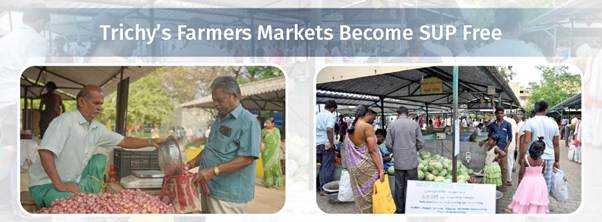
Tiruchirappalli, commonly called Trichy, in Tamil Nadu developed a market-focused campaign to reduce the use of single-use plastic.
The city corporation began the campaign in 2022 and selected three farmers' markets for intensive engagement: Tennur, K.K. Nagar and Woraiyur.
Together, the three markets covered 220 vendors.
Instead of relying only on enforcement, the city administration worked with vendors and consumers to explain the environmental effects of single-use plastic and encourage practical alternatives.
5. What Is ThunippaiThiruvizhai?
The ThunippaiThiruvizhai or Cloth-Bag Festival initiative encouraged shoppers to use reusable cloth bags instead of disposable plastic bags.
The approach targeted an everyday behaviour that can generate large quantities of plastic waste when repeated across thousands of shopping transactions.
Making reusable bags part of routine shopping can reduce waste at its source rather than depending entirely on collection and recycling after the plastic has already been discarded.
6. How Much Plastic Was Avoided in Trichy Markets?
The official backgrounder reported measurable reductions across the three farmers' markets.
Tennur market avoided 2,200 kilograms of single-use plastic in one year.
K.K. Nagar market avoided 620 kilograms in four months.
Woraiyur market avoided 300 kilograms in six months.
The time periods are different, so these figures should not be directly treated as annual comparisons between the three markets.
7. Why Is Source Reduction Important?
Waste management becomes easier when unnecessary waste is prevented before it is created.
Recycling requires collection, segregation, transportation, processing and a market for recycled materials. Source reduction avoids some of these downstream requirements entirely.
This is why reusable cloth or jute bags can play an important role in reducing dependence on disposable shopping bags.
8. What Is the Thaila ATM Initiative?
Vita town in Maharashtra has introduced five Thaila ATMs at crowded locations.
These machines operate in a manner similar to vending machines. A shopper can insert a coin or currency note and receive a reusable cotton bag.
The idea addresses a practical problem: even consumers who want to avoid plastic may sometimes arrive at a market without carrying a reusable bag.
By making cloth bags immediately available, the system makes the reusable option more convenient.
9. How Does Technology Support the Thaila ATM?
The machines use Global System for Mobile Communications or GSM technology.
The system allows the availability of bags to be monitored remotely. When the stock falls below a specified level, the municipal council can receive an alert and arrange replenishment.
The initiative therefore combines a simple reusable product with digital monitoring technology.
10. How Does the Thaila ATM Support Livelihoods?
Women associated with local Self-Help Groups stitch the cotton bags supplied through the machines.
This links environmental action with local livelihood generation.
Around 6,000 bags had been sold through the initiative, while the weekly market recorded sales of nearly 200 bags in a single day.
The model demonstrates how environmental programmes can potentially create economic opportunities when local groups participate in the supply chain.
11. What Other Plastic-Reduction Measures Are Being Used in Maharashtra?
Cities in Maharashtra are combining awareness campaigns with enforcement measures such as market inspections and penalties.
In Indapur, authorities seized 25 kilograms of plastic bags and imposed a fine of ₹90,000.
In Wardha, a Self-Help Group distributed 17,000 paper bags.
Cloth and jute bags are also being promoted as reusable alternatives.
These examples show that plastic reduction can involve enforcement, public awareness and access to practical alternatives simultaneously.
12. What Is the Milk-Pouch Buy-Back Initiative?
The Andaman and Nicobar Islands introduced an initiative to encourage consumers to return used plastic milk pouches instead of discarding them.
Collection points were established where consumers could return the pouches and receive rewards, including fresh milk and discounts.
The programme combines waste collection with an economic incentive, giving used plastic a small but visible value in the eyes of consumers.
13. Which Organisations Are Involved in the Milk-Pouch Programme?
The initiative was implemented in collaboration with the Andaman and Nicobar Islands Integrated Development Corporation Limited, abbreviated as ANIIDCO, and Sri Vijaya Puram Municipal Council, abbreviated as SVPMC.
Awareness programmes were also conducted to encourage residents to return used pouches and understand the importance of recycling and responsible disposal.
14. How Many Milk Pouches Were Collected?
By November 2024, 17,600 used milk pouches had been collected through the initiative.
Residents participating in the programme received a total of 352 litres of milk as rewards.
The programme illustrates the idea of a return system in which consumers have an incentive to bring packaging back into an organised waste-management channel rather than throwing it away.
15. What Is a Material Recovery Facility?
A Material Recovery Facility, commonly abbreviated as MRF, is a facility where collected waste is sorted so that recyclable materials can be separated and prepared for further processing.
Depending on the facility, operations may include sorting, segregation, shredding, compacting or baling.
Material Recovery Facilities are important because mixed waste is much more difficult to recycle efficiently than properly segregated material.
16. What Is Project Prithvi in Bengaluru?
In Bengaluru, the United Nations Development Programme's Project Prithvi has supported plastic-waste recovery and recycling.
Under the programme, a Material Recovery Facility known as Swachhata Kendra was established in 2019 for Safai Saathis.
The facility sorts plastic waste and processes it through shredding and baling so that the material can be supplied to recyclers.
The centre is managed by the social organisation Hasiru Dala.
17. Who Are Safai Saathis?
Safai Saathis are workers involved in waste collection, segregation and recovery activities.
Their work is critical to urban recycling systems because recyclable material must be collected and separated before it can re-enter the production cycle.
The Bengaluru Swachhata Kendra provided employment to 76 Safai Saathis during the COVID-19 pandemic, according to the PIB backgrounder.
The initiative therefore connects plastic recovery with livelihoods and the recognition of waste workers' role in the circular economy.
18. What Happens to the Recovered Plastic?
Plastic processed through recovery systems can be supplied to recyclers and converted into useful products.
The Bengaluru example highlighted applications such as roads, agricultural water pipes and furniture.
Instead of treating discarded plastic exclusively as useless waste, the circular-economy approach attempts to recover its material value and return it to productive use wherever technically and environmentally appropriate.
19. What Is Multilayered Plastic?
Multilayered Plastic, abbreviated as MLP, is packaging made by combining multiple layers of materials.
Examples include many chocolate wrappers, biscuit packets, chips packets and shampoo sachets.
These packages may combine materials such as plastic, paper and aluminium.
The combination provides useful packaging properties, but it also makes recycling difficult because the individual layers can be challenging to separate economically.
20. What Is Patiala Doing with Multilayered Plastic?
Patiala in Punjab has developed a recycling approach for difficult-to-recycle low-value plastic through a Plastic Recycling Facility.
At the CSR-supported facility, low-value plastic waste is sorted, cleaned and shredded into flakes.
These flakes then undergo hot and cold pressing to form chipboards.
This provides a potential productive use for material that might otherwise be sent to landfill.
21. What Are the Recycled Chipboards Used For?
The recycled chipboards can be used for applications such as furniture, roofing and temporary shelters.
According to the PIB backgrounder, the material is resistant to water and termites.
The facility has a processing capacity of 10 tonnes per day and produces approximately 75 to 100 chipboards.
This example represents the recreate stage of the plastic-management cycle.
22. What Is a Circular Economy?
A circular economy seeks to keep products and materials in productive use for as long as practical rather than following a simple take, use and discard model.
In the context of plastic, this can involve reducing unnecessary consumption, designing reusable products, collecting discarded material, recycling suitable waste and using recovered material to manufacture new products.
The goal is to reduce waste generation and make better use of existing resources.
23. What Is the Difference Between a Linear and Circular Economy?
A linear economy broadly follows the sequence of extracting resources, manufacturing products, using them and then discarding them.
A circular economy attempts to create loops in which products or materials are reused, repaired, recovered or recycled.
Not every material can be recycled indefinitely, and recycling itself requires energy and infrastructure. Therefore, waste prevention and reuse generally remain important alongside recycling.
24. What Is the Role of the Swachh Bharat Mission?
The Swachh Bharat Mission was launched on 2 October 2014.
In urban waste management, it has supported source segregation, door-to-door collection, scientific waste processing and material recovery.
The plastic-management examples highlighted in the September 2026 backgrounder demonstrate how local initiatives can complement broader national waste-management programmes.
The Mission completes twelve years on 2 October 2026.
25. What Happened to Identified Single-Use Plastic Items in India?
Identified single-use plastic items have been prohibited since 1 July 2022.
Single-use plastic refers broadly to plastic products designed to be used once before disposal or recycling, although the precise legal restrictions apply to specifically identified items under India's regulatory framework.
Students should therefore avoid interpreting the measure as a prohibition on every plastic product in India.
26. Why Is Source Segregation Important?
Source segregation means separating different categories of waste where they are generated, such as at households, shops or institutions.
When wet waste, dry waste and other waste streams are mixed together, recyclable material can become contaminated and more difficult to recover.
Separating waste at source improves the efficiency of collection, processing and recycling systems.
It is therefore a fundamental element of scientific municipal solid-waste management.
27. How Does Plastic Management Create Livelihoods?
Waste management requires collection, sorting, transportation, processing, recycling and manufacturing.
These activities can generate livelihood opportunities when organised properly.
The examples highlighted by PIB include Self-Help Group women stitching reusable cotton bags in Maharashtra and Safai Saathis working at the Bengaluru Material Recovery Facility.
This demonstrates the social dimension of the circular economy alongside its environmental objectives.
28. Why Is Community Participation Important?
Plastic waste is generated through millions of individual consumption decisions. Municipal authorities alone cannot prevent every disposable item from entering the waste stream.
Consumers influence outcomes by carrying reusable bags, segregating household waste and returning recyclable materials through authorised systems.
Vendors, Self-Help Groups, waste workers, recyclers and local governments also contribute at different stages.
The examples highlighted by PIB therefore emphasise behavioural change alongside infrastructure and regulation.
29. What Do the Five City Models Teach?
The Trichy model demonstrates reduction at source through reusable bags and market engagement.
Vita demonstrates reuse by making cotton bags conveniently available through Thaila ATMs.
The Andaman and Nicobar Islands model demonstrates return through incentives for used milk pouches.
Bengaluru demonstrates recovery through a Material Recovery Facility and the participation of Safai Saathis.
Patiala demonstrates recreation by converting difficult-to-recycle multilayered plastic into chipboards.
Together, they show that plastic management requires interventions at multiple stages rather than a single solution.
30. What Should Students Remember for Competitive Examinations?
The PIB backgrounder was released on 25 September 2026. Swachh Bharat Mission was launched on 2 October 2014. Identified single-use plastic items have been prohibited since 1 July 2022. Trichy's initiative covered Tennur, K.K. Nagar and Woraiyur farmers' markets and 220 vendors. Tennur avoided 2,200 kg of single-use plastic in one year. Vita in Maharashtra has five Thaila ATMs using GSM technology. Around 6,000 reusable bags had been sold. The Andaman and Nicobar Islands milk-pouch initiative collected 17,600 pouches by November 2024 and provided 352 litres of milk as rewards. Bengaluru's Swachhata Kendra was established in 2019 under UNDP's Project Prithvi and is managed by Hasiru Dala. Patiala's Plastic Recycling Facility can process 10 tonnes per day and produce approximately 75 to 100 chipboards.
For UPSC, the topic is relevant to Environment, urbanisation, circular economy, municipal solid-waste management, community participation and sustainable development. For SSC, Railway and State PCS examinations, important factual points include the Swachh Bharat Mission launch date, the single-use plastic prohibition date, Thaila ATM, Project Prithvi, Material Recovery Facility, multilayered plastic and the Reduce-Reuse-Return-Recover-Recreate framework.
क्या हुआ?
भारत में शहरी प्लास्टिक कचरा प्रबंधन के प्रयासों में अब नियमों के साथ स्थानीय नवाचार, सामुदायिक भागीदारी, पुनर्चक्रण और आजीविका सृजन को भी जोड़ा जा रहा है। 25 सितंबर 2026 को जारी Press Information Bureau के एक backgrounder में तमिलनाडु, महाराष्ट्र, अंडमान और निकोबार द्वीप समूह, कर्नाटक और पंजाब के उदाहरणों के माध्यम से बताया गया कि अलग-अलग शहर प्लास्टिक कचरे की समस्या के विभिन्न चरणों पर किस प्रकार काम कर रहे हैं। इन उदाहरणों को पाँच व्यापक विचारों से समझा जा सकता है: Reduce, Reuse, Return, Recover और Recreate।
1. नवीनतम विकास क्या है?
Press Information Bureau ने विभिन्न शहरों की ऐसी पहलों को प्रस्तुत किया जिनमें प्लास्टिक कचरे को केवल dumpsite या landfill में भेजने के बजाय उसकी खपत कम करने, संग्रह करने, पुनर्प्राप्त करने और उपयोगी सामग्री में बदलने का प्रयास किया जा रहा है।
इनमें तिरुचिरापल्ली के plastic-free farmers' markets, महाराष्ट्र के cloth-bag vending machines, अंडमान और निकोबार द्वीप समूह की milk-pouch buy-back व्यवस्था, बेंगलुरु का Material Recovery Facility और पटियाला में multilayered plastic से chipboard निर्माण शामिल हैं।
2. भारत की व्यापक प्लास्टिक कचरा रणनीति क्या है?
भारत की रणनीति में चिन्हित single-use plastic वस्तुओं पर प्रतिबंध के साथ source segregation, door-to-door collection, material recovery, recycling, जन-जागरूकता और सामुदायिक भागीदारी शामिल हैं।
Swachh Bharat Mission की शुरुआत 2 अक्टूबर 2014 को हुई थी। इसने कचरे के संग्रह, पृथक्करण और वैज्ञानिक प्रसंस्करण की प्रणालियों को मजबूत करने में भूमिका निभाई है।
चिन्हित single-use plastic वस्तुओं पर 1 जुलाई 2022 से प्रतिबंध लागू है।
3. Reduce, Reuse, Return, Recover और Recreate का क्या अर्थ है?
Reduce का अर्थ अनावश्यक प्लास्टिक उपयोग को कचरा बनने से पहले ही कम करना है।
Reuse का अर्थ ऐसी वस्तुओं का उपयोग करना है जिन्हें एक बार फेंकने के बजाय बार-बार इस्तेमाल किया जा सके।
Return का अर्थ उपभोक्ताओं को उपयोग की गई सामग्री वापस करने के लिए व्यवस्थित व्यवस्था देना है।
Recover का अर्थ कचरे से उपयोगी सामग्री अलग करके उसे recycling के लिए तैयार करना है।
Recreate का अर्थ पुनर्प्राप्त सामग्री को नए उपयोगी उत्पादों में बदलना है।
4. तिरुचिरापल्ली में क्या किया गया?
तमिलनाडु के तिरुचिरापल्ली, जिसे सामान्यतः Trichy कहा जाता है, ने single-use plastic कम करने के लिए बाजार-केंद्रित अभियान विकसित किया।
नगर निगम ने 2022 में अभियान शुरू किया और तीन farmers' markets को गहन भागीदारी के लिए चुना: Tennur, K.K. Nagar और Woraiyur।
इन तीनों बाजारों में कुल 220 vendors शामिल थे।
नगर प्रशासन ने vendors और ग्राहकों को single-use plastic से होने वाले पर्यावरणीय नुकसान के बारे में जागरूक किया और sustainable alternatives अपनाने के लिए प्रेरित किया।
5. ThunippaiThiruvizhai क्या है?
ThunippaiThiruvizhai अर्थात Cloth-Bag Festival ने ग्राहकों को disposable plastic bags के स्थान पर reusable cloth bags अपनाने के लिए प्रोत्साहित किया।
इस पहल का उद्देश्य रोजमर्रा की ऐसी आदत को बदलना था जो हजारों खरीदारी लेन-देन में दोहराए जाने पर बड़ी मात्रा में प्लास्टिक कचरा उत्पन्न कर सकती है।
Reusable bags अपनाने से प्लास्टिक के कचरे में बदलने से पहले ही उसकी मांग कम की जा सकती है।
6. Trichy के बाजारों में कितना प्लास्टिक बचाया गया?
Tennur market में एक वर्ष में 2,200 किलोग्राम single-use plastic के उपयोग से बचा गया।
K.K. Nagar में चार महीनों में 620 किलोग्राम प्लास्टिक बचाया गया।
Woraiyur में छह महीनों में 300 किलोग्राम प्लास्टिक उपयोग से बचा गया।
इन आँकड़ों की समय अवधि अलग-अलग है, इसलिए इन्हें सीधे वार्षिक तुलना के रूप में नहीं देखना चाहिए।
7. Source Reduction क्यों महत्वपूर्ण है?
यदि कचरा बनने से पहले ही अनावश्यक उपयोग कम कर दिया जाए तो बाद की waste-management प्रक्रिया आसान हो जाती है।
Recycling के लिए collection, segregation, transportation और processing की आवश्यकता होती है।
Source reduction इनमें से कुछ प्रक्रियाओं की आवश्यकता को शुरुआत में ही कम कर सकता है।
इसी कारण reusable cloth और jute bags महत्वपूर्ण विकल्प हैं।
8. Thaila ATM क्या है?
महाराष्ट्र के Vita town में भीड़भाड़ वाले स्थानों पर पाँच Thaila ATMs लगाए गए हैं।
ये vending machines की तरह काम करते हैं। ग्राहक coin या currency note डालकर reusable cotton bag प्राप्त कर सकता है।
इससे उस स्थिति का व्यावहारिक समाधान मिलता है जब कोई व्यक्ति बाजार में अपना reusable bag लाना भूल जाए।
9. Thaila ATM में तकनीक का उपयोग कैसे होता है?
ये मशीनें Global System for Mobile Communications अर्थात GSM technology का उपयोग करती हैं।
इसके माध्यम से bags की उपलब्धता की remote monitoring की जा सकती है।
जब bag stock निर्धारित स्तर से कम होता है तो municipal council को इसकी जानकारी मिल सकती है और नए bags उपलब्ध कराए जा सकते हैं।
इस प्रकार एक साधारण reusable bag initiative को digital monitoring से जोड़ा गया है।
10. Thaila ATM से आजीविका कैसे जुड़ी है?
स्थानीय Self-Help Groups से जुड़ी महिलाएँ इन मशीनों के लिए cotton bags सिलती हैं।
इससे पर्यावरण संरक्षण को स्थानीय livelihood generation से जोड़ा गया है।
लगभग 6,000 bags बेचे जा चुके थे और weekly market में एक दिन में लगभग 200 bags की बिक्री दर्ज की गई।
11. महाराष्ट्र में और कौन-से कदम उठाए गए?
महाराष्ट्र के शहर awareness और enforcement दोनों का उपयोग कर रहे हैं।
Indapur में अधिकारियों ने 25 किलोग्राम plastic bags जब्त किए और ₹90,000 का जुर्माना लगाया।
Wardha में एक Self-Help Group ने 17,000 paper bags वितरित किए।
इसके साथ cloth और jute bags को reusable alternatives के रूप में बढ़ावा दिया जा रहा है।
12. Milk-Pouch Buy-Back Initiative क्या है?
अंडमान और निकोबार द्वीप समूह में उपभोक्ताओं को इस्तेमाल किए गए plastic milk pouches फेंकने के बजाय वापस करने के लिए प्रोत्साहित किया गया।
Collection points बनाए गए जहाँ लोग इस्तेमाल किए गए pouches वापस करके fresh milk और discounts जैसे rewards प्राप्त कर सकते थे।
इस मॉडल में plastic waste को एक छोटा आर्थिक मूल्य देकर लोगों को उसे organised collection system में वापस लाने के लिए प्रेरित किया जाता है।
13. Milk-Pouch Programme में कौन-सी संस्थाएँ शामिल हैं?
यह पहल Andaman and Nicobar Islands Integrated Development Corporation Limited अर्थात ANIIDCO और Sri Vijaya Puram Municipal Council अर्थात SVPMC के सहयोग से की गई।
लोगों को recycling और responsible disposal के महत्व के बारे में जागरूक करने के लिए awareness campaigns भी चलाए गए।
14. कितने Milk Pouches एकत्र किए गए?
नवंबर 2024 तक इस पहल के माध्यम से 17,600 used milk pouches एकत्र किए गए थे।
भाग लेने वाले निवासियों को rewards के रूप में कुल 352 litres दूध दिया गया।
यह उदाहरण बताता है कि आर्थिक incentive लोगों को packaging वापस करने और उचित waste-management channel का उपयोग करने के लिए प्रेरित कर सकता है।
15. Material Recovery Facility क्या है?
Material Recovery Facility अर्थात MRF ऐसा केंद्र होता है जहाँ एकत्रित कचरे को अलग-अलग किया जाता है ताकि recyclable materials को पहचानकर आगे processing के लिए तैयार किया जा सके।
यहाँ sorting, segregation, shredding और baling जैसी प्रक्रियाएँ हो सकती हैं।
MRF महत्वपूर्ण है क्योंकि mixed waste की तुलना में अलग किया गया recyclable material अधिक प्रभावी ढंग से process किया जा सकता है।
16. Bengaluru का Project Prithvi क्या है?
बेंगलुरु में United Nations Development Programme के Project Prithvi ने plastic-waste recovery और recycling को समर्थन दिया है।
इस कार्यक्रम के अंतर्गत Safai Saathis के लिए 2019 में Swachhata Kendra नामक Material Recovery Facility स्थापित की गई।
यहाँ plastic waste को sort करके shredding और baling के माध्यम से recyclers के लिए तैयार किया जाता है।
इस केंद्र का प्रबंधन Hasiru Dala नामक सामाजिक संगठन करता है।
17. Safai Saathis कौन हैं?
Safai Saathis waste collection, segregation और recovery से जुड़े workers हैं।
Urban recycling system में उनकी महत्वपूर्ण भूमिका है क्योंकि recycling से पहले सामग्री को एकत्र और अलग करना आवश्यक होता है।
PIB backgrounder के अनुसार Bengaluru Swachhata Kendra ने COVID-19 pandemic के दौरान 76 Safai Saathis को रोजगार प्रदान किया था।
18. Recover किए गए Plastic का क्या होता है?
Recovery systems से प्राप्त plastic को recyclers तक पहुँचाकर उपयोगी उत्पादों में बदला जा सकता है।
Bengaluru के उदाहरण में processed plastic का उपयोग roads, agricultural water pipes और furniture बनाने में किया जाता है।
Circular economy का उद्देश्य discarded material के उपयोगी मूल्य को पुनः प्राप्त करके उसे उत्पादन प्रणाली में वापस लाना है।
19. Multilayered Plastic क्या है?
Multilayered Plastic को MLP कहा जाता है। इसमें अलग-अलग materials की कई layers को मिलाकर packaging तैयार की जाती है।
Chocolate wrappers, biscuit packets, chips packets और shampoo sachets इसके सामान्य उदाहरण हैं।
इनमें plastic, paper और aluminium जैसी सामग्रियों की layers हो सकती हैं।
इन layers को अलग करना कठिन होने के कारण ऐसी packaging को recycle करना चुनौतीपूर्ण होता है।
20. Patiala में Multilayered Plastic के साथ क्या किया जा रहा है?
पंजाब के Patiala में difficult-to-recycle low-value plastic के लिए Plastic Recycling Facility का उपयोग किया जा रहा है।
CSR-supported facility में plastic waste को sort, clean और shred करके flakes में बदला जाता है।
इसके बाद hot और cold pressing के माध्यम से इन flakes को chipboard में बदला जाता है।
इससे ऐसी सामग्री को उपयोगी रूप मिलता है जो अन्यथा landfill में जा सकती थी।
21. Recycled Chipboards का उपयोग कहाँ होता है?
इन recycled chipboards का उपयोग furniture, roofing और temporary shelters जैसी वस्तुओं में किया जा सकता है।
PIB backgrounder के अनुसार यह material water और termites के प्रति resistant है।
Facility की processing capacity 10 tonnes प्रतिदिन है और यह लगभग 75 से 100 chipboards बना सकती है।
यह plastic-management cycle के Recreate चरण का उदाहरण है।
22. Circular Economy क्या है?
Circular Economy का उद्देश्य products और materials को यथासंभव लंबे समय तक उपयोगी आर्थिक चक्र में बनाए रखना है।
Plastic के संदर्भ में इसका अर्थ अनावश्यक consumption कम करना, reusable products अपनाना, discarded material एकत्र करना, recyclable waste process करना और recovered material से नए products बनाना हो सकता है।
इससे waste generation कम करने और उपलब्ध resources का बेहतर उपयोग करने का प्रयास किया जाता है।
23. Linear Economy और Circular Economy में क्या अंतर है?
Linear Economy सामान्यतः resources निकालने, products बनाने, उनका उपयोग करने और फिर उन्हें फेंकने के क्रम पर आधारित होती है।
Circular Economy ऐसी loops बनाने का प्रयास करती है जिनमें products या materials को reuse, repair, recover या recycle किया जा सके।
हर material को अनंत बार recycle नहीं किया जा सकता और recycling में भी energy तथा infrastructure की आवश्यकता होती है। इसलिए waste prevention और reuse भी महत्वपूर्ण हैं।
24. Swachh Bharat Mission की क्या भूमिका है?
Swachh Bharat Mission की शुरुआत 2 अक्टूबर 2014 को हुई थी।
Urban waste management में यह source segregation, door-to-door collection, scientific waste processing और material recovery को मजबूत करने पर केंद्रित है।
सितंबर 2026 में प्रस्तुत plastic-management examples दिखाते हैं कि स्थानीय पहलें व्यापक राष्ट्रीय waste-management programme को किस प्रकार मजबूत कर सकती हैं।
2 अक्टूबर 2026 को Swachh Bharat Mission के 12 वर्ष पूरे होंगे।
25. Single-Use Plastic के संबंध में क्या कदम उठाया गया?
भारत में चिन्हित single-use plastic items पर 1 जुलाई 2022 से प्रतिबंध लागू है।
Single-use plastic सामान्यतः ऐसे plastic products को कहा जाता है जिन्हें एक बार उपयोग के बाद फेंकने के लिए बनाया जाता है।
हालाँकि कानूनी प्रतिबंध विशेष रूप से चिन्हित वस्तुओं पर लागू है। इसलिए इसे भारत में हर प्रकार के plastic पर पूर्ण प्रतिबंध के रूप में नहीं समझना चाहिए।
26. Source Segregation क्यों महत्वपूर्ण है?
Source segregation का अर्थ उस स्थान पर ही अलग-अलग प्रकार के कचरे को अलग करना है जहाँ वह उत्पन्न होता है, जैसे घर, दुकान या संस्थान।
यदि wet waste और dry recyclable waste आपस में मिल जाएँ तो recyclable materials दूषित हो सकते हैं और उन्हें recover करना कठिन हो सकता है।
Source segregation collection, processing और recycling की efficiency बढ़ाता है।
27. Plastic Management से रोजगार कैसे उत्पन्न हो सकता है?
Waste management में collection, sorting, transportation, processing, recycling और manufacturing जैसी अनेक गतिविधियाँ शामिल होती हैं।
सही तरीके से व्यवस्थित होने पर ये livelihood opportunities उत्पन्न कर सकती हैं।
PIB द्वारा बताए गए उदाहरणों में Maharashtra में Self-Help Group की महिलाओं द्वारा reusable cotton bags बनाना और Bengaluru में Safai Saathis का Material Recovery Facility में काम करना शामिल है।
28. Community Participation क्यों महत्वपूर्ण है?
Plastic waste लाखों व्यक्तिगत consumption decisions से उत्पन्न होता है। केवल municipal authorities हर disposable item को waste stream में जाने से नहीं रोक सकतीं।
Consumers reusable bags का उपयोग करके, household waste को अलग करके और recyclable materials को उचित collection systems में वापस करके योगदान दे सकते हैं।
Vendors, Self-Help Groups, waste workers, recyclers और local governments की भी अलग-अलग चरणों में भूमिका होती है।
29. पाँच स्थानीय मॉडल हमें क्या सिखाते हैं?
Trichy model reusable bags और market engagement के माध्यम से source reduction का उदाहरण है।
Vita का Thaila ATM reusable cotton bags को आसानी से उपलब्ध कराकर Reuse को बढ़ावा देता है।
Andaman and Nicobar Islands का milk-pouch programme Return model का उदाहरण है।
Bengaluru का Material Recovery Facility और Safai Saathis का मॉडल Recover को दर्शाता है।
Patiala में multilayered plastic को chipboard में बदलना Recreate का उदाहरण है।
ये सभी उदाहरण दिखाते हैं कि plastic pollution के समाधान के लिए एक ही उपाय पर्याप्त नहीं है।
30. प्रतियोगी परीक्षाओं के लिए क्या याद रखें?
PIB backgrounder 25 सितंबर 2026 को जारी हुआ। Swachh Bharat Mission 2 अक्टूबर 2014 को शुरू हुआ था। चिन्हित single-use plastic items पर 1 जुलाई 2022 से प्रतिबंध है। Trichy की पहल में Tennur, K.K. Nagar और Woraiyur के farmers' markets तथा कुल 220 vendors शामिल थे। Tennur में एक वर्ष में 2,200 kg single-use plastic उपयोग से बचा गया। Maharashtra के Vita में GSM technology वाले पाँच Thaila ATMs हैं। लगभग 6,000 reusable bags बेचे गए। Andaman and Nicobar Islands में नवंबर 2024 तक 17,600 milk pouches एकत्र किए गए और rewards के रूप में 352 litres दूध दिया गया। Bengaluru का Swachhata Kendra UNDP के Project Prithvi के अंतर्गत 2019 में स्थापित हुआ और इसका प्रबंधन Hasiru Dala करता है। Patiala Plastic Recycling Facility की क्षमता 10 tonnes प्रतिदिन है और यह लगभग 75 से 100 chipboards बना सकती है।
UPSC के लिए यह विषय Environment, urbanisation, circular economy, municipal solid-waste management, community participation और sustainable development से संबंधित है। SSC, Railway और State PCS के लिए Swachh Bharat Mission की शुरुआत, single-use plastic prohibition date, Thaila ATM, Project Prithvi, Material Recovery Facility, Multilayered Plastic और Reduce-Reuse-Return-Recover-Recreate framework महत्वपूर्ण तथ्य हैं।
Key Facts
• PIB released the plastic-waste management backgrounder on 25 September 2026.
• Swachh Bharat Mission was launched on 2 October 2014.
• Identified single-use plastic items have been prohibited since 1 July 2022.
• The highlighted approach follows Reduce, Reuse, Return, Recover and Recreate.
• Trichy began its market-focused single-use plastic campaign in 2022.
• Tennur, K.K. Nagar and Woraiyur farmers' markets participated in the Trichy initiative.
• The three Trichy markets covered 220 vendors.
• Tennur avoided 2,200 kg of single-use plastic in one year.
• K.K. Nagar avoided 620 kg in four months.
• Woraiyur avoided 300 kg in six months.
• Vita town in Maharashtra has installed five Thaila ATMs.
• Thaila ATMs dispense reusable cotton bags.
• The machines use GSM technology for remote stock monitoring.
• Women from local Self-Help Groups stitch bags for the Thaila ATMs.
• Around 6,000 bags had been sold through the initiative.
• Indapur authorities seized 25 kg of plastic bags and imposed a ₹90,000 fine.
• A Self-Help Group in Wardha distributed 17,000 paper bags.
• The Andaman and Nicobar Islands developed a used milk-pouch return initiative.
• By November 2024, 17,600 milk pouches had been collected.
• Participants received a total of 352 litres of milk as rewards.
• Bengaluru's Swachhata Kendra was established in 2019.
• The Bengaluru facility is associated with UNDP's Project Prithvi.
• Hasiru Dala manages the Bengaluru Swachhata Kendra.
• The facility provided employment to 76 Safai Saathis during the COVID-19 pandemic.
• Patiala has a Plastic Recycling Facility for low-value plastic waste.
• The Patiala facility converts plastic flakes into chipboards.
• Its processing capacity is 10 tonnes per day.
• The facility produces approximately 75 to 100 chipboards.
मुख्य तथ्य
• PIB ने plastic-waste management backgrounder 25 सितंबर 2026 को जारी किया।
• Swachh Bharat Mission की शुरुआत 2 अक्टूबर 2014 को हुई थी।
• चिन्हित single-use plastic items पर 1 जुलाई 2022 से प्रतिबंध लागू है।
• प्रमुख दृष्टिकोण Reduce, Reuse, Return, Recover और Recreate है।
• Trichy ने market-focused single-use plastic अभियान 2022 में शुरू किया।
• Tennur, K.K. Nagar और Woraiyur farmers' markets Trichy initiative में शामिल थे।
• तीनों बाजारों में कुल 220 vendors शामिल थे।
• Tennur ने एक वर्ष में 2,200 kg single-use plastic उपयोग से बचाव किया।
• K.K. Nagar ने चार महीनों में 620 kg plastic उपयोग से बचाव किया।
• Woraiyur ने छह महीनों में 300 kg plastic उपयोग से बचाव किया।
• Maharashtra के Vita town में पाँच Thaila ATMs लगाए गए हैं।
• Thaila ATMs reusable cotton bags उपलब्ध कराते हैं।
• मशीनें remote stock monitoring के लिए GSM technology का उपयोग करती हैं।
• स्थानीय Self-Help Groups की महिलाएँ Thaila ATM के bags सिलती हैं।
• लगभग 6,000 bags बेचे जा चुके थे।
• Indapur में 25 kg plastic bags जब्त किए गए और ₹90,000 का जुर्माना लगाया गया।
• Wardha में एक Self-Help Group ने 17,000 paper bags वितरित किए।
• Andaman and Nicobar Islands में used milk-pouch return initiative विकसित किया गया।
• नवंबर 2024 तक 17,600 milk pouches एकत्र किए गए।
• प्रतिभागियों को rewards के रूप में कुल 352 litres दूध दिया गया।
• Bengaluru का Swachhata Kendra 2019 में स्थापित किया गया।
• Bengaluru facility UNDP के Project Prithvi से संबंधित है।
• Hasiru Dala Bengaluru Swachhata Kendra का प्रबंधन करता है।
• इस facility ने COVID-19 pandemic के दौरान 76 Safai Saathis को रोजगार दिया।
• Patiala में low-value plastic waste के लिए Plastic Recycling Facility है।
• Patiala facility plastic flakes को chipboards में बदलती है।
• इसकी processing capacity 10 tonnes प्रतिदिन है।
• Facility लगभग 75 से 100 chipboards का उत्पादन करती है।
Background
India's urban plastic-waste strategy combines regulation, behavioural change, source segregation, collection, material recovery and recycling. The Swachh Bharat Mission was launched on 2 October 2014, while identified single-use plastic items have been prohibited since 1 July 2022. The PIB backgrounder released on 25 September 2026 used local examples from Trichy, Vita, the Andaman and Nicobar Islands, Bengaluru and Patiala to demonstrate how communities and urban authorities are applying different parts of the plastic circular-economy model.
पृष्ठभूमि
भारत की urban plastic-waste strategy में regulation, behavioural change, source segregation, collection, material recovery और recycling को जोड़ा गया है। Swachh Bharat Mission की शुरुआत 2 अक्टूबर 2014 को हुई थी, जबकि चिन्हित single-use plastic items पर 1 जुलाई 2022 से प्रतिबंध लागू है। 25 सितंबर 2026 को जारी PIB backgrounder में Trichy, Vita, Andaman and Nicobar Islands, Bengaluru और Patiala के उदाहरणों के माध्यम से बताया गया कि स्थानीय समुदाय और urban authorities plastic circular-economy model के अलग-अलग हिस्सों को कैसे लागू कर रहे हैं।
Why It Matters
Plastic pollution cannot be addressed through a single intervention. Preventing unnecessary consumption reduces waste at source, reusable alternatives reduce demand for disposable products, return systems improve collection, Material Recovery Facilities help recover recyclable material and recycling technologies can convert difficult waste into useful products. The initiatives also demonstrate how waste management can be linked with Self-Help Groups, Safai Saathis and local livelihood opportunities.
यह क्यों महत्वपूर्ण है?
Plastic pollution का समाधान किसी एक उपाय से नहीं किया जा सकता। अनावश्यक consumption को रोकने से source पर waste कम होता है, reusable alternatives disposable products की मांग घटाते हैं, return systems collection बेहतर करते हैं, Material Recovery Facilities recyclable material को recover करने में सहायता करती हैं और recycling technologies कठिन plastic waste को उपयोगी products में बदल सकती हैं। ये पहलें यह भी दिखाती हैं कि waste management को Self-Help Groups, Safai Saathis और स्थानीय livelihood opportunities से जोड़ा जा सकता है।
Exam Connection
Remember: PIB backgrounder—25 September 2026; Swachh Bharat Mission launch—2 October 2014; identified single-use plastic prohibition—1 July 2022; Trichy markets—Tennur, K.K. Nagar and Woraiyur; vendors covered—220; Vita—five Thaila ATMs using GSM technology; milk-pouch initiative—Andaman and Nicobar Islands; 17,600 pouches collected by November 2024 and 352 litres of milk given as rewards; Bengaluru—UNDP Project Prithvi and Swachhata Kendra established in 2019; Patiala—Plastic Recycling Facility with 10-tonne-per-day capacity; key framework—Reduce, Reuse, Return, Recover and Recreate.
परीक्षा से संबंध
याद रखें: PIB backgrounder—25 सितंबर 2026; Swachh Bharat Mission की शुरुआत—2 अक्टूबर 2014; चिन्हित single-use plastic items पर प्रतिबंध—1 जुलाई 2022; Trichy markets—Tennur, K.K. Nagar और Woraiyur; vendors—220; Vita—GSM technology वाले पाँच Thaila ATMs; milk-pouch initiative—Andaman and Nicobar Islands; नवंबर 2024 तक 17,600 pouches collected और rewards के रूप में 352 litres दूध; Bengaluru—UNDP Project Prithvi और 2019 में स्थापित Swachhata Kendra; Patiala—10 tonnes प्रतिदिन क्षमता वाली Plastic Recycling Facility; मुख्य framework—Reduce, Reuse, Return, Recover और Recreate।
 SSC CGL 2026 Ultimate Chapterwise
 SSC CHSL 2026 Ultimate Chapterwise