What Happened
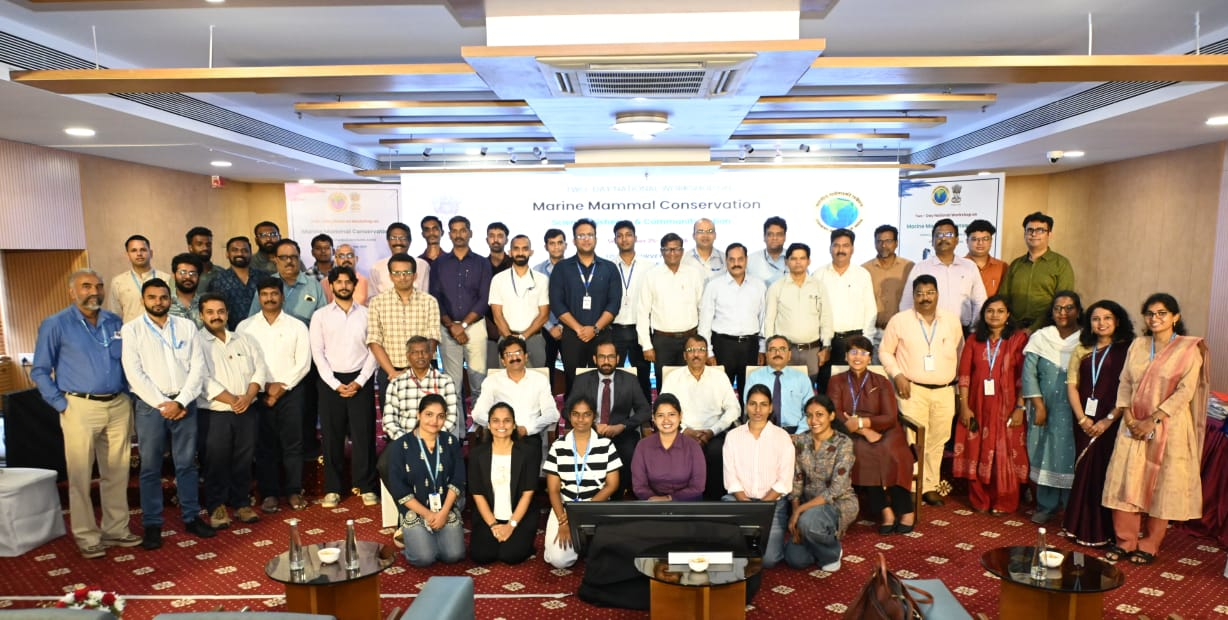
The Fishery Survey of India organised a two-day National Workshop on Marine Mammal Conservation: Science, Fisheries & Community Action at the World Trade Centre in Mumbai on 25–26 September 2026. The workshop was designed to contribute to a national action plan for marine mammal conservation for 2027–2032 and to strengthen scientific information on marine mammals in India's Exclusive Economic Zone. A major focus was the relationship between marine biodiversity conservation and sustainable fisheries.
1. What Was the National Workshop About?
The workshop focused on marine mammal conservation in Indian waters and brought together specialists from fisheries science, wildlife conservation, enforcement agencies, conservation organisations and fishing communities.
Its discussions centred on three major areas: improving monitoring of marine mammals, reducing accidental capture of marine mammals during fishing operations, and increasing the participation of fishing communities in conservation.
The programme also examined modern scientific technologies and community-based approaches that could form part of a coordinated conservation framework for 2027–2032.
2. Who Organised the Workshop?
The workshop was organised by the Fishery Survey of India, commonly abbreviated as FSI.
FSI functions under the Department of Fisheries, Ministry of Fisheries, Animal Husbandry and Dairying.
Its work is associated with assessment and survey of fishery resources and generation of scientific information relevant to fisheries management.
3. Where and When Was the Workshop Held?
The National Workshop began on 25 September 2026 and continued on 26 September 2026.
It was held at the World Trade Centre in Mumbai, Maharashtra.
The official theme of the workshop was Marine Mammal Conservation: Science, Fisheries & Community Action.
4. What Is the Main Objective for 2027–2032?
One of the central objectives is to contribute to the development of a national action plan for marine mammal conservation covering the period 2027–2032.
The proposed framework is intended to connect scientific monitoring, fisheries management, conservation action and community participation.
The workshop also sought to improve scientific information about marine mammal populations in India's Exclusive Economic Zone.
5. How Many Marine Mammal Species Are Found in the Arabian Sea and Bay of Bengal?
According to the Fishery Survey of India workshop release, the Arabian Sea and the Bay of Bengal are home to 33 species of marine mammals.
These include animals belonging to groups such as dolphins and whales, along with other marine mammals occurring in Indian waters.
The figure of 33 species is one of the most important factual points from the workshop for competitive examinations.
6. What Legal Protection Do These Species Receive?
The official release states that all 33 marine mammal species referred to in the Arabian Sea and Bay of Bengal receive the highest level of legal protection under Schedule I of the Wildlife (Protection) Act, 1972.
Schedule I protection is therefore an important legal association for examination purposes.
The existence of legal protection, however, does not eliminate the need for monitoring, enforcement, scientific research and reduction of accidental mortality.
7. What Is India's Exclusive Economic Zone?
An Exclusive Economic Zone, commonly abbreviated as EEZ, is a maritime zone extending beyond a country's territorial sea in which the coastal state has sovereign rights for purposes such as exploring, exploiting, conserving and managing natural resources in accordance with international law.
The workshop specifically emphasised the need to strengthen scientific information about marine mammals within India's EEZ.
For examinations, EEZ is an important concept connecting geography, international law, fisheries and marine-resource management.
8. Why Is Scientific Information Important?
Effective conservation requires reliable information about where species occur, their population patterns, movement, habitat use and interaction with human activities.
The workshop noted that information concerning deep-sea marine mammal populations and marine mammal bycatch in fishing operations remains limited.
Filling these information gaps can help conservation authorities and fisheries managers design better-targeted interventions.
9. What Is Marine Mammal Bycatch?
Bycatch refers to the unintended capture of animals that were not the primary target of a fishing operation.
For example, fishing gear deployed to catch commercially important fish can sometimes accidentally capture dolphins, whales or other marine animals.
Marine mammal bycatch can result in injury or mortality and is therefore an important issue at the intersection of fisheries and wildlife conservation.
10. Why Is Bycatch a Difficult Conservation Problem?
Fishing is an important source of food, employment and livelihoods for coastal communities. Conservation measures therefore need to reduce accidental harm to protected marine species without ignoring the social and economic importance of fisheries.
This is why the workshop brought fisheries scientists, conservation experts and representatives of fishing communities into the same discussion.
The objective is to identify practical methods that support both sustainable fisheries and marine mammal conservation.
11. What Is Passive Acoustic Monitoring?
Passive Acoustic Monitoring, or PAM, is one of the modern methods discussed for monitoring marine mammals.
Many marine mammals, particularly cetaceans such as whales and dolphins, produce sounds for communication, navigation and other biological functions.
Under passive acoustic monitoring, underwater listening equipment can record sounds in the marine environment. Researchers can analyse these acoustic signals to obtain information about the presence and activity of sound-producing marine animals.
12. Why Can Acoustic Monitoring Be Useful?
Marine mammals spend much of their lives underwater and may be difficult to observe directly over large ocean areas.
Acoustic monitoring can complement visual surveys by providing information when animals are producing detectable sounds.
However, it is not a complete substitute for other methods because detection depends on factors such as species behaviour, equipment placement, environmental conditions and the sounds being produced.
13. What Is Environmental DNA or e-DNA?
Environmental DNA, abbreviated as e-DNA, is genetic material collected from environmental samples rather than directly from an organism.
Living organisms can leave genetic traces in water through biological material. Scientists can collect water samples and analyse genetic material to look for evidence of particular organisms or groups.
The workshop identified e-DNA as one of the modern approaches that could be discussed for monitoring marine mammal populations.
14. Why Is e-DNA Important for Biodiversity Monitoring?
e-DNA can complement conventional biodiversity surveys because researchers may be able to detect evidence of organisms without physically capturing them.
This can be useful in aquatic environments where species may be difficult to locate visually.
Nevertheless, e-DNA results require careful sampling, laboratory analysis and interpretation, and the method is normally used alongside other sources of ecological information.
15. What Is Satellite Telemetry?
Satellite telemetry is another technology identified in the workshop for marine mammal monitoring.
Telemetry involves obtaining information remotely from an animal carrying an appropriate tracking device. Satellite-linked systems can provide information related to movement and location over time.
Such information can help scientists understand migration routes, habitat use and movement patterns of suitable tagged animals.
16. What Are Bycatch Reduction Devices?
Bycatch Reduction Devices are modifications or devices intended to reduce the accidental capture of non-target animals during fishing operations.
The workshop was scheduled to consider improved fishing gear and Bycatch Reduction Devices as possible approaches to reducing accidental capture of marine mammals.
Their design and effectiveness can vary depending on fishing method, target species and local ecological conditions.
17. What Are Acoustic Deterrents?
Acoustic deterrents use sound with the objective of warning or discouraging certain marine animals from approaching fishing gear or other areas where they may face risk.
The workshop included acoustic deterrents among the methods to be considered for reducing accidental capture of dolphins, whales and other marine mammals.
As with other conservation technologies, their application needs to consider effectiveness, species response and environmental conditions.
18. What Is a Marine Animal Stranding?
A stranding occurs when a marine animal such as a whale or dolphin is found ashore or in a situation where it cannot return to the water normally.
Strandings can involve living or dead animals and may have different causes.
A rapid and scientifically organised response can be important for animal welfare, collection of biological information and understanding possible causes of the event.
19. What Are Local Stranding Response Networks?
The workshop considered community-based local stranding response networks as part of the conservation framework.
Such networks can help ensure that appropriate organisations are informed quickly when a stranded marine animal is discovered.
Cooperation between local residents, fishing communities, scientists, wildlife authorities and trained responders can improve reporting and response.
20. What Is the Jalchar App?
The Jalchar app was identified as a digital tool to be discussed during the workshop for reporting and responding to stranded marine animals.
The application was developed by the Bombay Natural History Society, commonly abbreviated as BNHS, Mumbai.
Its inclusion in the workshop demonstrates how citizen reporting and digital tools can contribute to marine conservation and stranding-response systems.
21. What Is Citizen Science?
Citizen science involves members of the public contributing observations or other information to scientific research and monitoring.
Fishing communities and coastal residents spend considerable time near marine environments and can potentially provide useful observations concerning marine animals, strandings or unusual events.
When supported by clear protocols and expert verification, citizen science can complement formal scientific monitoring.
22. Why Are Fishing Communities Important for Conservation?
Fishing communities possess practical knowledge of local marine environments and interact with coastal and offshore ecosystems as part of their livelihoods.
Their participation can help identify where accidental encounters with marine mammals occur and whether particular fishing practices or locations are associated with higher risks.
Conservation measures are also more likely to be workable when the people directly affected by them are included in their design and implementation.
23. Who Participated in the Workshop?
The workshop brought together fisheries scientists, marine mammal experts, enforcement agencies, conservation organisations and representatives of fishing communities.
This multi-stakeholder approach reflects the fact that marine mammal conservation cannot be addressed through biological research alone.
It also involves fisheries management, law enforcement, technology, local knowledge and livelihood considerations.
24. Who Inaugurated the Workshop?
The workshop was inaugurated by Dr Ravikiran Govekar, IFS, Additional Principal Chief Conservator of Forests, Wildlife (West).
Dr Sanjay Pandey, Deputy Commissioner (Fisheries), attended as the Guest of Honour.
Dr Sreenath K. R., Director General of the Fishery Survey of India, presided over the inaugural session.
Dr Mahesh Kumar Farejiya and Dr Sijo P. Varghese, Deputy Directors General of FSI, also addressed the gathering.
25. Why Are the Arabian Sea and Bay of Bengal Important?
India has an extensive coastline facing two major marine regions: the Arabian Sea to the west and the Bay of Bengal to the east.
These waters support diverse marine ecosystems and significant fisheries.
The presence of 33 marine mammal species highlighted in the official release makes their conservation relevant to both biodiversity protection and sustainable management of India's marine resources.
26. How Does Marine Mammal Conservation Relate to Sustainable Fisheries?
Marine ecosystems support both wildlife and human livelihoods. Fisheries depend on functioning marine ecosystems, while poorly managed fishing practices can sometimes create risks for non-target species.
Sustainable fisheries therefore seek to maintain productive fisheries while reducing ecological damage and conserving biodiversity.
The FSI workshop directly connected marine mammal conservation with science, fisheries and community action rather than treating these subjects separately.
27. Why Is Deep-Sea Information a Challenge?
Deep-sea environments are difficult and expensive to study. Marine mammals may travel over large areas and spend substantial periods underwater.
Consequently, information about abundance, distribution and interactions with fishing operations can remain incomplete.
Technologies such as Passive Acoustic Monitoring, e-DNA and satellite telemetry are being considered because they can complement traditional observation methods and improve the scientific evidence base.
28. What Was Expected from the Workshop's Conclusion?
The two-day workshop was scheduled to conclude on 26 September 2026 with discussions directed toward a coordinated national framework for marine mammal conservation and sustainable fisheries.
The broader objective is to inform a conservation roadmap for 2027–2032.
The official release describes the workshop as part of the process of developing the framework; it should not be interpreted as evidence that every proposed measure had already been formally adopted or implemented nationwide.
29. Why Is This Topic Important for UPSC and State PCS?
The subject connects several parts of the syllabus: biodiversity conservation, marine ecology, fisheries, protected species, environmental technology, community participation and India's Exclusive Economic Zone.
Technologies such as e-DNA, Passive Acoustic Monitoring and satellite telemetry can appear in science-and-environment questions.
The legal association of the 33 marine mammal species with Schedule I of the Wildlife (Protection) Act, 1972 is also important for statement-based questions.
30. What Should Students Remember for Competitive Examinations?
The Fishery Survey of India organised the National Workshop on Marine Mammal Conservation: Science, Fisheries & Community Action at the World Trade Centre, Mumbai, on 25–26 September 2026. Its objective was to contribute to a national action plan for marine mammal conservation for 2027–2032 and strengthen scientific information concerning marine mammals in India's Exclusive Economic Zone.
According to the official release, the Arabian Sea and Bay of Bengal are home to 33 species of marine mammals, all of which receive the highest level of legal protection under Schedule I of the Wildlife (Protection) Act, 1972. Important monitoring technologies discussed included Passive Acoustic Monitoring, environmental DNA or e-DNA and satellite telemetry. Approaches to reducing accidental capture included improved fishing gear, Bycatch Reduction Devices and acoustic deterrents.
Community participation was another major pillar. Local stranding response networks and citizen science were discussed, along with the Jalchar app developed by the Bombay Natural History Society, Mumbai, for reporting and responding to stranded marine animals. For examinations, remember the association: FSI—Marine Mammal Conservation—33 species—Schedule I—Arabian Sea and Bay of Bengal—EEZ—PAM—e-DNA—satellite telemetry—bycatch reduction—Jalchar app—BNHS—2027–2032 roadmap.
क्या हुआ?
Fishery Survey of India ने 25–26 सितंबर 2026 को मुंबई के World Trade Centre में Marine Mammal Conservation: Science, Fisheries & Community Action विषय पर दो दिवसीय National Workshop आयोजित की। इस कार्यशाला का उद्देश्य 2027–2032 की अवधि के लिए समुद्री स्तनधारी संरक्षण की राष्ट्रीय कार्ययोजना के विकास में योगदान देना और भारत के Exclusive Economic Zone में marine mammals से संबंधित वैज्ञानिक जानकारी को मजबूत करना था। कार्यक्रम में marine biodiversity conservation और sustainable fisheries के बीच संबंध पर विशेष जोर दिया गया।
1. National Workshop किस विषय पर आयोजित की गई?
कार्यशाला भारत के समुद्री क्षेत्रों में marine mammal conservation पर केंद्रित थी। इसमें fisheries scientists, marine mammal experts, enforcement agencies, conservation organisations और fishing communities के representatives शामिल हुए।
चर्चा के तीन प्रमुख क्षेत्र थे: marine mammals की monitoring को बेहतर बनाना, fishing operations के दौरान accidental capture को कम करना और conservation में fishing communities की participation बढ़ाना।
इसके साथ आधुनिक scientific technologies और community-based approaches पर भी चर्चा की गई।
2. Workshop का आयोजन किसने किया?
इस workshop का आयोजन Fishery Survey of India अर्थात FSI ने किया।
FSI Department of Fisheries, Ministry of Fisheries, Animal Husbandry and Dairying के अंतर्गत कार्य करता है।
यह fisheries resources के survey और assessment तथा fisheries management के लिए scientific information generation से संबंधित संस्था है।
3. Workshop कहाँ और कब आयोजित हुई?
National Workshop 25 September 2026 को शुरू हुई और 26 September 2026 तक चली।
इसका आयोजन World Trade Centre, Mumbai, Maharashtra में किया गया।
Workshop का official theme Marine Mammal Conservation: Science, Fisheries & Community Action था।
4. 2027–2032 के लिए मुख्य उद्देश्य क्या है?
Workshop का एक प्रमुख उद्देश्य 2027–2032 की अवधि के लिए marine mammal conservation की national action plan के विकास में योगदान देना है।
प्रस्तावित framework में scientific monitoring, fisheries management, conservation action और community participation को जोड़ने पर जोर दिया गया।
इसके अतिरिक्त India's Exclusive Economic Zone में marine mammal populations से संबंधित scientific information को मजबूत करना भी महत्वपूर्ण उद्देश्य है।
5. Arabian Sea और Bay of Bengal में कितनी Marine Mammal Species पाई जाती हैं?
FSI के official release के अनुसार Arabian Sea और Bay of Bengal में marine mammals की 33 species पाई जाती हैं।
इनमें dolphins और whales जैसे समूहों से संबंधित marine mammals शामिल हैं।
Competitive examinations के लिए 33 species का आँकड़ा इस workshop से जुड़ा सबसे महत्वपूर्ण factual point है।
6. इन Species को कौन-सी Legal Protection प्राप्त है?
Official release के अनुसार Arabian Sea और Bay of Bengal में बताई गई सभी 33 marine mammal species को Wildlife (Protection) Act, 1972 की Schedule I के अंतर्गत highest level of legal protection प्राप्त है।
इसलिए Schedule I का association परीक्षा के लिए महत्वपूर्ण है।
Legal protection के बावजूद monitoring, enforcement, scientific research और accidental mortality reduction की आवश्यकता बनी रहती है।
7. India's Exclusive Economic Zone क्या है?
Exclusive Economic Zone को संक्षेप में EEZ कहा जाता है। यह territorial sea से आगे स्थित maritime zone है जिसमें coastal state को international law के अनुसार natural resources की exploration, exploitation, conservation और management से संबंधित sovereign rights प्राप्त होते हैं।
Workshop में India's EEZ के भीतर marine mammals की scientific information को मजबूत करने पर विशेष जोर दिया गया।
EEZ geography, international law, fisheries और marine-resource management से जुड़ा महत्वपूर्ण concept है।
8. Scientific Information क्यों महत्वपूर्ण है?
Effective conservation के लिए species की location, population patterns, movement, habitat use और human activities के साथ interaction की reliable information आवश्यक होती है।
Workshop में बताया गया कि deep-sea marine mammal populations और fishing operations में marine mammal bycatch से संबंधित जानकारी अभी सीमित है।
इन information gaps को भरने से conservation authorities और fisheries managers बेहतर interventions तैयार कर सकते हैं।
9. Marine Mammal Bycatch क्या है?
Bycatch का अर्थ fishing operation के दौरान ऐसी species का अनजाने में पकड़ा जाना है जो fishing का primary target नहीं थी।
उदाहरण के लिए commercially important fish को पकड़ने के लिए लगाए गए fishing gear में dolphin, whale या अन्य marine animal accidentally फँस सकते हैं।
Marine mammal bycatch injury या mortality का कारण बन सकता है और इसलिए fisheries तथा wildlife conservation के बीच एक महत्वपूर्ण issue है।
10. Bycatch Conservation की कठिन समस्या क्यों है?
Fishing coastal communities के लिए food, employment और livelihood का महत्वपूर्ण स्रोत है। इसलिए conservation measures को protected marine species को accidental harm कम करने के साथ fisheries की social और economic importance को भी ध्यान में रखना होता है।
इसी कारण workshop में fisheries scientists, conservation experts और fishing-community representatives को एक साथ शामिल किया गया।
उद्देश्य sustainable fisheries और marine mammal conservation दोनों को support करने वाले practical methods तलाशना है।
11. Passive Acoustic Monitoring क्या है?
Passive Acoustic Monitoring अर्थात PAM marine mammals की monitoring के लिए workshop में चर्चा की गई आधुनिक technologies में से एक है।
Whales और dolphins जैसे कई marine mammals communication और navigation सहित विभिन्न biological functions के लिए sounds उत्पन्न करते हैं।
Passive Acoustic Monitoring में underwater listening equipment के माध्यम से marine environment की sounds record की जा सकती हैं। Researchers इन acoustic signals का analysis करके sound-producing marine animals की presence और activity के बारे में जानकारी प्राप्त कर सकते हैं।
12. Acoustic Monitoring क्यों उपयोगी हो सकती है?
Marine mammals अपने जीवन का बड़ा हिस्सा पानी के भीतर बिताते हैं और विशाल ocean area में उन्हें सीधे देखना कठिन हो सकता है।
Acoustic monitoring visual surveys को complement कर सकती है क्योंकि animals द्वारा detectable sounds उत्पन्न किए जाने पर उनकी presence के बारे में information प्राप्त हो सकती है।
हालाँकि यह अन्य monitoring methods का पूर्ण replacement नहीं है क्योंकि detection species behaviour, equipment placement और environmental conditions पर निर्भर करता है।
13. Environmental DNA या e-DNA क्या है?
Environmental DNA अर्थात e-DNA वह genetic material है जिसे किसी organism को सीधे पकड़ने के बजाय environmental samples से प्राप्त किया जाता है।
जीव water में biological material के माध्यम से genetic traces छोड़ सकते हैं। Scientists water samples collect करके genetic material का analysis कर particular organisms की presence के संकेत खोज सकते हैं।
Workshop में e-DNA को marine mammal monitoring के लिए चर्चा किए जाने वाले आधुनिक approaches में शामिल किया गया।
14. Biodiversity Monitoring में e-DNA क्यों महत्वपूर्ण है?
e-DNA conventional biodiversity surveys को complement कर सकता है क्योंकि researchers किसी organism को physically capture किए बिना उसकी presence के evidence का पता लगा सकते हैं।
Aquatic environments में यह विशेष रूप से उपयोगी हो सकता है जहाँ species को visually locate करना कठिन होता है।
लेकिन e-DNA के लिए careful sampling, laboratory analysis और scientific interpretation आवश्यक है और इसे अन्य ecological information के साथ उपयोग किया जाता है।
15. Satellite Telemetry क्या है?
Satellite telemetry workshop में marine mammal monitoring के लिए बताई गई एक अन्य technology है।
Telemetry में suitable tracking device के माध्यम से animal से remote information प्राप्त की जाती है। Satellite-linked systems समय के साथ movement और location से संबंधित information उपलब्ध करा सकते हैं।
इससे suitable tagged animals के migration routes, habitat use और movement patterns को समझने में सहायता मिल सकती है।
16. Bycatch Reduction Devices क्या हैं?
Bycatch Reduction Devices ऐसे modifications या devices हैं जिनका उद्देश्य fishing operations के दौरान non-target animals के accidental capture को कम करना होता है।
Workshop में improved fishing gear और Bycatch Reduction Devices पर विचार किया गया।
इनकी design और effectiveness fishing method, target species और local ecological conditions के अनुसार अलग हो सकती है।
17. Acoustic Deterrents क्या हैं?
Acoustic deterrents sound का उपयोग करके कुछ marine animals को fishing gear या अन्य risky areas के पास आने से रोकने या सावधान करने का प्रयास करते हैं।
Workshop में dolphins, whales और अन्य marine mammals के accidental capture को कम करने के लिए acoustic deterrents को भी संभावित उपाय के रूप में शामिल किया गया।
इनका उपयोग करते समय effectiveness, species response और environmental conditions को ध्यान में रखना आवश्यक है।
18. Marine Animal Stranding क्या है?
Stranding वह स्थिति है जब whale या dolphin जैसे marine animal को shore पर पाया जाता है या वह ऐसी स्थिति में होता है जहाँ सामान्य रूप से water में वापस नहीं जा सकता।
Stranding में जीवित या मृत दोनों प्रकार के animals शामिल हो सकते हैं और इसके कई अलग कारण हो सकते हैं।
तेज और scientifically organised response animal welfare, biological information collection और घटना के संभावित कारणों को समझने के लिए महत्वपूर्ण हो सकता है।
19. Local Stranding Response Networks क्या हैं?
Workshop में community-based local stranding response networks को conservation framework का महत्वपूर्ण हिस्सा माना गया।
ऐसे networks stranded marine animal मिलने पर appropriate organisations को शीघ्र जानकारी पहुँचाने में सहायता कर सकते हैं।
Local residents, fishing communities, scientists, wildlife authorities और trained responders के बीच coordination reporting और response को बेहतर बना सकता है।
20. Jalchar App क्या है?
Jalchar app workshop में stranded marine animals की reporting और response के लिए चर्चा किया गया digital tool है।
इसे Bombay Natural History Society अर्थात BNHS, Mumbai ने विकसित किया है।
इस app का workshop में शामिल होना दिखाता है कि citizen reporting और digital tools marine conservation तथा stranding-response systems में योगदान दे सकते हैं।
21. Citizen Science क्या है?
Citizen science में सामान्य नागरिक scientific research और monitoring के लिए observations या अन्य information उपलब्ध कराते हैं।
Fishing communities और coastal residents marine environments के निकट अधिक समय बिताते हैं और marine animals, strandings तथा unusual events के बारे में उपयोगी observations दे सकते हैं।
Clear protocols और expert verification के साथ citizen science formal scientific monitoring को complement कर सकता है।
22. Fishing Communities Conservation के लिए क्यों महत्वपूर्ण हैं?
Fishing communities के पास local marine environments का practical knowledge होता है और उनका livelihood coastal तथा offshore ecosystems से जुड़ा होता है।
उनकी participation से यह समझने में सहायता मिल सकती है कि marine mammals के accidental encounters कहाँ होते हैं और कौन-सी fishing practices अधिक risk उत्पन्न कर सकती हैं।
Conservation measures अधिक practical हो सकते हैं जब उनसे सीधे प्रभावित communities को planning और implementation में शामिल किया जाए।
23. Workshop में कौन-कौन शामिल हुआ?
Workshop में fisheries scientists, marine mammal experts, enforcement agencies, conservation organisations और fishing communities के representatives शामिल हुए।
यह multi-stakeholder approach दिखाता है कि marine mammal conservation केवल biological research का विषय नहीं है।
इसमें fisheries management, law enforcement, technology, local knowledge और livelihood considerations भी शामिल हैं।
24. Workshop का उद्घाटन किसने किया?
Workshop का उद्घाटन Dr Ravikiran Govekar, IFS, Additional Principal Chief Conservator of Forests, Wildlife (West) ने किया।
Dr Sanjay Pandey, Deputy Commissioner (Fisheries), Guest of Honour थे।
Fishery Survey of India के Director General Dr Sreenath K. R. ने inaugural session की अध्यक्षता की।
FSI के Deputy Directors General Dr Mahesh Kumar Farejiya और Dr Sijo P. Varghese ने भी gathering को संबोधित किया।
25. Arabian Sea और Bay of Bengal क्यों महत्वपूर्ण हैं?
भारत की विशाल coastline पश्चिम में Arabian Sea और पूर्व में Bay of Bengal की ओर खुलती है।
ये waters विविध marine ecosystems और महत्वपूर्ण fisheries को support करते हैं।
Official release में 33 marine mammal species की presence बताई गई है, इसलिए इनका conservation biodiversity protection और sustainable marine-resource management दोनों से जुड़ा है।
26. Marine Mammal Conservation और Sustainable Fisheries का क्या संबंध है?
Marine ecosystems wildlife और human livelihoods दोनों को support करते हैं। Fisheries functioning marine ecosystems पर निर्भर करती हैं, जबकि poorly managed fishing practices कभी-कभी non-target species के लिए risks उत्पन्न कर सकती हैं।
Sustainable fisheries का उद्देश्य productive fisheries को बनाए रखते हुए ecological damage कम करना और biodiversity को conserve करना है।
FSI workshop ने science, fisheries और community action को एक integrated framework के रूप में देखा।
27. Deep-Sea Information प्राप्त करना कठिन क्यों है?
Deep-sea environments का अध्ययन कठिन और महँगा हो सकता है। Marine mammals विशाल areas में travel कर सकते हैं और काफी समय underwater बिताते हैं।
इसलिए abundance, distribution और fishing operations के साथ interaction की जानकारी incomplete रह सकती है।
Passive Acoustic Monitoring, e-DNA और satellite telemetry जैसी technologies traditional observation methods को complement करके scientific evidence को मजबूत कर सकती हैं।
28. Workshop से क्या Outcome अपेक्षित था?
दो दिवसीय workshop 26 September 2026 को marine mammal conservation और sustainable fisheries के लिए coordinated national framework पर discussions के साथ समाप्त होने वाली थी।
इसका broader objective 2027–2032 conservation roadmap को inform करना था।
Official release workshop को framework-development process का हिस्सा बताता है। इसलिए यह नहीं मानना चाहिए कि चर्चा किए गए सभी measures पहले ही पूरे देश में formally adopted या implemented हो चुके थे।
29. UPSC और State PCS के लिए यह Topic क्यों महत्वपूर्ण है?
यह विषय biodiversity conservation, marine ecology, fisheries, protected species, environmental technology, community participation और India's Exclusive Economic Zone को जोड़ता है।
e-DNA, Passive Acoustic Monitoring और satellite telemetry जैसी technologies science और environment questions में पूछी जा सकती हैं।
33 marine mammal species और Wildlife (Protection) Act, 1972 की Schedule I का association statement-based questions के लिए विशेष रूप से महत्वपूर्ण है।
30. प्रतियोगी परीक्षाओं के लिए क्या याद रखें?
Fishery Survey of India ने 25–26 September 2026 को World Trade Centre, Mumbai में Marine Mammal Conservation: Science, Fisheries & Community Action पर National Workshop आयोजित की। इसका उद्देश्य 2027–2032 के लिए marine mammal conservation national action plan के विकास में योगदान देना और India's Exclusive Economic Zone में marine mammals की scientific information को मजबूत करना था।
Official release के अनुसार Arabian Sea और Bay of Bengal में marine mammals की 33 species पाई जाती हैं और सभी को Wildlife (Protection) Act, 1972 की Schedule I के अंतर्गत highest level of legal protection प्राप्त है। महत्वपूर्ण monitoring technologies में Passive Acoustic Monitoring, environmental DNA अर्थात e-DNA और satellite telemetry शामिल हैं। Accidental capture को कम करने के लिए improved fishing gear, Bycatch Reduction Devices और acoustic deterrents पर चर्चा की गई।
Community participation भी एक महत्वपूर्ण pillar है। Local stranding response networks और citizen science के साथ Bombay Natural History Society, Mumbai द्वारा विकसित Jalchar app पर चर्चा हुई। परीक्षा के लिए association याद रखें: FSI—Marine Mammal Conservation—33 species—Schedule I—Arabian Sea and Bay of Bengal—EEZ—PAM—e-DNA—satellite telemetry—bycatch reduction—Jalchar app—BNHS—2027–2032 roadmap।
Key Facts
• The Fishery Survey of India organised a National Workshop on marine mammal conservation.
• The workshop was held on 25–26 September 2026.
• The venue was the World Trade Centre in Mumbai.
• The workshop theme was Marine Mammal Conservation: Science, Fisheries & Community Action.
• The workshop aims to contribute to a national marine mammal conservation action plan for 2027–2032.
• It also aims to strengthen scientific information on marine mammals in India's Exclusive Economic Zone.
• The Arabian Sea and Bay of Bengal are home to 33 species of marine mammals according to the official release.
• All 33 species receive the highest level of legal protection under Schedule I of the Wildlife (Protection) Act, 1972.
• Information on deep-sea marine mammal populations remains limited.
• Information on marine mammal bycatch in fishing operations also remains limited.
• Passive Acoustic Monitoring was identified as a modern monitoring method.
• Environmental DNA or e-DNA was identified as another monitoring approach.
• Satellite telemetry was also included in the technologies for discussion.
• Improved fishing gear is being considered to reduce accidental capture.
• Bycatch Reduction Devices were included in the workshop discussions.
• Acoustic deterrents were also considered for reducing accidental capture.
• The workshop emphasised greater participation of fishing communities.
• Local stranding response networks were included in the discussions.
• Citizen science initiatives were included in the conservation approach.
• The Jalchar app is a tool for reporting and responding to stranded marine animals.
• The Jalchar app was developed by the Bombay Natural History Society in Mumbai.
• The workshop included fisheries scientists and marine mammal experts.
• Enforcement agencies and conservation organisations also participated.
• Representatives of fishing communities participated in the workshop.
• Dr Ravikiran Govekar inaugurated the workshop.
• Dr Sreenath K. R., Director General of FSI, presided over the inaugural session.
मुख्य तथ्य
• Fishery Survey of India ने marine mammal conservation पर National Workshop आयोजित की।
• Workshop 25–26 September 2026 को आयोजित हुई।
• Venue World Trade Centre, Mumbai था।
• Workshop का theme Marine Mammal Conservation: Science, Fisheries & Community Action था।
• Workshop का उद्देश्य 2027–2032 के लिए national marine mammal conservation action plan के विकास में योगदान देना है।
• इसका उद्देश्य India's Exclusive Economic Zone में marine mammals की scientific information मजबूत करना भी है।
• Official release के अनुसार Arabian Sea और Bay of Bengal में marine mammals की 33 species पाई जाती हैं।
• सभी 33 species को Wildlife (Protection) Act, 1972 की Schedule I के अंतर्गत highest level of legal protection प्राप्त है।
• Deep-sea marine mammal populations से संबंधित information अभी limited है।
• Fishing operations में marine mammal bycatch की information भी limited है।
• Passive Acoustic Monitoring को modern monitoring method के रूप में शामिल किया गया।
• Environmental DNA अर्थात e-DNA एक अन्य monitoring approach है।
• Satellite telemetry भी discussion में शामिल technology है।
• Accidental capture कम करने के लिए improved fishing gear पर विचार किया गया।
• Bycatch Reduction Devices workshop discussion का हिस्सा थे।
• Acoustic deterrents पर भी विचार किया गया।
• Workshop ने fishing communities की participation बढ़ाने पर जोर दिया।
• Local stranding response networks discussions में शामिल थे।
• Citizen science initiatives conservation approach का हिस्सा थे।
• Jalchar app stranded marine animals की reporting और response के लिए digital tool है।
• Jalchar app Bombay Natural History Society, Mumbai ने विकसित किया है।
• Workshop में fisheries scientists और marine mammal experts शामिल हुए।
• Enforcement agencies और conservation organisations भी शामिल हुए।
• Fishing communities के representatives ने भी भाग लिया।
• Workshop का उद्घाटन Dr Ravikiran Govekar ने किया।
• FSI Director General Dr Sreenath K. R. ने inaugural session की अध्यक्षता की।
Background
India's marine ecosystems support biodiversity as well as large fishing-dependent communities. The Fishery Survey of India workshop in Mumbai brought these two dimensions together by focusing on marine mammal science, sustainable fisheries and community action. The official release identifies 33 marine mammal species in the Arabian Sea and Bay of Bengal and notes that all receive Schedule I protection under the Wildlife (Protection) Act, 1972. At the same time, important information gaps remain regarding deep-sea populations and accidental capture in fishing operations.
पृष्ठभूमि
भारत के marine ecosystems biodiversity के साथ बड़ी fishing-dependent communities को भी support करते हैं। Mumbai में Fishery Survey of India की workshop ने marine mammal science, sustainable fisheries और community action पर एक साथ focus करके इन दोनों dimensions को जोड़ा। Official release Arabian Sea और Bay of Bengal में 33 marine mammal species की पहचान करता है और बताता है कि सभी को Wildlife (Protection) Act, 1972 की Schedule I protection प्राप्त है। साथ ही deep-sea populations और fishing operations में accidental capture से संबंधित महत्वपूर्ण information gaps अभी भी मौजूद हैं।
Why It Matters
The initiative is important because marine mammal conservation requires more than legal protection. Reliable population information, monitoring technologies, reduced bycatch, rapid stranding response and participation of fishing communities are all important components. The proposed 2027–2032 roadmap seeks to bring science, fisheries management, conservation organisations, enforcement agencies and communities into a coordinated framework while supporting sustainable fisheries.
यह क्यों महत्वपूर्ण है?
यह पहल महत्वपूर्ण है क्योंकि marine mammal conservation के लिए केवल legal protection पर्याप्त नहीं है। Reliable population information, monitoring technologies, bycatch reduction, rapid stranding response और fishing communities की participation सभी महत्वपूर्ण components हैं। प्रस्तावित 2027–2032 roadmap science, fisheries management, conservation organisations, enforcement agencies और communities को coordinated framework में जोड़ने का प्रयास करता है, साथ ही sustainable fisheries पर भी ध्यान देता है।
Exam Connection
Remember: Organiser—Fishery Survey of India; workshop—Marine Mammal Conservation: Science, Fisheries & Community Action; dates—25–26 September 2026; venue—World Trade Centre, Mumbai; proposed conservation period—2027–2032; marine mammal species cited—33 in the Arabian Sea and Bay of Bengal; legal protection—Schedule I of the Wildlife (Protection) Act, 1972; important technologies—Passive Acoustic Monitoring, environmental DNA and satellite telemetry; bycatch measures—improved fishing gear, Bycatch Reduction Devices and acoustic deterrents; community tools—stranding response networks, citizen science and Jalchar app; Jalchar developer—Bombay Natural History Society, Mumbai.
परीक्षा से संबंध
याद रखें: आयोजक—Fishery Survey of India; workshop—Marine Mammal Conservation: Science, Fisheries & Community Action; dates—25–26 September 2026; venue—World Trade Centre, Mumbai; proposed conservation period—2027–2032; marine mammal species—Arabian Sea और Bay of Bengal में 33; legal protection—Wildlife (Protection) Act, 1972 की Schedule I; technologies—Passive Acoustic Monitoring, environmental DNA और satellite telemetry; bycatch measures—improved fishing gear, Bycatch Reduction Devices और acoustic deterrents; community tools—stranding response networks, citizen science और Jalchar app; Jalchar developer—Bombay Natural History Society, Mumbai।
 English Language Medium Theory Solutions
 PARMAR English Selection Competitive Examination
 Anxious Overthinking Present Transform Superpower
 Power Your Subconscious Mind Success
 Self Belief Self Help Motivation Personal Paperback
 Power Your Subconscious Mind
 ASUS Chromebook Smartchoice Processor CM1505CM4A S70080
 Acer Chromebook Octa Core Processor C725
 Neopticon Student Celeron Expandable Graphics
 Primebook Storage 14 1 Inch MediaTek Keyboard