What Happened
The National Statistics Office under the Ministry of Statistics and Programme Implementation has launched the third Forward-Looking Survey on Private Corporate Sector CAPEX Investment Intentions, known as CAPEX 2026. The survey will be conducted during October-December 2026 and is designed to generate timely information on capital expenditure already undertaken as well as future investment plans of large private corporate enterprises in India.
The survey is important because private investment is a major component of economic growth. New factories, machinery, digital infrastructure, power systems, transport facilities, robotics and other productive assets can increase an economy's productive capacity. By collecting information directly from selected enterprises, the NSO aims to improve understanding of the direction and magnitude of private corporate investment.
1. What Is CAPEX 2026?
CAPEX 2026 is the third round of the Forward-Looking Survey on Private Corporate Sector CAPEX Investment Intentions conducted by the National Statistics Office.
CAPEX is a commonly used abbreviation for capital expenditure. It generally refers to expenditure on assets intended to support production or operations over a relatively long period, such as plant, machinery, equipment, buildings and technological infrastructure.
The survey does not merely examine past investment. It also collects provisional information for the current financial year and investment intentions for the forthcoming financial year.
2. When Is CAPEX 2026 Being Conducted?
The survey period is October to December 2026.
The Ministry of Statistics and Programme Implementation announced the launch on 1 October 2026.
Selected private corporate enterprises will submit information through a dedicated secure web portal.
3. Who Conducts the Survey?
The survey is conducted by the National Statistics Office, or NSO, under the Ministry of Statistics and Programme Implementation, commonly abbreviated as MoSPI.
NSO is India's official statistical institution responsible for a wide range of economic and social statistics.
4. What Is the Main Objective?
The primary objective is to obtain information about capital expenditure undertaken in recent financial years, provisional capital expenditure in the current financial year and investment intentions for the forthcoming financial year.
This makes the exercise forward-looking because it attempts to capture what companies intend to invest in addition to what they have already spent.
5. Which Enterprises Are Covered?
The survey covers selected large private corporate sector enterprises operating across different sectors of the Indian economy.
The survey frame is prepared using information relating to active enterprises registered with the Ministry of Corporate Affairs, subject to prescribed eligibility and turnover criteria.
Therefore, the survey should not be interpreted as a census of every company or every business operating in India.
6. What Information Is Collected?
CAPEX 2026 collects information covering past, current and future capital expenditure.
It seeks information across different asset groups and industry sectors, investment intentions and investment strategies, investment in green energy and robotics, objectives of investment such as capacity expansion and upgradation, and sources used to finance capital expenditure.
These dimensions allow policymakers and analysts to understand not only how much companies intend to invest but also where and why investment is planned.
7. Why Is Capital Expenditure Important?
Capital expenditure can expand an enterprise's productive capacity and improve efficiency.
For example, expenditure on a new manufacturing plant can increase production capacity, while expenditure on advanced machinery or robotics may improve productivity and automation.
Investment in energy infrastructure, transport equipment and digital systems can similarly strengthen productive capabilities.
8. How Is CAPEX Different from Ordinary Operating Expenditure?
Capital expenditure generally relates to acquisition, creation or significant improvement of assets expected to provide benefits over an extended period.
Operating expenditure, by contrast, generally concerns recurring expenses required for everyday business operations.
The distinction is important because CAPEX provides information about investment and future productive capacity rather than only current operating costs.
9. How Is the Data Collected?
NSO uses a dedicated and secure web portal for the survey.
Selected enterprises can compile and submit their responses online themselves.
The portal provides assistance to respondents for understanding the questionnaire, statistical concepts and definitions.
10. What Digital Assistance Is Available?
CAPEX 2026 includes an instruction manual and a video guide to help enterprises navigate the portal and report their information.
An AI chatbot is also available to assist with portal navigation and reporting.
The questionnaire is bilingual.
These features are intended to improve the user interface and the quality and usability of the information submitted.
11. Under Which Law Is the Survey Conducted?
The CAPEX survey is conducted under the provisions of the Collection of Statistics Act, 2008.
This is an important fact for examinations because the survey is part of India's official statistical framework rather than a private opinion poll or market survey.
12. Is This India's First CAPEX Survey?
No. CAPEX 2026 is the third round.
NSO conducted the inaugural Forward-Looking Survey on Private Sector CAPEX Investment Intentions, CAPEX 2024, between November 2024 and January 2025.
The second survey, CAPEX 2025, was conducted during October-December 2025.
The third round has now been launched in October 2026.
13. What Did CAPEX 2024 Find?
According to MoSPI, manufacturing accounted for the largest share of aggregate expenditure among the principal activity categories during 2024-25 at 43.80 percent.
Information and communication accounted for 15.60 percent.
Transportation and storage accounted for 14.00 percent.
These results demonstrated the prominent role of manufacturing in private corporate capital expenditure captured by the first survey.
14. What Did CAPEX 2025 Show About Manufacturing?
The CAPEX 2025 survey showed that manufacturing represented the largest share of provisional aggregate capital expenditure in 2025-26.
Its share was 50.17 percent, corresponding to ₹5,73,900 crore.
This means manufacturing alone accounted for approximately half of the provisional aggregate CAPEX reported in this classification.
15. What Was the Share of Information and Communication?
Information and communication ranked second in the CAPEX 2025 findings cited by MoSPI.
It represented 16.38 percent of provisional aggregate capital expenditure in 2025-26, amounting to ₹1,87,395 crore.
The figure demonstrates the significance of digital, telecommunications and information-related investment within the private corporate investment landscape covered by the survey.
16. What Was the Investment in Electricity and Related Activities?
Electricity, gas, steam and air-conditioning supply accounted for 8.96 percent of provisional aggregate CAPEX in 2025-26.
The corresponding amount was ₹1,02,448 crore.
This category ranked behind manufacturing and information and communication among the principal categories highlighted in the official release.
17. What Was the Share of Transportation and Storage?
Transportation and storage accounted for 5.55 percent of provisional aggregate CAPEX in 2025-26.
The amount was ₹63,517 crore.
Transportation infrastructure and logistics investment can be important for movement of goods, connectivity and the efficiency of supply chains.
18. What Did the Survey Reveal About Robotics?
CAPEX 2025 also collected information about planned investment in robotics.
According to the official release, nearly 21.16 percent of enterprises planned to allocate more than 80 percent of their total CAPEX to robotics.
Around 78.84 percent stated that less than 20 percent of their total CAPEX would be devoted to robotics investments.
These figures describe the distribution of reported investment intentions among surveyed enterprises and should not be interpreted as robotics accounting for the same percentage of India's total private investment.
19. What Is the Realisation Ratio?
A realisation ratio compares actual capital expenditure with previously indicated investment intentions.
According to estimates from CAPEX 2025, actual CAPEX incurred during 2024-25 by the panel of enterprises averaged ₹173.5 crore per enterprise.
The overall realisation ratio was 96.3 percent.
MoSPI stated that this indicated actual expenditure was broadly in line with investment intentions at the aggregate level.
20. Why Is the Realisation Ratio Important?
Companies can announce or plan investment without ultimately spending exactly the intended amount.
Projects can be delayed, expanded, reduced or cancelled because of financing conditions, demand, regulatory approvals, supply constraints or changes in corporate strategy.
Comparing intentions with actual expenditure therefore provides a useful indication of how much planned investment was eventually realised.
21. What Did the Fixed Panel of 3,819 Enterprises Show?
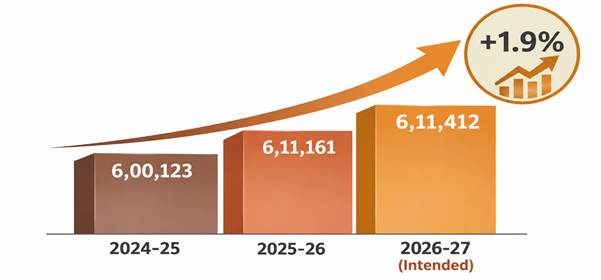
CAPEX 2025 included aggregate figures based on a fixed panel of 3,819 enterprises covering 2024-25, 2025-26 and intended expenditure for 2026-27.
For this fixed panel, aggregate CAPEX was ₹6,00,123 crore in 2024-25.
It was ₹6,11,161 crore for 2025-26 and intended CAPEX for 2026-27 was ₹6,11,412 crore.
The official release described the change over the actual 2024-25 CAPEX as a modest growth of 1.9 percent.
22. Why Must the Fixed-Panel Figures Be Interpreted Carefully?
The ₹6,00,123 crore, ₹6,11,161 crore and ₹6,11,412 crore figures relate specifically to a fixed panel of 3,819 enterprises reported in CAPEX 2025.
They should not be presented as total private-sector investment for the entire Indian economy.
Similarly, the 2026-27 figure represents intended expenditure captured by the survey and should not be described as already completed investment.
23. What Is an Investment Intention?
An investment intention represents what an enterprise plans or expects to spend in the future.
It is not the same as actual expenditure already incurred.
Economic conditions, financing availability, demand, project execution and corporate decisions can cause actual investment to differ from initial intentions.
This distinction is essential when interpreting forward-looking surveys.
24. Why Does CAPEX 2026 Cover Green Energy?
The latest survey specifically collects information about investment in green energy.
This can help statisticians and policymakers understand how corporate capital allocation is changing as enterprises invest in new energy technologies and related infrastructure.
The survey itself measures investment information; it should not be interpreted as a government claim that every surveyed enterprise is making a green-energy investment.
25. Why Is Robotics Included?
Robotics can be associated with automation, advanced manufacturing and productivity-enhancing investment.
By separately collecting information about robotics expenditure, NSO can obtain a clearer picture of how enterprises are allocating capital toward automation-related technologies.
The inclusion of robotics also reflects the changing composition of corporate capital investment beyond conventional buildings and machinery.
26. Does the Survey Examine Why Companies Invest?
Yes. CAPEX 2026 seeks information on the objectives of investment.
These can include capacity expansion, upgradation and other investment purposes.
Knowing the purpose is important because an enterprise investing to expand production may have different economic implications from an enterprise primarily replacing or modernising existing assets.
27. Does It Examine Sources of Finance?
Yes. The survey collects information on sources used to finance capital expenditure.
Investment can depend heavily on the availability and cost of finance.
Information about financing therefore improves understanding of how enterprises fund their investment programmes.
28. Why Are Timely Responses Important?
MoSPI has emphasised that the quality and usefulness of CAPEX estimates depend substantially on coverage and timely responses from selected enterprises.
Individual responses are combined to produce aggregate indicators that help show the direction and magnitude of private corporate investment across sectors.
Timely submission also allows NSO to validate and process the information within the survey schedule.
29. Will Individual Company Data Be Published?
No. MoSPI has assured participating enterprises that individual information will remain confidential.
Unit-level CAPEX data will not be disseminated.
The Government states that safeguards are applied when publishing results so that confidential information identifying an individual reporting enterprise is not disclosed.
30. Why Is Confidentiality Important?
Future investment plans can contain commercially sensitive information.
A company may not want competitors to know the exact amount, location, timing or nature of a proposed investment.
Protecting unit-level information can therefore encourage enterprises to provide complete and accurate information while allowing aggregate statistics to be published for public use.
31. Why Is Private CAPEX Important for the Economy?
Private capital expenditure can contribute to the creation of productive assets, expansion of industrial capacity, technological modernisation and improvements in productivity.
It can also influence demand for machinery, construction, transport, financial services and skilled labour.
However, investment intentions should not automatically be equated with future economic growth because actual outcomes depend on whether projects are implemented and how productive those investments become.
32. Why Is Manufacturing's Share Important?
Manufacturing represented 43.80 percent of aggregate expenditure in the CAPEX 2024 findings for 2024-25 and 50.17 percent of provisional aggregate CAPEX in the CAPEX 2025 findings for 2025-26.
These figures indicate that manufacturing was the largest principal activity category in both sets of results cited by MoSPI.
They provide useful evidence for analysing the composition of private corporate investment, although comparisons should account for differences in survey rounds and the status of estimates.
33. Why Is This Important for UPSC?
CAPEX 2026 is relevant to GS Paper III topics such as the Indian economy, investment models, industrial growth, infrastructure, manufacturing, technological change and economic statistics.
It is also useful for understanding the distinction between investment intentions, provisional expenditure and actual expenditure.
In a mains answer, CAPEX survey data can be used carefully to discuss private investment trends while clearly identifying the survey population and the period to which each figure relates.
34. What Is Important for SSC, Railway and State Exams?
Remember that CAPEX 2026 is conducted by the National Statistics Office under MoSPI.
The survey period is October-December 2026 and it is the third CAPEX survey.
The first round was CAPEX 2024 and the second was CAPEX 2025.
The survey is conducted under the Collection of Statistics Act, 2008.
CAPEX 2026 covers investment in areas including green energy and robotics and uses a secure web portal with a bilingual questionnaire and an AI chatbot for respondent assistance.
35. What Should Students Remember?
NSO launched CAPEX 2026 on 1 October 2026 to collect timely information on private corporate capital expenditure and future investment intentions. The survey will run from October to December 2026 and covers selected large private corporate enterprises.
The previous CAPEX 2025 survey found manufacturing had the largest share of provisional aggregate CAPEX in 2025-26 at 50.17 percent or ₹5,73,900 crore, followed by information and communication at 16.38 percent or ₹1,87,395 crore. Electricity, gas, steam and air-conditioning supply accounted for 8.96 percent or ₹1,02,448 crore, while transportation and storage accounted for 5.55 percent or ₹63,517 crore.
A fixed panel of 3,819 enterprises reported aggregate CAPEX of ₹6,00,123 crore for 2024-25, ₹6,11,161 crore for 2025-26 and intended expenditure of ₹6,11,412 crore for 2026-27. These are panel-based figures, not total private investment for the entire economy.
For quick revision remember: CAPEX 2026 — NSO — MoSPI — October-December 2026 — third survey — selected large private corporate enterprises — Collection of Statistics Act 2008 — past, current and future CAPEX — green energy — robotics — investment objectives — financing sources — secure portal — bilingual questionnaire — AI chatbot — confidential unit-level data.
क्या हुआ?
सांख्यिकी एवं कार्यक्रम कार्यान्वयन मंत्रालय के अंतर्गत राष्ट्रीय सांख्यिकी कार्यालय ने निजी कॉरपोरेट क्षेत्र की पूंजीगत व्यय निवेश योजनाओं से संबंधित तीसरा अग्रदर्शी सर्वेक्षण CAPEX 2026 शुरू किया है। यह सर्वेक्षण अक्टूबर से दिसंबर 2026 के दौरान आयोजित किया जाएगा। इसका उद्देश्य भारत के बड़े निजी कॉरपोरेट उद्यमों द्वारा पहले किए गए पूंजीगत व्यय के साथ उनकी भविष्य की निवेश योजनाओं के बारे में समयबद्ध और व्यापक जानकारी प्राप्त करना है।
निजी निवेश आर्थिक वृद्धि का एक महत्वपूर्ण घटक है। नए कारखानों, मशीनों, डिजिटल अवसंरचना, ऊर्जा प्रणालियों, परिवहन सुविधाओं, रोबोटिकी और अन्य उत्पादक परिसंपत्तियों में निवेश अर्थव्यवस्था की उत्पादन क्षमता बढ़ा सकता है। चयनित उद्यमों से प्रत्यक्ष जानकारी प्राप्त करके राष्ट्रीय सांख्यिकी कार्यालय निजी कॉरपोरेट निवेश की दिशा और परिमाण को बेहतर ढंग से समझने का प्रयास कर रहा है।
1. CAPEX 2026 क्या है?
CAPEX 2026 निजी कॉरपोरेट क्षेत्र की पूंजीगत व्यय निवेश योजनाओं पर राष्ट्रीय सांख्यिकी कार्यालय द्वारा आयोजित तीसरा अग्रदर्शी सर्वेक्षण है।
CAPEX का सामान्य अर्थ Capital Expenditure अर्थात पूंजीगत व्यय है। यह सामान्यतः ऐसी परिसंपत्तियों पर होने वाले व्यय को दर्शाता है जिनसे अपेक्षाकृत लंबी अवधि तक उत्पादन या व्यावसायिक गतिविधियों में लाभ प्राप्त होता है, जैसे संयंत्र, मशीनरी, उपकरण, भवन और तकनीकी अवसंरचना।
यह सर्वेक्षण केवल पिछले निवेश को नहीं मापता। इसमें वर्तमान वित्तीय वर्ष के अनंतिम पूंजीगत व्यय और आगामी वित्तीय वर्ष की निवेश योजनाओं की जानकारी भी ली जाती है।
2. CAPEX 2026 कब आयोजित किया जा रहा है?
सर्वेक्षण की अवधि अक्टूबर से दिसंबर 2026 है।
सांख्यिकी एवं कार्यक्रम कार्यान्वयन मंत्रालय ने 1 अक्टूबर 2026 को इसके आरंभ की जानकारी दी।
चयनित निजी कॉरपोरेट उद्यम एक समर्पित सुरक्षित वेब पोर्टल के माध्यम से जानकारी प्रस्तुत करेंगे।
3. सर्वेक्षण कौन आयोजित करता है?
यह सर्वेक्षण सांख्यिकी एवं कार्यक्रम कार्यान्वयन मंत्रालय के अंतर्गत राष्ट्रीय सांख्यिकी कार्यालय अर्थात NSO द्वारा आयोजित किया जाता है।
NSO भारत की आधिकारिक सांख्यिकीय व्यवस्था का महत्वपूर्ण संस्थान है और अनेक आर्थिक तथा सामाजिक आँकड़ों के संकलन और प्रकाशन से जुड़ा है।
4. सर्वेक्षण का मुख्य उद्देश्य क्या है?
मुख्य उद्देश्य हाल के वित्तीय वर्षों में किए गए पूंजीगत व्यय, वर्तमान वित्तीय वर्ष के अनंतिम पूंजीगत व्यय और आगामी वित्तीय वर्ष की निवेश योजनाओं के बारे में जानकारी एकत्र करना है।
इसी कारण यह अग्रदर्शी सर्वेक्षण है क्योंकि यह केवल किए जा चुके व्यय को नहीं, बल्कि कंपनियों की भविष्य की निवेश योजनाओं को भी मापता है।
5. किन उद्यमों को इसमें शामिल किया जाता है?
सर्वेक्षण में अर्थव्यवस्था के विभिन्न क्षेत्रों के चयनित बड़े निजी कॉरपोरेट उद्यम शामिल हैं।
सर्वेक्षण का आधार कॉरपोरेट कार्य मंत्रालय में पंजीकृत सक्रिय उद्यमों की जानकारी से तैयार किया जाता है और इसके लिए निर्धारित पात्रता तथा कारोबार संबंधी मानदंड लागू होते हैं।
इसलिए इसे भारत की प्रत्येक कंपनी या प्रत्येक व्यवसाय की पूर्ण गणना नहीं समझना चाहिए।
6. कौन-कौन सी जानकारी एकत्र की जाती है?
CAPEX 2026 में पिछले, वर्तमान और भविष्य के पूंजीगत व्यय की जानकारी ली जाती है।
इसमें विभिन्न परिसंपत्ति समूहों और उद्योग क्षेत्रों का पूंजीगत व्यय, निवेश योजनाएँ और रणनीतियाँ, हरित ऊर्जा तथा रोबोटिकी में निवेश, क्षमता विस्तार और उन्नयन जैसे निवेश उद्देश्य तथा पूंजीगत व्यय के वित्तपोषण के स्रोत शामिल हैं।
इससे केवल निवेश की मात्रा ही नहीं, बल्कि निवेश कहाँ और किस उद्देश्य से किया जा रहा है, यह भी समझने में सहायता मिलती है।
7. पूंजीगत व्यय क्यों महत्वपूर्ण है?
पूंजीगत व्यय किसी उद्यम की उत्पादन क्षमता बढ़ाने और कार्यकुशलता सुधारने में सहायक हो सकता है।
उदाहरण के लिए नया विनिर्माण संयंत्र उत्पादन क्षमता बढ़ा सकता है, जबकि उन्नत मशीनरी अथवा रोबोटिकी में निवेश उत्पादकता और स्वचालन को बढ़ा सकता है।
ऊर्जा अवसंरचना, परिवहन उपकरण और डिजिटल प्रणालियों में निवेश भी उत्पादक क्षमता को मजबूत कर सकता है।
8. पूंजीगत व्यय और सामान्य परिचालन व्यय में क्या अंतर है?
पूंजीगत व्यय सामान्यतः ऐसी परिसंपत्तियों के अधिग्रहण, निर्माण अथवा महत्वपूर्ण सुधार से संबंधित होता है जिनसे लंबी अवधि तक लाभ मिलने की संभावना होती है।
इसके विपरीत परिचालन व्यय दैनिक व्यावसायिक गतिविधियों को चलाने के लिए बार-बार होने वाले खर्च से संबंधित होता है।
यह अंतर महत्वपूर्ण है क्योंकि पूंजीगत व्यय भविष्य की उत्पादन क्षमता और निवेश की जानकारी देता है।
9. आँकड़े कैसे एकत्र किए जाते हैं?
NSO इस सर्वेक्षण के लिए एक समर्पित और सुरक्षित वेब पोर्टल का उपयोग करता है।
चयनित उद्यम स्वयं अपनी जानकारी संकलित करके ऑनलाइन प्रस्तुत कर सकते हैं।
प्रश्नावली, अवधारणाओं और परिभाषाओं को समझने में सहायता के लिए पोर्टल पर आवश्यक सुविधाएँ उपलब्ध कराई गई हैं।
10. कौन सी डिजिटल सहायता उपलब्ध है?
CAPEX 2026 में उद्यमों की सहायता के लिए निर्देश पुस्तिका और पोर्टल के उपयोग से संबंधित वीडियो मार्गदर्शिका उपलब्ध है।
पोर्टल संचालन और जानकारी प्रस्तुत करने में सहायता के लिए कृत्रिम बुद्धिमत्ता आधारित संवाद सहायक भी उपलब्ध कराया गया है।
प्रश्नावली द्विभाषी है।
इन सुविधाओं का उद्देश्य जानकारी प्रस्तुत करने की प्रक्रिया को सरल बनाना और आँकड़ों की गुणवत्ता सुधारना है।
11. सर्वेक्षण किस कानून के अंतर्गत किया जाता है?
CAPEX सर्वेक्षण Collection of Statistics Act, 2008 अर्थात सांख्यिकी संग्रह अधिनियम, 2008 के प्रावधानों के अंतर्गत आयोजित किया जाता है।
परीक्षा की दृष्टि से यह महत्वपूर्ण है क्योंकि यह किसी निजी संस्था का बाजार सर्वेक्षण नहीं, बल्कि भारत की आधिकारिक सांख्यिकीय व्यवस्था का हिस्सा है।
12. क्या यह भारत का पहला CAPEX सर्वेक्षण है?
नहीं। CAPEX 2026 इसका तीसरा चरण है।
NSO ने पहला अग्रदर्शी निजी क्षेत्र CAPEX निवेश योजना सर्वेक्षण, CAPEX 2024, नवंबर 2024 से जनवरी 2025 के बीच आयोजित किया था।
दूसरा CAPEX 2025 सर्वेक्षण अक्टूबर से दिसंबर 2025 के दौरान किया गया।
अब अक्टूबर 2026 में तीसरा चरण शुरू किया गया है।
13. CAPEX 2024 से क्या पता चला था?
MoSPI के अनुसार 2024-25 में प्रमुख गतिविधि श्रेणियों के कुल व्यय में विनिर्माण की हिस्सेदारी सबसे अधिक 43.80 प्रतिशत थी।
सूचना एवं संचार की हिस्सेदारी 15.60 प्रतिशत थी।
परिवहन एवं भंडारण की हिस्सेदारी 14.00 प्रतिशत थी।
इन परिणामों से पहले सर्वेक्षण में निजी कॉरपोरेट पूंजीगत व्यय में विनिर्माण की प्रमुख भूमिका सामने आई।
14. CAPEX 2025 ने विनिर्माण के बारे में क्या बताया?
CAPEX 2025 के अनुसार 2025-26 के अनंतिम कुल पूंजीगत व्यय में विनिर्माण की हिस्सेदारी सबसे अधिक थी।
इसकी हिस्सेदारी 50.17 प्रतिशत और राशि ₹5,73,900 करोड़ थी।
अर्थात इस वर्गीकरण में विनिर्माण का योगदान अनंतिम कुल पूंजीगत व्यय के लगभग आधे के बराबर था।
15. सूचना एवं संचार की हिस्सेदारी कितनी थी?
CAPEX 2025 के परिणामों में सूचना एवं संचार दूसरे स्थान पर था।
2025-26 के अनंतिम कुल पूंजीगत व्यय में इसकी हिस्सेदारी 16.38 प्रतिशत और राशि ₹1,87,395 करोड़ थी।
यह निजी कॉरपोरेट निवेश में डिजिटल, दूरसंचार और सूचना संबंधी गतिविधियों के महत्व को दर्शाता है।
16. बिजली और संबंधित गतिविधियों में कितना निवेश था?
बिजली, गैस, भाप और वातानुकूलन आपूर्ति की हिस्सेदारी 2025-26 के अनंतिम कुल पूंजीगत व्यय में 8.96 प्रतिशत थी।
इसकी राशि ₹1,02,448 करोड़ थी।
आधिकारिक विज्ञप्ति में प्रमुख श्रेणियों में यह विनिर्माण तथा सूचना एवं संचार के बाद आती है।
17. परिवहन एवं भंडारण की हिस्सेदारी कितनी थी?
2025-26 के अनंतिम कुल पूंजीगत व्यय में परिवहन एवं भंडारण की हिस्सेदारी 5.55 प्रतिशत थी।
इसकी राशि ₹63,517 करोड़ थी।
परिवहन और रसद क्षेत्र में निवेश वस्तुओं की आवाजाही, संपर्क और आपूर्ति-श्रृंखला की कार्यकुशलता के लिए महत्वपूर्ण हो सकता है।
18. रोबोटिकी के बारे में सर्वेक्षण से क्या पता चला?
CAPEX 2025 में रोबोटिकी से संबंधित प्रस्तावित निवेश की जानकारी भी एकत्र की गई थी।
आधिकारिक विज्ञप्ति के अनुसार लगभग 21.16 प्रतिशत उद्यमों ने अपने कुल पूंजीगत व्यय का 80 प्रतिशत से अधिक भाग रोबोटिकी में लगाने की योजना बताई थी।
लगभग 78.84 प्रतिशत उद्यमों ने कहा था कि उनके कुल पूंजीगत व्यय का 20 प्रतिशत से कम भाग रोबोटिकी में लगाया जाएगा।
इन आँकड़ों को भारत के कुल निजी निवेश में रोबोटिकी की समान हिस्सेदारी नहीं समझना चाहिए।
19. प्राप्ति अनुपात क्या है?
प्राप्ति अनुपात वास्तविक पूंजीगत व्यय की तुलना पहले व्यक्त की गई निवेश योजनाओं से करता है।
CAPEX 2025 के अनुमान के अनुसार 2024-25 में सर्वेक्षण में शामिल उद्यमों के समूह का वास्तविक पूंजीगत व्यय औसतन ₹173.5 करोड़ प्रति उद्यम था।
कुल प्राप्ति अनुपात 96.3 प्रतिशत था।
MoSPI के अनुसार इससे संकेत मिलता है कि समग्र स्तर पर वास्तविक व्यय निवेश योजनाओं के काफी निकट था।
20. प्राप्ति अनुपात क्यों महत्वपूर्ण है?
कंपनियाँ निवेश की योजना बना सकती हैं, लेकिन वास्तविक व्यय हमेशा नियोजित राशि के बराबर नहीं होता।
वित्तीय परिस्थितियों, मांग, नियामक मंजूरी, आपूर्ति बाधाओं या कॉरपोरेट रणनीति में बदलाव के कारण परियोजनाएँ विलंबित, विस्तारित, सीमित या रद्द हो सकती हैं।
इसलिए निवेश योजना और वास्तविक व्यय की तुलना यह समझने में मदद करती है कि नियोजित निवेश का कितना भाग वास्तव में हुआ।
21. 3,819 उद्यमों के निश्चित समूह से क्या पता चला?
CAPEX 2025 में 3,819 उद्यमों के एक निश्चित समूह के लिए 2024-25, 2025-26 और 2026-27 की निवेश योजनाओं से संबंधित कुल आँकड़े दिए गए।
इस समूह का कुल पूंजीगत व्यय 2024-25 में ₹6,00,123 करोड़ था।
2025-26 के लिए यह ₹6,11,161 करोड़ और 2026-27 के लिए नियोजित पूंजीगत व्यय ₹6,11,412 करोड़ था।
आधिकारिक विज्ञप्ति ने 2024-25 के वास्तविक पूंजीगत व्यय की तुलना में इसे 1.9 प्रतिशत की मामूली वृद्धि बताया है।
22. इन आँकड़ों को सावधानी से क्यों समझना चाहिए?
₹6,00,123 करोड़, ₹6,11,161 करोड़ और ₹6,11,412 करोड़ के आँकड़े CAPEX 2025 में शामिल 3,819 उद्यमों के निश्चित समूह से संबंधित हैं।
इन्हें पूरी भारतीय अर्थव्यवस्था के कुल निजी निवेश के रूप में प्रस्तुत नहीं किया जाना चाहिए।
इसी प्रकार 2026-27 का आँकड़ा नियोजित व्यय है, पहले से पूरा हो चुका निवेश नहीं।
23. निवेश योजना क्या होती है?
निवेश योजना यह बताती है कि कोई उद्यम भविष्य में कितनी राशि खर्च करने की योजना अथवा अपेक्षा रखता है।
यह पहले से किए जा चुके वास्तविक व्यय के समान नहीं होती।
आर्थिक परिस्थितियाँ, वित्त उपलब्धता, मांग, परियोजना क्रियान्वयन और व्यावसायिक निर्णय वास्तविक निवेश को प्रारंभिक योजना से अलग कर सकते हैं।
24. CAPEX 2026 में हरित ऊर्जा क्यों शामिल है?
नवीनतम सर्वेक्षण में हरित ऊर्जा में निवेश की जानकारी विशेष रूप से एकत्र की जा रही है।
इससे यह समझने में सहायता मिल सकती है कि नई ऊर्जा तकनीकों और संबंधित अवसंरचना की दिशा में कॉरपोरेट पूंजी आवंटन किस प्रकार बदल रहा है।
सर्वेक्षण निवेश संबंधी जानकारी एकत्र करता है; इसका अर्थ यह नहीं है कि सर्वेक्षण में शामिल प्रत्येक उद्यम हरित ऊर्जा में निवेश कर रहा है।
25. रोबोटिकी को क्यों शामिल किया गया है?
रोबोटिकी स्वचालन, उन्नत विनिर्माण और उत्पादकता बढ़ाने वाले निवेश से जुड़ी हो सकती है।
रोबोटिकी पर अलग जानकारी एकत्र करने से NSO यह समझ सकता है कि उद्यम स्वचालन तकनीकों की दिशा में कितनी पूंजी लगा रहे हैं।
यह कॉरपोरेट पूंजी निवेश की बदलती प्रकृति को भी दर्शाता है।
26. क्या सर्वेक्षण निवेश के उद्देश्य को भी मापता है?
हाँ। CAPEX 2026 निवेश के उद्देश्यों की जानकारी भी एकत्र करता है।
इनमें क्षमता विस्तार, उन्नयन और अन्य निवेश उद्देश्य शामिल हो सकते हैं।
यह जानकारी महत्वपूर्ण है क्योंकि उत्पादन क्षमता बढ़ाने के लिए किया गया निवेश और केवल मौजूदा परिसंपत्ति को बदलने अथवा आधुनिक बनाने वाला निवेश अलग आर्थिक प्रभाव डाल सकता है।
27. क्या वित्तपोषण के स्रोतों की जानकारी भी ली जाती है?
हाँ। सर्वेक्षण पूंजीगत व्यय के वित्तपोषण के स्रोतों के बारे में जानकारी एकत्र करता है।
निवेश पर वित्त की उपलब्धता और उसकी लागत का महत्वपूर्ण प्रभाव पड़ सकता है।
इसलिए वित्तपोषण की जानकारी उद्यमों के निवेश कार्यक्रमों को बेहतर ढंग से समझने में मदद करती है।
28. समय पर उत्तर देना क्यों महत्वपूर्ण है?
MoSPI ने कहा है कि CAPEX अनुमानों की गुणवत्ता और उपयोगिता चयनित उद्यमों की व्यापक भागीदारी और समय पर उत्तर पर निर्भर करती है।
अलग-अलग उद्यमों से मिली जानकारी को जोड़कर निजी कॉरपोरेट निवेश की दिशा और परिमाण से संबंधित समग्र संकेतक तैयार किए जाते हैं।
समय पर जानकारी मिलने से NSO निर्धारित अवधि में आँकड़ों की जाँच और प्रसंस्करण कर सकता है।
29. क्या किसी कंपनी की व्यक्तिगत जानकारी प्रकाशित की जाएगी?
नहीं। MoSPI ने भाग लेने वाले उद्यमों को उनकी व्यक्तिगत जानकारी की गोपनीयता का आश्वासन दिया है।
इकाई स्तर के CAPEX आँकड़े सार्वजनिक नहीं किए जाएंगे।
परिणाम प्रकाशित करते समय ऐसी सावधानियाँ अपनाई जाती हैं जिनसे जानकारी देने वाले किसी विशेष उद्यम की पहचान उजागर न हो।
30. गोपनीयता क्यों महत्वपूर्ण है?
भविष्य की निवेश योजनाओं में व्यावसायिक रूप से संवेदनशील जानकारी हो सकती है।
कोई कंपनी अपने प्रतिस्पर्धियों को प्रस्तावित निवेश की सटीक राशि, स्थान, समय या प्रकृति नहीं बताना चाह सकती।
इकाई स्तर की जानकारी की सुरक्षा उद्यमों को पूर्ण और सही जानकारी देने के लिए प्रोत्साहित कर सकती है, जबकि सार्वजनिक उपयोग के लिए समग्र आँकड़े उपलब्ध कराए जा सकते हैं।
31. अर्थव्यवस्था के लिए निजी पूंजीगत व्यय क्यों महत्वपूर्ण है?
निजी पूंजीगत व्यय उत्पादक परिसंपत्तियों के निर्माण, औद्योगिक क्षमता के विस्तार, तकनीकी आधुनिकीकरण और उत्पादकता सुधार में योगदान दे सकता है।
इससे मशीनरी, निर्माण, परिवहन, वित्तीय सेवाओं और कुशल श्रम की मांग भी प्रभावित हो सकती है।
हालाँकि निवेश योजनाओं को भविष्य की आर्थिक वृद्धि के समान नहीं माना जाना चाहिए क्योंकि वास्तविक परिणाम परियोजनाओं के क्रियान्वयन और उनकी उत्पादकता पर निर्भर करते हैं।
32. विनिर्माण की हिस्सेदारी क्यों महत्वपूर्ण है?
CAPEX 2024 के 2024-25 संबंधी परिणामों में विनिर्माण की हिस्सेदारी 43.80 प्रतिशत थी, जबकि CAPEX 2025 के 2025-26 के अनंतिम परिणामों में यह 50.17 प्रतिशत थी।
MoSPI द्वारा उद्धृत दोनों सर्वेक्षण परिणामों में विनिर्माण सबसे बड़ी प्रमुख गतिविधि श्रेणी रहा।
ये आँकड़े निजी कॉरपोरेट निवेश की संरचना समझने में उपयोगी हैं, लेकिन अलग-अलग सर्वेक्षण चरणों और अनुमानों की स्थिति को ध्यान में रखकर ही तुलना करनी चाहिए।
33. UPSC के लिए यह क्यों महत्वपूर्ण है?
CAPEX 2026 GS Paper III के भारतीय अर्थव्यवस्था, निवेश मॉडल, औद्योगिक वृद्धि, अवसंरचना, विनिर्माण, तकनीकी परिवर्तन और आर्थिक सांख्यिकी जैसे विषयों से संबंधित है।
यह निवेश योजना, अनंतिम व्यय और वास्तविक व्यय के बीच अंतर समझने के लिए भी उपयोगी है।
मुख्य परीक्षा के उत्तर में CAPEX सर्वेक्षण के आँकड़ों का उपयोग निजी निवेश की प्रवृत्ति समझाने के लिए किया जा सकता है, लेकिन सर्वेक्षण में शामिल उद्यमों और संबंधित अवधि का स्पष्ट उल्लेख करना चाहिए।
34. SSC, Railway और State Exams के लिए क्या महत्वपूर्ण है?
याद रखें कि CAPEX 2026 का संचालन सांख्यिकी एवं कार्यक्रम कार्यान्वयन मंत्रालय के अंतर्गत राष्ट्रीय सांख्यिकी कार्यालय करता है।
सर्वेक्षण अवधि अक्टूबर-दिसंबर 2026 है और यह तीसरा CAPEX सर्वेक्षण है।
पहला चरण CAPEX 2024 और दूसरा CAPEX 2025 था।
सर्वेक्षण सांख्यिकी संग्रह अधिनियम, 2008 के अंतर्गत आयोजित किया जाता है।
CAPEX 2026 में हरित ऊर्जा और रोबोटिकी सहित विभिन्न निवेश क्षेत्रों की जानकारी ली जाती है तथा सुरक्षित वेब पोर्टल, द्विभाषी प्रश्नावली और कृत्रिम बुद्धिमत्ता आधारित संवाद सहायक का उपयोग किया गया है।
35. विद्यार्थियों को क्या याद रखना चाहिए?
NSO ने निजी कॉरपोरेट पूंजीगत व्यय और भविष्य की निवेश योजनाओं के बारे में समयबद्ध जानकारी प्राप्त करने के लिए 1 अक्टूबर 2026 को CAPEX 2026 शुरू किया। सर्वेक्षण अक्टूबर से दिसंबर 2026 तक चलेगा और इसमें चयनित बड़े निजी कॉरपोरेट उद्यम शामिल होंगे।
पिछले CAPEX 2025 सर्वेक्षण में 2025-26 के अनंतिम कुल पूंजीगत व्यय में विनिर्माण की हिस्सेदारी सबसे अधिक 50.17 प्रतिशत अथवा ₹5,73,900 करोड़ थी। सूचना एवं संचार की हिस्सेदारी 16.38 प्रतिशत अथवा ₹1,87,395 करोड़ थी। बिजली, गैस, भाप और वातानुकूलन आपूर्ति की हिस्सेदारी 8.96 प्रतिशत अथवा ₹1,02,448 करोड़ और परिवहन एवं भंडारण की हिस्सेदारी 5.55 प्रतिशत अथवा ₹63,517 करोड़ थी।
3,819 उद्यमों के निश्चित समूह ने 2024-25 में ₹6,00,123 करोड़, 2025-26 में ₹6,11,161 करोड़ और 2026-27 के लिए ₹6,11,412 करोड़ का नियोजित पूंजीगत व्यय बताया। ये केवल संबंधित समूह के आँकड़े हैं, पूरी भारतीय अर्थव्यवस्था का कुल निजी निवेश नहीं।
त्वरित पुनरावृत्ति: CAPEX 2026 — NSO — MoSPI — अक्टूबर-दिसंबर 2026 — तीसरा सर्वेक्षण — चयनित बड़े निजी कॉरपोरेट उद्यम — सांख्यिकी संग्रह अधिनियम 2008 — पिछले, वर्तमान और भविष्य के पूंजीगत व्यय की जानकारी — हरित ऊर्जा — रोबोटिकी — निवेश उद्देश्य — वित्तपोषण स्रोत — सुरक्षित पोर्टल — द्विभाषी प्रश्नावली — कृत्रिम बुद्धिमत्ता आधारित संवाद सहायक — इकाई स्तर के आँकड़े गोपनीय।
Key Facts
• NSO launched CAPEX 2026 in October 2026.
• The survey period is October-December 2026.
• CAPEX 2026 is the third Forward-Looking Survey on Private Corporate Sector CAPEX Investment Intentions.
• The survey is conducted by NSO under MoSPI.
• It covers selected large private corporate enterprises.
• The survey frame uses active enterprises registered with the Ministry of Corporate Affairs subject to prescribed criteria.
• The survey is conducted under the Collection of Statistics Act, 2008.
• Data are submitted through a dedicated secure web portal.
• The CAPEX 2026 questionnaire is bilingual.
• The portal includes an instruction manual, video guide and AI chatbot.
• The survey collects past, current and future capital expenditure information.
• It covers different asset groups and industry sectors.
• It collects information on green-energy investment.
• It collects information on robotics investment.
• It examines investment objectives including capacity expansion and upgradation.
• It also collects information on sources of CAPEX financing.
• CAPEX 2024 was the inaugural survey.
• Manufacturing accounted for 43.80 percent of aggregate expenditure in the CAPEX 2024 results for 2024-25.
• Information and communication accounted for 15.60 percent in the CAPEX 2024 results.
• Transportation and storage accounted for 14.00 percent in the CAPEX 2024 results.
• CAPEX 2025 found manufacturing accounted for 50.17 percent or ₹5,73,900 crore of provisional aggregate CAPEX in 2025-26.
• Information and communication accounted for 16.38 percent or ₹1,87,395 crore.
• Electricity, gas, steam and air-conditioning supply accounted for 8.96 percent or ₹1,02,448 crore.
• Transportation and storage accounted for 5.55 percent or ₹63,517 crore.
• The CAPEX 2025 estimates reported actual 2024-25 CAPEX of ₹173.5 crore per enterprise for the panel.
• The overall realisation ratio was 96.3 percent.
• A fixed panel of 3,819 enterprises reported aggregate CAPEX of ₹6,00,123 crore for 2024-25.
• The corresponding figure for 2025-26 was ₹6,11,161 crore.
• Intended CAPEX for 2026-27 for the fixed panel was ₹6,11,412 crore.
• The official release described this as 1.9 percent growth over actual CAPEX reported for 2024-25.
• Unit-level CAPEX data will not be disseminated to protect enterprise confidentiality.
मुख्य तथ्य
• NSO ने अक्टूबर 2026 में CAPEX 2026 शुरू किया।
• सर्वेक्षण की अवधि अक्टूबर-दिसंबर 2026 है।
• CAPEX 2026 निजी कॉरपोरेट क्षेत्र की पूंजीगत व्यय निवेश योजनाओं पर तीसरा अग्रदर्शी सर्वेक्षण है।
• इसका संचालन MoSPI के अंतर्गत NSO करता है।
• इसमें चयनित बड़े निजी कॉरपोरेट उद्यम शामिल हैं।
• सर्वेक्षण का आधार कॉरपोरेट कार्य मंत्रालय में पंजीकृत सक्रिय उद्यमों की जानकारी से निर्धारित मानदंडों के अनुसार तैयार होता है।
• सर्वेक्षण सांख्यिकी संग्रह अधिनियम, 2008 के अंतर्गत किया जाता है।
• आँकड़े समर्पित सुरक्षित वेब पोर्टल के माध्यम से प्रस्तुत किए जाते हैं।
• CAPEX 2026 की प्रश्नावली द्विभाषी है।
• पोर्टल में निर्देश पुस्तिका, वीडियो मार्गदर्शिका और कृत्रिम बुद्धिमत्ता आधारित संवाद सहायक उपलब्ध है।
• सर्वेक्षण पिछले, वर्तमान और भविष्य के पूंजीगत व्यय की जानकारी एकत्र करता है।
• इसमें विभिन्न परिसंपत्ति समूह और उद्योग क्षेत्र शामिल हैं।
• हरित ऊर्जा में निवेश की जानकारी एकत्र की जाती है।
• रोबोटिकी में निवेश की जानकारी भी ली जाती है।
• क्षमता विस्तार और उन्नयन सहित निवेश उद्देश्यों की जानकारी ली जाती है।
• पूंजीगत व्यय के वित्तपोषण स्रोतों की जानकारी भी एकत्र की जाती है।
• CAPEX 2024 पहला सर्वेक्षण था।
• CAPEX 2024 के 2024-25 परिणामों में विनिर्माण की हिस्सेदारी 43.80 प्रतिशत थी।
• सूचना एवं संचार की हिस्सेदारी 15.60 प्रतिशत थी।
• परिवहन एवं भंडारण की हिस्सेदारी 14.00 प्रतिशत थी।
• CAPEX 2025 में 2025-26 के अनंतिम कुल पूंजीगत व्यय में विनिर्माण की हिस्सेदारी 50.17 प्रतिशत अथवा ₹5,73,900 करोड़ थी।
• सूचना एवं संचार की हिस्सेदारी 16.38 प्रतिशत अथवा ₹1,87,395 करोड़ थी।
• बिजली, गैस, भाप और वातानुकूलन आपूर्ति की हिस्सेदारी 8.96 प्रतिशत अथवा ₹1,02,448 करोड़ थी।
• परिवहन एवं भंडारण की हिस्सेदारी 5.55 प्रतिशत अथवा ₹63,517 करोड़ थी।
• CAPEX 2025 के अनुसार संबंधित समूह में 2024-25 का वास्तविक पूंजीगत व्यय औसतन ₹173.5 करोड़ प्रति उद्यम था।
• कुल प्राप्ति अनुपात 96.3 प्रतिशत था।
• 3,819 उद्यमों के निश्चित समूह का 2024-25 का कुल पूंजीगत व्यय ₹6,00,123 करोड़ था।
• 2025-26 का संबंधित आँकड़ा ₹6,11,161 करोड़ था।
• 2026-27 के लिए नियोजित पूंजीगत व्यय ₹6,11,412 करोड़ था।
• आधिकारिक विज्ञप्ति ने 2024-25 के वास्तविक पूंजीगत व्यय की तुलना में इसे 1.9 प्रतिशत वृद्धि बताया।
• उद्यमों की गोपनीयता के लिए इकाई स्तर के CAPEX आँकड़े सार्वजनिक नहीं किए जाएंगे।
Background
The National Statistical Office introduced the Forward-Looking Survey on Private Sector CAPEX Investment Intentions to improve the availability of timely statistics on private corporate investment. The inaugural CAPEX 2024 survey was conducted between November 2024 and January 2025, followed by CAPEX 2025 during October-December 2025. CAPEX 2026 is the third round. Unlike statistics that record only expenditure already completed, this survey combines historical expenditure, provisional current-year expenditure and future investment intentions. It therefore provides a forward-looking statistical view of corporate investment while requiring careful distinction between intended and realised expenditure.
पृष्ठभूमि
राष्ट्रीय सांख्यिकी कार्यालय ने निजी कॉरपोरेट निवेश के बारे में समयबद्ध आँकड़ों की उपलब्धता बेहतर करने के लिए निजी क्षेत्र की पूंजीगत व्यय निवेश योजनाओं पर अग्रदर्शी सर्वेक्षण शुरू किया था। पहला CAPEX 2024 सर्वेक्षण नवंबर 2024 से जनवरी 2025 के बीच आयोजित किया गया और इसके बाद CAPEX 2025 अक्टूबर-दिसंबर 2025 में किया गया। CAPEX 2026 तीसरा चरण है। केवल पहले से किए जा चुके व्यय को दर्ज करने वाले आँकड़ों के विपरीत यह सर्वेक्षण पिछले व्यय, वर्तमान वर्ष के अनंतिम व्यय और भविष्य की निवेश योजनाओं को एक साथ मापता है। इसलिए यह कॉरपोरेट निवेश की अग्रदर्शी सांख्यिकीय तस्वीर देता है, लेकिन नियोजित और वास्तविक व्यय के बीच अंतर बनाए रखना आवश्यक है।
Why It Matters
CAPEX 2026 matters because private corporate investment is closely connected with capacity creation, industrial expansion, technological modernisation and productivity. The survey also provides information on emerging investment areas such as green energy and robotics. Its value lies not only in measuring the amount of investment but also in identifying sectors, asset categories, investment objectives and financing sources. For policymakers, researchers and students, it offers a structured statistical basis for analysing private investment trends while avoiding the mistake of treating investment intentions as completed expenditure.
यह क्यों महत्वपूर्ण है?
CAPEX 2026 महत्वपूर्ण है क्योंकि निजी कॉरपोरेट निवेश उत्पादन क्षमता निर्माण, औद्योगिक विस्तार, तकनीकी आधुनिकीकरण और उत्पादकता से जुड़ा है। सर्वेक्षण हरित ऊर्जा और रोबोटिकी जैसे उभरते निवेश क्षेत्रों की जानकारी भी देता है। इसका महत्व केवल निवेश की राशि मापने तक सीमित नहीं है, बल्कि इससे क्षेत्र, परिसंपत्ति श्रेणी, निवेश उद्देश्य और वित्तपोषण स्रोतों की जानकारी भी मिलती है। नीति निर्माताओं, शोधकर्ताओं और विद्यार्थियों के लिए यह निजी निवेश प्रवृत्तियों के विश्लेषण का व्यवस्थित सांख्यिकीय आधार प्रदान करता है, साथ ही यह ध्यान रखना आवश्यक है कि निवेश योजना को पहले से पूरा हो चुका व्यय नहीं माना जाए।
Exam Connection
Remember: CAPEX 2026 was launched by the National Statistics Office under MoSPI on 1 October 2026. Survey period: October-December 2026. It is the third Forward-Looking Survey on Private Corporate Sector CAPEX Investment Intentions and is conducted under the Collection of Statistics Act, 2008. CAPEX 2025 showed manufacturing at 50.17 percent or ₹5,73,900 crore of provisional aggregate CAPEX in 2025-26. A fixed panel of 3,819 enterprises reported ₹6,00,123 crore CAPEX in 2024-25, ₹6,11,161 crore in 2025-26 and intended ₹6,11,412 crore for 2026-27. CAPEX 2026 also collects information on green energy, robotics, investment objectives and financing sources.
परीक्षा से संबंध
याद रखें: CAPEX 2026 को 1 अक्टूबर 2026 को MoSPI के अंतर्गत राष्ट्रीय सांख्यिकी कार्यालय ने शुरू किया। सर्वेक्षण अवधि अक्टूबर-दिसंबर 2026 है। यह निजी कॉरपोरेट क्षेत्र की पूंजीगत व्यय निवेश योजनाओं पर तीसरा अग्रदर्शी सर्वेक्षण है और सांख्यिकी संग्रह अधिनियम, 2008 के अंतर्गत आयोजित किया जाता है। CAPEX 2025 के अनुसार 2025-26 के अनंतिम कुल पूंजीगत व्यय में विनिर्माण की हिस्सेदारी 50.17 प्रतिशत अथवा ₹5,73,900 करोड़ थी। 3,819 उद्यमों के निश्चित समूह का पूंजीगत व्यय 2024-25 में ₹6,00,123 करोड़, 2025-26 में ₹6,11,161 करोड़ और 2026-27 के लिए नियोजित ₹6,11,412 करोड़ था। CAPEX 2026 में हरित ऊर्जा, रोबोटिकी, निवेश उद्देश्य और वित्तपोषण स्रोतों की जानकारी भी ली जाती है।
 SSC CGL 2026 Ultimate Chapterwise
 SSC CHSL 2026 Ultimate Chapterwise